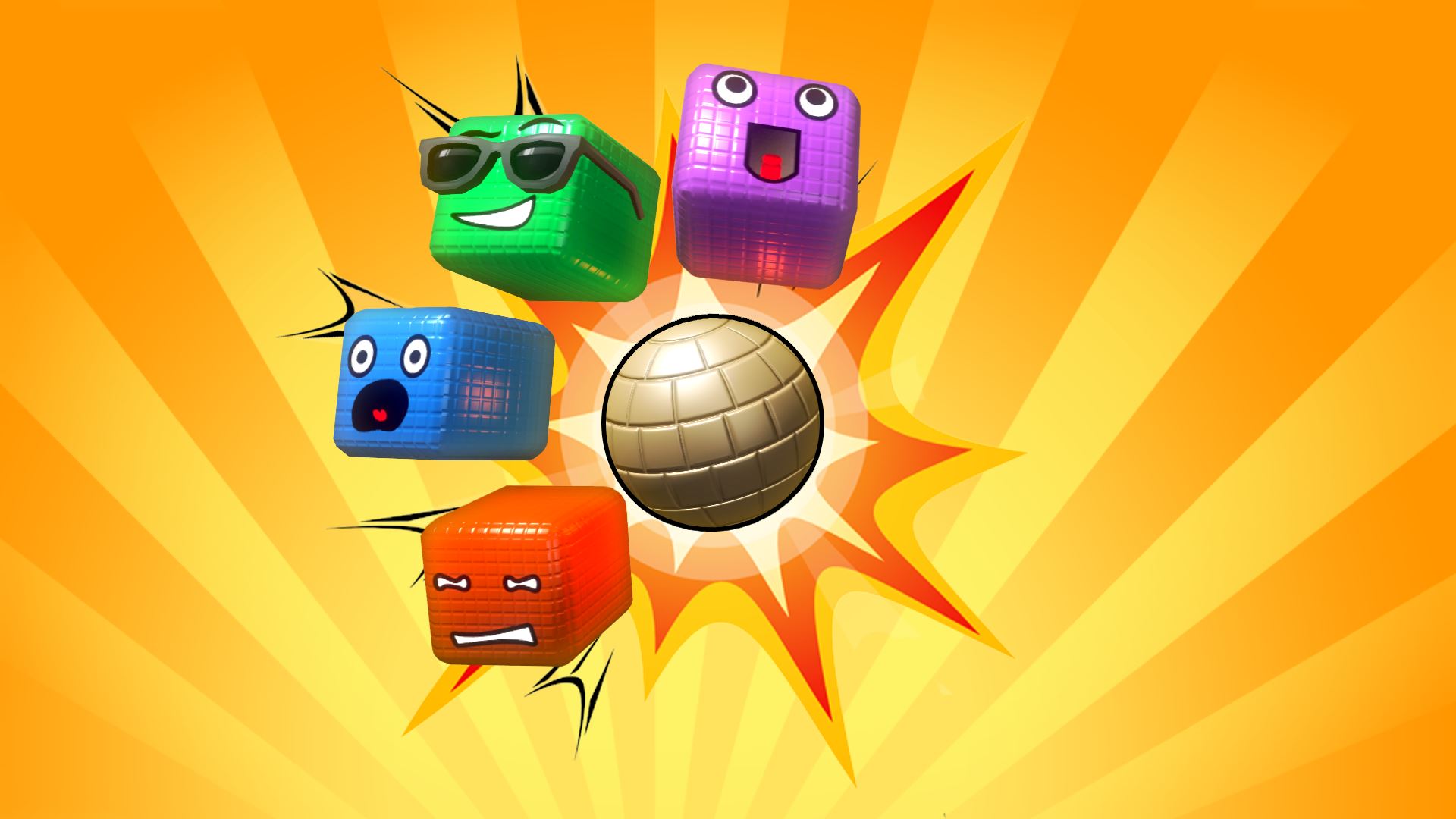
Boom Ball for Kinect is the first game to come from Virtual Air Guitar, using the Xbox One’s reworked Kinect sensor. Like their previous titles, the game focuses on precise movement and creatively using motion controls. The game is based on their Boom Ball series for PC and Mac, one of the few motion controlled games away from consoles. From their previous releases, it is obvious the company is committed to the concept.
Boom Ball for Kinect is the second release on the Xbox platform from the developer, after Kung-Fu High Impact released on the Xbox 360. With the newer technology in their hands, motion controls can now be much more precise. The use of the Kinect in Boom Ball is natural, by using a first person perspective. The game’s core idea can be picked up instantly, and in-game movement is usually mapped well from the player. Rather than hitting the ball like you would in real life, angling you hand like a tennis racquet is a close comparison.

The technology used to control Boom Ball obviously has had time invested in it, as quite often, the motion is mapped well from the player. Sadly, even though basic movements are executed with no problems, the more complex gestures, which are crucial to the completing the game, aren’t picked up so well. Throwing and rebounding balls can often be done with little hassle, but while the movement is achieved, it never feels smooth. This can often lead to moments when the game feels unresponsive, and if multiple balls are on the screen, frantic flailing with little skill is the only viable option.

The primary goal in each level of Boom Ball for Kinect is to destroy the cubes on screen, and clear the play space. The area where these cubes are stored is square, and this is the only playable area. While scenery is behind these invisible walls, this is a theme, rather than a gameplay element. Think of this as a racquetball court, with a scenic backdrop. While this is required for the game mechanics to work in the way they do, the game does feel empty and lifeless. The game does change up the layout later in the game however, such as portals, with drastically modify how a level plays. Even though this may require a change in mindset, the core gameplay is similar in most levels.
Boom Ball for Kinect has a unique art style, which uses colourful, but plain textures, and emphasised shadowing. While this is simplistic, the game runs smoothly, and all objects in the game are far from complex. This isn’t a bad thing, as this allows precise, but basic controls to be used.

While most players aim to destroy the blocks on each level, another addition has been made that increases replayability. If completing the 55 levels isn’t enough for avid players, it is possible to run through the levels once again, in order to improve your time. When playing levels, the time you have spent attempting to destroy all the blocks is being recorded, and after completion, is translated to a tier of medal. Most players would find this to be repetitive, but for those who love the title, it is possible to draw out the experience for a longer period of time. This may not be the most imaginative feature, however adds extra depth to the title.
Boom Ball for Kinect comes with a low price tag of $9.99 in the United States, £7.99 in the United Kingdom, and in €9.99 Europe. This is a great price for the amount of content given, however the overall experience struggles to justify the cost. For those with younger children, Boom Ball is a safe purchase, and is likely to entertain for hours. For a more mature audience, this isn’t a title to rush out for, as the variety in the game soon fails to keep a grasp of your interest. If you have spare money left in your Microsoft account, this may be a good title to try, but sadly I can’t recommend this to a large audience, as the lack of imaginative content soon breaks what is a great concept.

Matt was a regular ICXM contributor in 2015, publishing 110 articles across game reviews, Windows and PC, and Xbox news. Their work focused on hands-on reviews, platform commentary, and breaking-news reporting during the Xbox One’s first full year of post-launch coverage, including the early days of Backwards Compatibility and Windows 10 gaming. They post on X as @RTEnvi.