It is rare to see a cRPG game ported from PC to consoles, and even rarer to see one that is ported well. The genre is so dense and so complex that few developers have dared step foot into the foreign land of console gaming. The likelihood of rejection in that region too daunting, developers have continued to seek refuge under the protection of PC gamers, the ones all too familiar with the reading and the research and the focus that the cRPG genre so gleefully demands. Now, however, that is changing. This generation of gaming clamors for the meshing of machinery as the operating systems, hardware, and control schemes of consoles and computers begin to unite. With that comes the implementation of some of the best features of the cRPG onto consoles. One of the first to do so is Divinity: Original Sin Enhanced Edition.
First released in 2014 on PC by Larian Studios, Divinity: Original Sin was praised for its modernization of the cRPG genre, but was left completely in the shadows for console gamers, until recently, when a port of the enhanced edition was announced to release on Xbox One and PS4. Divinity: Original Sin Enhanced Edition, which I will from now on refer to as the more reasonable “Divinity”, is an exceptional port and remaster of an already great video game.
After choosing between four difficulties (the last of which, “Honour Mode”, allows only one save for the entire course of the game), you are directed towards a character customization screen. You choose the aspects of two separate characters, and will later in the game be joined by two more. You tailor the name, gender, and class of each character before customizing the looks and skills of each. Multiple classes such as “Wizard”, “Rogue”, “Witch”, or “Inquisitor”, just to name a few, give your character three predetermined special attacks or moves and separate sets of stats, abilities, and traits, all of which are balanced well. This is the optimal way for most players to jump right into the game. However, if you desire the longer, more customizable experience, then feel free to alter every trait of each of your characters for as long as you’d like.
One of the most unique features in Divinity’s character customization system is the AI personality option. Throughout the game there are times when you can approach a situation multiple ways. By selecting a personality such as “Loyal” or “Maniac” for one of your characters, he or she will automatically speak during these dialogue sections with that identity as an undertone for their words. For players who want a faster paced game with more defined characters, I suggest you give at least one of your two characters a preset personality. However, if you want complete control over the dialogue and charisma of your party, then I suggest you leave both characters without AI.
The very first thing that you will notice about Divinity is the wonderful controls. Surprisingly, the large amount of commands required from a cRPG game is expertly merged with the simplicity of the gamepad controller, creating a scheme that anyone can easily adjust to. There are often multiple actions that can be performed on an object, such as “Attack”, “Open”, “Move”, or “Examine”, however by pressing X a list with all of these options pops up. You simply have to scroll through it and confirm the action that you want to perform. Alternately, clicking down on the left stick will make a cursor appear. You can highlight any object with this cursor and select an action from there. This is a nice touch for those players looking for a “keyboard and mouse” style of play. Holding the right trigger and flicking the left stick opens up your inventory, log, or character menus, depending on the direction of the flick. You can switch between characters by doing the same thing with the left trigger. Divinity requires a lot of resource management, and although organizing each character’s individual inventory is a hassle, the menus can be explored so smoothly and conveniently that it doesn’t end up being too much of a problem. Another great function is the search feature. By holding A for a couple seconds all items in your immediate surrounding area will be revealed and can be added to your inventory with one button tap. This eliminates the dull trudging back and forth across an area, collecting each and every item of interest, a feature that seems to be prevalent in many other RPG games.
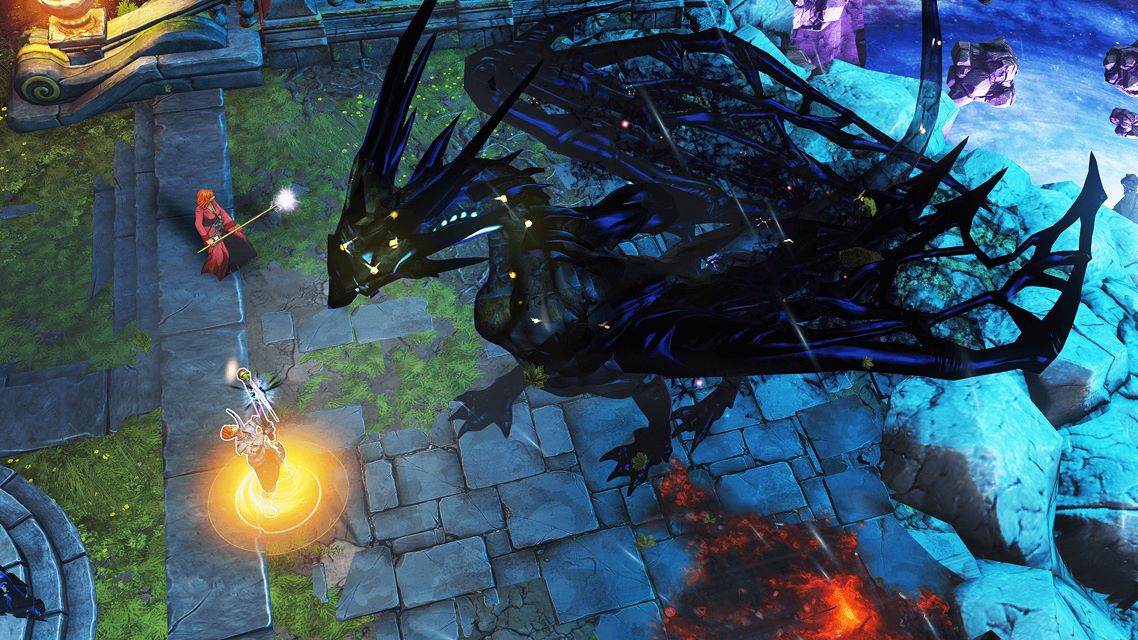
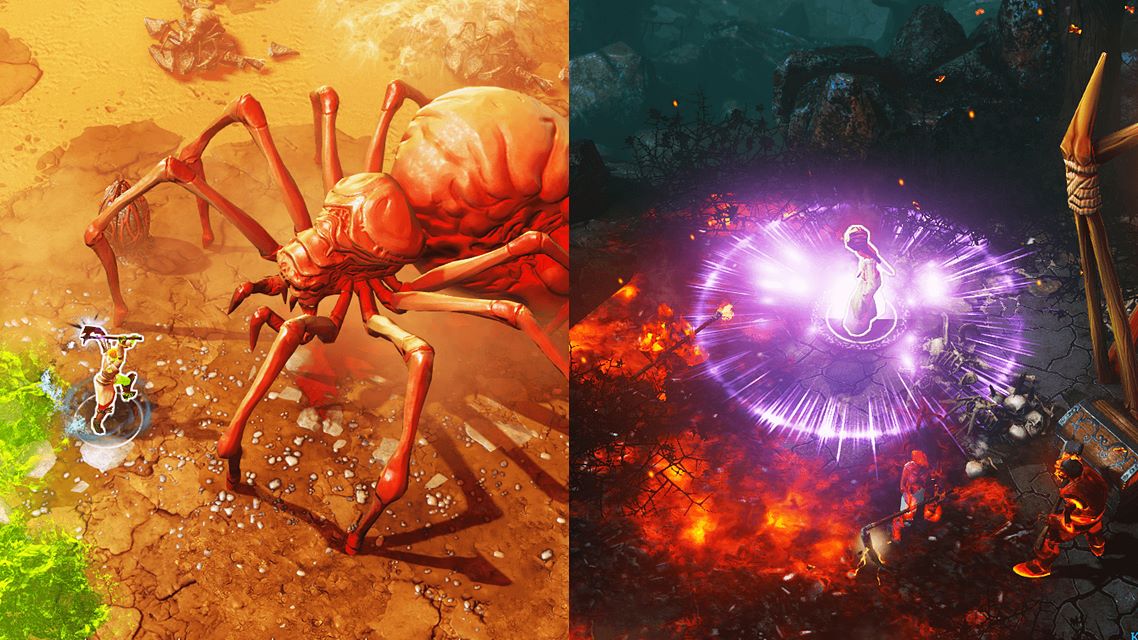
The visuals in Divinity are incredibly charming. The game looks gorgeous, with bright blue water flowing lusciously, grass drifting in the wind, and birds flying overhead in some areas. The lighting dynamically changes as you enter and exit certain areas. For example, as you leave a dimly lit building and return into the sunlight, you are, for a split second, blinded, just like in real life. As you move through dense areas, some solid structures, such as overhead arches, blend into transparency, enabling for a clearer line of sight. The interface has also been adapted for consoles so that text is easy to read. You don’t have to squint to read what an object is or what a person is saying.
As for the sounds, cities are populated, alive, and realistic. Dungeons are eerie, with subtle music playing in the background and the drip of damp water drizzling from the ceilings is evident. The score is fantastic and matches the atmosphere surrounding you.
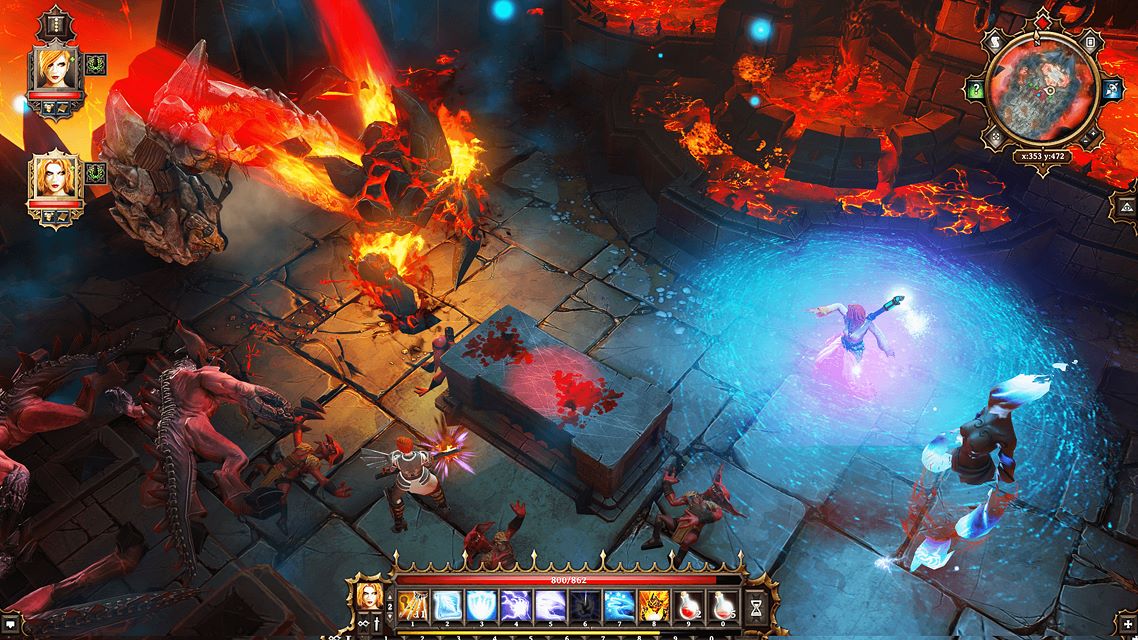
Combat is where Divinity really shines. Some players will be disappointed by the lack of a real time Diablo combat system, but the new turn-based style is addicting. As soon as an enemy sees you they will engage in an attack, which will initiate combat mode, so it’s your choice whether to strike head on or sneak around for a flanking attack. Your characters’ actions are governed by Action Points, and all movements, attacks, and abilities expend some number of these points. I’m pleased that Larian Studios decided to dismiss gridded combat locations, instead allowing free movement anywhere during combat, and restricting distance based actions by means of a radius rather than by odd “L” shapes and squares. Combat requires a good deal of strategy and the world is filled with opportunities to bend the odds of battle in your favor. Often times this has to do with the elements. You can douse a group of enemies in oil and then throw a lit candle at their feet, or soak them with a water balloon before unleashing a lightning blast for devastating results. It’s a good idea to create characters whose skills will complement each other in order to sustain the most control in a fight. Some spells can even be cast on your allies. “Vampiric Touch”, for example, which has a lifelink effect, can be used to transfer HP from one character to another, useful in certain situations.
Co-op mode is another feature that was added with the Enhanced Edition. You can play through Divinity with a friend online or in local split-screen. The addition of offline play is a fantastic feature, and is executed well. Both you and your comrade can either remain together and participate in the same fights and dialogues or can separate in order to accomplish tasks faster. The TV screen will split vertically when one of you strays too far from the other. Co-op alone might be the defining factor in deciding whether or not to buy Divinity for some people.
Unfortunately, Divinity’s main story is lackluster at best. What begins as an intriguing investigation of a murder soon unveils itself as something more when a rock teleports you to a magical fortress that does not exist on any world line. You are enrolled to take part in an incredibly dull search for more of these rocks, called “Star Stones”, which apparently keep a mystical dragon from destroying time itself…or something. It is hard to consider a worse premise. In fact, it is quite challenging not to consider a plot like this bland when it causes one to reminisce about a 1999 PBS TV show aimed at preschoolers. In my case, Dragon Tales, in which two children utilize a magic stone to visit dragons and learn about morals, such as sharing, or academia, such as identifying triangles. Luckily enough, Divinity still manages to maintain my attention narrative wise due to well written side quests and good NPC voice acting.
The side quests in Divinity are often quirky and allow for plenty of decision-making. You can choose how to approach a mission, and the power over who lives and who dies is often left in your own hands. Sometimes your attitude towards a character will permanently affect your relationship with him or her. NPCs are brought to life by voice acting, which was newly added to the Enhanced Edition. The amount of lines recorded is astounding, and adds an extra level of atmosphere that was not present in the original PC version of Divinity. These lines are executed well, but I found that sometimes the same ones would be delivered too often in certain populated areas. For example, after helping a group of soldiers kill some Orcs near the beginning of the game, I spent a couple minutes organizing my inventory. Problem is, Divinity does not pause when you are in the menu or the inventory. During this short time, one talkative soldier muttered “Taken before his time, long before his time” twenty times a minute as he looked down upon his fallen comrade. Meanwhile, a rather violent soldier screamed “I like you much better with your guts on the floor” with the same consistency, furiously kicking the bloody remains of a recently departed Orc. This repetition is a minor flaw but annoying nonetheless, and is an unfortunate side effect of an addition that is seemingly implemented so strongly.
The most frustrating thing in Divinity for me is an odd one, and one that I hope can be easily fixed in a future update. The characters move too slowly. Almost all RPG games demand grinding and task completion and exploring, and I don’t mind that at all. In fact, I often enjoy the average fetch quest or the uncertainty that traveling to an undiscovered location brings along. What I can’t stand is doing this slowly for no reason. If I cannot find a required objective then that’s my issue, but if I know exactly where one is and yet still spend an unreasonable amount of time getting to it, then that’s an issue. I sometimes distracted my attention away from the TV screen to do something else, one thumb still leaning the left joystick so that my characters could continue to trudge along sluggishly. This issue is so simple to fix, but at the time of writing it majorly impacts my views on Divinity, as it distracts me from the game and ruins the pacing of what is otherwise an exciting RPG adventure.
Divinity: Original Sin Enhanced Edition is not without errors. It suffers from an unoriginal main story, an overly frustrating inventory, and other more minor issues that detract from the pacing of the game. NPCs can be annoying and the characters move far too slowly. However, the excellent gamepad controls, co-op option, in depth RPG elements, gorgeous graphics, realistic sounds, and addicting gameplay make up for these issues. Players can expect to spend at least fifty hours exploring the lively world that Larian Studios has created. I recommend Divinity: Original Sin Enhanced Edition for newcomers to the RPG genre and veterans alike.

Tristan was a regular ICXM contributor between 2015–2017, publishing 51 articles across opinion pieces, game reviews, Windows and PC, and Xbox news. Their work focused on hands-on reviews, platform commentary, and breaking-news reporting during the Xbox One X launch year and Microsoft’s wider Play Anywhere / UWP gaming initiative. They post on X as @tbogost.