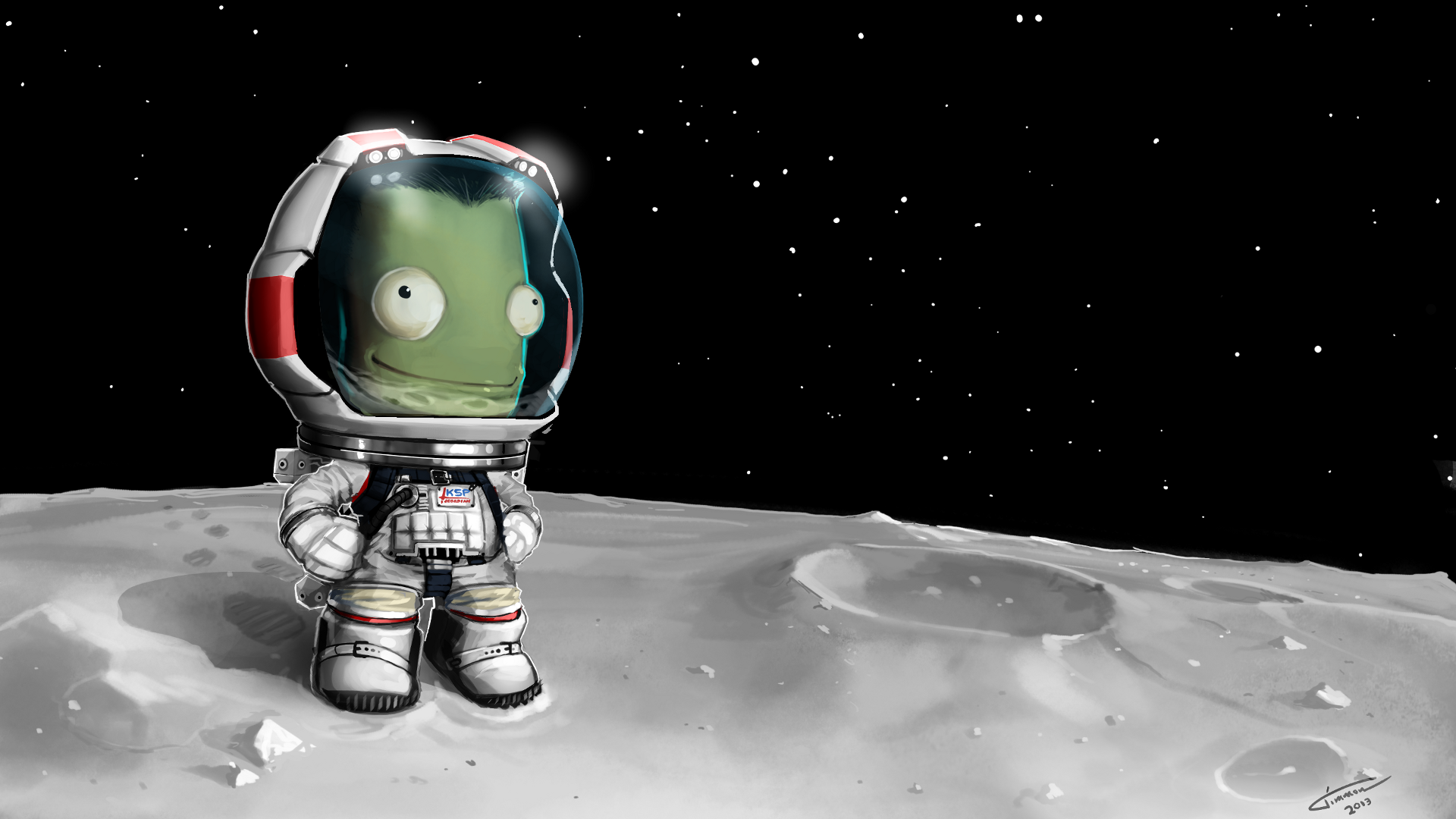
By now many of you have heard of Kerbal Space Program. The game launched on Windows many months ago and since then has garnered quite the following. Xbox One owners got to experience the game a few weeks back when it officially launched on consoles. For those of you who are still unfamiliar with the title, Kerbal Space Program can be summed up by stating that it’s basically about building rockets to go into space. While that might seem like a trivial task given the scope of video games, it’s actually quite a complex experience. You have to take into account minuscule details like the need to equip a parachute as well as reverse thrusters upon atmospheric reentry. What about blasting into space in the first place? Well, that presents a whole series of challenges in itself.
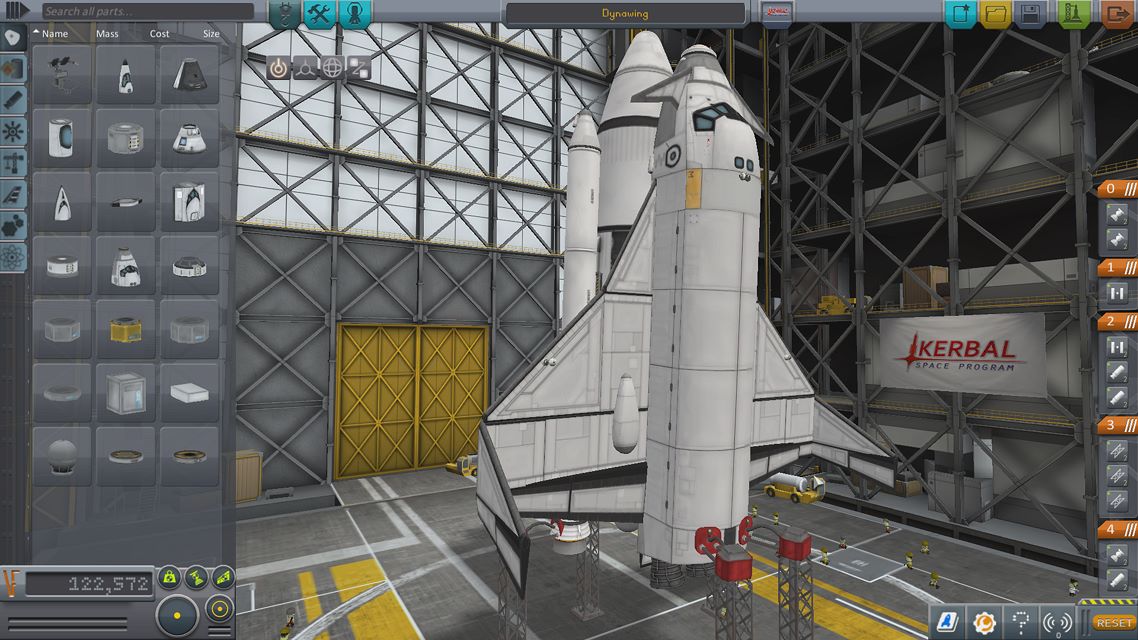
The game starts off in a rather prolonged fashion with extensive loading screens and generation. I’m not sure why this is the case because, even though it has a tremendous amount of content, it’s still not a graphically demanding title. At first you’re presented with a deep and thorough tutorial that teaches you the basics of the game. You build a simple rocket with the purpose of going up into the air and coming back down. While this is only the most basic task, it’s still quite a tricky one. You immediately realize that Kerbal Space Program isn’t as cute and simple as the little green creatures at its center. You even have to go as far as programing how the rocket will separate and when the parachute will engage. Going to the moon and further is even harder.
Before I get into what makes the title so different and great, I have to talk about some of the issues with the graphics and controls. While Kerbal Space Program has never been a looker even on Windows, it’s still a sharp and crisp experience on lesser devices. The console port, despite numerous adjustments to the sharpness and fiddling around with my television’s settings, is an odd and blurry mess. While it doesn’t really distract from the gameplay, looking at it is still a jarring experience which makes you realize how much of a downgrade it is. What baffles me is how the graphics are the simplest I’ve ever seen in a video game but it still can’t manage a clear picture. Kerbal Space Program relies on reading as much as it does on construction and the visuals make the reading portions a chore, especially when it comes to the necessary tutorial.
The controls, well, there really aren’t any in the traditional sense. You have to use your thumbstick to control an on-screen cursor and basically move it around like you would on the Windows version. I’m not a developer but surely there could’ve been an easier way to incorporate controller support than by mapping a mouse to the thumbstick. Using this scheme is fine in the beginning but prolonged gameplay becomes frustrating because the accuracy of a mouse is missing. Why not add SmartGlass touchpad support to overcome this issue? Everyone has a tablet or smartphone nowadays. I’m positive Project Spark did it.
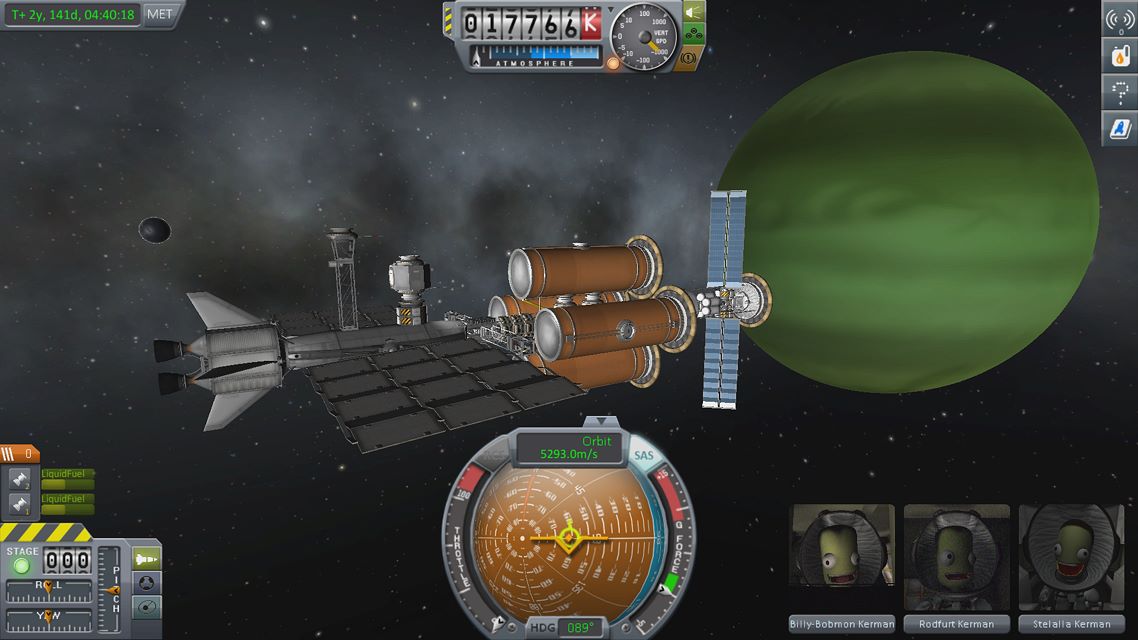
Despite all of its issues, Kerbal Space Program is a playable and enjoyable game. It’s just that the design decisions made by the developers are strange in my opinion. It definitely needs more polish.
The customization the game offers, as well as the hundreds of different items to build insane spaceships, is definitely the high point. I can’t tell you how many times I failed because I came up with a truly asinine design that looked amazing but was completely impractical. Just exploring all of the content in this game and using it will take you dozens of hours, if not more. When I first started the game—outside of the tutorial—I was honestly overwhelmed. There is so much to do and so much to engage with. The variety of vessels you can create with the endless supply of attachments is astronomical.
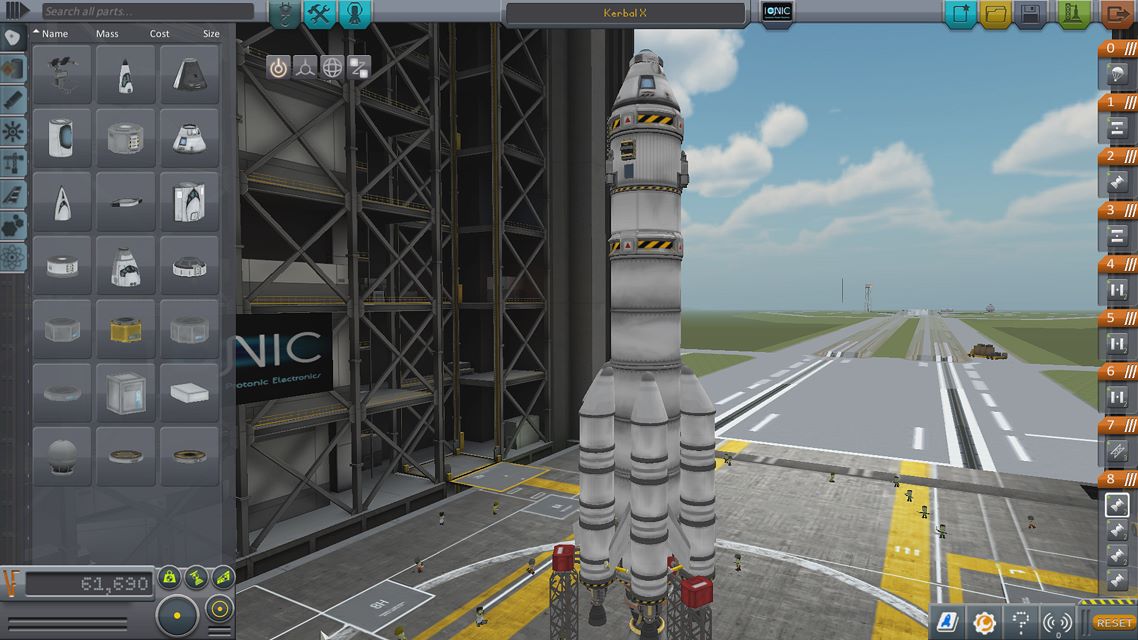
Apart from just building a rocket, there are other areas of the Kerbal Space Center that you can view and control. As far as building games go, this is definitely the more expansive and vast one out there. You’ll have a lot of fun and will keep on coming back for more. The purpose of the game seems to be on experimenting and trial and error. It definitely succeeds on that front and only by taking risks will you push the boundaries of what this title offers. Let loose and go crazy. That’s my only advice.
Summary
Kerbal Space Program costs $40 in the United States and is priced similarly elsewhere. I don’t think many gamers will agree with this because the title’s already been out on Windows for a long time. It’s not the definitive version nor does it offer an enhanced experience. If anything, it’s a flawed one when you take into account the controls and visuals. The steep price will definitely be a hard pill to swallow for many. Why it’s not cheaper is beyond me especially given its age and technical misgivings on Xbox One.
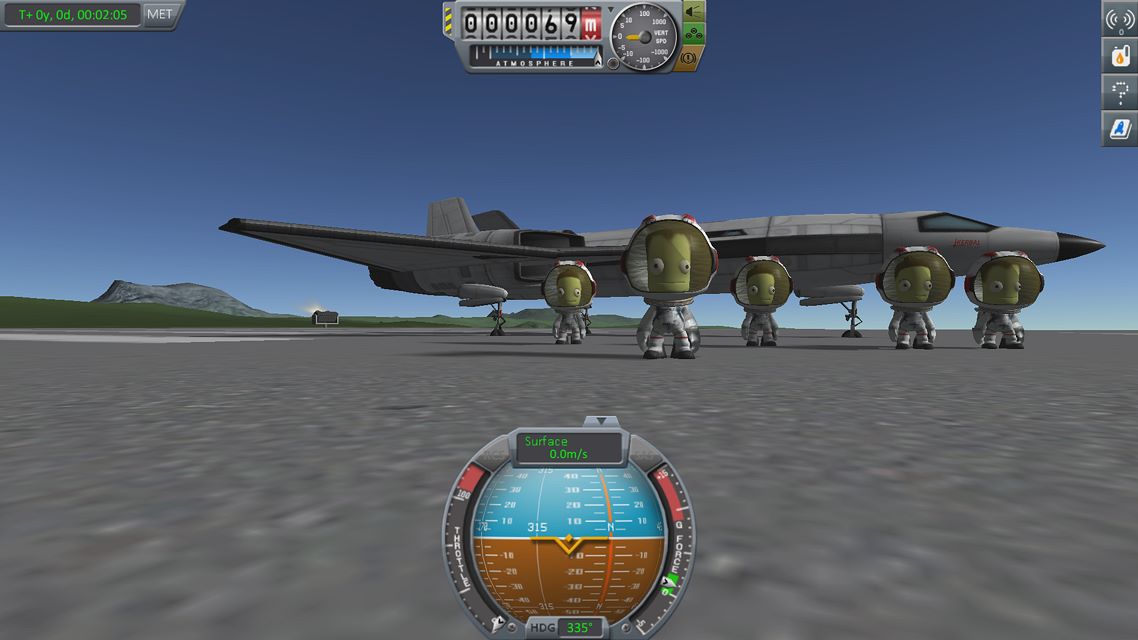
It’s still a fun and enjoyable simulator and if you haven’t played it on Windows, give the Xbox One version a go. Console gamers will be pleased with the experience and it seems like the Xbox One port was designed for new players in mind. I would definitely recommend it because the sheer enjoyment you get out of Kerbal Space Program overcome its problems.

Asher is a games journalist, former News Writer (Gaming) at Windows Central. They contributed 1110 articles to ICXM between 2015–2017, focused on opinion pieces, game reviews, Windows and PC, and Xbox news: wrote over 1,100 ICXM pieces on Xbox news, hardware reviews, and platform commentary before joining Future plc’s Windows Central in 2017.