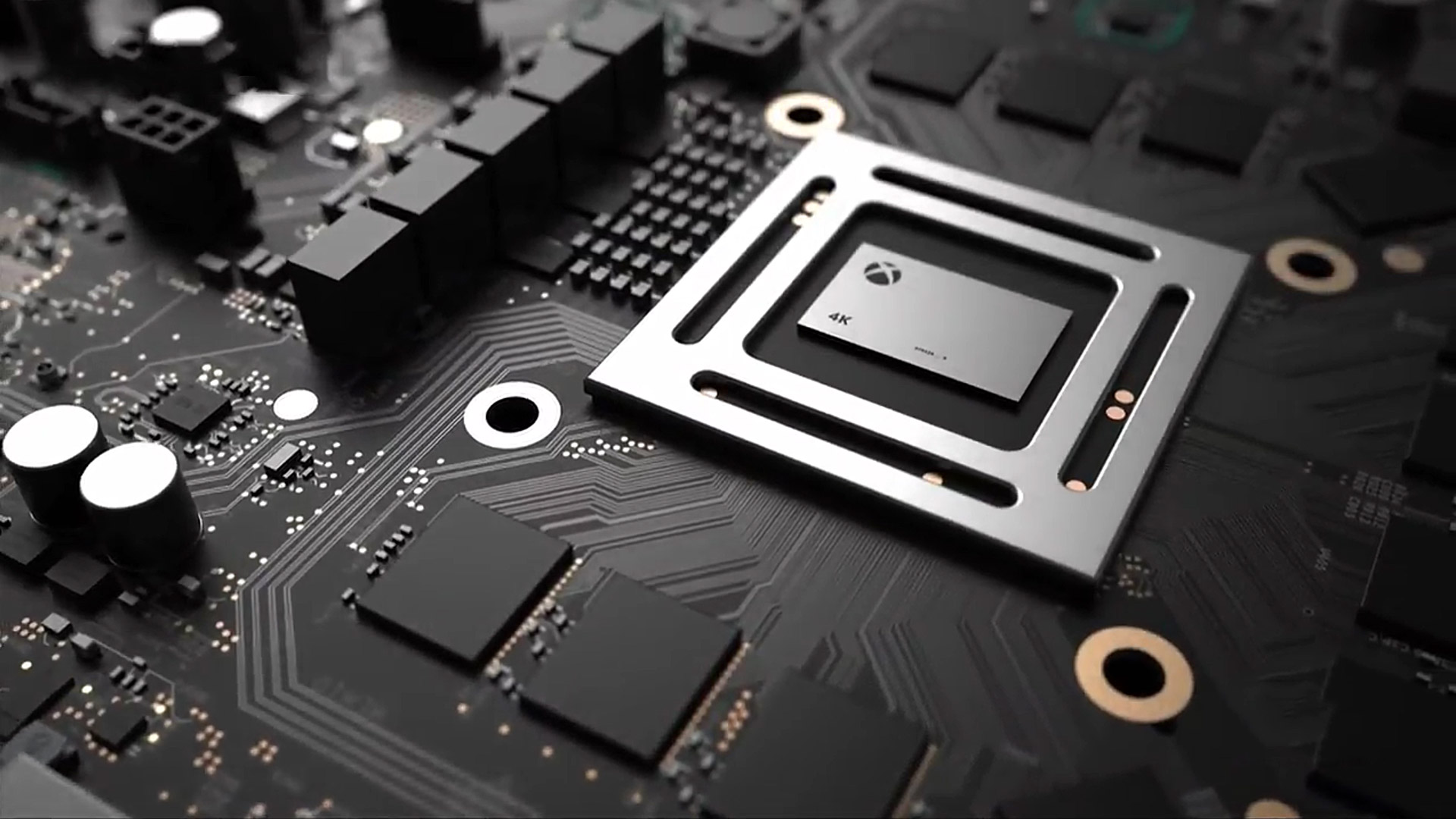
When Microsoft in partnership with Eurogamer revealed the extraordinary Project Scorpio specifications, everyone who had a brain and any sense were watering at the mouth for a piece of this action. Xbox fans obviously turned rabid with excitement, but there were a few haters in there too.
Now that we had some time to digest the details surrounding the console, and with more information being pushed out sporadically, people might ask why they should upgrade to the upcoming beast of a console. Well, the answer is pretty simple, and I’ll explain why.
Whenever new technology is revealed, we as gamers usually have to wait a very long time before it’s properly utilized, and its effects become apparent in the games we play. For instance, when the latest generation of the console was launched, it took gamers quite a while to see games that really pushed the envelope when it came to graphics and resolution. On Xbox One, Gears of War 4 and Forza Horizon 3 really showed us what the console was capable of, and with PlayStation 4 they had to wait until Horizon Zero Dawn launched before they got value for money in the graphics department. Uncharted 4 also helped. But these games launched 3 years after the consoles launched, which means we had to wait quite a while and had to be satisfied with several below par experiences.
When Project Scorpio launches, not only will you get the most powerful console ever built, but you’ll get a console that can hold its own against PC builds twice the price. Not only that, the console targets 4K 60 FPS on games, and as we saw with the Eurogamer teaser, the possibilities are high that we will actually get that delivered to us. However, game developers are a finicky bunch and generally don’t want to put too much work towards things that would make games look better. Especially if a game launches on multiple platforms.
PC have experienced this quite a lot, where the games are downgraded with simple upscaling and maybe better textures being available if your system is powerful enough. With Quantum Break, the game was originally built with the checkerboarding method enabled, so both Xbox and PC had to be strapped with this antiquated development technique. Less powerful hardware, like the PlayStation 4 Pro, will hold Project Scorpio and PC games back because the power differential is 2 TFLOPS rather than 0.5 TFLOPS this time.
If console gamers were to be serious about their future gaming experience, they would opt to buy Project Scorpio so that the console would grab significant market share, and in so doing would force developers to optimize and offer these gamers the gaming experience to match the investment they made. PC gamers have had to struggle with this, but because a console is generally a fixed platform, optimizations can be made to match the hardware easily instead of trying to force a ‘one-size-fits-all’ method.
So what about gamers on PlayStation? Well if each and every gamer opted to purchase their multiplatform games on Project Scorpio, this wouldn’t matter because the few on PlayStation will only receive a lower resolution version of the same game. The PlayStation 4 Pro is more than capable of running games at 1080p, and the original PS4 and Xbox One would receive even lower resolution ports to match their capabilities. In the end, developers should, if gamers opt to move towards the superior platform, develop games that scale the best version towards the Project Scorpio with Ultra settings (like with ForzaTech) and 4K resolution.
Will this happen? Well, it’s all up to Microsoft and Xbox in the end. If they price the console in the $399 range, the opportunity exists where they can truly push gaming forward and give us the realism we want in our games without having to be chained to the past with checkerboard rendering and faux-K resolutions. The industry is moving forward and gamers should all buy Project Scorpio because it will not only improve gaming for you but everyone else as well.

Dreyer was a regular ICXM contributor between 2016–2017, publishing 139 articles across opinion pieces, game reviews, Windows and PC, and Xbox news. Their work focused on hands-on reviews, platform commentary, and breaking-news reporting during the Xbox One X launch year and Microsoft’s wider Play Anywhere / UWP gaming initiative. They post on X as @dreyer_smit.