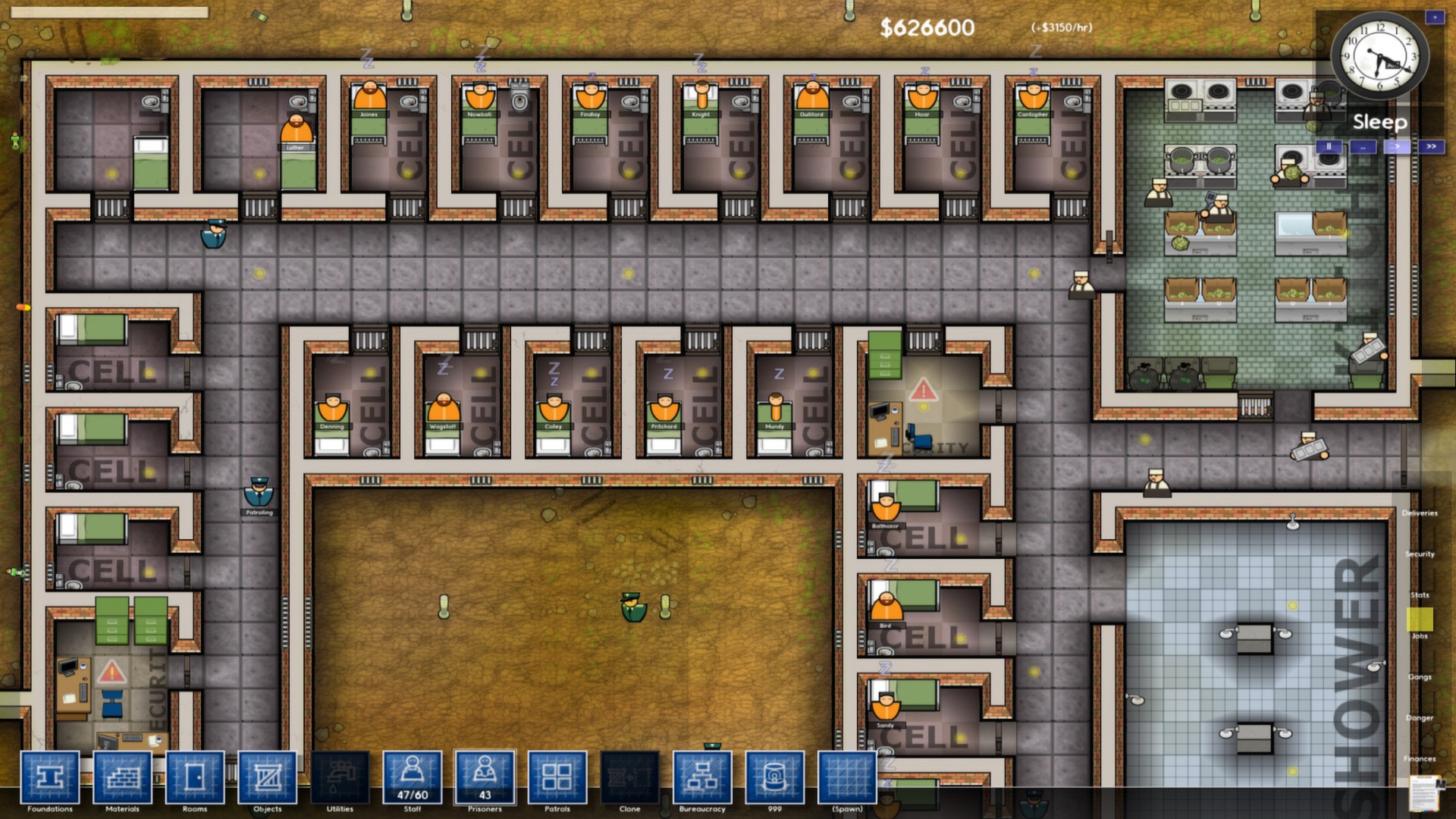
Even in today’s vast gaming marketplace, full of indies with bright ideas and consumers with the power to crowdfund them, there are still certain types of games that don’t seem to get enough love. One of those is the builder-simulation genre. Back in the day, before Peter Molyneux lost his marbles, there were a bunch of amazing sims which have all but faded from existence now. But while classic Theme and Tycoon games might be effectively dead – and other classics like Dwarf Fortress have been relegated to obscurity – there are still some talented developers out there who not only keep the genre alive, but might just have made one of the all time great simulation games.
Introversion Software have had a rocky history over the years. They found success with Uplink, Darwinia & DEFCON, but still struggled to stay afloat. One of the founders, Thomas Arundel, admitted that even after great reviews and decent sales, they had to limp back onto government welfare and were forced to sell almost everything except their laptops.
Everything changed though, when Steam launched its Early Access feature. The much-maligned service has seen its fair share of never-to-be-finished games and is now mostly associated with many of the worst business practices that plague today’s videogame market. But Introversion’s Prison Architect was one of the first to the party and is still one of the few games to do Early Access right.
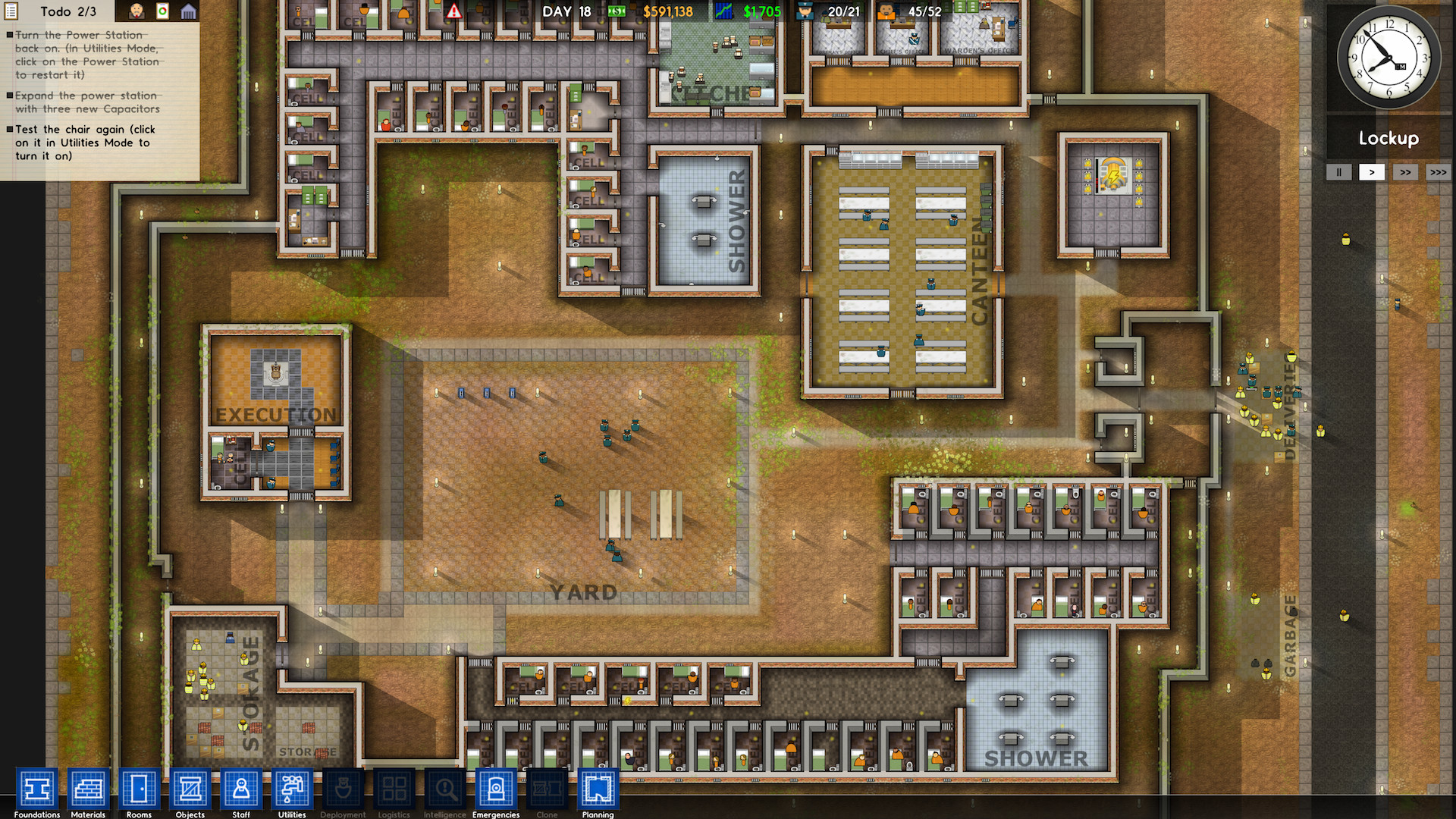
The Steam feature allowed Prison Architect to grow over the last three years, with a new public alpha build coming out every single month, delivering new features and collecting community feedback. Not only did this allow for a financially stable development period, but all the early playtesting meant that features could be tweaked and layered to perfection. Put simply, this game couldn’t have existed any other way.
The result – officially released as version 1.0 – is a deep, complex, intelligent, charming and nearly perfect simulation game. A prison might not seem like an obvious thing to base compelling a building and management game on, but Introversion blow away any negative pre-conceptions by delivering a sim experience just as rich as any other.
While it might not seem like it at first thought, a prison is a goldmine of possibilities; some creative, some logical, some deeply philosophical. Needless to say, trying to design a prison that runs efficiently, while keeping tabs on hundreds of violent, thieving, drug-addicted inmates is a tremendously addictive and fascinating experience.

There are so many different possibilities in this game, that coming into it as a newbie will be a tall order. Thankfully there is a “campaign” mode that shows new players the ropes through a series of story-driven tutorials. It’s a great way to not just do a tutorial, but to set the tone and give players a hint to what awaits them in the main Sandbox mode.
In the sandbox mode, you start with an empty plot of land and must design a prison on a limited budget. You sketch out blueprints, build foundations, fill the rooms with objects then populate it with prisoners and staff. You hire workmen to construct your plans, guards to keep order, janitors to clean up and doctors keep everyone alive. There’s a lot more people than that too, including executive staff like your security chief and accountant, who unlock research options which give you more advanced ways of doing things. One such option is arming your guards with Tasers to keep the peace.
There’s also a lot of management that needs to be taken care of, like setting a schedule for when your prisoners are supposed to eat, sleep or get recreational time. You can set a policy for punishments too, so for instance, if a prisoner is caught doing something naughty they will be locked up in a solitary cell for a set period of time.

Those examples barely scratch the surface of what’s available here. With so much depth and complexity to the building, management and simulation, it’s amazing that it all works so well. Almost all the systems are intuitive, with a near-perfect balance between autonomy and micromanagement. There are a few fiddly or repetitive tasks, like linking your dozens of CCTV cameras to viewing monitors, but they won’t bother most players.
Planning, building and running a prison definitely falls in the category of easy to learn, hard to master. The mechanics are simple and effortless to pick up, but squeezing every last drop of efficiency out of what you’ve created is incredibly rewardingly difficult. No matter what you create though, there’s a crazy amount of variety to be found, even in something as basic as the placement of the different kinds of rooms you can build.
As well as cells, prisoners have to eat so there’s kitchens and canteens, reformation is important so there’s classrooms and carpentry workshops, plus the prison needs an armoury to keep the guards’ guns locked up even tighter than the inmates. These are just a handful of the things that can be built, so how the prison is designed will hugely impact its efficiency and security.
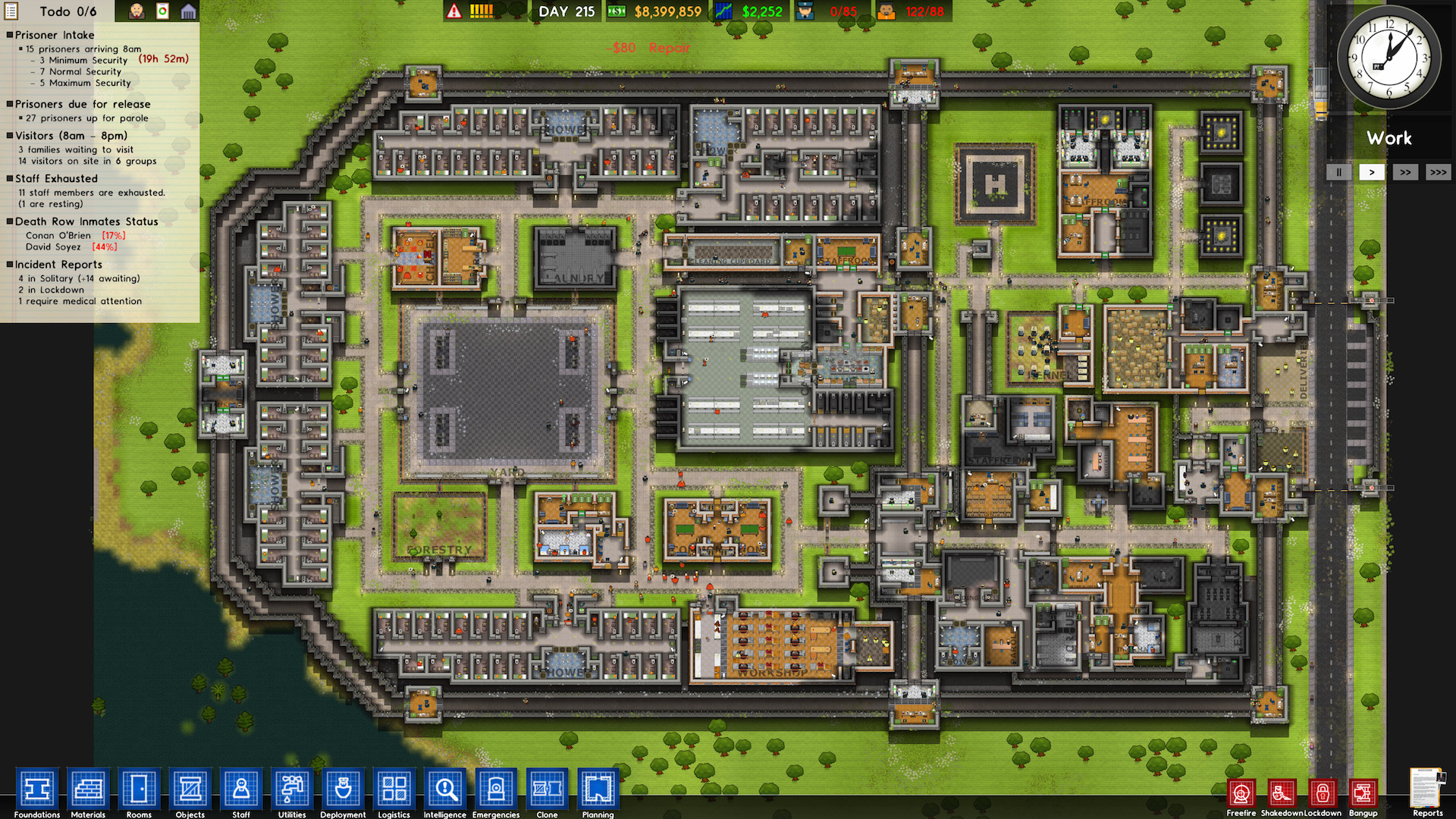
Prisoners themselves arrive as either minimum, normal, or maximum security. Each and every single one of them has their own personality and abilities. So for example, there might be a minimum security prisoner called Tim who got banged up for tax evasion. He’d be unlikely to cause much trouble, but a maximum security guy called “Skull Crusher” Jackson who is doing life for multiple murders, just might be a danger. He’d be very likely to have at least one skill, like being extra strong or able to disarm guards with sweet kung-fu moves, making him more of a handful when things kick off.
Some prisoners might also be ex-cops or other people that criminals tend not to like. These, along with prisoners that snitch to you, are often targets for a good stabbing. Other prisoners might be legendary criminals too, which have a lot of high level skills and are extremely volatile. These kinds of guys complicate things further, so making sure they have the right amount of freedom and security is paramount. A psychopath that’s allowed the opportunity to steal a drill from the workshop can really cause a mess.

All prisoners need to be kept happy, or at least suppressed, or else things quickly become dangerous. Riots can break out, as can fires, which run the risk of triggering a game over condition for having too many deaths on your hands. Being convicted of negligence can actually land you in your own prison, which is where version 1.0’s new Escape Mode comes in, but that will be addressed later.
It’s simply not possible to cover every single element of the gameplay in the sandbox mode, needless to say it’s massive, complex and highly rewarding. The game’s strength is in its ability to let you iterate on your designs as your understanding of all the different elements evolves. Once your prison starts to make a good profit, not only can you buy more land to expand the prison, but you can also sell the prison and start from scratch with all that cash from the beginning.
This way, every time you want to build a new prison, you’ll be able to take everything you learnt from the last one and design a better one right off the bat. Even now, after years of alpha builds, the game is so adaptable that players are still finding new ways to build unique prisons. It’s an astonishing achievement.

In a highly advanced player’s prison, the sheer amount of things happening is mind-boggling. All the prisoners and all the staff operate on individual AI routines, all with specific needs, skills and things to do at every moment. Everything that happens, big or small, is a naturally occurring event. This can lead to some incredibly cool or even funny things happening. It’s these that elevate the game above a mere construction or management game.
For instance, a minimum security prisoner might choose to work in the prison shop to earn a meagre wage, so he can pay a gang protection money. While the gang keeps the guards away, he’s steals spoons from the kitchen and a saw from the workshop. During the night, he digs under the toilet into the cell next door and gets its occupant to help him out. Together, they dig a tunnel under the cell block and break inside a large pipe that leads them out to freedom through five hundred yards of foulness.
Another time, a maximum security prisoner might get sick of being locked in his cell. He begins to smash up his possessions. The guards open the door to suppress him, but he has a shiv and stabs them both. He takes their keys and lets out the other prisoners. They beat up an armed guard and take his shotgun, then storm the armoury to get more. The prison is sent into lockdown, but the hundreds of other prisoners begin to riot. Fires break out and the warden is killed by the hoard. The national guard are called in and a massive gun battle ensues. The firemen can’t get through the chaos, so the flames spread throughout the entire prison. By the time it’s all over, the death toll is so high, you’ll be behind bars yourself.

Sometimes it’s more simple than that though. Like a prisoner running through the hallways naked, or a searching a prisoner who’s supposedly visiting the infirmary for drug withdrawal therapy, only to discover he’s actually stealing drugs from there. Also, reading a prisoner’s background information and seeing that their crime is being “One of a couple of guys, who were up to no good, causing trouble in the neighbourhood. Got in a fight with a fellow b-ball player, forcing him to move to Bel Air.”
There are thousands of those kinds of bios in the game. So too are there thousands of unique names. Almost all of them were submitted by the community, so you’ll very rarely see the same prisoner twice and there’s always something funny to read.
It’s not all for laughs though, despite the cutesy art style perhaps implying otherwise. While there’s no overt drama or attempts to be gritty, the subject matter is of course quite dark. This is especially true when it comes to executing prisoners. Thankfully, it’s handled maturely and sensibly, as well as being completely optional if that’s not the kind of prison you want to make.

Despite all the great things about the game though, there are a few problems. Even though the game is finally considered ready for general release, there are still a few bugs that can be quite annoying. The UI is also quite poor. Not only is it a bit ugly in places, it’s also quite awkward to use. Finding items is still far too difficult and navigating the various logistical pages feels unrefined. The pop-ups that appear when clicking on objects still feel like placeholder menus too.
The visual presentation overall just seems extremely unpolished. The art style is great for the most part, but specific objects and textures are poorly or confusingly drawn. The unfinished feeling extends to the game’s menus, which are garish to look at and fiddly to use. There’s no main menu to greet you, instead the game jumps you straight into a new sandbox. It’s confusing and unwelcoming.
Even navigating the pause menu is awful. It seems jumbled and out of order, with features like the new Escape mode buried under Extras. There’s also a distinct lack of options for graphics, sound and other common things that most games offer. Even basic things like resolution options are absent, aside from a windowed mode. Keyboard shortcuts would’ve been a great addition too, but none of that stuff is here.

The other major bad thing about the game is the Escape mode. Even though hiding it in the Extras menu is silly, it really is a bonus feature rather than a full mode. Basically, this mode flips the game on its head, putting the player in control of an individual prisoner. Absolutely any prison can be played in, offering a ton of potential variety.
Unfortunately the mode is completely shallow. It’s simply not fun to play for more than a few minutes. Despite the huge amount of cool stuff in the game, almost nothing can be interacted with, except weapons. Your prisoner doesn’t get hungry or tired or anything else, so there’s no reason to use any of the facilities around the prison. You can’t interact with anyone else either, aside from fighting or recruiting them to be an ally.
Fighting itself is an awful, clunky mess. It’s devoid of precision and feedback, let alone variety or skill. You can upgrade a very limited set of special skills, like being able to take more damage, but you’ll be maxed out within minutes of fighting a few guys. All you do in the mode is steal a tool and dig a tunnel, or try to run out the front gates when somebody opens them. It’s devoid of anything interesting, but there is a lot of potential for future updates, so keep an eye on this over the coming months.

Summary
Prison Architect is an incredible achievement. It is unquestionably among the greatest simulation games of all time and a breath of fresh air for an under-appreciated genre. It marries simple mechanics with a deep and varied experience that has near-limitless possibilities.
What flaws it does have are fixable with further updates, although it is a shame that can be said after three years of public testing. The core sandbox gameplay is almost as good as anyone could have imagined though, so nit-picking just seems harsh.
The mix of logical and creative challenge is exceptional, as is the game’s ability to flow seamlessly from the relaxing mundanity when planning, to the thrilling excitement when those plans go wrong. Introversion have created something so good, that they’ve inadvertently convicted themselves to a life sentence of making Architect games. After everything they’ve been through, that’s probably the justice they deserve.

Dean was a regular ICXM contributor between 2015–2017, publishing 39 articles across game reviews, Windows and PC, and Xbox news. Their work focused on hands-on reviews, platform commentary, and breaking-news reporting during the Xbox One X launch year and Microsoft’s wider Play Anywhere / UWP gaming initiative. They post on X as @SpookyWomble.