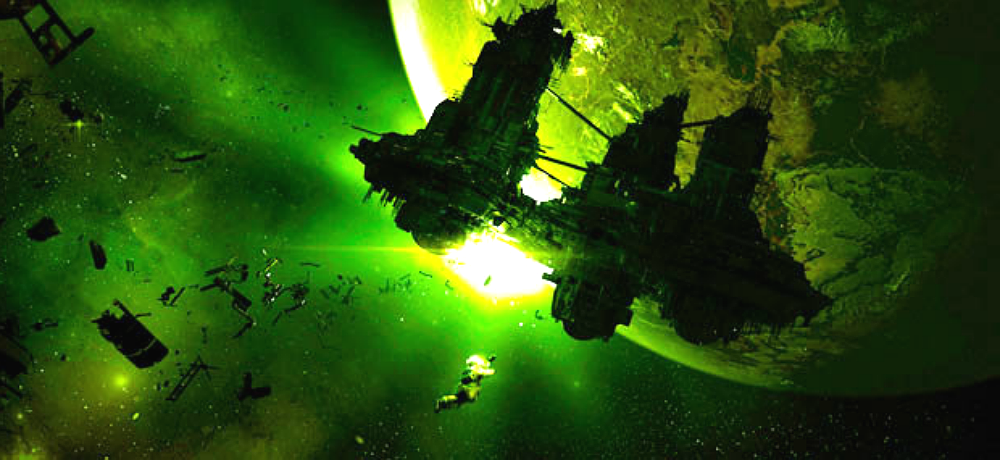
In Space, No One Can Hear You Scream ….but it turns out that in my block of flats, everyone can.
I watched ‘Alien’ when I was far too young, and as a result it left a strong impression on me (or as the therapist called it, ‘emotional scarring’). When it came time to boot up Creative Assembly and SEGA’s Alien:Isolation I had high expectations. I was worried I was going to be faced with an insipid FPS that did nothing but abuse a well-loved licence.
Within 20 minutes of leaving the title screen, it had already become apparent that those fears were totally misplaced. Alien: Isolation has learned a LOT from SEGA’s last xenomorphic outing.
This is a game that pays serious homage to its roots. From the moment you (as Amanda Ripley, daughter of Ellen) awake from cryosleep on the ‘Torrens’ the look and feel of this game is perfect. What makes the game stand out is that the fact that it accurately recreates the ‘retro-futuristic’ style of the film. In short, you get to walk around and experience what 1979 thought 2137 would look like.
The Creative Assembly have a clear love for the source material and have scoured footage, models and artwork from 20th Century Fox to make sure they could provide an authentic experience. Apparently this aesthetic was achieved by digitally recreating equipment and machinery that could only be made using technology that was available in 1979. You are wandering round space ships and stations, but interacting with monochrome computer screens and cassette tape players. It looks brill and completely accurate to the original sets.

The story follows on directly from the original movie, and sees you as Amanda Ripley visiting Sevastopol station on the payroll of Weyland-Yutani to find out what happened to the Nostromo and your mother. Upon arrival you discover that the once bustling spaceport has been all but abandoned. The only population left seem to be pockets of paranoid human looters, crazed ‘Working Joe’ robots (being controlled by a sinister APOLLO A.I.), and one particularly unwelcome guest.
Upon your arrival everything goes (rather unsurprisingly) wrong, and what starts as a routine visit quickly becomes a desperate scramble for survival.
The truth is I desperately want to take you through the story. I want to explain all the twists and turns, the revelations and the changes of focus, but in good conscience I can’t. You see, the writing in this game is great. The story is a testament to Ridley Scott’s masterpiece, and unfolds with the same combination of measured tension and sudden frantic urgency. I don’t want to go into too much detail, because I want you to have the chance to come to the story with as little forewarning as I did. Just trust me when I say that if you like the film, you are going to enjoy this plot.

You have the run of the station for most of the game, although your tasks usually dictate the area in which you operate at any given time. Just like its film forbear, this is a survival horror game through and through. Whether you are in an area being patrolled by robots, scavenged by armed and paranoid humans or stalked by something much more sinister – stealth is the key. Combat is always an option, but is very much a last resort.
You will spend your time sneaking through dark corridors and air ducts, fashioning noisemakers, flashbangs, portable EMP and Molotov Cocktails, to distract and disorient rather than kill. You will have weapons (with limited ammo) at your disposal, like stun batons and pistols. However, you quickly learn that open combat can attract much bigger problems than it solves.
You aren’t some power-armour-wearing , self-healing space marine here. You are an incredibly fragile human being with no remarkable combat or survival skills. On ‘hard’ difficulty and with full Kinect options turned on (head tracking and noise monitoring) you will spend a large amount of time under tables and in lockers, holding your breath and sitting perfectly still -and hoping to god that those black legs and long tail keep moving and don’t stop in front of you.
You see, when you are moving around the levels in ‘normal’ circumstances, the robots and humans are busy undertaking their own tasks. They are an ever-present threat, but survival is a matter of cautiously making your way around them and sticking to the shadows as you make your way to your objective.
Once your motion tracker picks up that tell-tale fast moving blip, however, the entire dynamic changes. Your focus shifts from slow, methodical planning and movement to heart-pounding, frantic desperation and urgency. On the highest difficulties, to get a clear view of the titular villain is to face certain death. Instead you move from one piece of cover to the next, crawling on all fours and using gadgets to buy yourself a precious extra few seconds to reach a door or air duct.

This is genuinely the most tense experience I’ve ever had in gaming. A few people have drawn parallels to the survival Horror game ‘Outlast’ – but that comparison is akin to comparing ‘Battlefield’ to ‘Doom’. The concept of an unkillable enemy stalking you, and the need to hide rather than fight is similar, but that’s where the comparison ends. You see, Outlast (while brilliant) is heavily scripted. The majority of the scares and chases are programmed to happen at certain times, at certain places and in certain ways.
Alien: Isolation is horror gaming for the new generation of console. You don’t feel like you are trying to avoid programmed AI subroutines. Instead you feel like you are being stalked and hunted by a fast and deadly predator… Because you are.
This monster learns your behaviours. You can’t use the same tactics twice to evade her and expect to live the second time. At the highest difficulty this hunter will actively seek you out, listening for the slightest noise, watching for movement or shadows (of course if you chicken out and set it to easy it becomes akin to trying to avoid a Roomba).
This game is genuinely horrifying, because you legitimately feel like you are barely surviving from one minute to the next, and the slightest mistake will receive the ultimate punishment. There are a lot of subtle factors that contribute to this effect, and it was only on examining these that I forgave what I initially noted as my biggest problem with the game: the save game feature.

You see, you can’t just save the game by dropping to the pause screen. Instead you have to go old-school and find the save points (phone kiosks) scattered throughout the station. For the first half of the game I hated this system. I hated how far apart they were. I hated the fact that one mistake saw me repeating a whole objective. In fact I had earmarked this as the main criticism to put forward in this review. But around half way through the game the importance of this system really hit me.
If you could save at any time, the tension would be broken. Just as with Skyrim or Fallout, any engagement would be preceded with the creation of a new save file. It has become the gaming equivalent of keeping your fingers in the last three pages of your ‘Choose Your Own Adventure’ books (or ‘Fighting Fantasy’, if that was your bag). Alien: Isolation doesn’t offer you such an easy get-out.
You want to save the game, you have to work for it. You have to make it to the next kiosk, and it may be far from the locker you’re hiding in. You have to survive.
…and that sums up my experience with Alien: Isolation. This is a game that perfectly simulates the basic human need to survive. It also perfectly fits in with, and continues, the lore created by the Alien and Aliens movies.
If you are looking for another Space-based FPS, walk away now. If the above is what you want, get this now.
^HooksaN (@HooksaN)
Official launch trailer:

David Hook (HooksaN) contributed 26 articles to ICXM between 2014–2015, covering game reviews, and Xbox news with a focus on hands-on impressions and verified-source reporting. Their bylines on the site span the Xbox One’s first full year of post-launch coverage, including the early days of Backwards Compatibility and Windows 10 gaming. They post on X as @Hooksan.