Paladins: Champions of the Realm has been labeled as a “blatant rip-off” of Blizzard’s Overwatch by a large portion of the latter game’s fan base ever since its initial PC beta release in November 2015, just a month after the closed beta for Overwatch began. After hours of playing on PC, and now on Xbox One, it’s very clear that Paladins’ colorful cast of fantasy characters and even its basic gameplay loop is heavily inspired by Blizzard’s recent success.
Overwatch’s gigantic appeal to a wide audience is due to the game being extremely easy for everyone to pick up and play. Overwatch is simple, it’s depth is in the characters and how each individual hero plays. Paladins not only has this, with each of its characters playing completely different from one another but also introduces several different mechanics which boosts Paladins’ gameplay depth above that of its primary competitor.
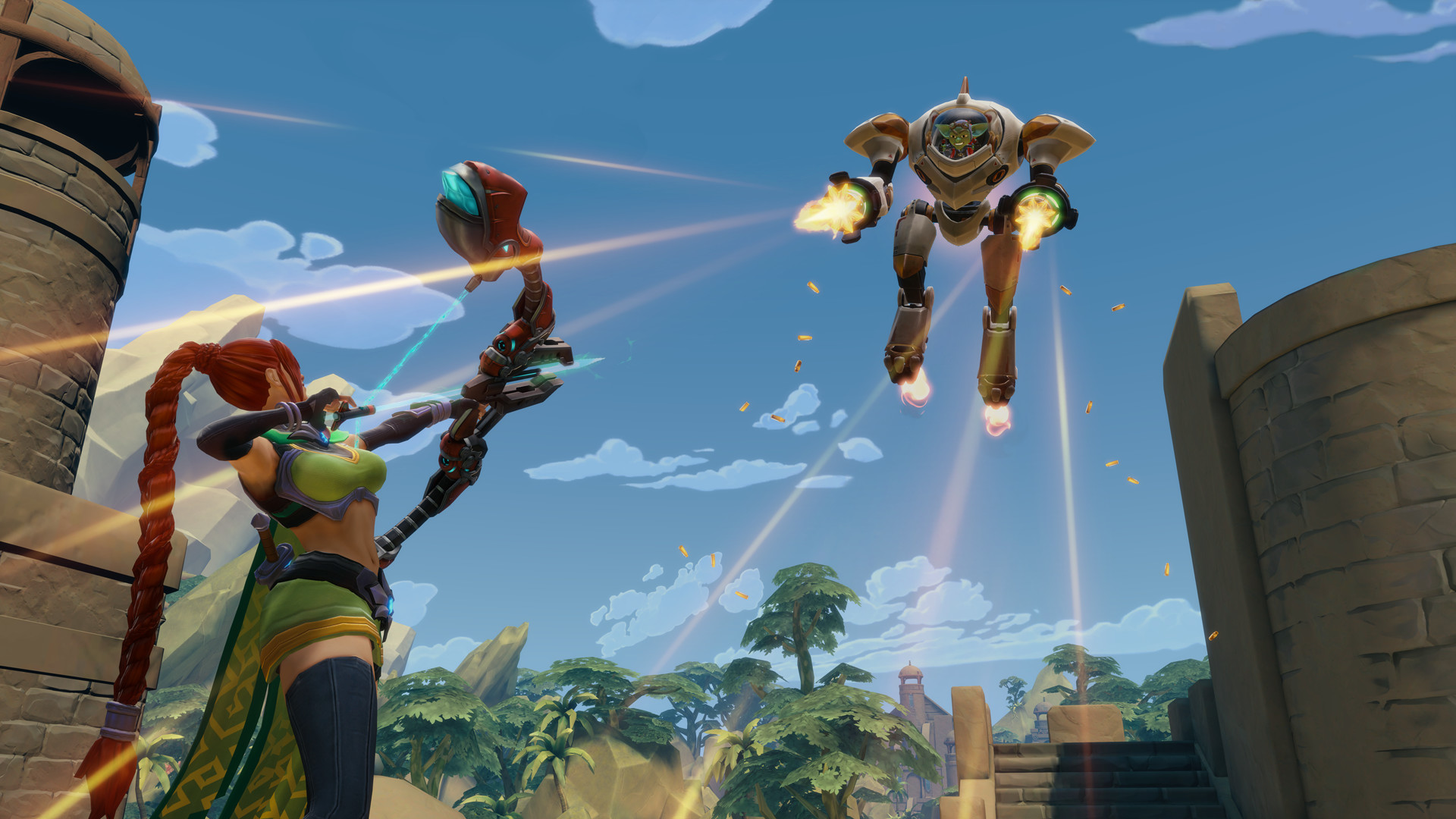
In Overwatch you have a payload, the same is true in Paladins. However, while initially in Overwatch the payload game type consisted of just three rounds maximum—the first to two points for either stopping the payload or getting it to the target destination—this time the game mode stretches further with the winning team having to get four points to win the match. To start with, there is no “attacking” or “defending” team, both teams are attempting to capture the same place on the map which when done successfully earns the team one out of the four points they need to win.
The team who captures the point in each round then becomes the attacking team with their objective switching to delivering the cart full of explosives across the map to the opposition’s base. Achieving this goal rewards you with another point—then bringing your total up to two points for round one—and failure results in the enemy team getting a point towards them.
This four-point system allows the tide of battle to constantly switch and turn from game-to-game. Whilst there will be some teams who just straight up decimate you and win both objectives in the first two rounds, team-work and tactic changes allows any team to massively move the game in their favor. The heightened score amount isn’t the only aspect of Paladins’ gameplay that achieves this with a MOBA-esque attribute upgrade system also being integrated into the experience so that you can craft buffs to your character mid-game.
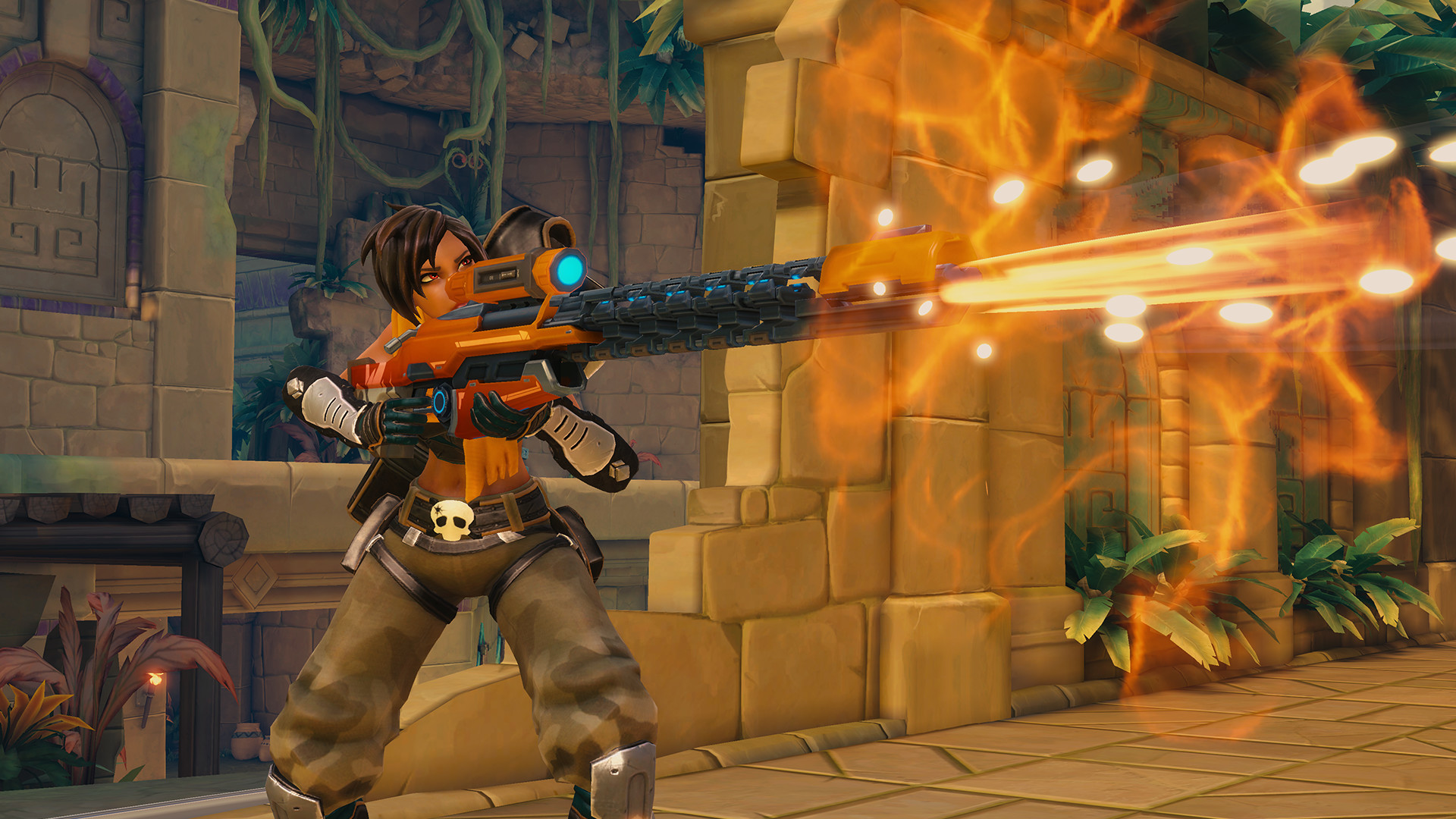
Over the course of playing you’ll gain credits, a currency that allows you to purchase buffs to your character which will stay for the remainder of the match. These buffs range from doing more damage to shields, increased movement speed, decreasing the cooldown time of your moves and even life steal attributes. I’m a big fan of this system, as someone who isn’t a fan of the MOBA-style of gameplay, this is pretty much my introduction to this form of upgrade system in a multiplayer experience—to my memory anyways—and the introduction of this system in Paladins feels fresh as well as extremely useful within matches.
The customization in Paladins is very, very needed, however, due to the game striking one massive gameplay difference with its primary competitor. Whereas Overwatch is a game about switching your character to react to different situations, Paladins does not have that luxury. At the start of a game, you choose your character, you change individual parts of their appearance—instead of equipping just a single outfit—and you’re stuck with that choice for the remainder of that match. Thankfully, Paladins customization allows you to craft a character you may not like all that much into your own fighter, making them play to your strengths.
Mid-match upgrades from credits aren’t the only customizable upgrades. Loadout cards can be earned through loot chests or purchasing with gold earned in-game. Each loadout that you create consists of five cards which need to add up to a total of twelve points to boost various attributes of that specific character. Switching loadouts mid-game is not allowed and you’ll be stuck with your choice until the game ends. The biggest problem with this system comes in the form of experimentation. Testing your loadout and its differences can only be done in full game. This means that to test how effective your damage or cooldown times you have to load into a full match with a full loadout in order to test how much more efficient your choices are.
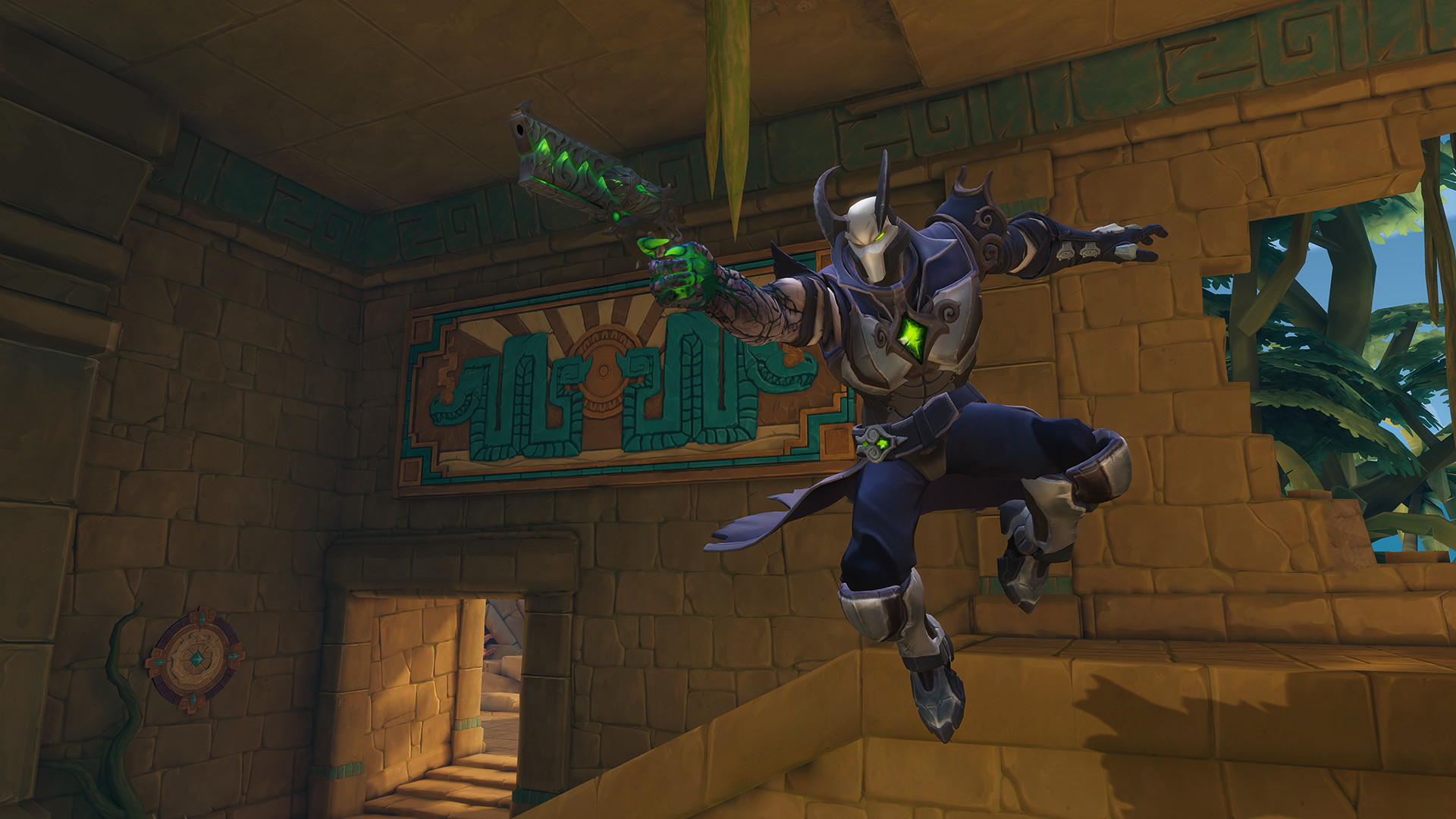
The glaring issue in Paladins—which every Overwatch fan is talking about—undoubtedly comes in the form of its characters and their similarities to Overwatch. After hours playing both games, Paladins characters definitely take very heavy cues from Blizzard’s work. The majority of characters feel like mix-matched versions of what Blizzard offers. For example, character Drogoz has the jet pack of Overwatch’s Farah as well as her rocket launcher but also has the empty-the-chamber move of McRee, the floating blob of Symmetra and his ultimate is basically Reinhardt’s charge that is now an instakill ability. The Fernando character has Reinhardt’s shield, Viktor is essentially Solider 76, Ruckus is Paladins’ form of D.Va and Barik is undoubtedly Torbjörn.
Paladins is a free-to-play title compared to Overwatch’s premium price set-up. Paladins approach to gaining income is the same as many other games such as Smite. Players can either buy a membership to receive boosts in earned gold, XP, and items earned in loot chests or purchase crystals to open loot boxes and purchase special cosmetic items. These chests not only contain the previously mentioned cards and cosmetic items but also include gold which you’ll need to unlock certain characters. Again, like Smite, Paladins free-to-play business model switches out the free characters you can play as every now and again meaning that you’ll have to use your earned gold to permanently have that character unlocked on your account.
Paladins’ biggest disappointment is its extremely basic map design. Whereas Overwatch is full of small details and hidden hiding places and advantages for certain characters, encouraging you to switch out when your character when you reach certain choke points, Paladins map design seems more basic in order to compensate for the lack of being able to switch characters mid-game. Maps are competent and include just enough ways for you to flank the enemy team although the generic nature and repetition of each maps layout lowers the amount of enjoyable playtime that you can have with such a limited map pool.
Overall, Paladins is a pretty decent attempt at creating a free-to-play Overwatch alternative. The characters are fun albeit nowhere near as expressive as their competitors and the gameplay is still solid with a lot of customization. If you can’t afford Overwatch or just want an alternative, Paladins is a good choice even in its beta stage.

Lewis is a games journalist, freelance gaming and consumer-tech journalist. They contributed 344 articles to ICXM between 2015–2017, focused on opinion pieces, game reviews, Windows and PC, and Xbox news: has since served as Editor-in-Chief at StealthOptional and Gaming Editor at MSPoweruser, with bylines at Gfinity Esports and FRVR.