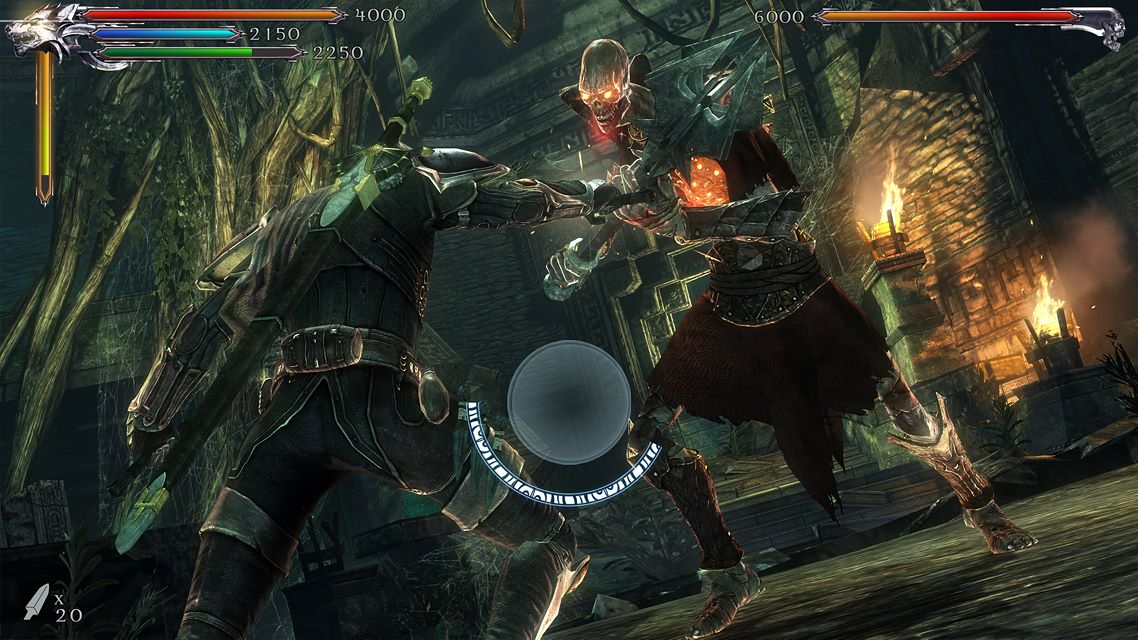
The best part about an engaging novel is becoming engulfed in the world you’re reading. At some point, you lose awareness you’re reading words on a page, and you can see the world you’re in. You can visualize your hero clashing swords with the villain, or feel the emotional struggle of your protagonist, or many other narrative stories. It’s for this reason that we love reading excellently crafted stories, to pull us in, and become part of the world. Joe Dever’s Lone Wolf attempts to do this with a stylish blend of novel reading and turn-based combat, and while it’s an overall enjoyable experience, it’s not as engaging as it could be.
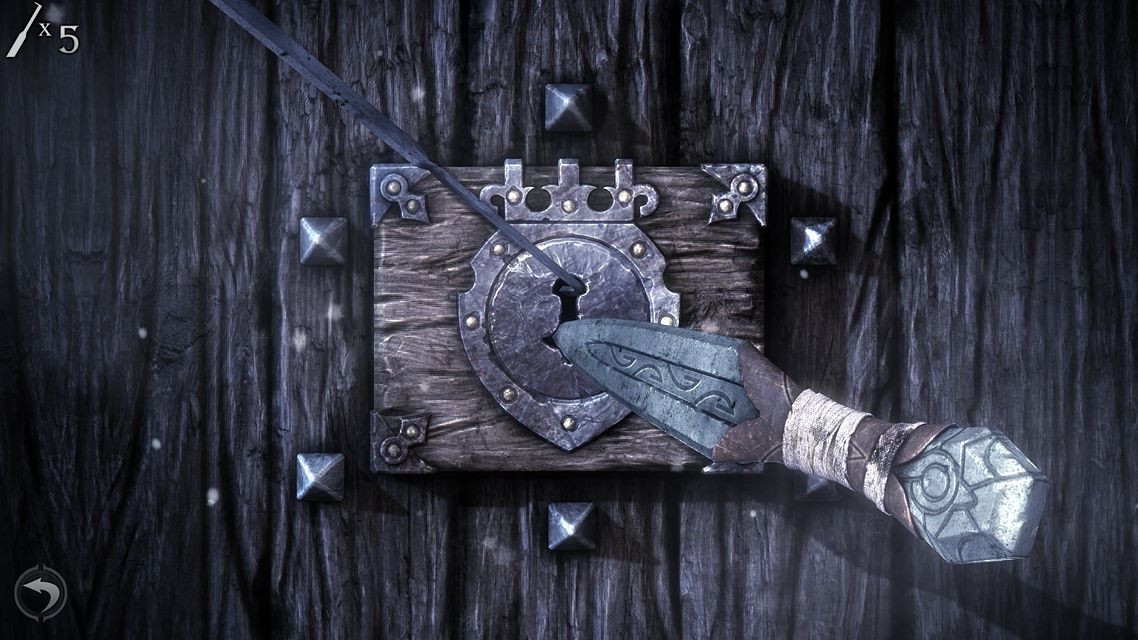
Joe Dever’s Lone Wolf started its life as an episodic mobile game, which was then ported as a whole unit to PC, Xbox One, and PS4. The game functions in two major parts: one half of the game has the player reading through the story of the Lone Wolf, a sole survivor who has slain the Giak king before the game starts. The other half the game is pseudo-turn-based combat against multiple enemies. There are also small sections for lock picking or puzzle solving, which are a nice change of pace. During the reading sections, usually there are parts where the player is given a situation, and depending on the skills the player chose at the beginning, they can choose how to approach a situation. Do you use your stealth to slip in a window and get the stealthy attack on the Giaks? Do you use your massive strength to break the door down? Or do you summon a pack of wolves to go in ahead of you and kill them for you? It adds a nice layer of interactivity into the sections that are usually just reading.
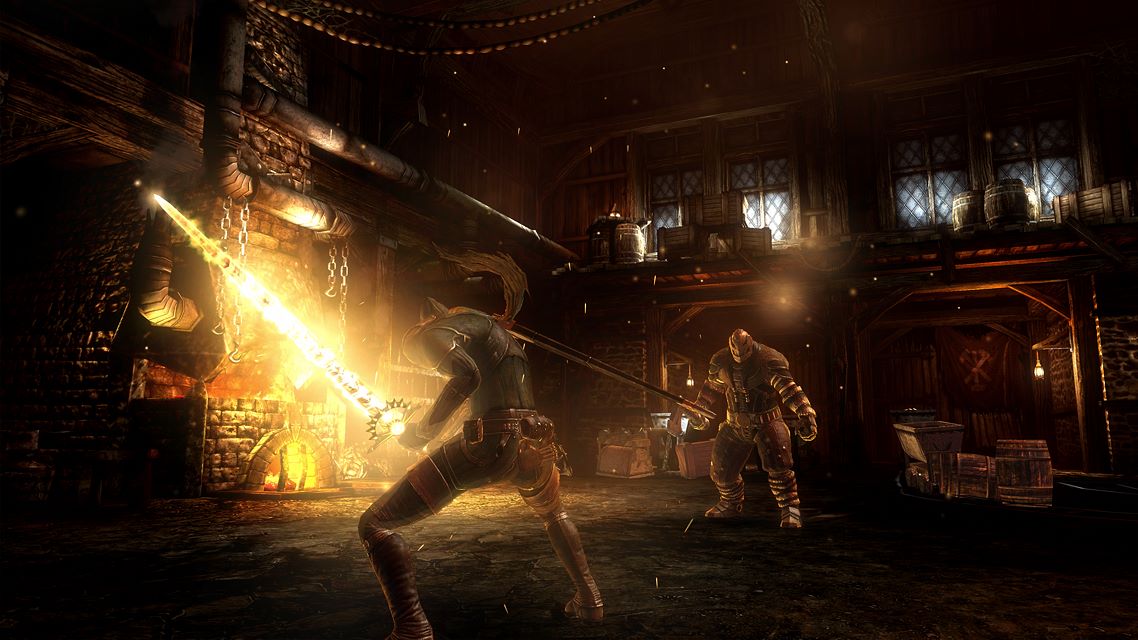
The game starts with a very extensive character creator in text form. Choose the back story, the skill set, the perks, the abilities, and the weapon for the Lone Wolf before the game starts. These choices will affect which combat and story options are available. While it’s definitely fun to add this much depth to the Lone Wolf, it would also be nice to have some physical customization for the character that appears during combat. The Lone Wolf looks fine as is, but if I can customize everything about him, why shouldn’t I change what he looks like?
The combat is where the game shines, as it’s both complex enough to satisfy any turn-based fan, and fast-paced enough to grab the attention of people who don’t usually play turn-based games. In the early game, it’s a bit of an information overload. There aren’t descriptions on what each individual attack does, although a quick tutorial gives you the general gist of things. There’s a lot of trial and error during the first few fights, and while they’re easy enough to facilitate this, there are enough different attacks it can take a while to learn them. There are normal melee attacks, super-powered Kai attacks, throwing projectile attacks, and a set of less-overpowered Kai tools. Once an attack is used, most of them deplete a meter and have a cool down, so rarely will the player do the same attack twice in a single fight. Each attack has a quick time event you have to perform to get better results, though each attack always uses the same QTE, so it’s fairly easy to memorize. Once I got a hang of the combat, it was definitely the best part of the game.
There are a couple of issues with the combat. Because each turn is timed, the player doesn’t have a lot of time to think through various strategies. If the player sits and does nothing, after about five to ten seconds their turn is over, regardless of any actions taken. On the flip side, if the player takes no time at all to select and execute attacks, they can cram in a ton of attacks. Thinking of traditional turn-based games, it seems unbalanced. That being said, it does help get through the battles with Giaks (essentially a goblin/orc generic enemy) pretty quickly. There are some meters that deplete when certain attacks are used, and they try to maintain the balance while the player is spamming moves. Once the meters are depleted, the game allows the player to do ‘sacrifice moves’ which deplete health rather than the meter. Assuming the player has their healing move on hand, or they have a rest location nearby, or a potion ready, a sacrifice move is usually a safe bet. These critiques are fairly minor though, and combat is still very enjoyable. I played through the game on Normal difficulty, if the difficulty was set to Hard I’m guessing the balance would be tilted against the player.
Between the storybook sections and the battle sections, sometimes there’s a small map that appears and allows the player to select which path they want to take. Usually there is only one option available, though sometimes there are multiple paths to take. In the first act of the game, Lone Wolf spends most of his time working through a ransacked village as he finds survivors and assembles parts. He also slays dozens of Giaks and other, tougher enemies. During this process, the player can choose which buildings they’d like to check out first, and sometimes have the option to meditate at the map, restoring their health and meters. I won’t spoil the rest story, but it definitely picks up in the later episodes.
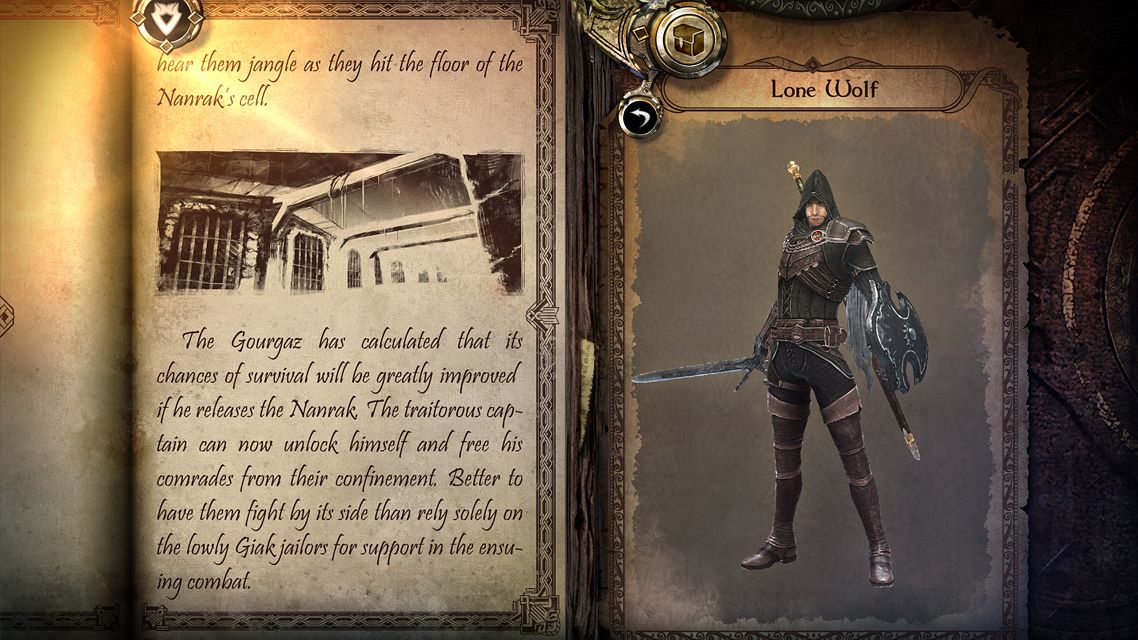
As a storybook game, the story should be just as important as the combat. While it was fine to read, there are a couple of issues with it. The first, and probably least important, is the typeface for the book itself. It’s a nice looking script font, but for reading paragraph after paragraph, it should be a simpler typeface that’s easier to read. The other options don’t make that any better. Another issue is that the story is written in second-person perspective, so rather than “I said” or “he said,” it’s “you said” and that takes some time to get used to. In all of the many novels I’ve read, I haven’t seen one with second-person perspective. I would have greatly preferred a first-person or third-person perspective. The writing quality itself isn’t great either, with a lot of exposition and telling-not-showing. This does get better as the game goes along, but in the early sections, it’s sometimes tough to stay engaged.
Summary
Overall, Lone Wolf is an ambitious and successful attempt to make storybook games more popular in a mainstream setting. Prior to Joe Dever’s Lone Wolf, storybook games were a niche game that only the few and far between even noticed. It’s a nice way to jump into an unusual genre for gaming, and while not perfect, it makes a good starting point. The writing itself isn’t exceptional but it moves the story along, and the combat itself is a highlight that just about anyone could have fun with. While I wouldn’t recommend Lone Wolf to everyone, if you’ve watched the trailers, read the reviews, and think this game is up your alley, it probably is and definitely worth checking out.

Timothy was a community contributor to ICXM, writing 2 articles in 2016 covering game reviews. ICXM operated as an independent Xbox and Windows gaming outlet through the run-up to Xbox One S and Project Scorpio, plus the broader Windows 10 gaming push, drawing from a rotating bench of editorial volunteers.