I once heard a developer state that a gimmick is just a feature that hasn’t caught on yet. It may be hard to remember, but the thumbstick was just a gimmick on the Nintendo 64 controller and the dual thumbsticks were a gimmick on the PlayStation DualShock controller. As time has progressed, it is now impossible to imagine a new console being released, by any manufacturer, which does not support two analogue sticks on its controller.
In the same way, software has also gone through these gimmick-to-feature transitions. Open world, RPG elements, puzzle-platforming, etc. have been the new taglines for every game released in the last few years. Most notably to me is the tower-control gimmick from Assassin’s Creed. Defeating and claiming a tower allowed a larger view of the map and accessibility to new missions. This gimmick was turned into a feature when Ubisoft decided to put it in every Assassin’s Creed game, as well as every other open world game including Far Cry and Watch Dogs.
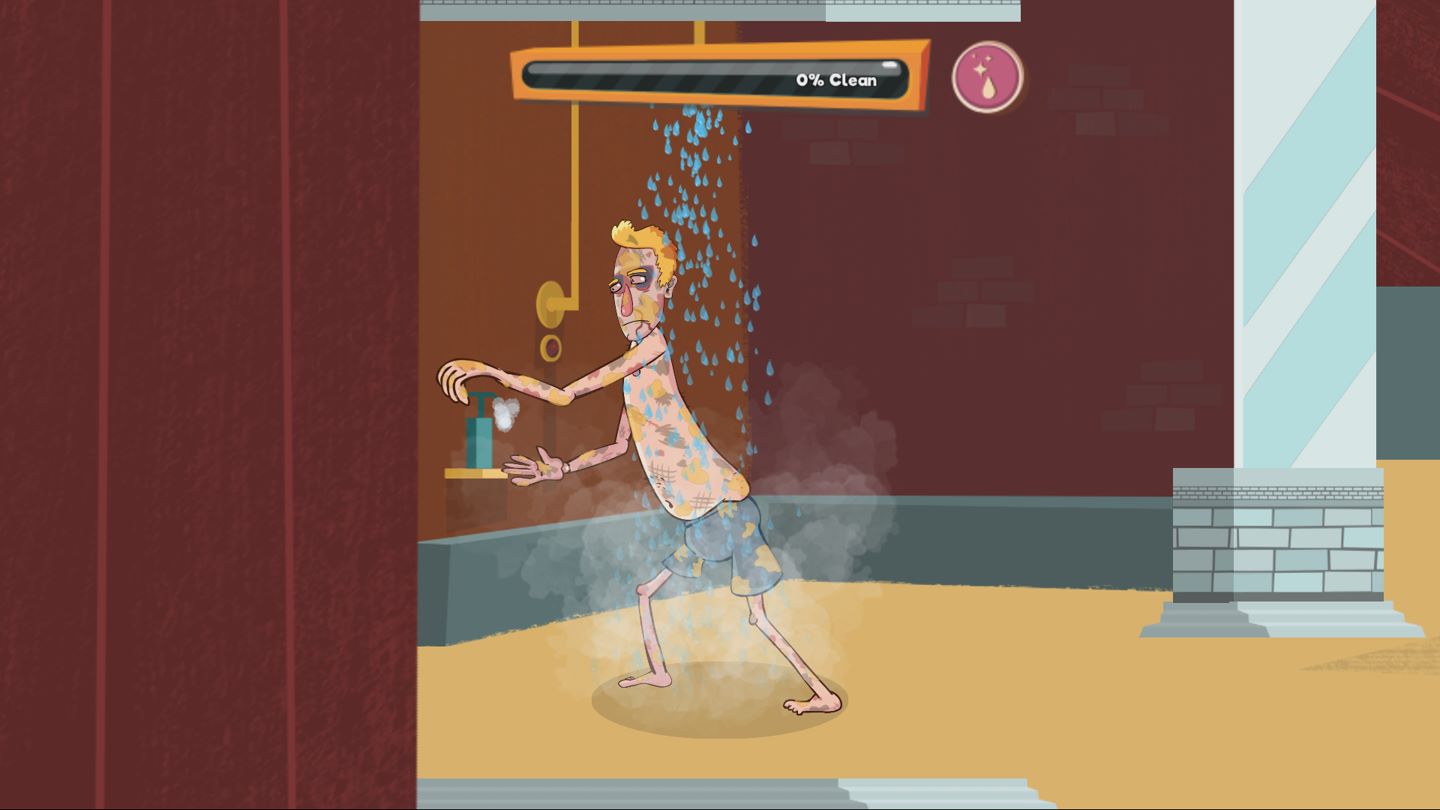
While playing Manual Samuel, I was faced with a gimmick that I hope never becomes a feature in someone else’s game. That is the manually-controlled, body function gimmick.
Now before you run off screaming that ICXM hates Manual Samuel, innovation, or unusual mechanics; just wait for an explanation. Manual Samuel is defined by this specific gimmick, and that is a great thing. I congratulate developer Perfectly ParaNormal for branching into the unknown and trying something truly innovative. I also strongly encourage other developers to take notice and also try the fresh and unusual.
Manual Samuel’s movement gimmick is one of the most unique gameplay mechanics I have used in a long time. The main character, Samuel, has made a deal with Death in order to return to Earth and continue his life. The clause is that Samuel must learn to do everything himself. As the player, I had to control Samuel’s leg movements with the left and right trigger, his inhaling and exhaling with the X and B buttons, blinking with the A button, and ensuring his spine was straight using the D-pad. Luckily, this was not the only gameplay of Manual Samuel.
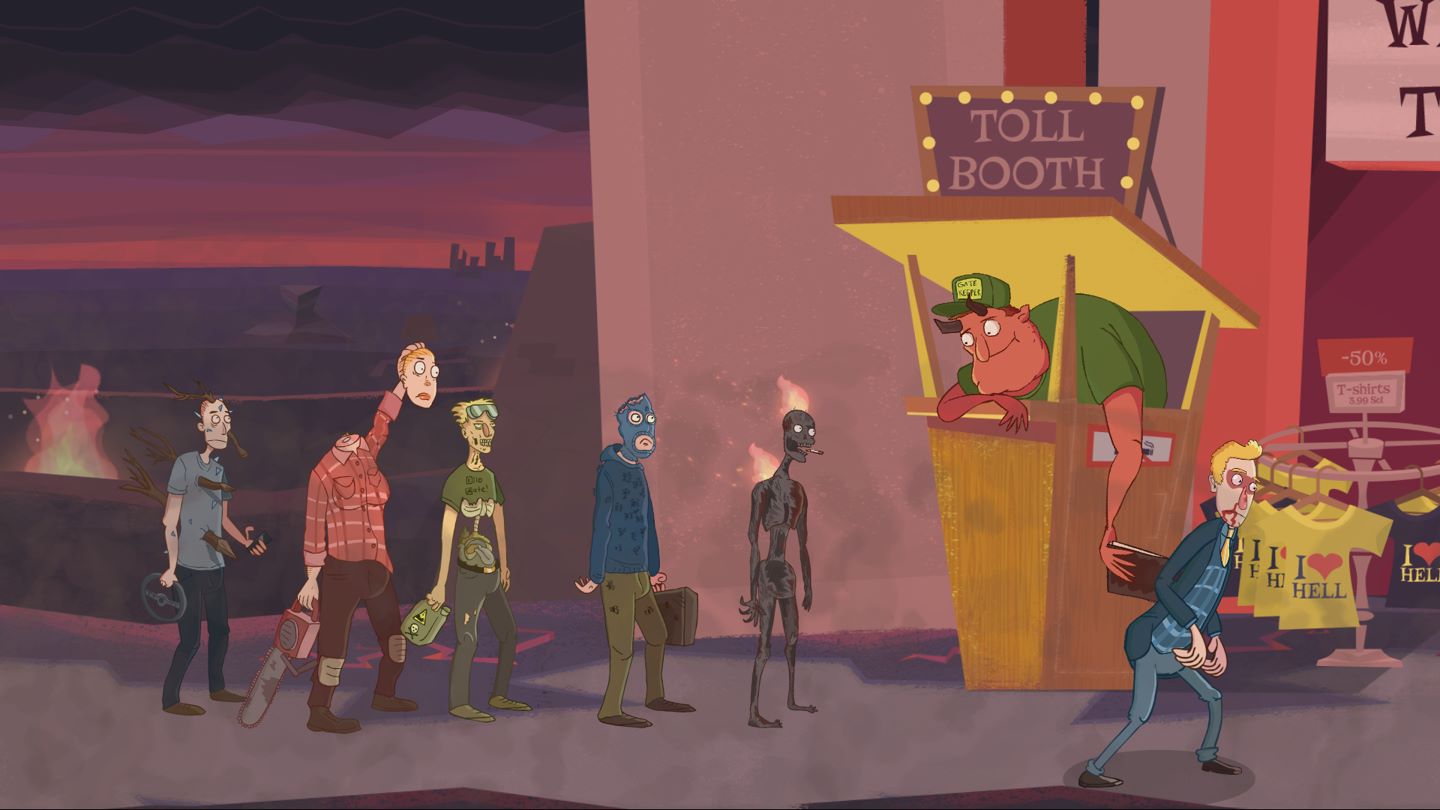
The reason I say I do not want this controlling movement gimmick repeated in other games is that Manual Samuel wove the gimmick into the game rather than forcing it into each scenario. While putting on clothes to go to work, driving a manual transmission vehicle, and fighting waves of robots to save orphans; the developers insured that the gameplay enhanced the game rather than tying it down and forcing it to perform. I feel copycats will miss this fact and we will end up with something closer to I Am Bread, Goat Simulator, or QWOP.
Manual Samuel has some very high points. The characters of Death and War, two of the four Horsemen of the Apocalypse, are hilarious. Samuel is only able to say two or three sentences throughout the whole game, a mini-game that involves quickly selecting the right letters on a moving scale, so his character is more of a catalyst for the story. Death is really the star as he struggles to balance his need to impress Satan, and also land a sweet kickflip. The story is incredibly silly, but so much fun. I laughed out loud multiple times at the comedic dialogue.
Much like Portal, the level design also has great comedic timing. In one section I launched a rocket that was mistimed. This rocket crashed into a building and earned me an achievement and a hashtag, the collectable of the game. The awesome thing is that the building I blew up was created by an action I took in the first chapter of the game. The fact that the game molds to decisions I made is always an awesome addition.
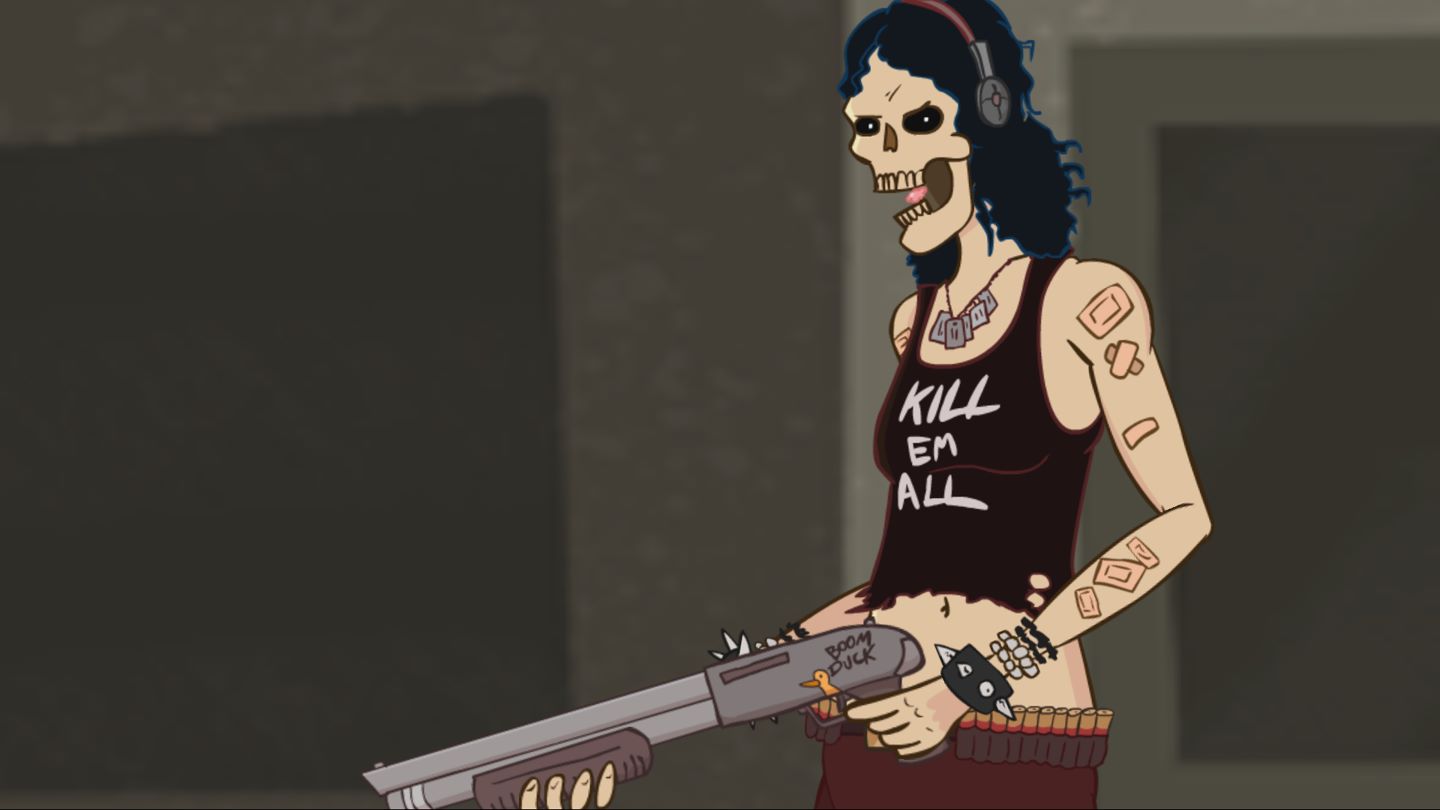
The artwork of Manual Samuel is also brilliant. The 2D, paper cut-out style fits perfectly into the story that the developer is trying to tell. It reminds me of the old show Ugly Americans, and has the same mixture of crass and beauty. Every scene is vibrantly colored and unique from the last. The sound design is also done very well. The background music, dialogue, and sound effects are all perfectly balanced throughout the game.
Not everything is wonderful about Manual Samuel, though. First, the game is incredibly short. With only eight levels, the entire game can be completed in just over two hours. Completing each level unlocks a time attack mode, but there is no real draw to completing those modes. Controlling Samuel is pretty difficult, and only completionists will want to fight with his body to try and complete a level they have already done.
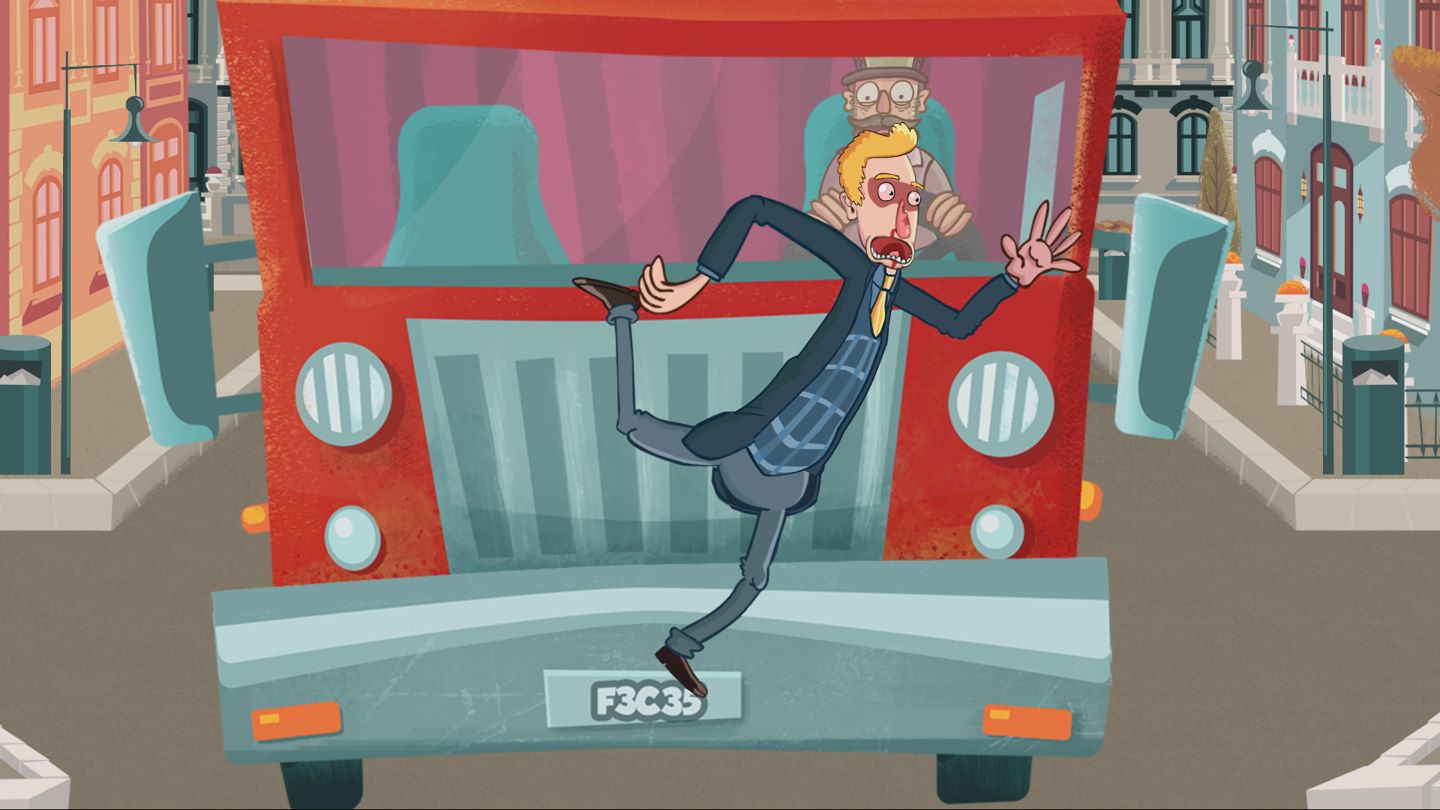
The controls themselves are also a point of frustration. Since I had to alternate clicking the left, the right, and then the left trigger again to make Samuel walk; clicking too fast would make Sam fall down. To make him stand up, I had to click the trigger that corresponded to his leg that was supposed to move forward on this turn, then click it a second time to take the step. This only became frustrating when I was only moving from one point to another without anything else going on.
When robots were attacking, or I was having my final battle against the big boss, it made sense that the controls would offer resistance to increase the difficulty and keep the game from reducing down to a button-mashing mini-game. But when the only point was to walk from one side of the screen to the other and it took an extra 30 seconds per screen because my spine would collapse and then I would fall, I felt the gimmick was waning on me.

Summary
Manual Samuel is a truly unique game that was made as a labor of love. From the credit screen in the beginning to the ending cinematic, there was not a single line of code written that did not bare Perfectly ParaNormal’s signature style of comedy. While the game ran incredibly smoothly and offered a high rate of laughs per minute, I think it could have benefited from slightly tighter controls and few extra levels in length to fully flesh out the story being told. I think Manual Samuel is definitely worth a life shred, just maybe not your final one.

Joshua was a regular ICXM contributor between 2016–2017, publishing 42 articles across game reviews, and Xbox news. Their work focused on hands-on reviews, platform commentary, and breaking-news reporting during the Xbox One X launch year and Microsoft’s wider Play Anywhere / UWP gaming initiative.