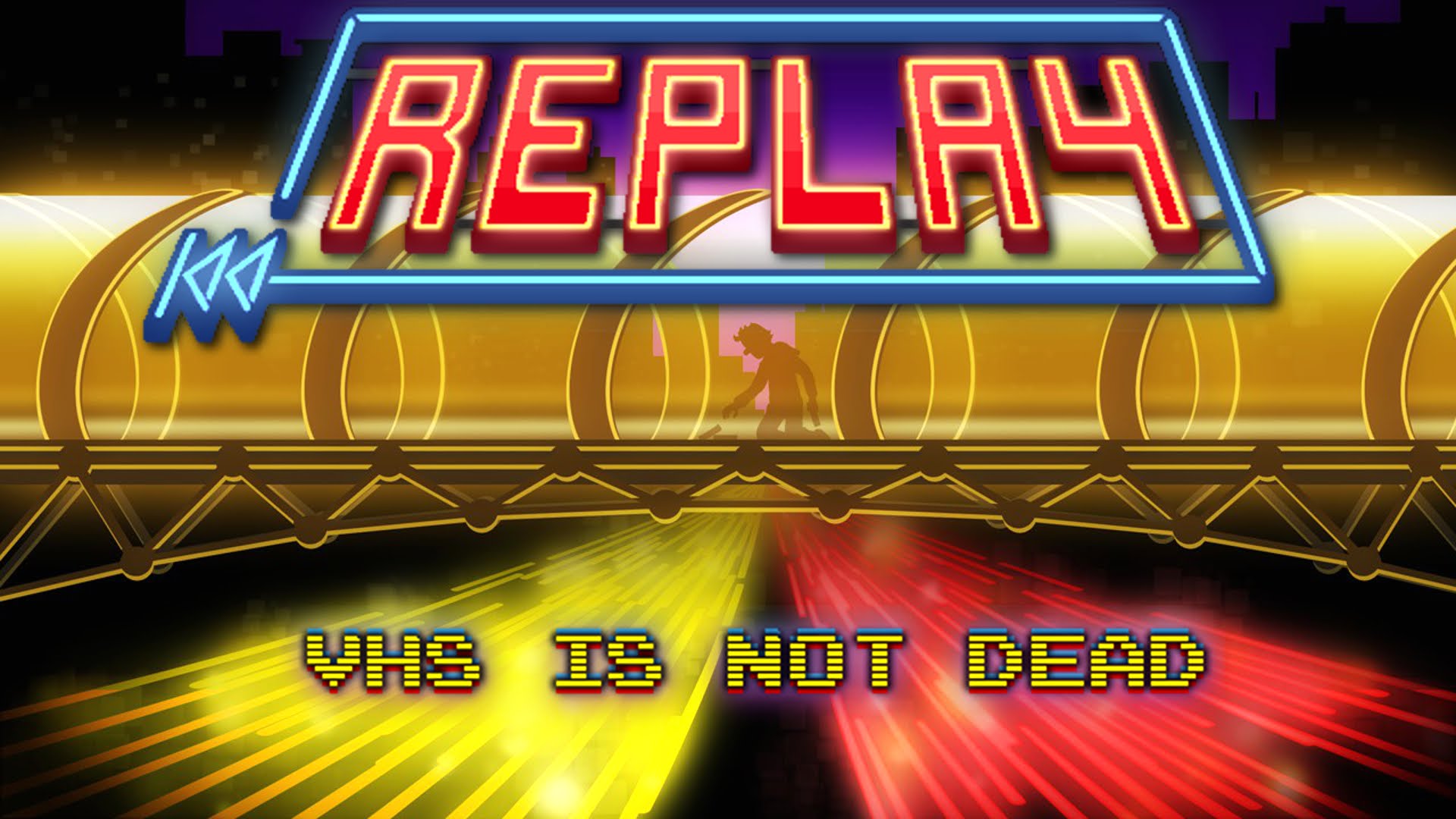
There aren’t many games where rewinding time is used as a superpower. The last game I saw using that was Life Is Strange, but in Replay: VHS is not dead, the rewinding time “superpower” is a bit different. To start, the rewind feature in Replay: VHS is not dead is applied to every character presented in the game, and secondly the rewind feature is the main feature that is used to overcome the various levels of the game.
In Replay: VHS is not dead, you will follow the adventures of Harvey, a mattress delivery guy that one day goes to a VHS rental store and rents a couple of movies to watch once he gets home. The girl that works at the VHS store, which Harvey fancies quite a bit, offers him a new remote control. On his way home, Harvey is mysteriously struck by lightning, and once he gets home he discovers that all the VHS tapes have been affected by the lightning making them all unwatchable. While he’s looking at the TV, Harvey is sucked into the device and finds himself in the middle of one of the movies he rented. The movies he rented will be the main stages for the levels and all of them are parodies of some famous movies like Pirates of the Caribbean (Corsairs of the Canaries), Star Trek (Star Trip VII: Wrath of the Glubons), Friday the 13th (Tuesday the 31th: A Nightmare in Transylvania), and Indiana Jones (Nevada Johnson and the Trident of Neptune).
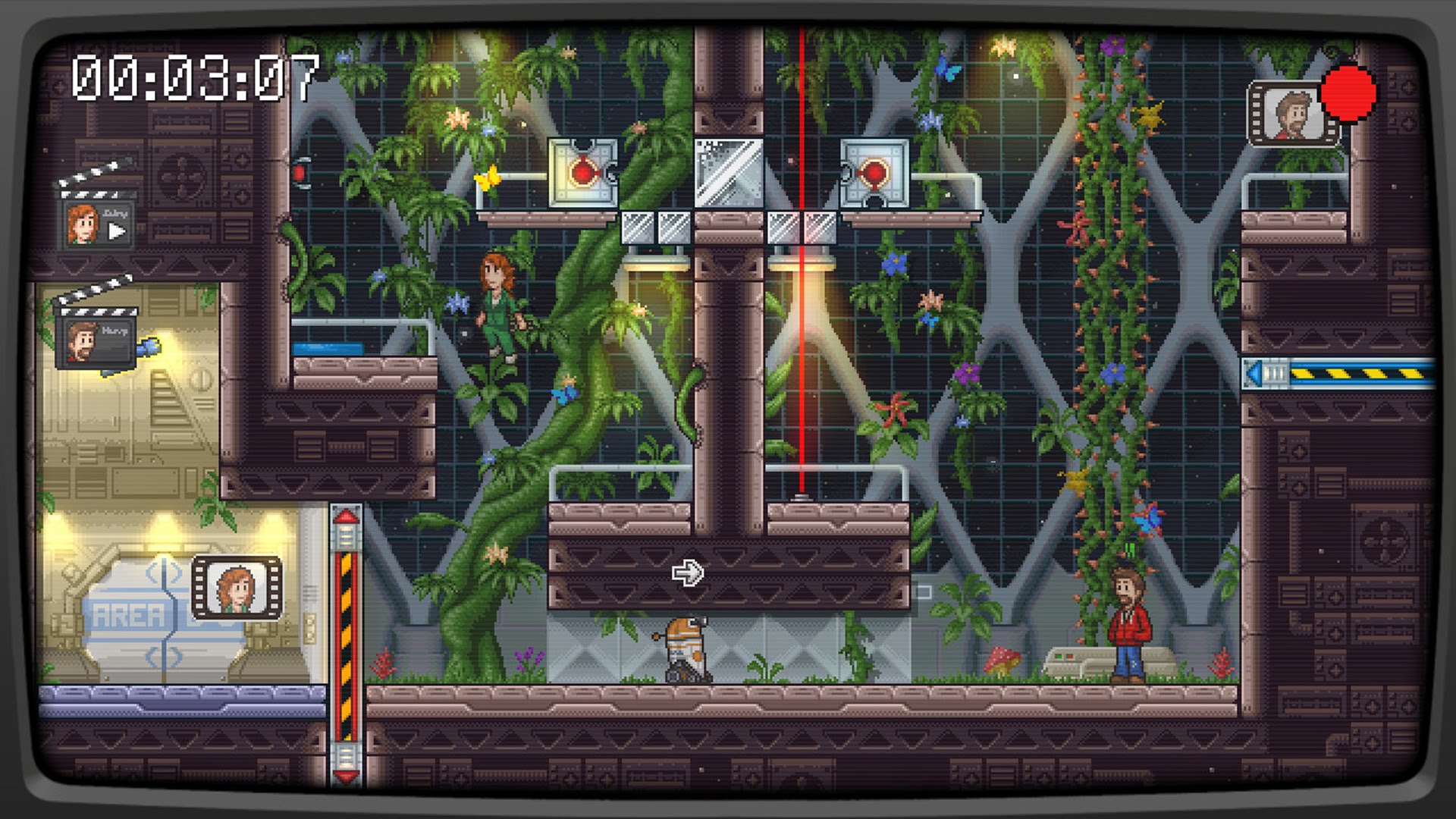
Besides the different themes of each movie, the objectives of each level are always the same, excluding the boss levels. To clear each level you have to move each character/actor of the movie into their respective exit. To do that you select one of the characters and move to interact with whatever is needed, then you rewind back and select the other character and move them while the previous character you controlled replicates the same moves you did while controlling them. It’s basically like Braid. This might seem a bit confusing but let me give you a small example of how this idea works.
On one of the first levels you have Harvey on top and another character on the bottom and both of them have their exits on the top. Harvey is on his back when the level starts, and the other is on top of a platform. You need to select Harvey and push a box until it falls down, then you move Harvey to his exit. After you reach Harvey’s exit you will need to rewind back and select the other character and while you move the new character Harvey will replicate every move you made while controlling him, meaning he will push the box and walk to his exit by himself, while you will move the new character in your control in order to jump to the box that Harvey pushed down and then jump to the platform where the exit is.

As with any puzzle platformer game out there on the market, the difficulty of the game will increase as you progress through the game. You will have more characters to control that might require you to control them more than a dozen times. All of them need to work as a team in order for you to solve the harder puzzles that will cross your path as you try to beat the game.
Replay: VHS is not dead features four different areas, represented by the movies that Harvey rented. Each area/movie is divided into three parts, and in each part, you will find five stages plus a bonus one once you clear all the fifteen main stages. After that you will face a boss battle. Each main stage features a golden key and by collecting them you will unlock the bonus levels. The main stages also have a medal scoring system (bronze, silver and gold) which is related to the time you take to solve each of them. The bonus levels will either unlock outfits for Harvey or biographies from the characters that you encounter through your journey. These bonus levels also feature the medal scoring system. The boss battles use the same mechanics presented in the remaining stages: you will need to move each character on their own in order to create a sequence that will allow you to finally defeat the bosses.
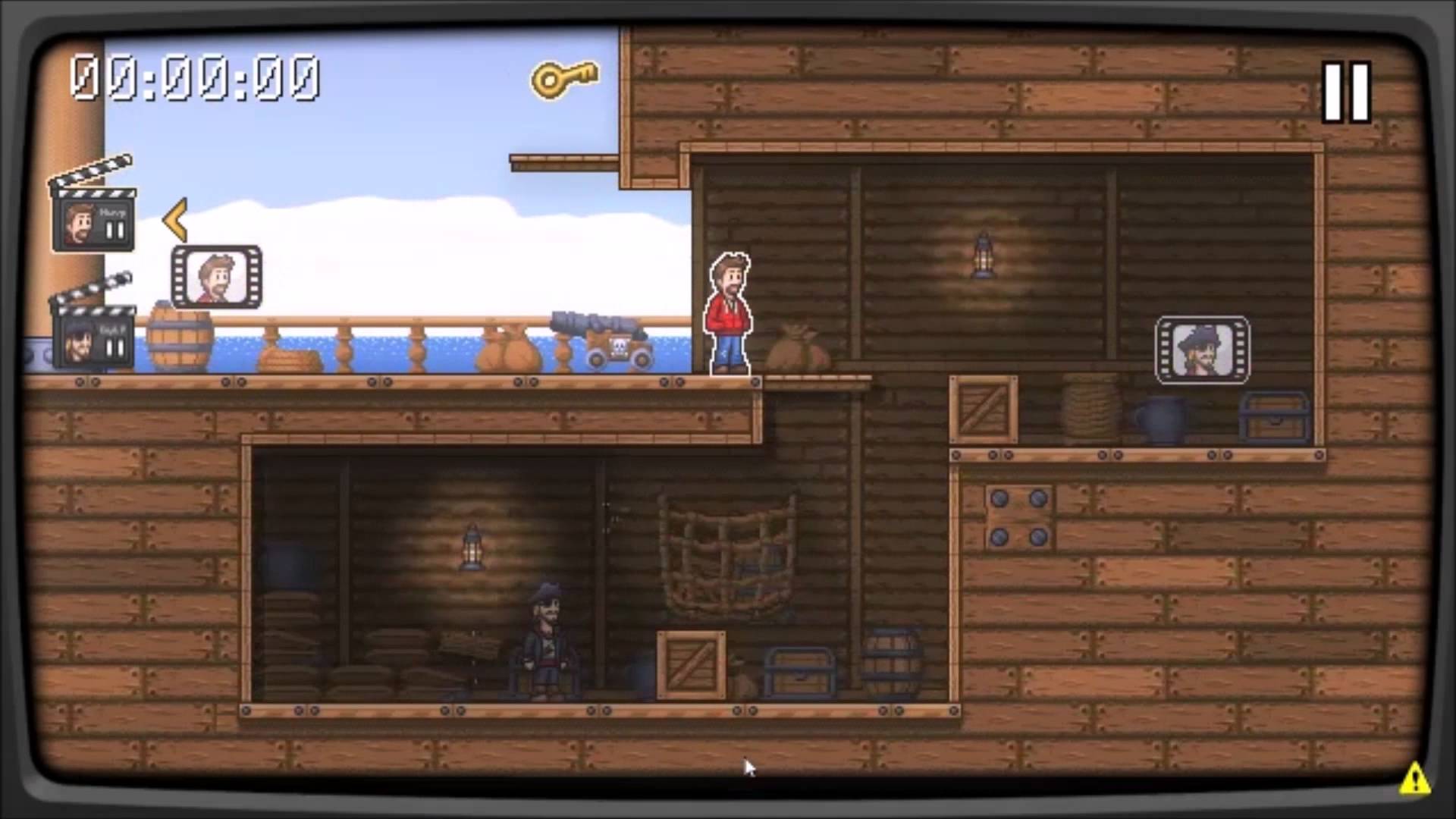
As for the graphics, Replay: VHS is not dead features the usual retro style presented in many indie games out there, which, if we take into consideration the era that is represented in the game, is something that will make you feel a bit nostalgic, if you remember those days that is. As for the sound department, the game doesn’t exactly stand out much; there isn’t any voice acting and all the dialogues appear written on the screen. The sound effects and background music aren’t exactly the best but they fit well into the game. They could’ve been improved to say the least.
Summary
Replay: VHS is not dead is without a doubt one of the most stressful and hardest puzzle games that I’ve played. It requires not only to be able to anticipate some movements but it also requires you to remember each and every movement you do with the characters, which only gets harder and harder as you progress through the game. Replay: VHS is not dead is a game that has niche appeal and not all gamers will get into it. This isn’t due to it being a bad game but due to the thinking and memorization it requires. Hardcore puzzle game lovers that enjoy a good challenge are the target audience here and if you fit that category then you definitely want to play this one.

João is a games journalist, Senior Editor at XDA Developers. They contributed 156 articles to ICXM between 2015–2017, focused on game reviews, Windows and PC, and Xbox news: previously reported for Neowin before joining XDA Developers in 2021, where he leads coverage of Windows, Microsoft, and hardware.