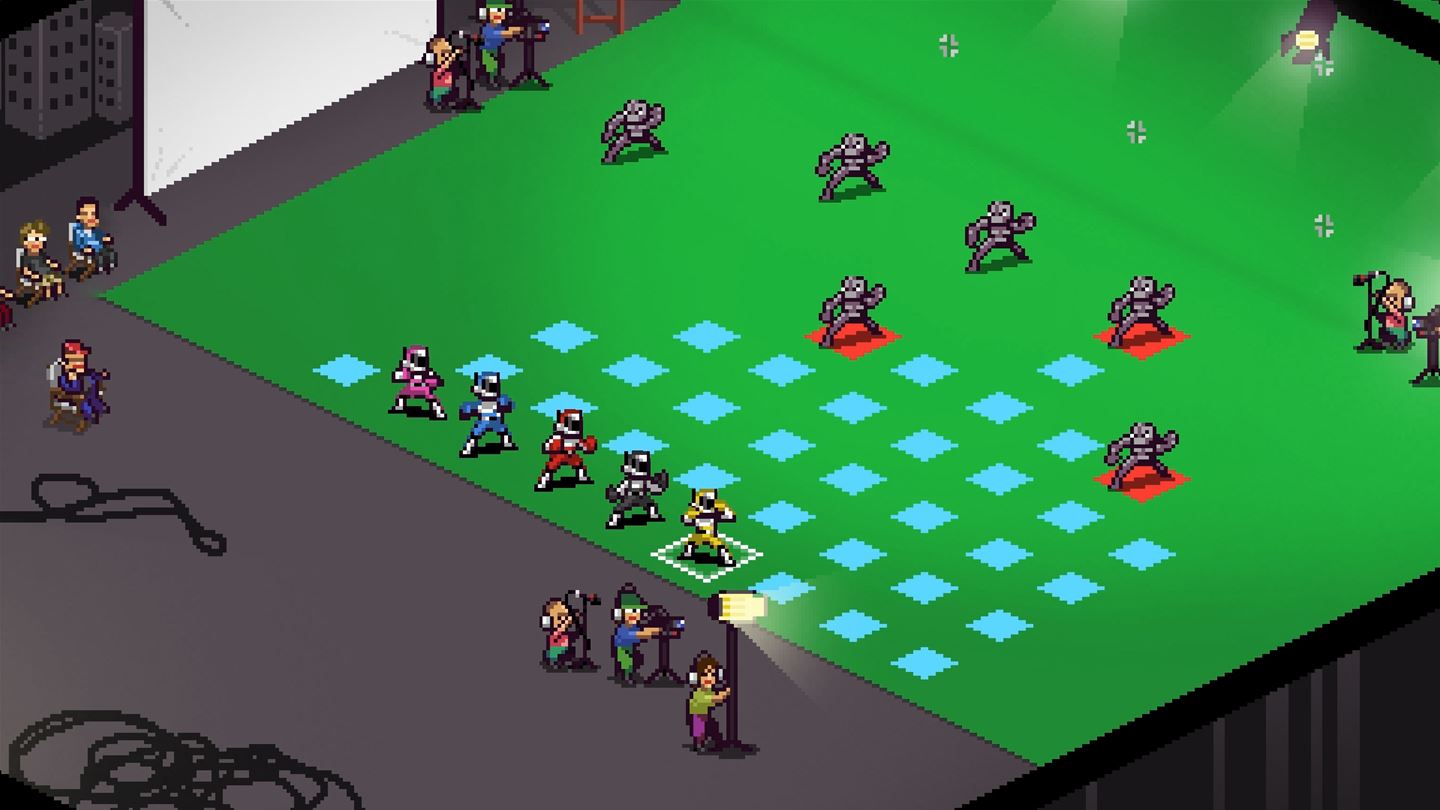
Immediately on the start screen, the Power Rangers influence in Chroma Squad is clear, almost to the point where it could pass as one of those cheap mobile knockoffs, but thankfully it rises above that. Chroma Squad is an isometric tactical role-playing game funded through Kickstarter. Players take control of a group of Japanese-style sentai heroes and manage their own studio as they film a television series.
Tired of an egotistical director, a group of five stuntmen quit their jobs and start their own studio in an uncle’s warehouse, feeling that they can make a better series if they have more control over it. With what little resources they have, the squad begins to film in the hopes of making it big. Managing the studio requires players to buy upgrades for the set, maintain an audience, and actually film through a number of seasons of the show.
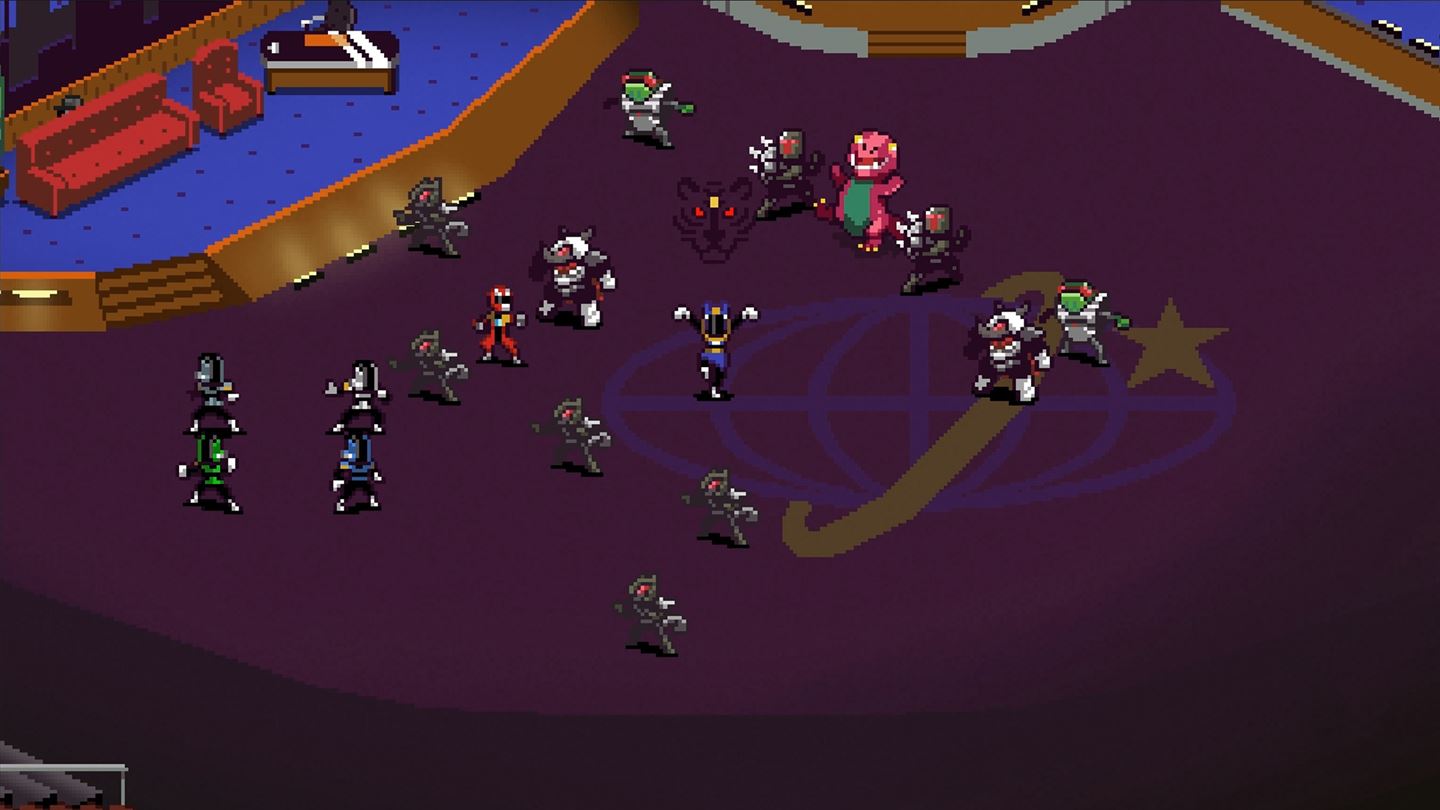
Before filming, you must assign actors to their roles. These include Lead, Assault, Scout, Techie, and Assist. Different actors are more suited for certain roles based on their stats, so you’ll need to decide on which provides the most benefits for a given part. You’ll also need to be aware of how much each actor’s salary is as some are more expensive than others, though I never encountered an issue with money. I appreciated the amount of choice, but I didn’t feel like my decision of actors would make or break my studio.
Once you fill all of the roles, you can start recording. Each season contains a few episodes, all with their own storyline and drawbacks. For instance, while filming a specific episode in season one, a member of the Chroma Squad will leave halfway through filming because of a dentist appointment. In an effort to retain viewers, the team comes up with a new storyline on the spot, and it also requires the player to make their attacks flashier. Episodes may see you facing off against an alien adversary or a villain whose actor decided to wear a barrel that day as a costume.
The dialogue can be witty, but it certainly isn’t memorable. Delivered through text boxes, the game allows you to fast forward through all dialogue while filming. It’s a welcome feature seeing as I didn’t want to be reading pointless filler, however it highlights an inherent problem in that the dialogue just doesn’t matter.
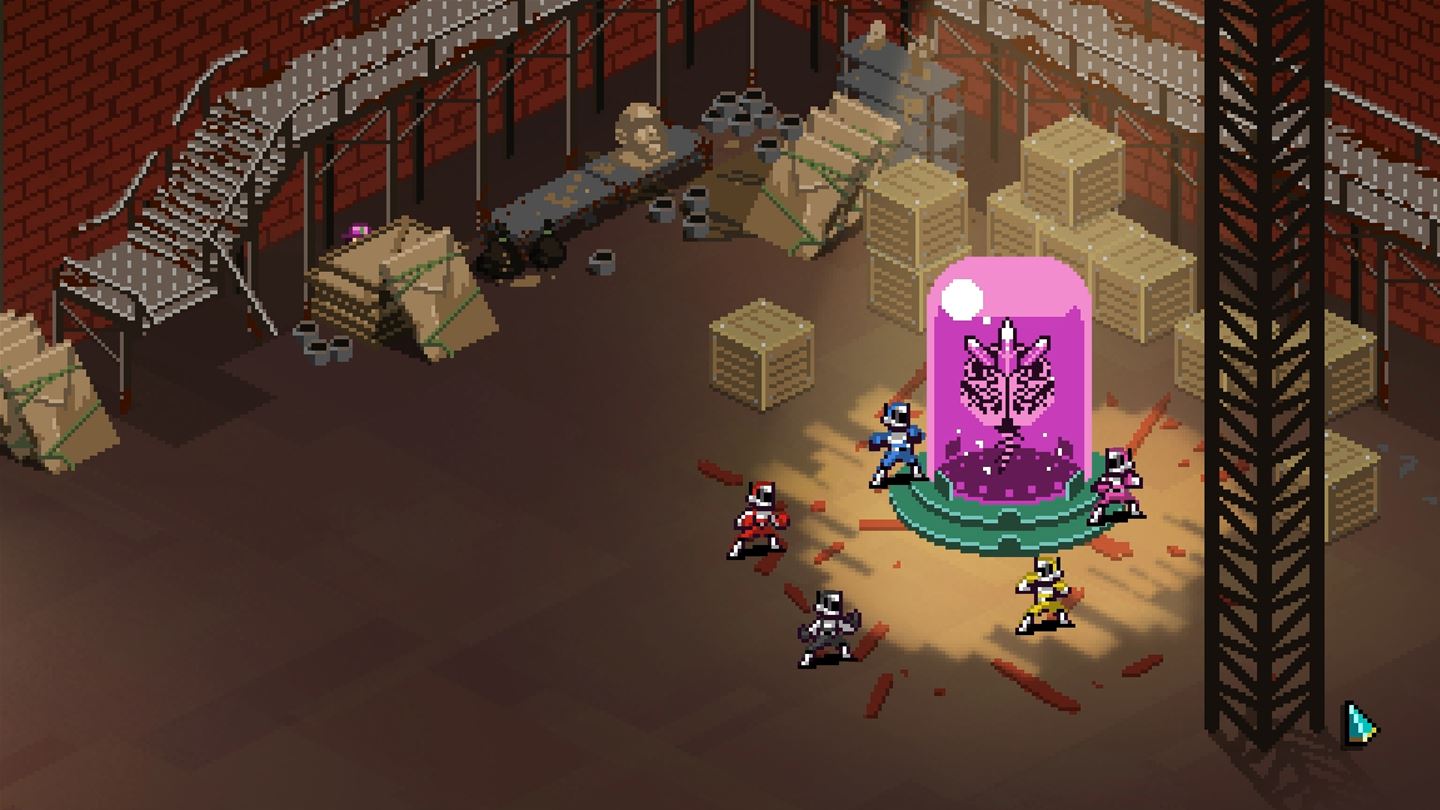
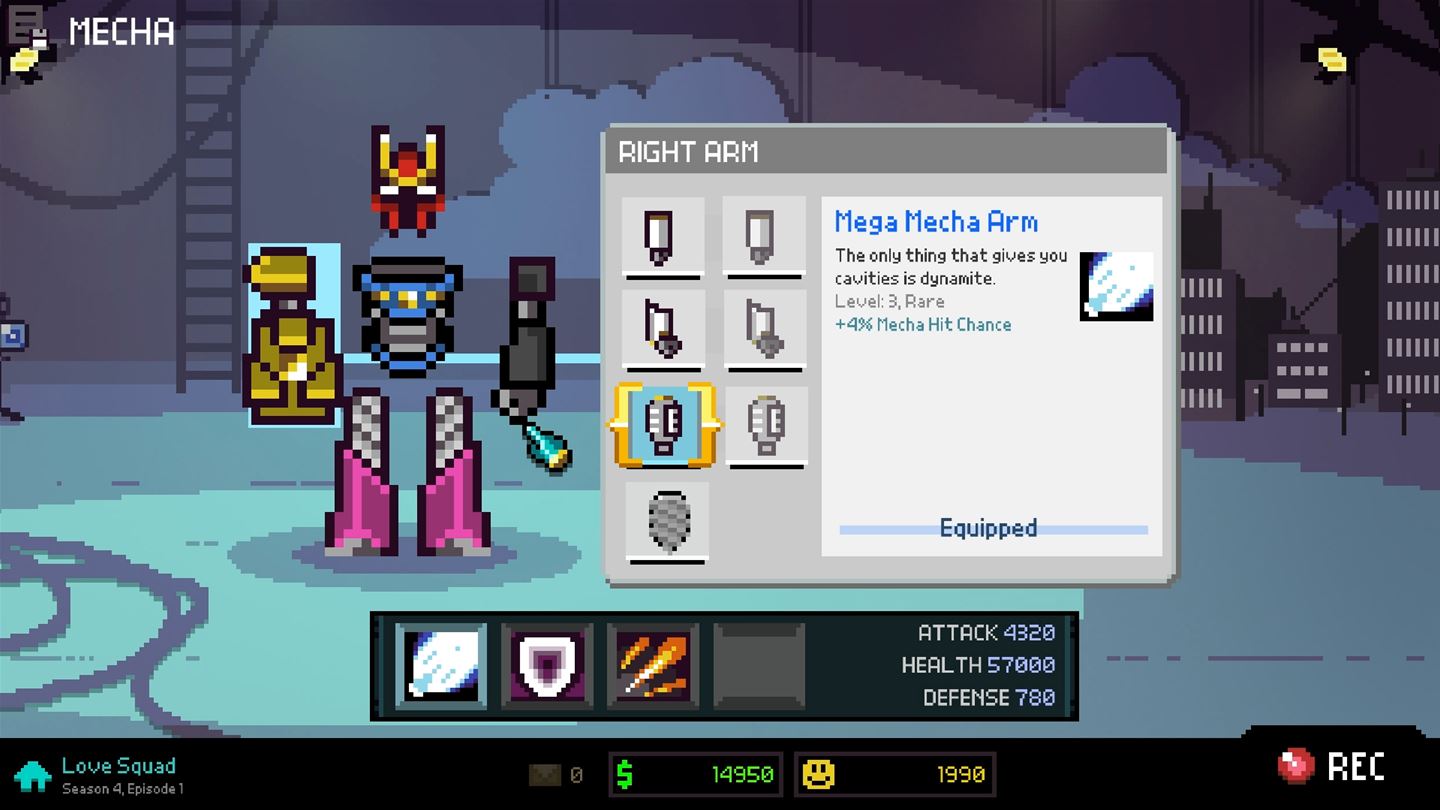
To complete an episode, the squad films action sequences involving fairly weak grunts and a main villain. Chroma Squad’s turn-based combat system is surprisingly fitting as it makes it feel like the actors are carefully planning the action like they would in a real show. A character can only move a set number of spaces but can be aided by another member’s acrobatics. Acrobatics are activated by selecting “Teamwork” and moving a squad member into position to launch another member into the air, allowing them a greater range of movement. Actors come equipped with passive and active skills that help attract a larger audience. At the end of season one, the squad even gains access to a Mecha, the game’s equivalent of a Megazord. Behold Studios set up the foundation of a great game, but the core of it sadly gets repetitive even with its customization and RPG elements.
The more audience members you have, the more money you make, and this is key to managing the studio. Upgrades such as a microphone or SD camera cost you per episode but are worth it in the long run for the audience gained by being more high quality and professional. Eventually the Chroma Squad will be contacted by marketing firms, and this is where you can navigate the wonderful world of promotion. You can opt for a world renowned agency with the price tag to boot, or you can go indie and choose lesser known avenues. Just like how I imagine it would be in real life, you can promote yourself through friends and family, such as a friend with a microblog.
Summary
While I enjoy the Power Rangers inspiration and numerous pop culture nods, Chroma Squad never provides enough incentive for me to continue playing after a while. You’ll end up finishing seasons and upgrading your studio more out of the knowledge that you should than because you want to. The combat which starts off strong wears thin, and I lost motivation to oversee my studio around the middle of season two. For all of its faults, Chroma Squad still manages to capture the charm of the television it emulates. In that regard, the game succeeds at being both a cheesy form of entertainment and a delightful tribute.

Jennifer is a games journalist, former games journalist and PR Manager at Gearbox. They contributed 234 articles to ICXM between 2015–2017, focused on opinion pieces, game reviews, Windows and PC, and Xbox news: went on to write for Windows Central and later managed PR for Gearbox Software.