Starpoint Gemini 2, developed by Little Green Men games, is the latest open world space game to come to the Xbox One, previously being exclusive to PC, and offers up the opportunity for dazzling experiences in the stars. The map is vast, dogfights are intense, and the general atmosphere constantly invokes a sense of awe. However, Starpoint suffers from major visual glitches and a general feeling of flatness, which detract from an otherwise stellar journey.
Starpoint offers two separate game modes: campaign and free-roam. The campaign revolves around Adrian Faulkner, a young man who seeks revenge on those who murdered his father. It is not necessary to have played the original Starpoint’s campaign, but it also isn’t entirely necessary to play through Starpoint Gemini 2’s campaign either. On the one hand, the story is not engaging, with missions almost always consisting of traveling to a destination and then killing pirates before listening to bizarre characters drone on endlessly. On the other hand, the campaign offers context that will assist you in understanding how to operate in this enormous galaxy. I picked up bits of lore, tips, and tricks here and there, which were helpful in the long run. I recommend starting out with the campaign in order to gather these pieces of information. After all, you can always abandon a mission temporarily in favor of exploring, or start a separate free-roam game, which withdraws the orange “main mission” pop-ups entirely, presenting a narrative free, exploration driven sandbox experience.
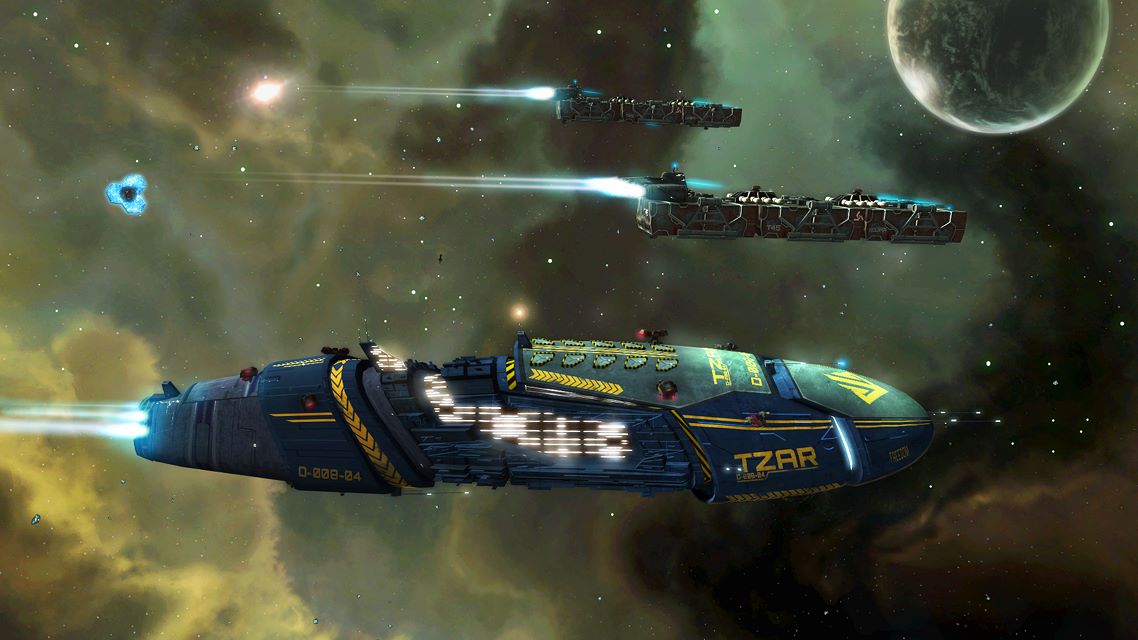
Although marketed as a space-simulation/RPG hybrid, Starpoint actually feels much more arcade-like. You control a spaceship from a third-person perspective, and navigating your ship doesn’t feel an overly complicated, perilous task like it does in true space simulation games such as Elite: Dangerous. It is easy to fly manually, adjusting the triggers and thumbsticks to control velocity and direction, but it is equally simple to direct your ship towards a waypoint automatically via autopilot. Although the absence of complex movement systems can make navigation seem dull, your spaceship’s thrusters sound authentic and powerful and the ambient “spacemusic” yields a relaxing charm as you sit back and admire the broad expanse of the galaxy before you.
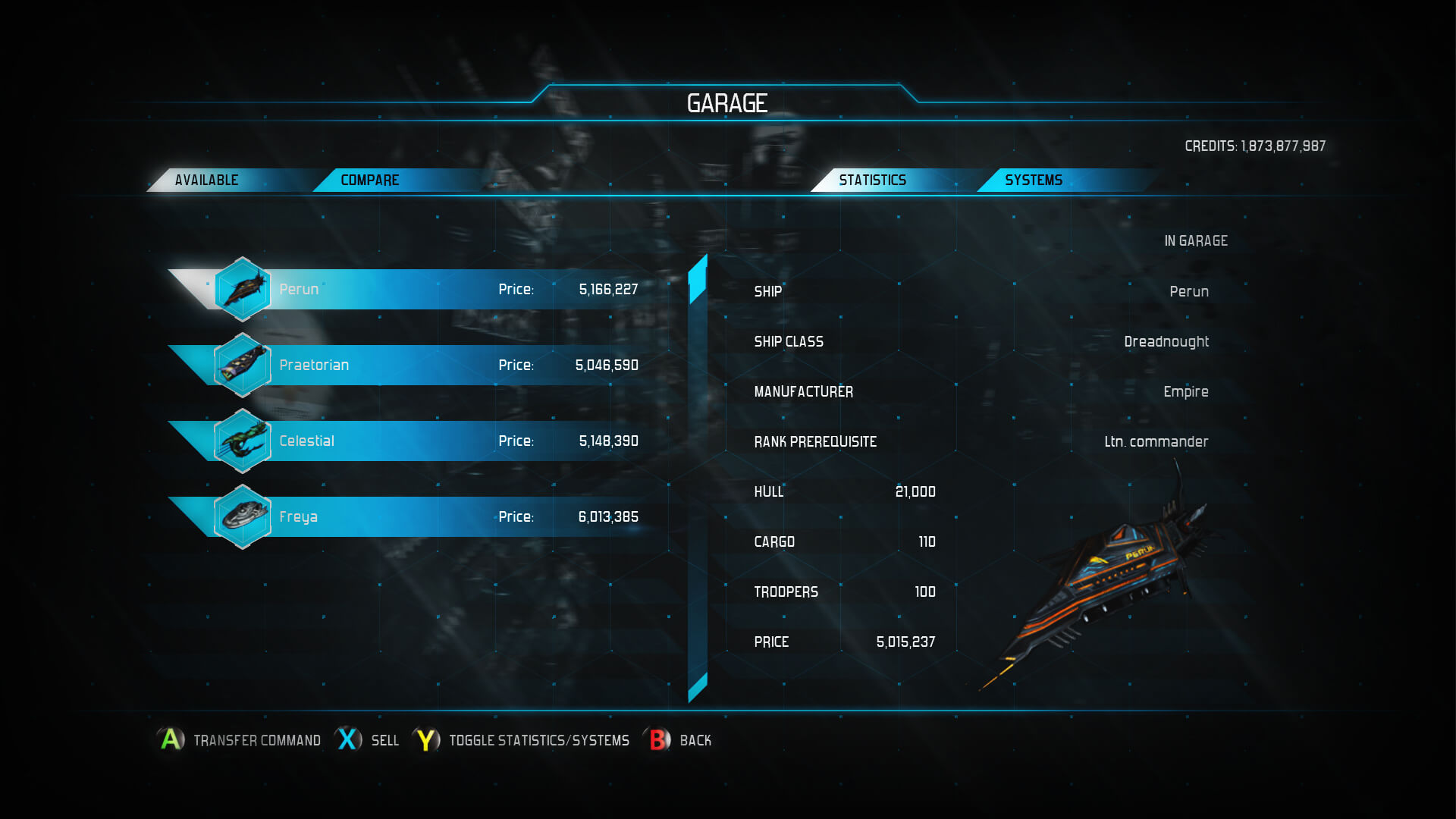
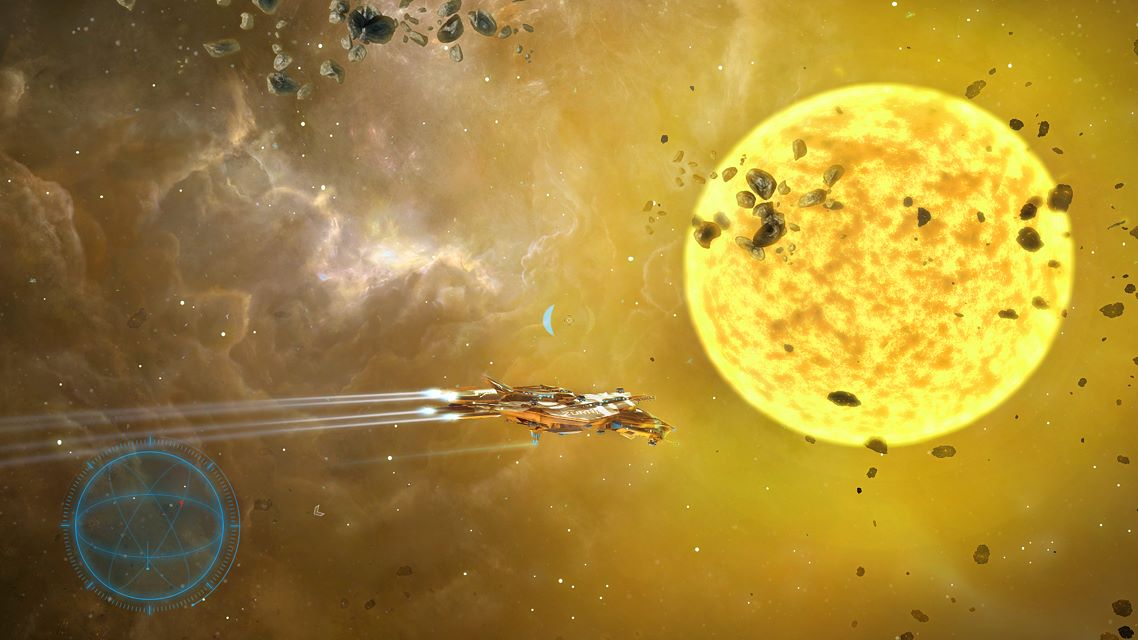
As a sandbox RPG, Starpoint Gemini 2 is an immense success. When starting a game you choose between three classes: Commando, Gunner, and Engineer, each of which boasts a different line of skills based on managing allied ships, destroying enemy ships, and boosting or lowering statistics of certain ships, respectively. You level up as you complete tasks, from exploring to mining to fighting to trading and selling. Each time you level up you get a point used to upgrade your starting skills, specific to your class, and every five levels you get a point to apply towards perks, which are general across all three classes. It’s pleasant to see that no matter what your preferred way of making money is in Starpoint, you can get by just fine. Modifications are important, and you unlock new gear, equipment, and weapons at space stations and planets. You can also purchase new ships for yourself or mercenary ships to guard you, although many of these are locked behind a level barrier even if you possess enough credits to buy them. I was happy to see that ships differ more so in just stats. My second ship emitted a golden glow from its rockets in a way that my first one had not.
The problem with all these RPG elements is that they require long amounts of time in abysmal menus. Little Green Men has nailed Starpoint’s controls on the Xbox One gamepad, creating easily piloted radial menus for conducting actions, but the menus used for applying skills and buying gear are archaic and unusable. A light neon blue color decreases visibility, and there are zero sound effects to convey movement from one selection to the next or the confirmation of purchasing an item from a store. It is near impossible to see what you are highlighting in many of the menus.
Combat is probably the most exciting part for many people. I can confirm that if you are a fan of tactical, real time combat then you will approve. When beginning an encounter, a three-dimensional shield will circumscribe your ship, displaying in real time from where you are taking damage. Fights are intense and exciting, as you either manually target enemy ships or tell your crew to target them for you. Either way, you must concentrate on multitasking, using abilities from your skill tree and allocating the right amount of power to your engines, shields, and weapons, while also maneuvering your ship into a position where it can successfully fire on enemies. It’s much more about being strategic than it is about being aggressive. Combat may not be realistic like it is in Elite: Dangerous, but it is certainly more varied. Landing shots will not win a battle, planning will.
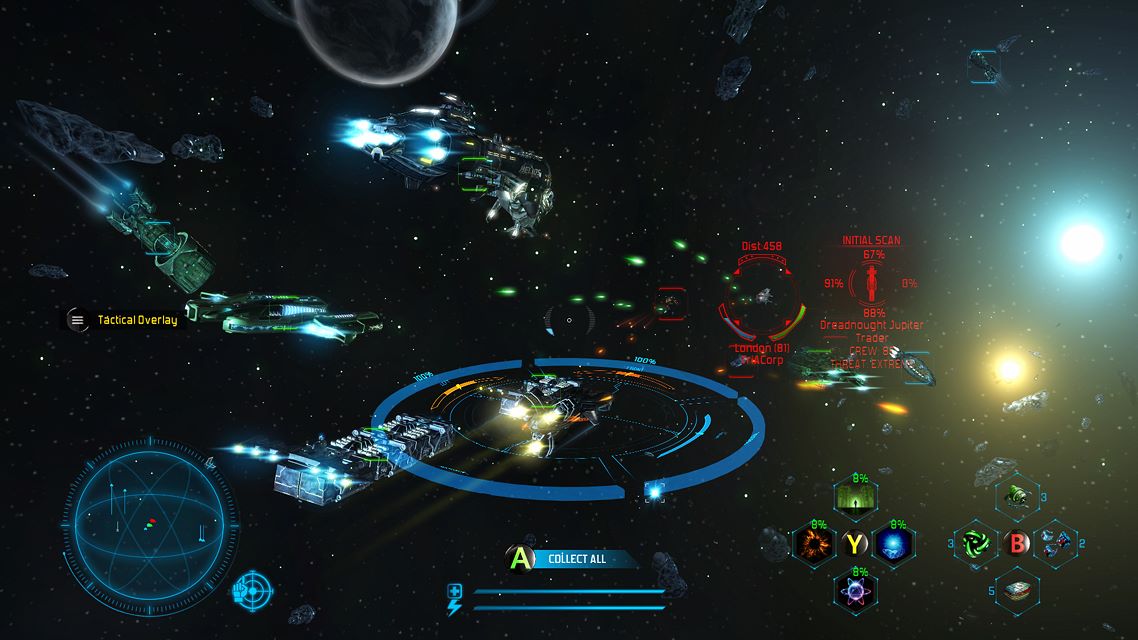
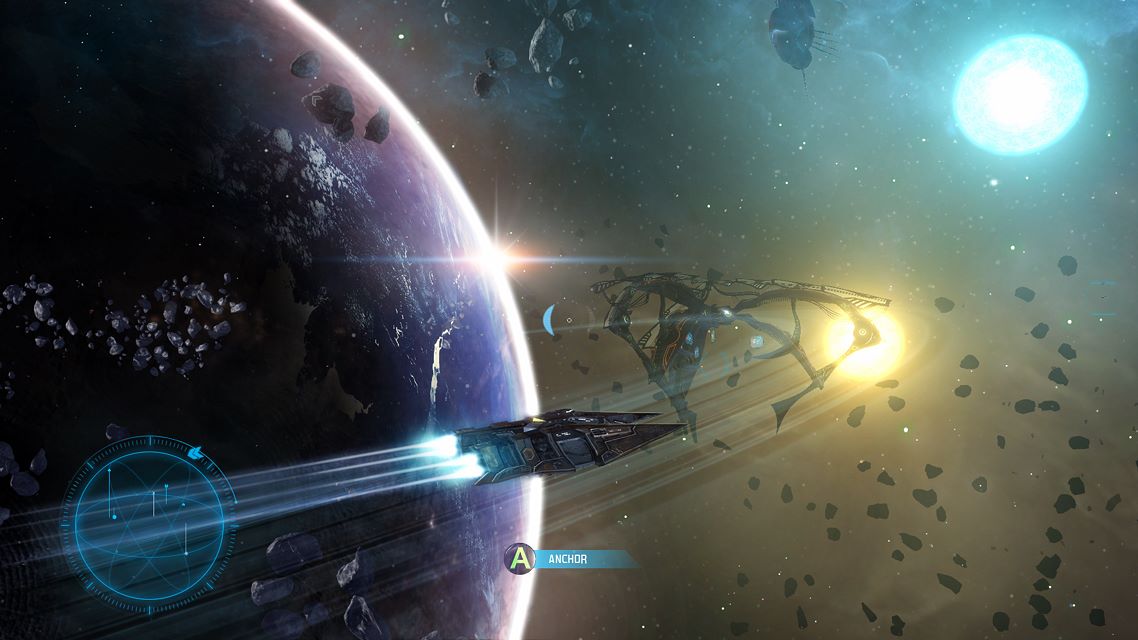
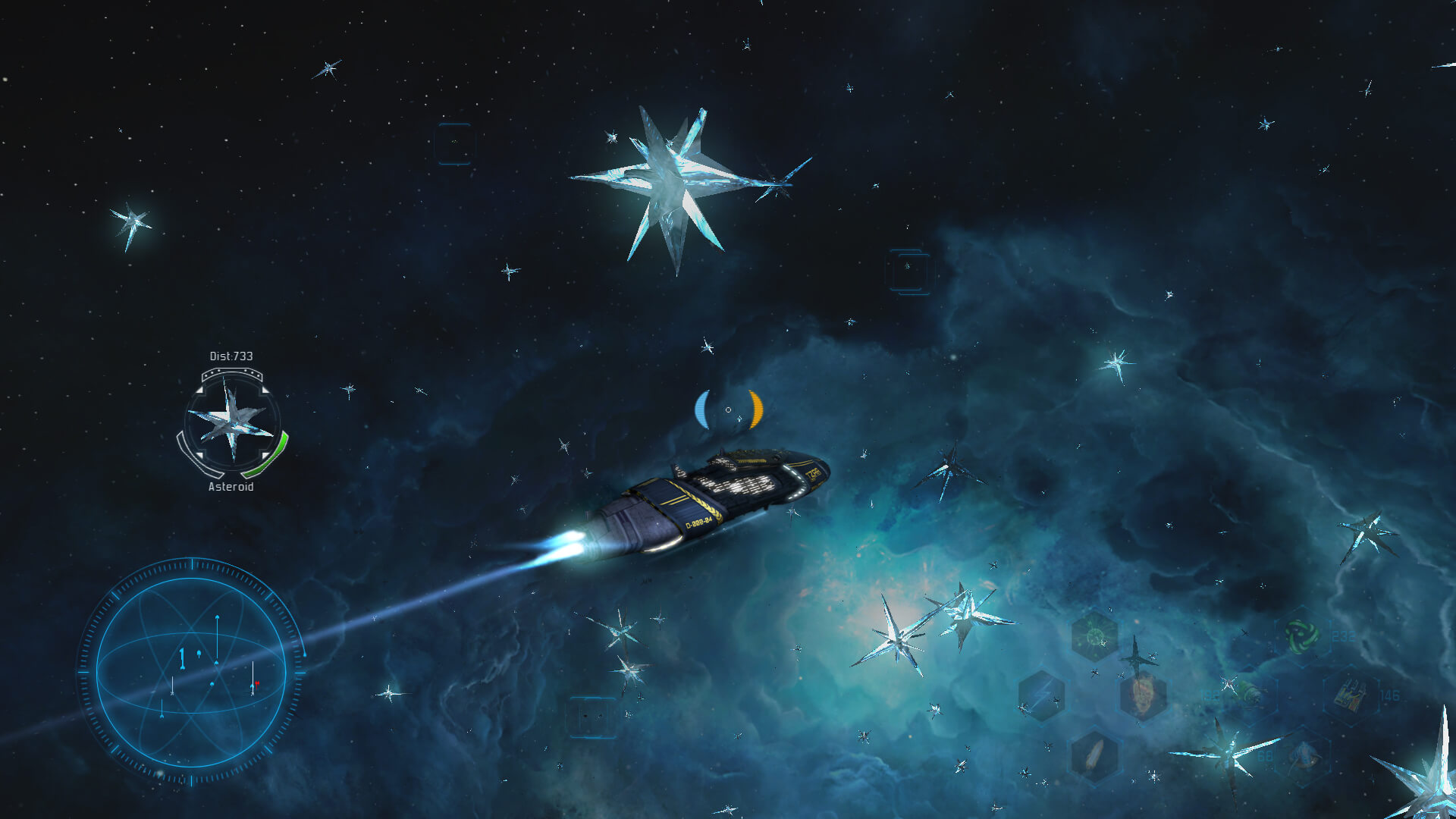
Exploration is by far my favorite part of Starpoint. Planets and stars twinkle in the distance and colors blend and mix and bend to create gorgeous galactic anomalies. Asteroids float in space, and although they are easy to avoid, they are wondrous to behold. I love accelerating towards a field of them, rubble flying around me in turmoil. It makes me long for a first person cockpit camera just so that I can take unadulterated screenshots of these magnificent sights.
Unfortunately, Starpoint suffers from what I hope is merely an atrocious bug waiting to be fixed. The map is divided into hexagonal regions, and every time you pass from one region to the next, the framerate drops close to zero for two entire seconds. This terminates the serene mood of exploration instantaneously and occurs incredibly often. In fact, I carried out a test. The map consists of 360 hexagons total, 20 long and 17 wide. At full throttle it took me one minute and eight seconds to traverse one, including two two-second pauses. On the one hand, the map is huge! It takes over twenty-two and a half minutes just to travel in a straight line from one side to the other. But on the other hand, you will experience this miserable frame drop just over once a minute. That is completely unacceptable, and something that I hope is addressed promptly.
Summary
Overall, Starpoint Gemini 2 is an incredibly fun game, and it is easy to lose oneself skirmishing with space pirates for much needed ship upgrades or relaxing in the tranquil atmosphere, but the $35 price tag is hard to justify due to evident matters. A significant frame drop issue, flat storyline, and obsolete menus cause vexation, but only because they devalue what is an otherwise splendid adventure. I recommend Starpoint to those who have already had their eyes on it, but for the less convinced, I suggest you wait for an update that mends at least the core issues.

Tristan was a regular ICXM contributor between 2015–2017, publishing 51 articles across opinion pieces, game reviews, Windows and PC, and Xbox news. Their work focused on hands-on reviews, platform commentary, and breaking-news reporting during the Xbox One X launch year and Microsoft’s wider Play Anywhere / UWP gaming initiative. They post on X as @tbogost.