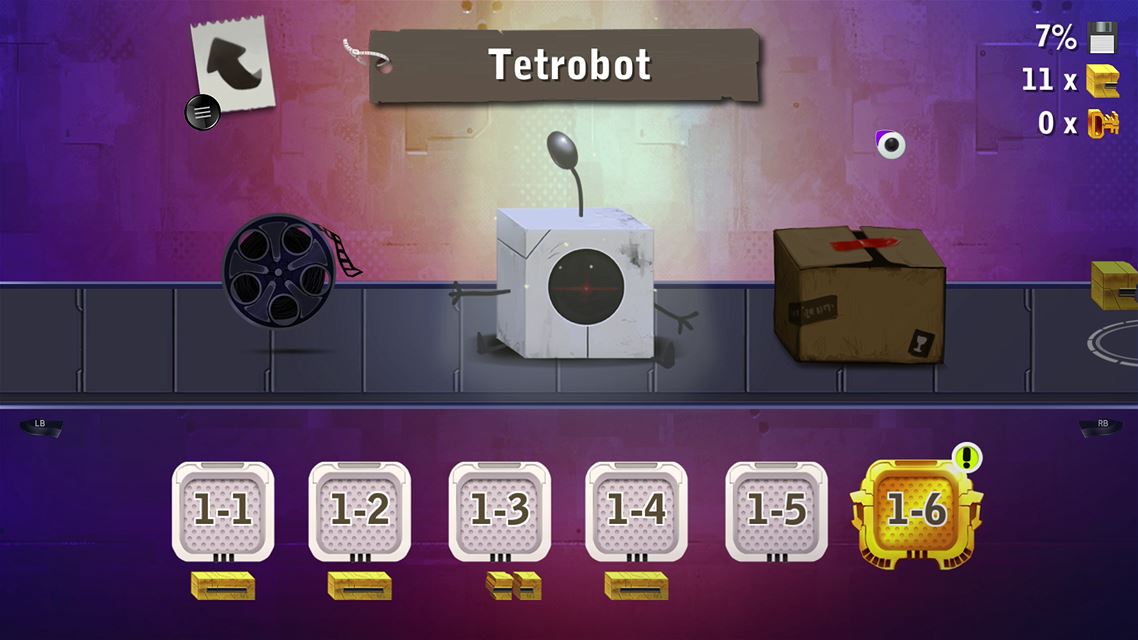
Every once in a while a game is released that is better than it has any right to be. Tetrobot and Co. by developer Swing Swing Submarine is that game. A truly original puzzle game, sporting tight mechanics, great puzzle design, built-in difficulty challenges, gorgeous art, and engaging storytelling is difficult to find in the Xbox Store indie space. Tetrobot and Co. contains these elements in spades. If you cannot tell already, I am smitten with this title and here is why.
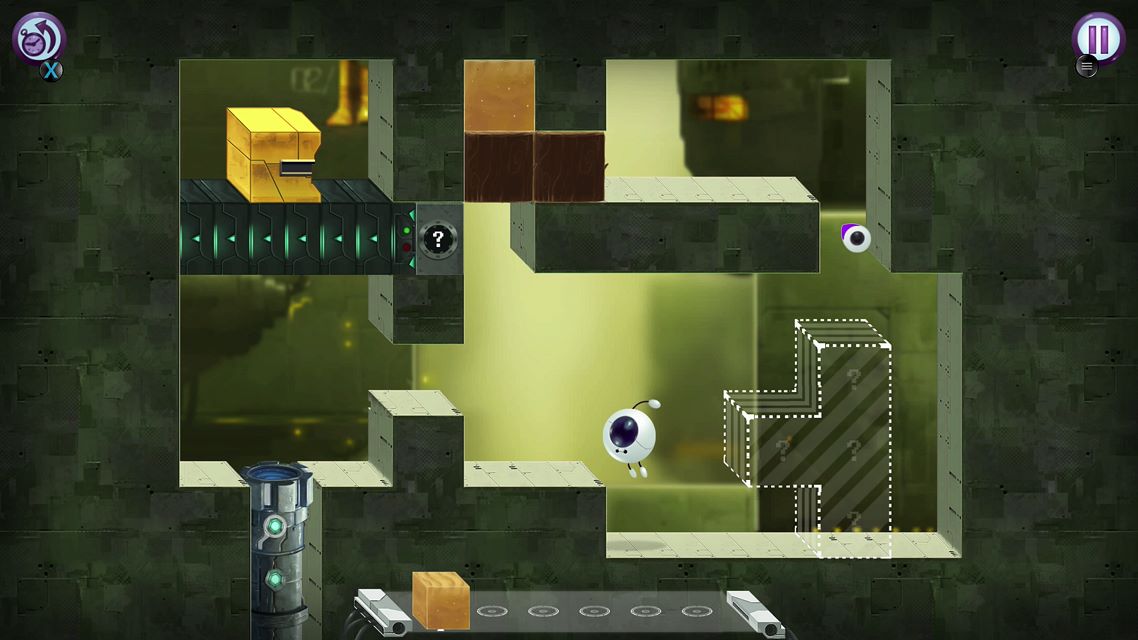
First, a little about Tetrobot and Co.’s storyline. You play as a miniature robot named Psychobot. Well, technically you play as Maya who created the Psychobot and is controlling the mini robot in order to repair broken Tetrobots. Are you following? Good. The levels are organized in five main levels and one key level per chapter, there are ten chapters overall. Each chapter is a new robot, with new puzzles that you must complete to repair the robot. As you work your way through each level, you are tasked with collecting three memory pieces in order to make a memory block. Each memory block contains parts of the story, sometimes given in a cutscene and sometimes given in Maya’s journal. The story starts out a little creepy, but morphs into a very heartwarming one that is fulfilling.
This is an aspect of the game that really hooked me. Most puzzle games have stories that are jammed into the game just because the developer feels they should be one. The story doesn’t have anything to say and has no real value. The addition of this well thought out story made me feel like this game was a labor of love and it permeated through the entire experience.
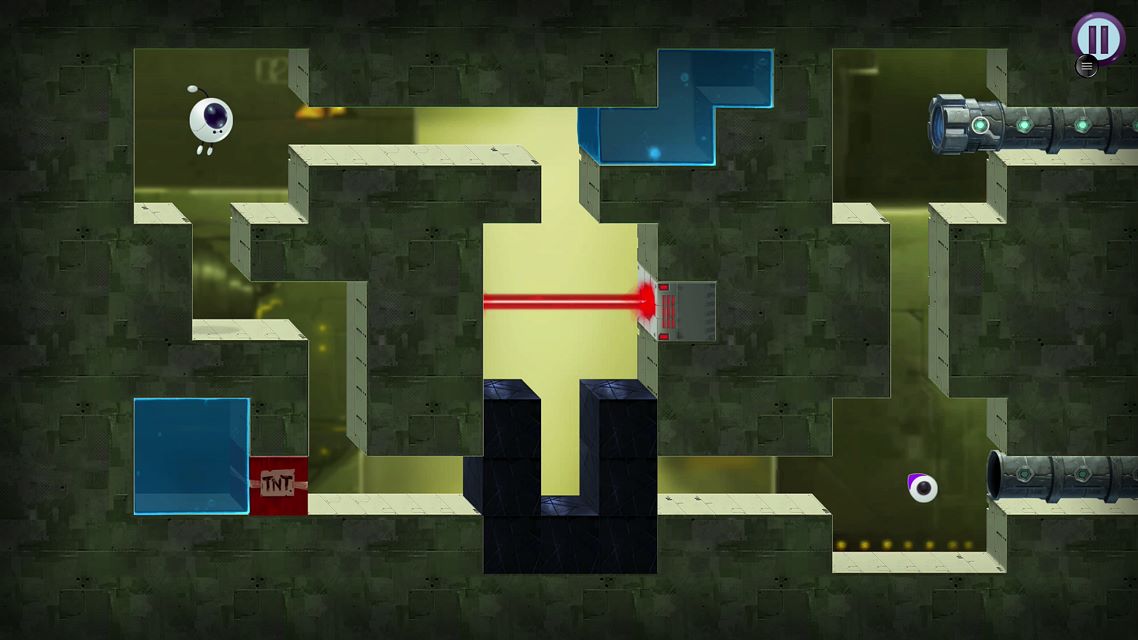
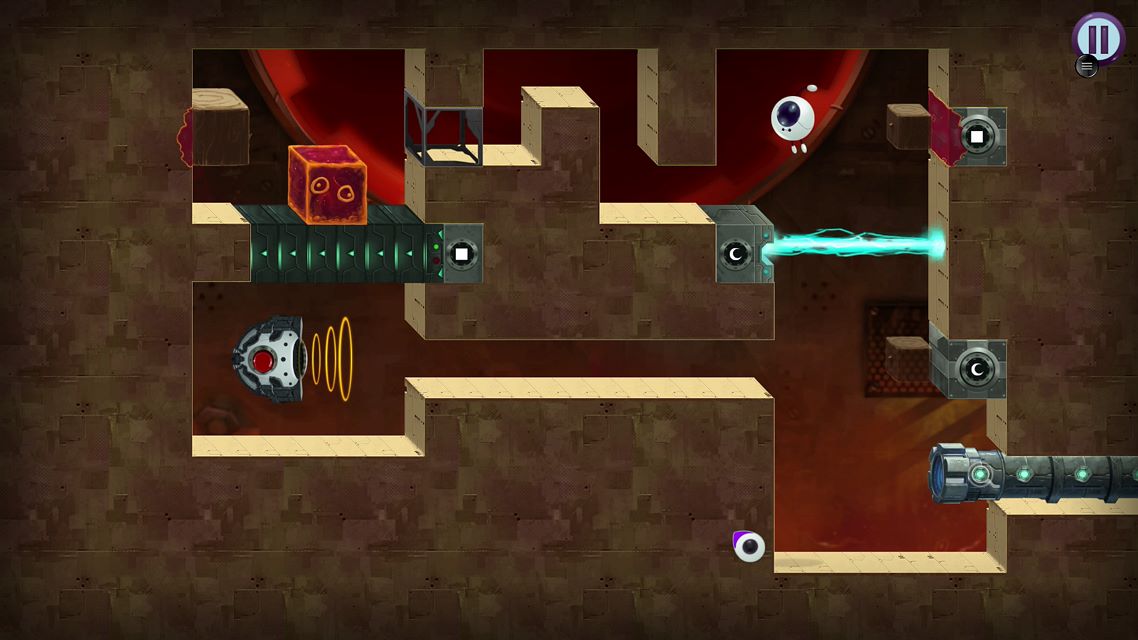
However, the most important aspect of a puzzle game is not the storyline, it is the puzzles and gameplay. You control Psychobot by clicking on a location and it will automatically move to that location. You then absorb, shoot, or destroy blocks in order to solve the puzzle, collect the memory pieces, and exit the level. How this all plays out is that you enter a level and move through a tube, you then survey the area and see what obstacles you must pass in order to get to the next tube and continue on with the level. The main gimmick is that you use different blocks like wood, sand, glass, or metal to interact with the environment. For example, when the sand block hits a laser beam, it turns into a glass block. Or, when the metal block hits an electric beam it becomes electrically charged.
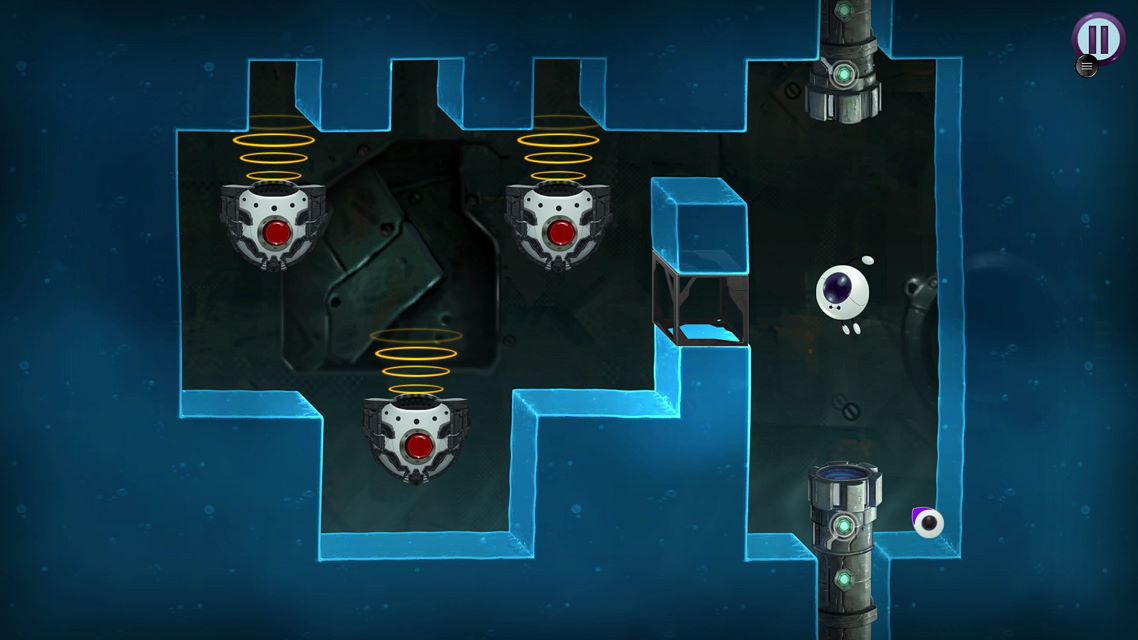
Each block is given its own FaceBlox™ page, an obvious farce of Facebook, where it tells you the blocks’ status and various likes and dislikes. These likes and dislikes translate into the attributes these blocks take on in different situations. Reading these short pages was not only charming and funny, but essential to finishing the difficult puzzles that come in the later levels. And that is what I mean when I say a built-in difficulty. You do not select easy, medium, or hardcore in the beginning of the game, you just jump in and play. You can try to make it from the beginning area to the end portal, and it will be an easy and fair challenge. But, if you want to get 100%, unlock the final bonus level, and truly master the game, you have to get all the memory blocks which charge you with thinking way outside of the box.
I could sit here and talk all day about the mechanics, but let me shrink it down to the main points that I loved. The reload system is perfect. If you throw a block and disintegrate it when you didn’t want to, tap X and you go back one step to before you threw the block. Accidently used a block and realized you needed to progress to another room first to get the memory piece? Tap X a couple more times and you will be back to where you started. This system takes all the frustration out of trial and error. If you mess up, as soon as you discover the error, you can correct it instead of having to redo the entire level. I also love that you cannot die. If you walk into a monster, a laser, or a block falls on you; you just bounce back, no harm done. Again, this allows the game to remain hard in the way you want it to be–the puzzles.
Summary
Each level takes around ten minutes to complete with the exploration of trying to collect all of the memory shards and reloading from missed opportunities. Overall, you are looking at a ten hour game that is neither too short, nor does it overstay its welcome. Tetrobot and Co. continuously adds new blocks and challenges to make sure every new chapter, level, and challenge feels unique and refreshing. It continues to reward your efforts with more exposition and more engaging puzzles. Tetrobot and Co. is a slam dunk and I hope this encourages Swing Swing Submarine to bring their other games to Xbox One as well.

Joshua was a regular ICXM contributor between 2016–2017, publishing 42 articles across game reviews, and Xbox news. Their work focused on hands-on reviews, platform commentary, and breaking-news reporting during the Xbox One X launch year and Microsoft’s wider Play Anywhere / UWP gaming initiative.