In 1988 Brian Fargo’s Wasteland was released on the Apple II computer. Wasteland was the first video game to examine the struggles of surviving in a post-apocalyptic world, a theme that many forms of media latch hold of today. The game was spiritually succeeded by the Fallout franchise, and only after extensive copyright and legal complications has Brian Fargo finally managed to gain back the rights to Wasteland. Wasteland 2 was released on PC in 2014, appealing to those who longed for a return to the origins of the fallout gaming experience, and the director’s cut is now making an appearance on Xbox One.
Wasteland 2 would have been a great game ten years ago. Unfortunately, Fargo seems to be trapped in time, still suffering from a longing of the past, which has transformed what could be a fantastic modern take on a classic RPG into a dull one, mediocre on all levels. Instead of reworking Wasteland into something new and exciting, he has attempted to implement features from the original Wasteland and from other popular strategy video games. However, none of these features are executed very well, and Wasteland 2, especially the console version, ends up feeling recycled, outdated, and unimportant.
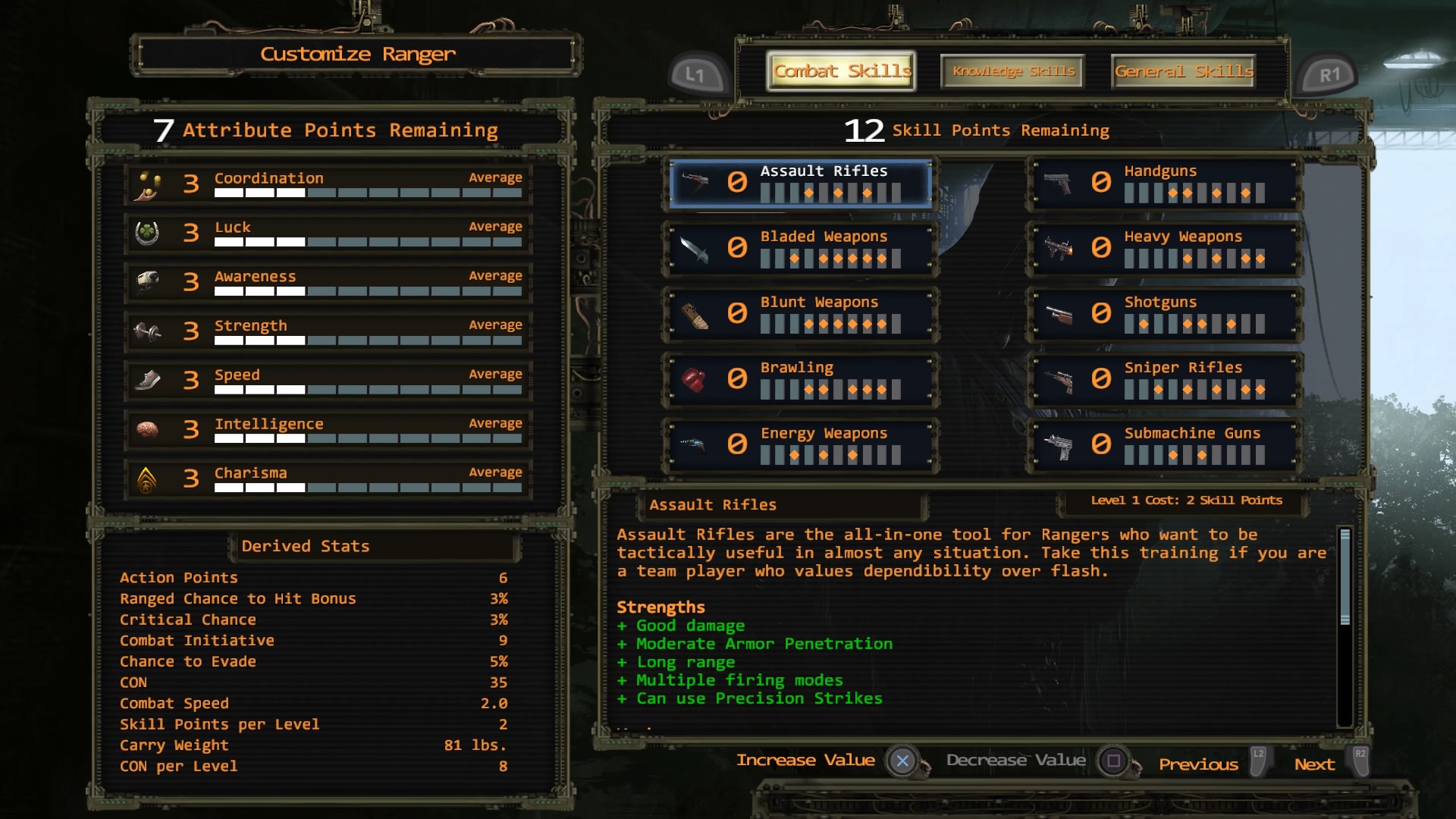
The premise is that World War III is long over. Nuclear war having been unavoidable, Earth is now a treacherous place, filled with criminals, cannibals, and despair. Your goal is to create and command four desert rangers who will protect survivors of the fallout from evil. The very first task to accomplish is, unsurprisingly, the customizing of characters. You select the gender, name, look, and even nationality of each ranger. You can even type up a short bio for each character, which has no affect on gameplay or story. Good luck typing that on an Xbox controller. Characters do not have classes, but are given a limited amount of points which can be distributed among a variety of skills. You can create a sniper who is a medic and communicates with animals, or a blade-wielding thief who loves explosives. Problem is, the options are overwhelming, and no tutorials offer advice on which skills are essential to survival. A couple hours into the game one of my rangers was shot down, but not quite dead. Although I had put several skill points into the medic skill for multiple other characters, no one was capable of reviving this one, even with the right supplies, for reasons unknown.
Quirks are part of the customization process added in the Director’s Cut, and one can be applied to each character. Each one adds both a good and bad quality. For example, one might increase the success rate of diplomatic speech but remove all possibility of sweet talk. This is an interesting feature but yet again, no warnings of compatibility errors are given, which can be frustrating later on. How should a player even know which skills are important and which are not? I love the idea of quirks, but I shouldn’t be forced to choose one before playing the game. Quirks should be handed out to characters based on my play style, not based on my misinformed decisions.
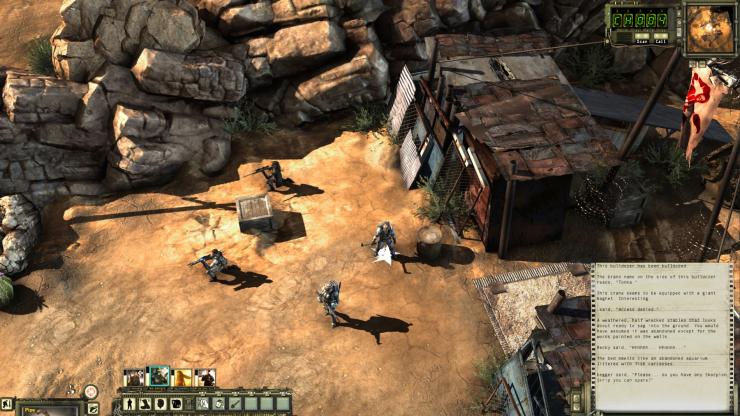
The original 1988 Wasteland game came with a small booklet titled Wasteland Paragraphs. As you played, you might be asked to open the booklet to a certain numbered paragraph in order to read in more detail the events occurring in the game. Wasteland 2 attempts to do something similar digitally, with a virtual typewriter taking up the bottom right section of the TV screen, which outputs text as you travel or act. Perhaps this works for PC gamers, but on an Xbox One the typewriter is a dreaded nightmare. Miniscule, ant sized text scrolls across its pages, and even from just a couple feet away I had no idea what I was supposed to be reading. The font size can be increased, but to little avail. The text only becomes slightly larger. It is also frustrating when my eyes are distracted by the giant typewriter who has so proudly inserted himself, uninvited, into my domain. Often times the information given here is unimportant anyways. When I end my turn in a combat situation the typewriter clamors back “Ending turn.” When my character misses a shot at point blank range for the third time in a row, despite an eighty percent chance of success, the typewriter quickly reminds me. Thank you, typewriter, for that valuable information. I’ll be sure to scroll back up and study that later. The Director’s Cut adds hundreds of lines of voiced dialogue anyway. I would have rather the typewriter been abandoned completely and replaced by voices and subtitles, or at least completely reworked for a better console experience.
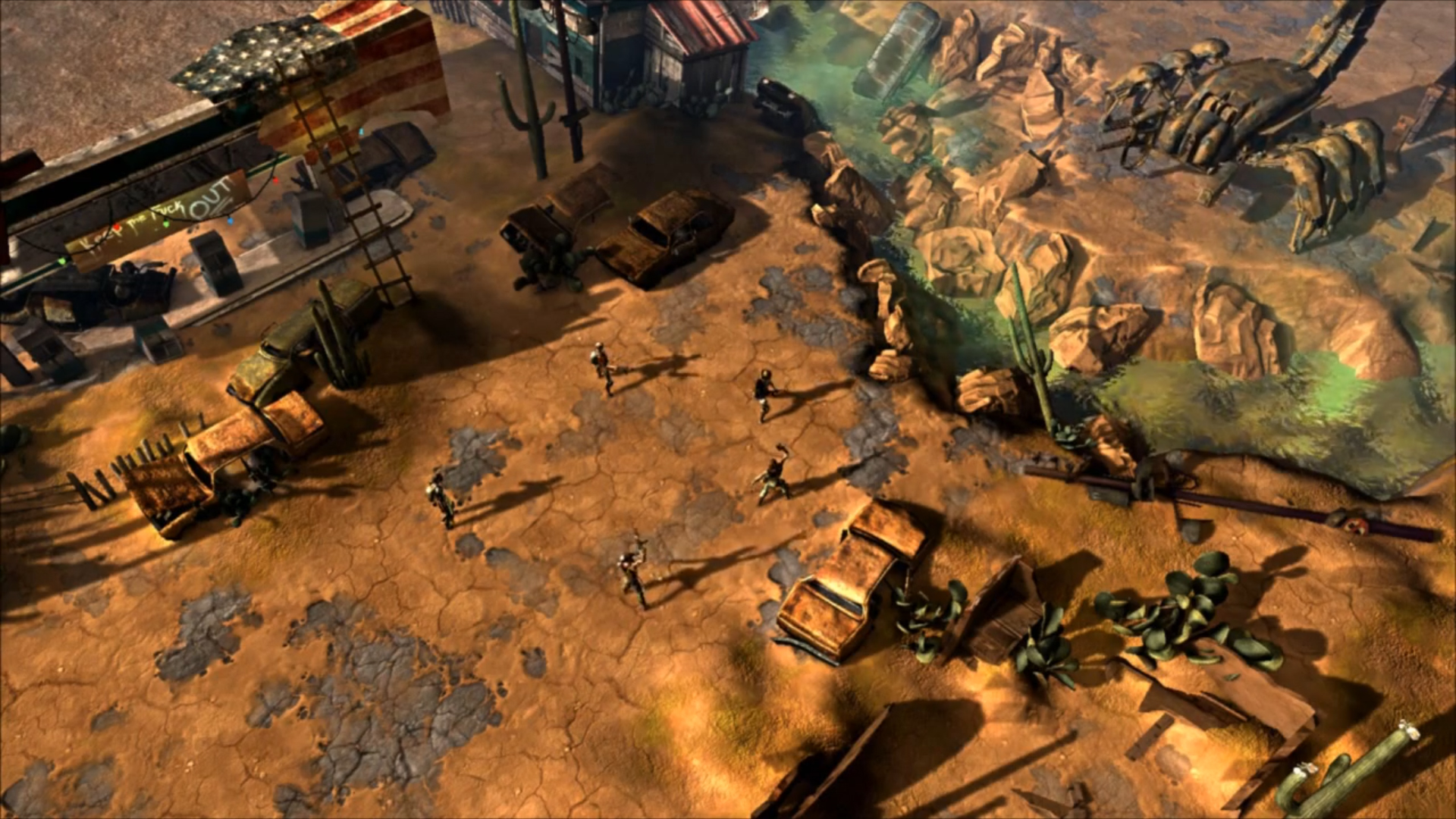
Wasteland 2 suffers from other visual issues as well. Each location looks too much the same with not enough variation or uniqueness. There is no depth to the environments, and the color palette is dull, grimy, and brown. Every character model looks the same. I can’t tell my own characters apart and I can barely tell my own rangers from enemies. Note that no matter what armor, boots, or trousers you collect and equip, character models are permanently unchanged. The look that you give a character at the beginning of the game is irreversible. A post apocalyptic art style could have invoked despair and emptiness, while also maintaining distinctions between places and people, but Wasteland 2 demands much squinting and many headaches, results of graphical blandness and blurriness. These unpleasantries are only intensified by the eerie sounds, which consist less so of music and more so of distantly screaming voices.
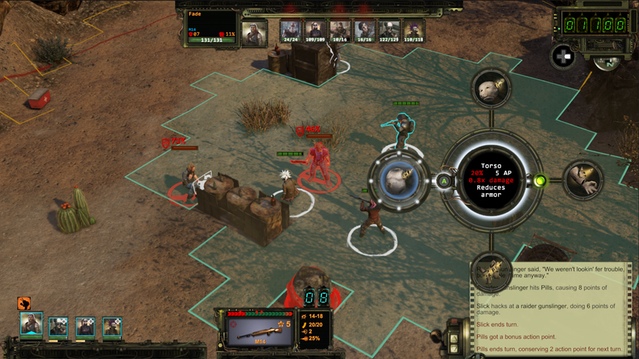
To traverse the wasteland your group of rangers moves back and forth between points on a map, Indiana Jones style. Once you reach a region that you would like to enter, the world becomes open. You move the group using the left joystick and the camera with the right. Once an enemy sees you or you engage with an enemy, an encounter begins, and movement becomes restricted by a rectangular grid. You would think that it would be possible to set up a strategic approach in order to flank enemies, but it is actually quite challenging to do so. The camera is awful. It is near impossible to see anything in front of you. You literally feel like a rabbit, prey to anything as you traverse an area, with only peripheral vision to guide you. It is awkward to see where you are moving and it is impossible to predict the location of enemies from around a corner. Encounters often begin because you walk directly into an enemy.

Combat is incredibly average. I’m a fan of turn-based combat, but I found Wasteland 2 to bring nothing new to the style. It works, but it doesn’t improve upon any feature that hasn’t already been perfected. It tries to sell itself as more tactical than masterpieces of the turn-based genre such as XCOM: Enemy Unknown, but is actually just more complicated on account of a terrible interface and an unintuitive inventory. It costs Action Points to perform any action, but the amount of AP expended alters from weapon to weapon, person to person, and item to item. This adds frustration and confusion to combat, which is already mediocre enough. Statistics and numbers seem vague when a shotgun blast to the face removes one fifth of an enemy’s health bar and a pistol shot from ten meters away does triple the damage. As seen above, characters with an eighty percent chance to hit an enemy often miss two, three, four times in a row. The addition of friendly fire intrigued me, but was ultimately a letdown. The arc of fire cannot strafe, and due to the box-like grid characters cannot aim with precision. You look at an enemy and you fire at that enemy. You cannot angle your shots so that shrapnel will hit the most enemies, and you cannot line up shots so as not to hit your friends. Combat is outdated and is lacking sophistication.
There are few redeeming features here, but the writing is well done and the stories behind missions are often interesting. Interacting with other people and choosing what to say is exciting, and I enjoy examining the personalities of different characters in a world so desolate. It’s unfortunate that other features detract so much from the atmosphere, because it makes the parts that I do enjoy hard to appreciate.
Summary
Those feeling truly nostalgic for Wasteland or Fallout 1 or 2 might enjoy themselves here, and those heavily invested in RPGs will assuredly find some features redeeming, but for the general population of gamers, Wasteland 2 is an old game with old mechanics attempting to disguise itself as something new. It’s just as bland as the desert future that it foretells.

Tristan was a regular ICXM contributor between 2015–2017, publishing 51 articles across opinion pieces, game reviews, Windows and PC, and Xbox news. Their work focused on hands-on reviews, platform commentary, and breaking-news reporting during the Xbox One X launch year and Microsoft’s wider Play Anywhere / UWP gaming initiative. They post on X as @tbogost.