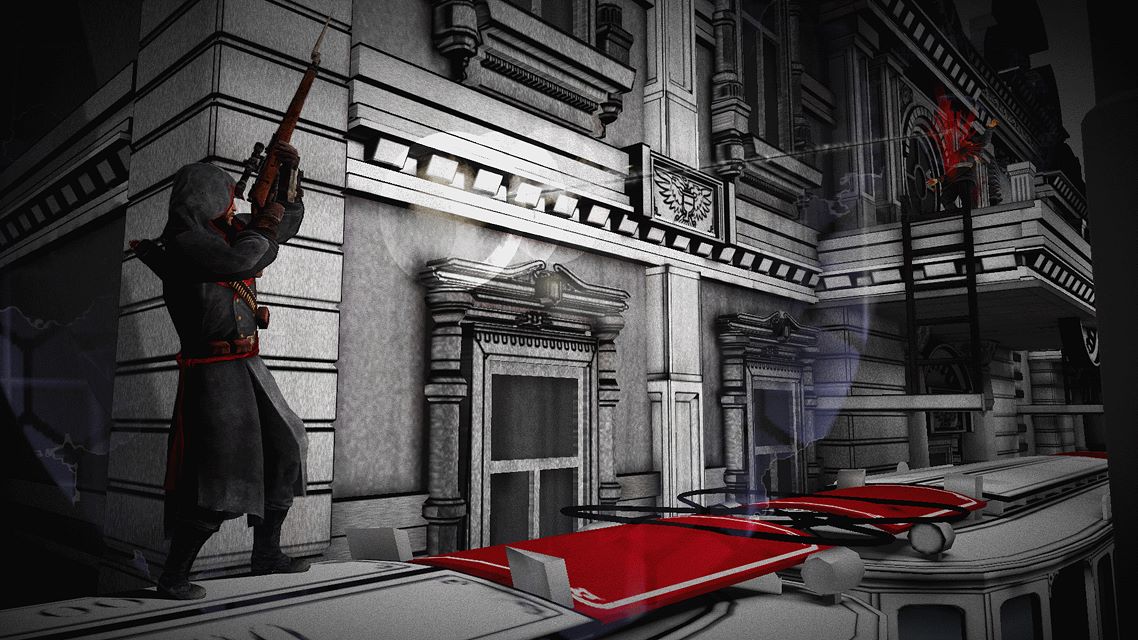
Assassin’s Creed Chronicles: Russia is the third and final game in the Assassin’s Creed Chronicles trilogy, following China and India. It retains the 2.5D side-scrolling nature, and adds its own unique art style and platforming. I’m a huge fan of the series, so I was eager to start playing it. There were some aspects of the game that really shined, but it wasn’t without its own problems.
This time, you’re playing as Nikolai Orelov, who some fans may be familiar with if they have read the Assassin’s Creed comics The Fall and The Chain. If not, I highly recommend doing so. Chronicles: Russia takes place between those two comic series, and follows Nikolai in 1918 on one last mission where he must retrieve a Precursor artifact from the Bolsheviks. During his efforts, he manages to save the Tsar’s daughter, Princess Anastasia. It was great to see the story unfold while mentioning characters from other Assassin’s Creed games. What I love about Assassin’s Creed is how closely connected the entire series it. Whenever I can find a plot thread that spans multiple games, it makes me so much more interested in it. Chronicles: Russia did a wonderful job of keeping me engrossed in the story.
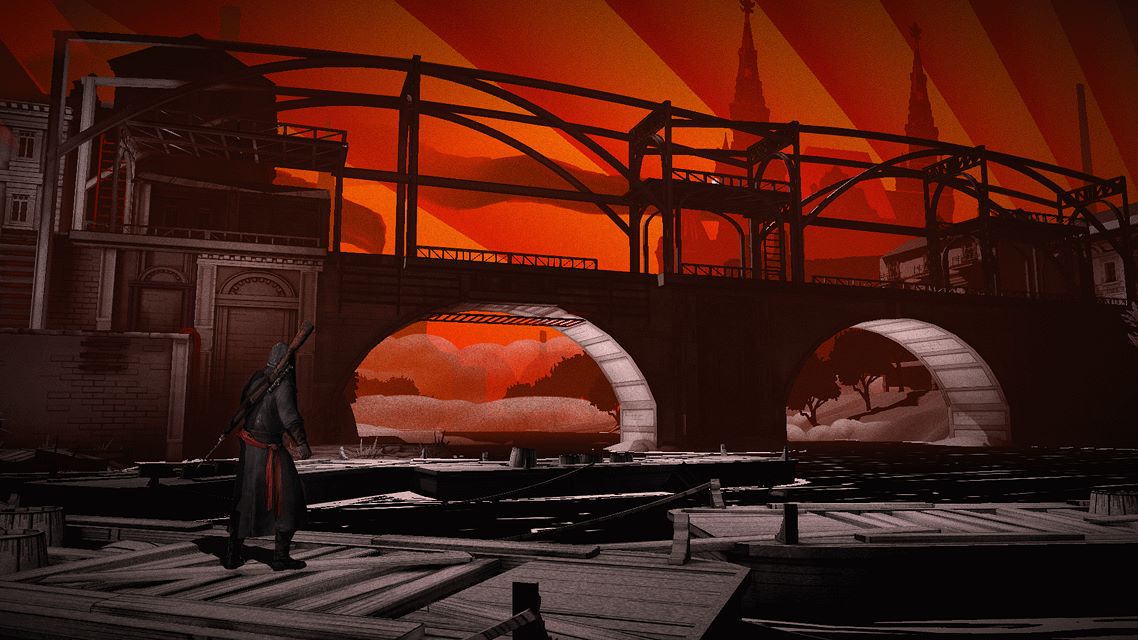
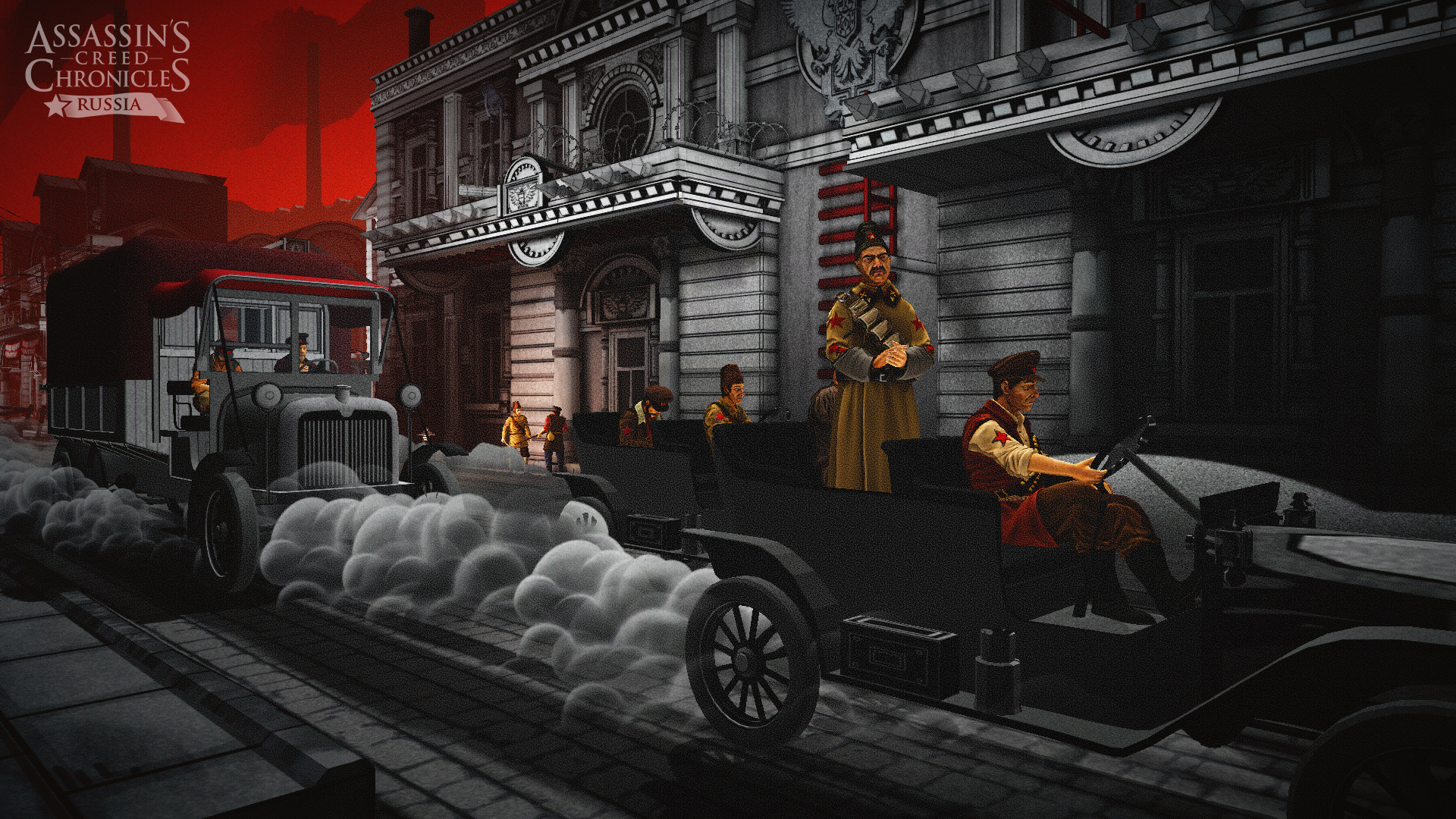
All three games in the Chronicles trilogy utilized unique art styles to reflect the location, and Chronicles: Russia is no different. Everything in the game looks like something out of a comic book. The art style and aesthetic suit the time period perfectly. The most predominant colors used are gray and red, which really helps immerse the player into the setting. You can immediately tell that they were trying to capture the feel of Russia after Red October and before the rise of the USSR. The art team did a fantastic job.
The controls and gameplay were mostly smooth, save for a few exceptions. There were times when I would press up on the left thumbstick to try and quickly jump into another hiding spot, however this would only cause me to jump into the sight of an enemy soldier. It was frustrating trying to change my cover areas. Other than the controls for hiding being finicky, everything else was very intuitive. Running and vaulting over platforms felt nice, and it was fun to climb around buildings.
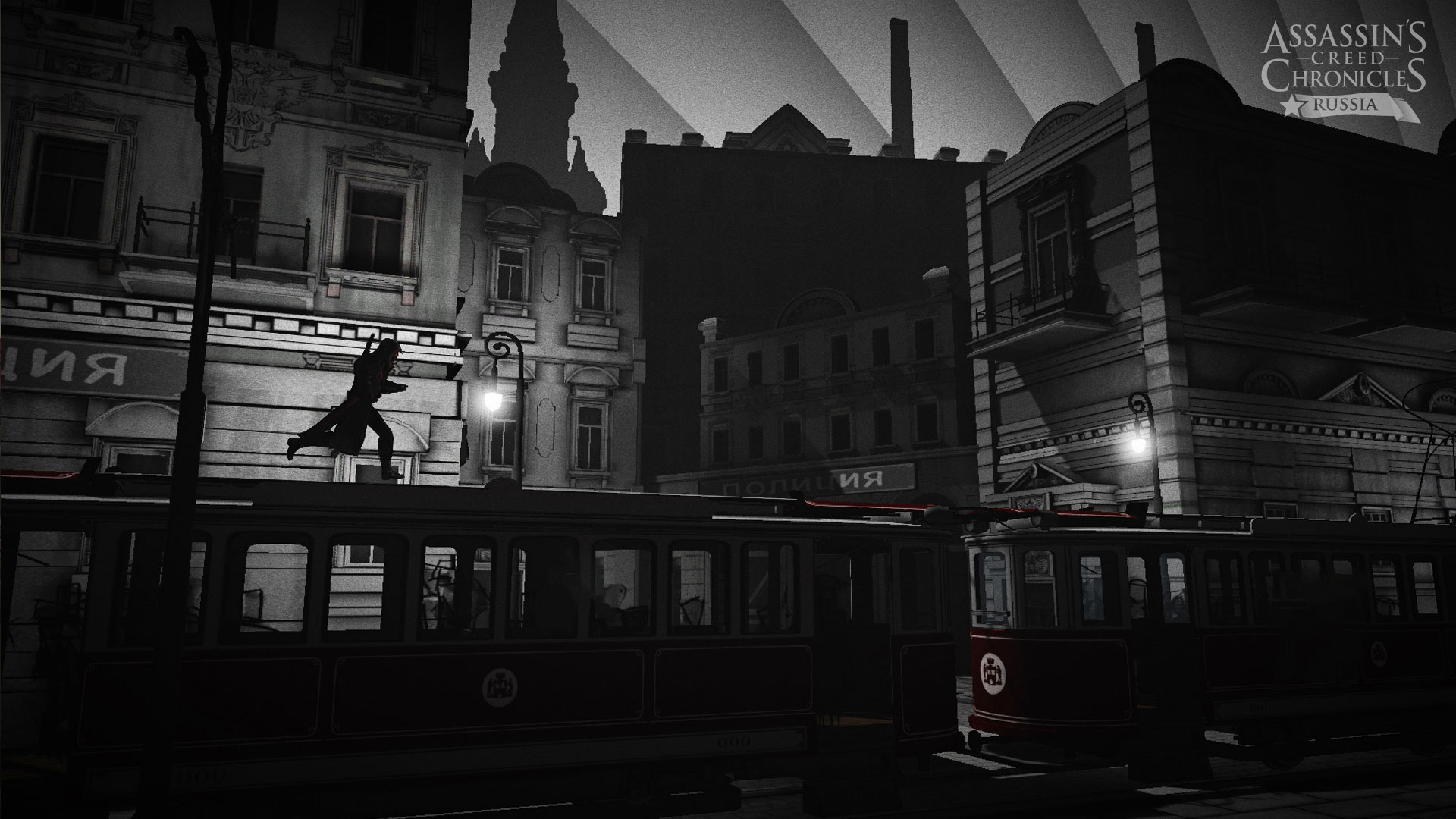
Because it is in a 2.5D style, the level designers had to use visual cues to communicate with the player and tell them where to go. This was done by making climbable objects and paths red, and hiding spots green. To move into the foreground or background of a level, you would find red pathways which allowed you to cross over to another section. Using colors to guide the player through the level was a smart design choice. You don’t want to constantly get text pop-ups on the screen telling you where to go, so the developer helped the player in the most minimally invasive way possible.
Nikolai had access to multiple gadgets, such as a winch and sniper rifle, which made for some very fun levels. I could use the winch to raise an elevator or even take out the lights in a level, allowing me to quickly dispatch every enemy once it was harder for them to see. The sniper rifle would have designated areas where you could use it to snipe enemies, and these were sections that I came to enjoy. It was satisfying being able to scope out a part of a level and then pick off soldiers one by one. It forced you to think of a good strategy too, because if a guard saw a dead body, other guards would immediately be alerted. Enemy snipers would quickly kill you if you didn’t react fast enough.
The only problem that I had with the sniper rifle was that guards didn’t seem to hear it. I could shoot a guard looking outside of a window and the guard below him would give no indication that anything was wrong. This definitely helped make some sections easier, but it was odd to see that unless a guard was a foot away from where I shot, he was essentially deaf otherwise. Enemies definitely relied more on sight than sound.
It wouldn’t be an Assassin’s Creed game without platforming sections, and the ones in Chronicles: Russia were enjoyable. They weren’t as intricate or as difficult as what you might expect from a traditional Assassin’s Creed game, but they still provided a nice challenge. If anything, I would have liked to see more of them in the game.
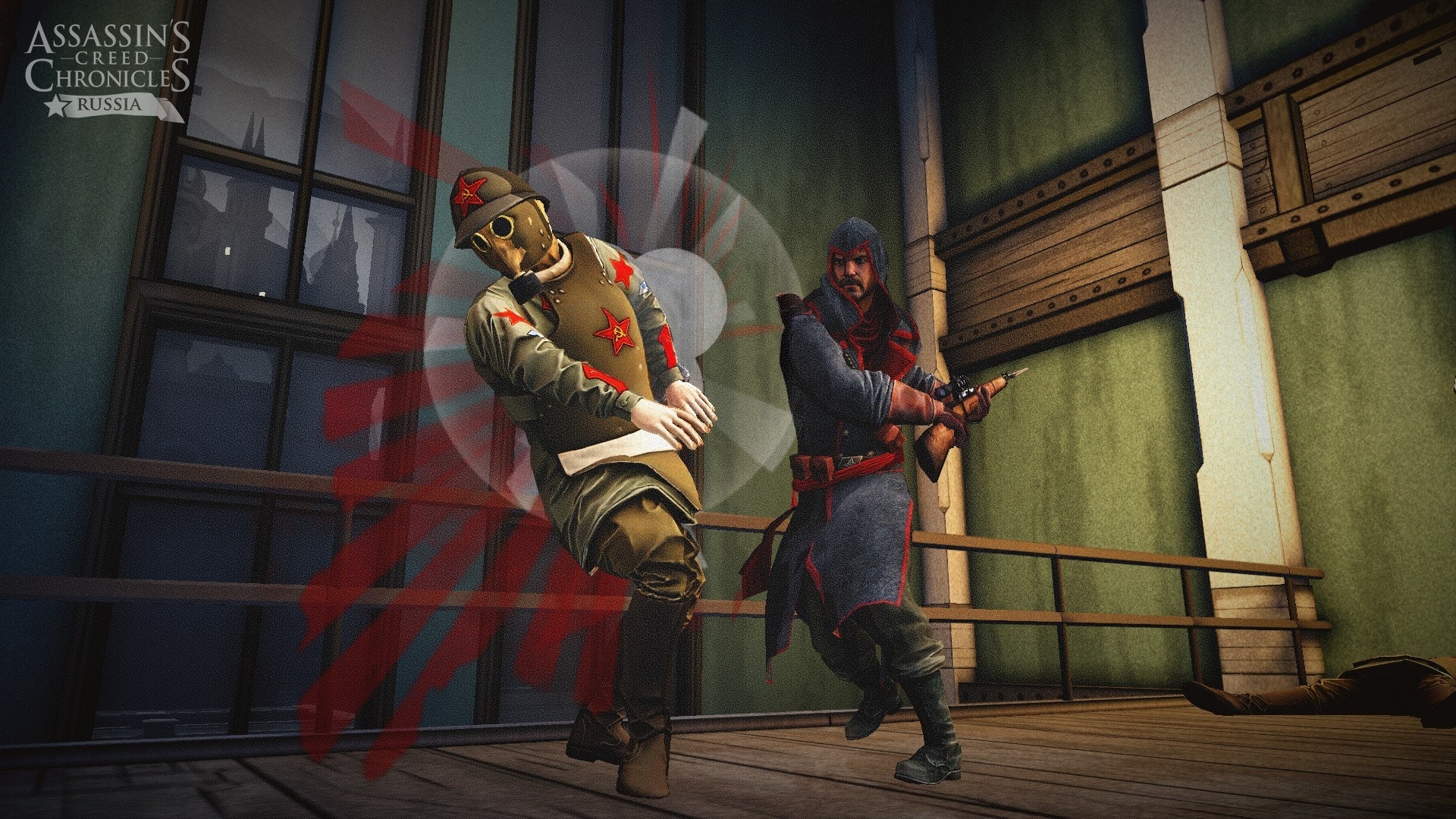
The game’s biggest downside was how repetitive the mission structures were. Many sections were just defined by getting from point A to point B while killing a certain number of Templars. Sometimes it was outside, sometimes underground, and sometimes on a moving train, but the message was the same. Run, duck, stab, run some more. It was severely lacking variety.
Challenge Rooms offer trial levels similar to the training rooms in previous Assassin’s Creed titles. They have a style similar to what you would see in the Animus, and you are able to complete different objectives. If you need to practice assassinations or just want to collect Animus fragments as quickly as possible, this is a good way to do it. I found myself repeatedly going to the Challenge Rooms because of how fun they were. They offered nice platforming sections and essentially provided good practice levels where I didn’t need to worry about the consequences if I was caught by a guard.
Summary
While I had fun playing Assassin’s Creed Chronicles: Russia, it was let down by its repetitive nature, frustrating controls, and poor AI. This is something that I wish was a full-fledged Assassin’s Creed title. The setting had so much potential for a larger story, and although the story that we got was quite good, it’s a shame that it was forced into such a small game. It could have been an amazing title, but it stumbled in a few areas. Looking past it flaws, overall Chronicles: Russia was still a solid entry in the series.

Jennifer is a games journalist, former games journalist and PR Manager at Gearbox. They contributed 234 articles to ICXM between 2015–2017, focused on opinion pieces, game reviews, Windows and PC, and Xbox news: went on to write for Windows Central and later managed PR for Gearbox Software.