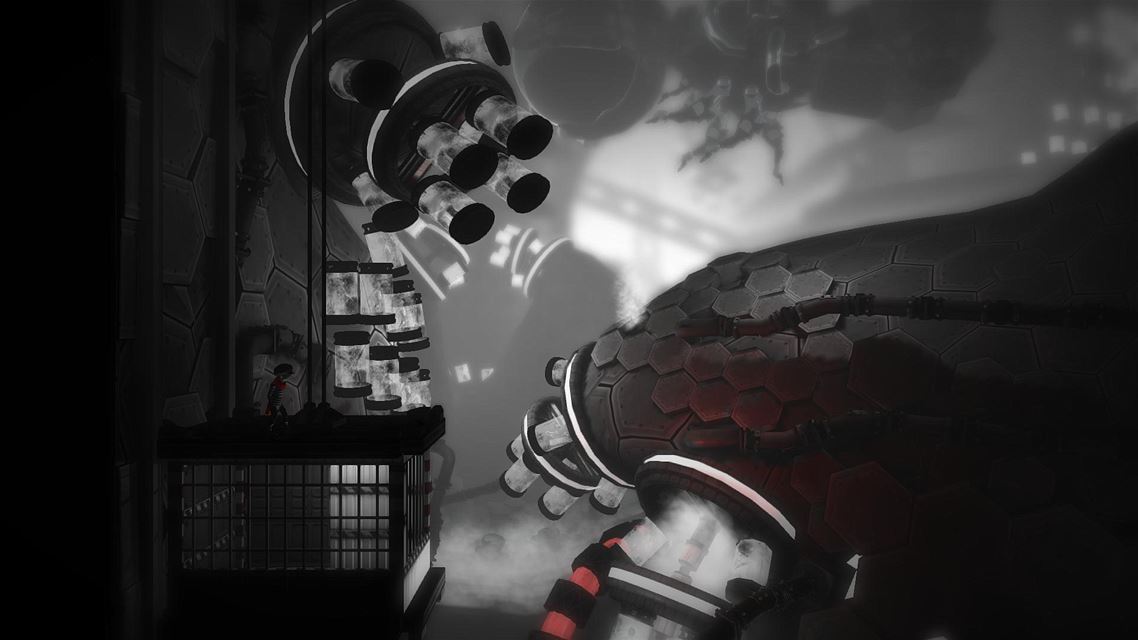
Monochroma, an atmospheric platform game set in a dystopian future, tries to capitalize on the popularity of games like Limbo, with level designs that are void of any life, and a story that is minimalist in the message it tries to convey. However, against its critically-acclaimed brethren, does this game achieve the goal it set out for and does it give the player an enjoyable experience?
The game, as I’ve mentioned, is set in an alternate universe, where a multinational, government-controlled corporation has taken over the entire world. As you traverse this world, you see the company logo, colours and influence visible everywhere and the company—which according to the developers—is a socialist tyranny that has enslaved the people. As you go through the game, you’ll see this nefarious plan unfold.
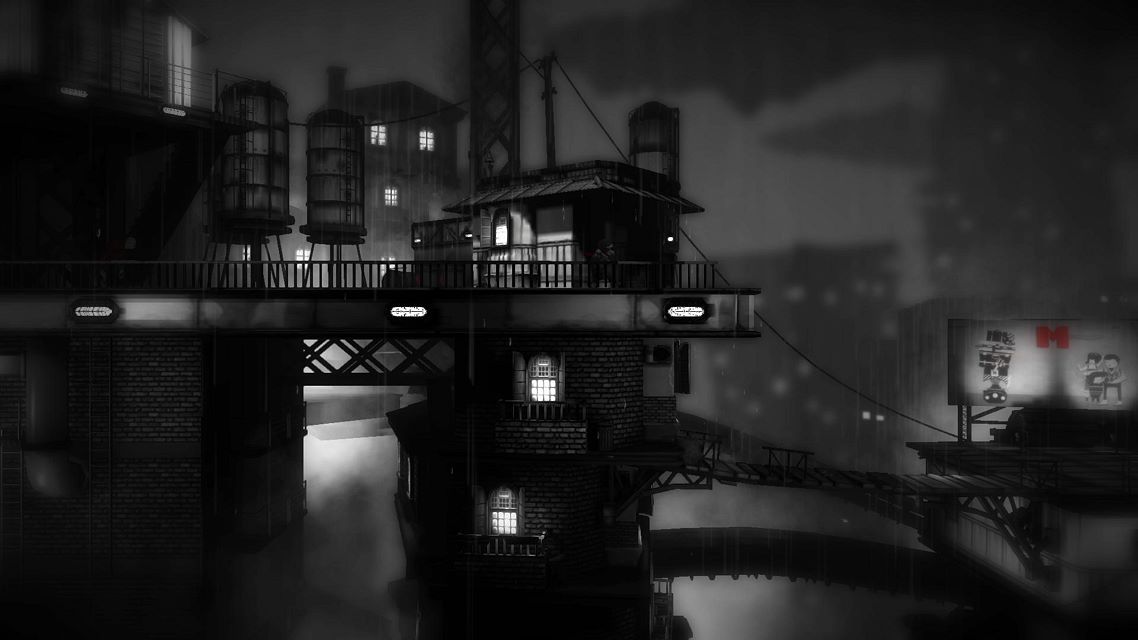
You play as a little boy, who at the start frolics with his little brother in a field outside your home. As you play around, the little brother wanders off with his kite. As one does, the big brother sets off and tries to bring him back, but your sibling falls and gets injured. However, this is where the game loses me. First off, you and your injured brother don’t turn around and head home, you instead forge on ahead in the direction your little brother would have gone, and of which you had to go and bring him back from, like some mad mindless drone.
Besides the weird turn of events at the start, the game takes on a pure Limbo-style approach, where you have to solve simple enough puzzles to continue through the game (or bring your brother closer to harm, even though that’s not the goal of the game). I was startled at the blatant similarities with Limbo and found that even certain sounds used in the game were starkly similar. But unlike Limbo, it over-reached in this regard with rather an odd background music, and mechanics that were visibly inferior.
The game also gives you certain instances where you’re “rushed” to achieve something, and this is usually marked by fast-paced music, and some big grunt chasing you down. Beyond that, the game takes some strange twists closer to the end, where your little brother finally gets kidnapped by the corporation—thanks to you—and you have to again set off and try to get him back. It becomes a rendition of Lord of the Rings and Eagle Eye (the movie). When you finally retrieve your brother from this nefarious overlord, you end up meters away from the main villain of the game.
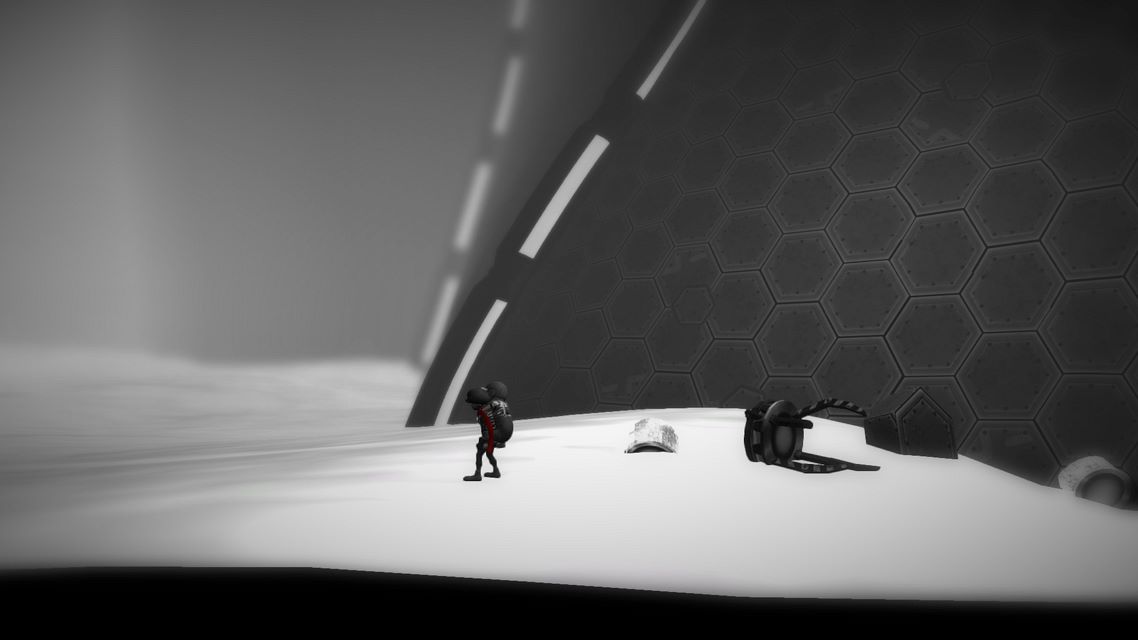
The end battle, which isn’t too difficult to complete, sees you try to disable the evil “master”, in his blimp, of all places. The game doesn’t expect you to take on this nefarious foe single-handedly, however, you have to maneuver around his attacks, and use other elements in the world around you to disable him.
The story ends on quite a sombre note, of which I found myself to be quite divided over. Firstly, you leave your smaller sibling out in the rain, and set off along with the blimp so you can play the hero, and then you end up doing something which is quite drastic but still unclear as to what it would accomplish. Usually, evil state-owned corporations don’t crumble when the CEO dies after his blimp is taken down by a ten-year old, and the main reason for the game was about you bringing your little brother safely home, of which you failed as well, since you left him on the site of the dock, where the company can take him back to where you had to save him from anyway.
The game opens too many plot points and closes none of them. It tries to convey brotherly love, but only ends with you feeling that the brother is most likely the most irresponsible of the two. The world outside of these facts is extremely well-designed and the puzzles are satisfactory, however with a story that leaves you scratching your head, it all goes down the drain.
Summary
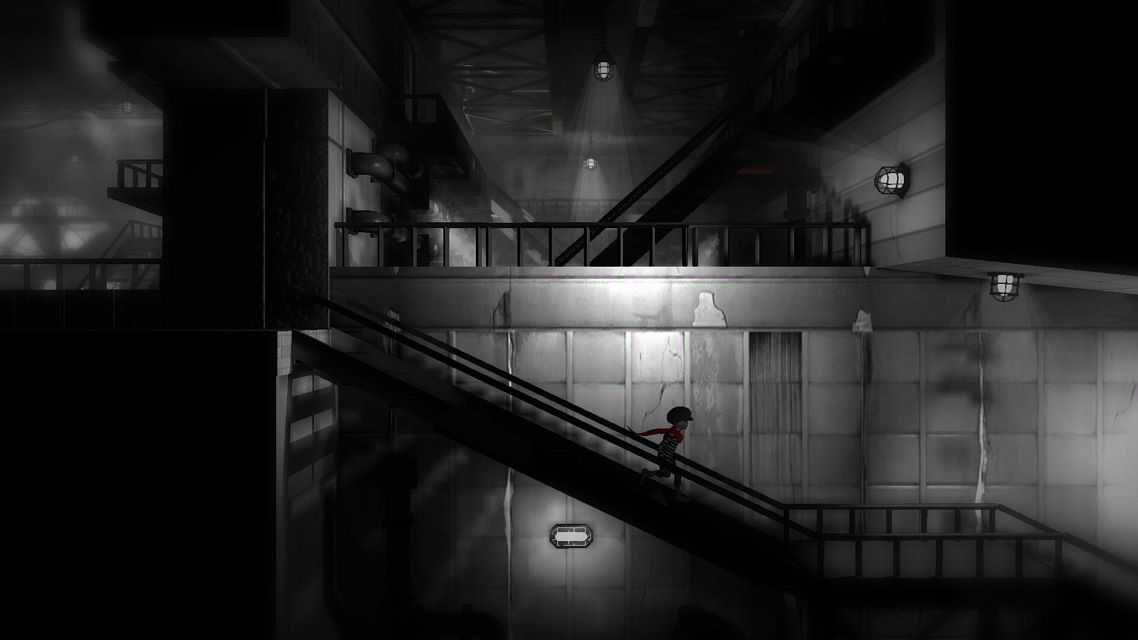
Monocroma tries to capitalize on the success of games like Limbo, but unlike those games, it fails to achieve anything of substance. The story is open to interpretation and leaves you wondering why the developers chose these set of events to try and convey that. The world is extremely atmospheric, and I didn’t find any glaring issues. The mechanics are broken, as you can visibly see the character latch onto ledges that do not have any correlation with the visible. The puzzles the game throws at you are similar in difficulty to what you would expect, and bar a few that can be quite challenging, it’s quite an enjoyable experience. I would recommend this game only for the rather tepid gameplay aspect as the story left me wanting more, but not in a good way.

Dreyer was a regular ICXM contributor between 2016–2017, publishing 139 articles across opinion pieces, game reviews, Windows and PC, and Xbox news. Their work focused on hands-on reviews, platform commentary, and breaking-news reporting during the Xbox One X launch year and Microsoft’s wider Play Anywhere / UWP gaming initiative. They post on X as @dreyer_smit.