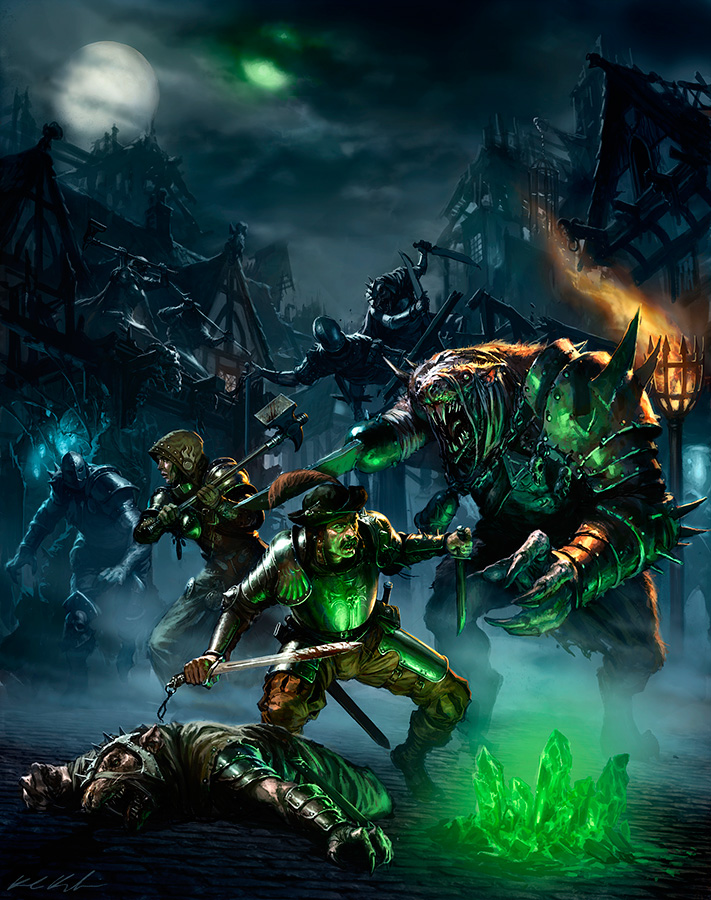
You’d think that converting tabletop games to video games wouldn’t be as difficult as so many developers have made it look over the years. It should be that difficult to just take what makes the original popular, make it digital, add some flair and make everybody happy. Mordheim: City of the Damned kind of does that, but in doing so, exposes a lot of the problems with such conversions.
Based on the Games Workshop tabletop version from many moons ago, Mordheim is a third-person, turn-based, swords-and-sorcery strategy game and other words that send a lot of people to sleep. But games like XCOM and Civilization prove that strategy games can be for more than just nerds without losing any meaningful depth or complexity.
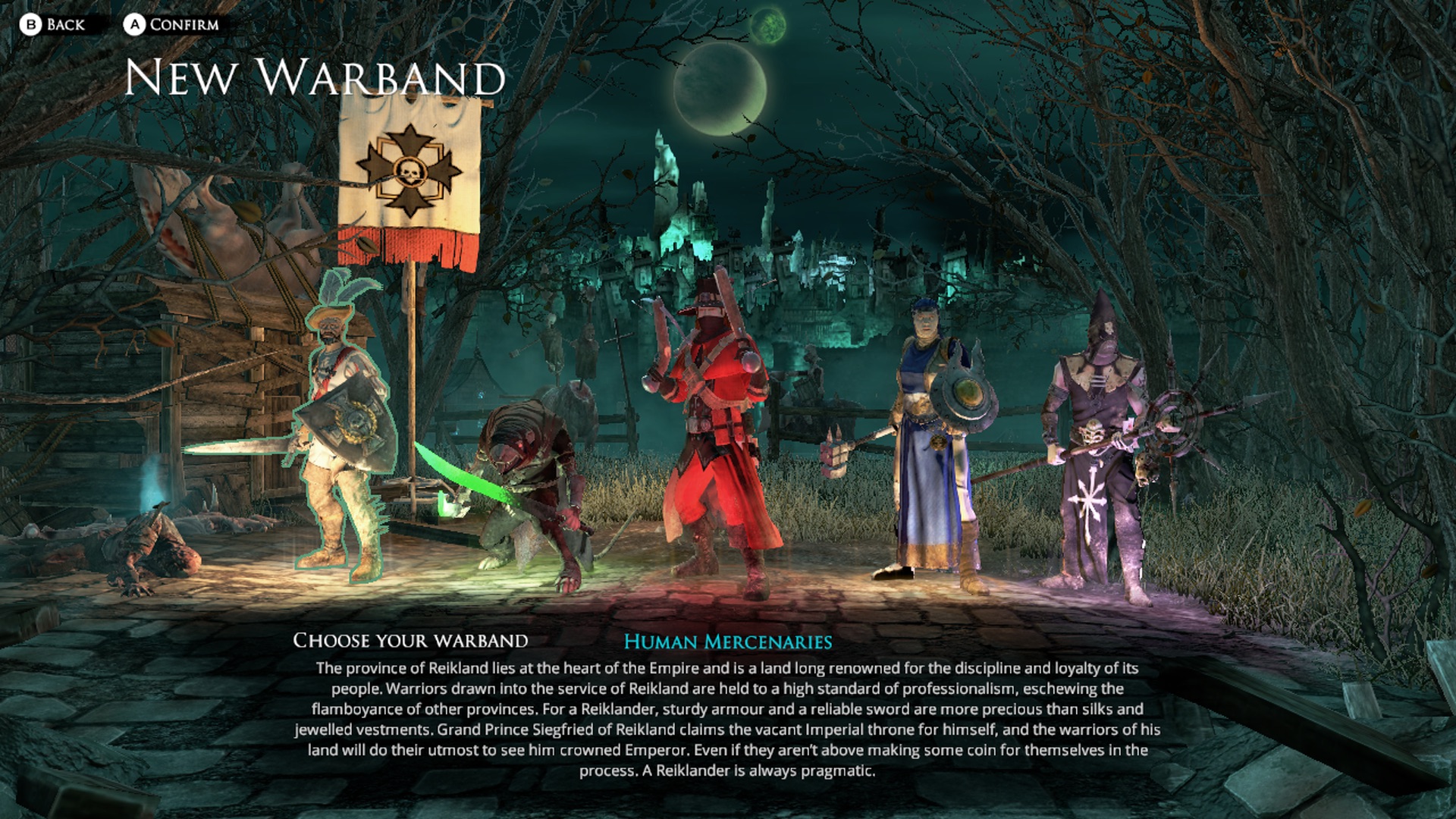
Unfortunately Mordheim eschews streamlined design philosophy but lacks the intellectual gravitas to appeal to armchair tacticians. Instead, it throws a ton of numbers and incredibility mind-numbing micromanagement at the player, to give the illusion that there’s more going on here than there is. It’s less of complex strategy game and more of jumbled mess with unsatisfying combat.
Right from the off, the main menu greets you with just two depressing main options; New Warband and Tutorials. You know a game is poorly streamlined when tutorials are a main feature. To its credit, they do help a lot, but they are a grind. It’s a similar kind of tedium to spending an hour reading the Monopoly instructions and arguing with your family over house rules.
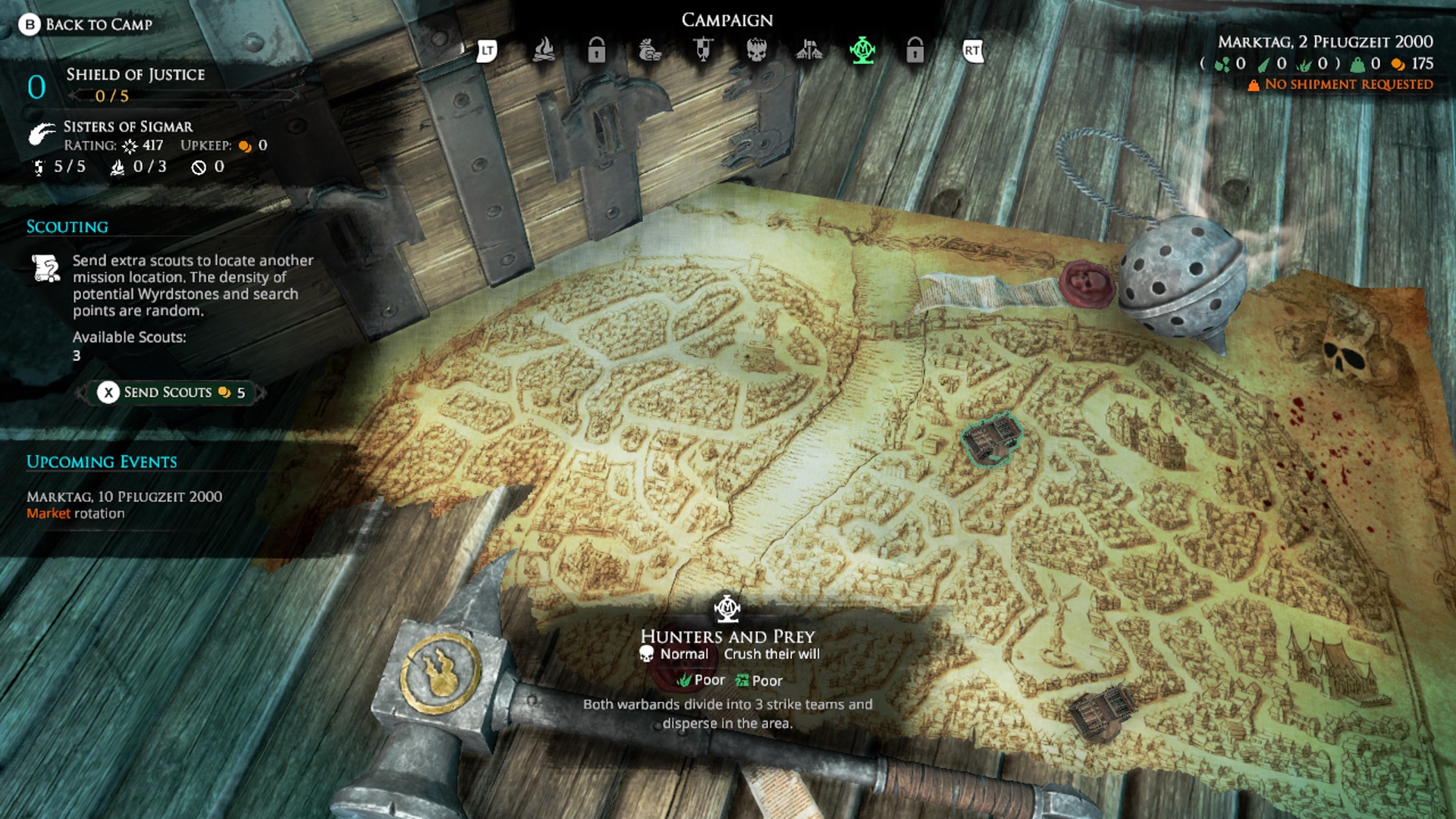
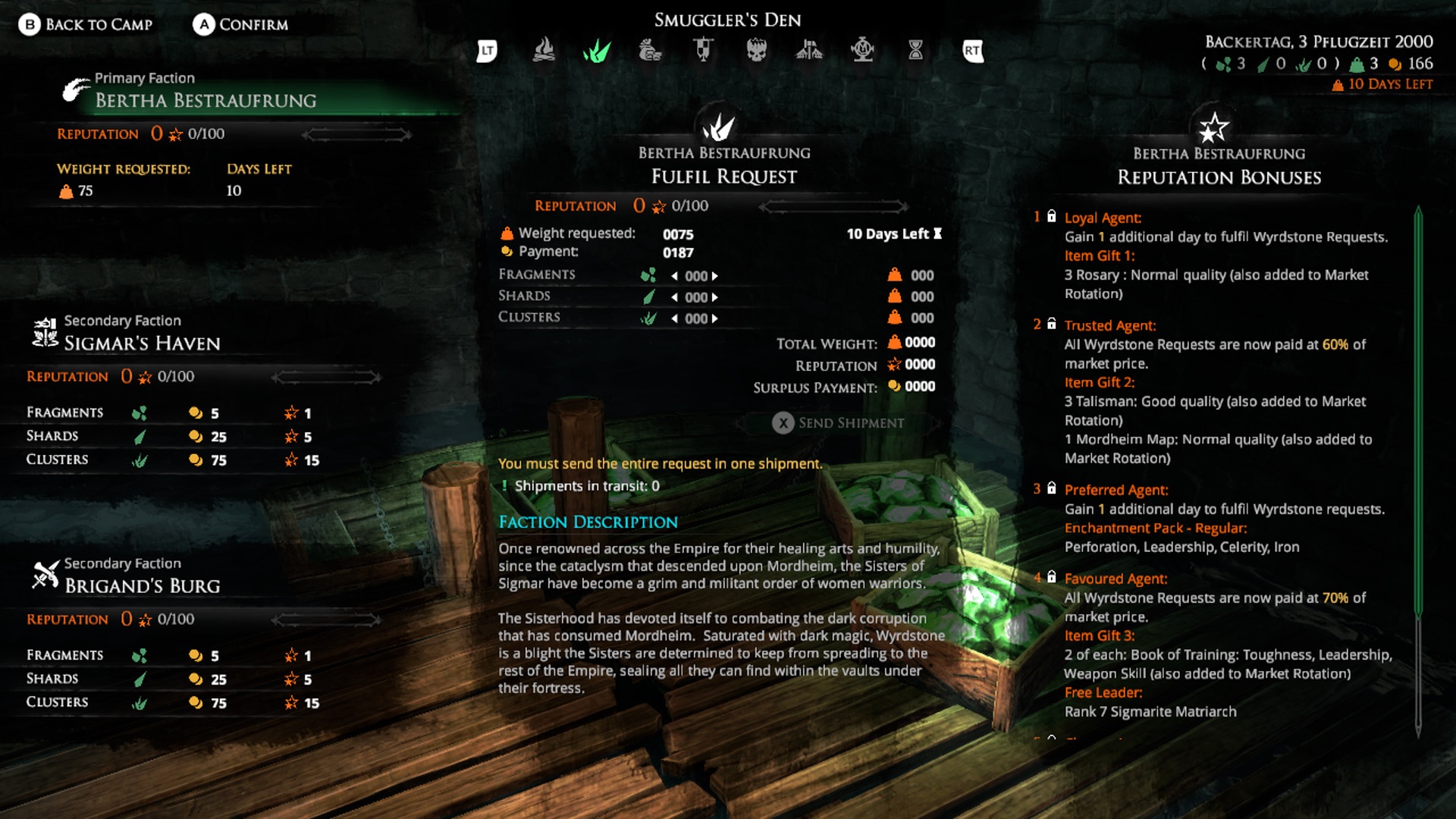
The meat of the game is the Warband mode, which you recruit soldiers, level them up, fight baddies in randomly chosen battles, trade items for profit and complete the overarching story. There’s a lot here, but there’s no elegance. It’s obvious here that the whole game’s UI was designed for PC first, with a huge amount of text in small sizes and ridiculously fiddly navigation.
Worse though, is the overall structure of the mode. The basic premise is that you fight battles and loot enemies or treasure chests around the maps in order to send shipments of cocaine or whatever it is to customers. But every step of this is so repetitive that it is immediately frustrating and tiresome. Before breaking down why, let’s talk about those battles.
So you launch a mission and pick your team. This is no XCOM loadout screen. It’s just a pop-up box with drag and drop selection and no awesome music to get you pumped or any visual representation of your team. After the long loading time on a static screen, the mission starts and then you probably have to wait again for at least one enemy to take their turn first, which also takes ages.
Eventually you get to go. Each character on either team has an individual turn, rather than controlling the whole team at once. The first thing you do is look at the strategy map, which is trash. It’s a hideous 2D drawing, but is necessarily for navigating the maze-like maps. It barely helps, considering the levels have multiple floors.
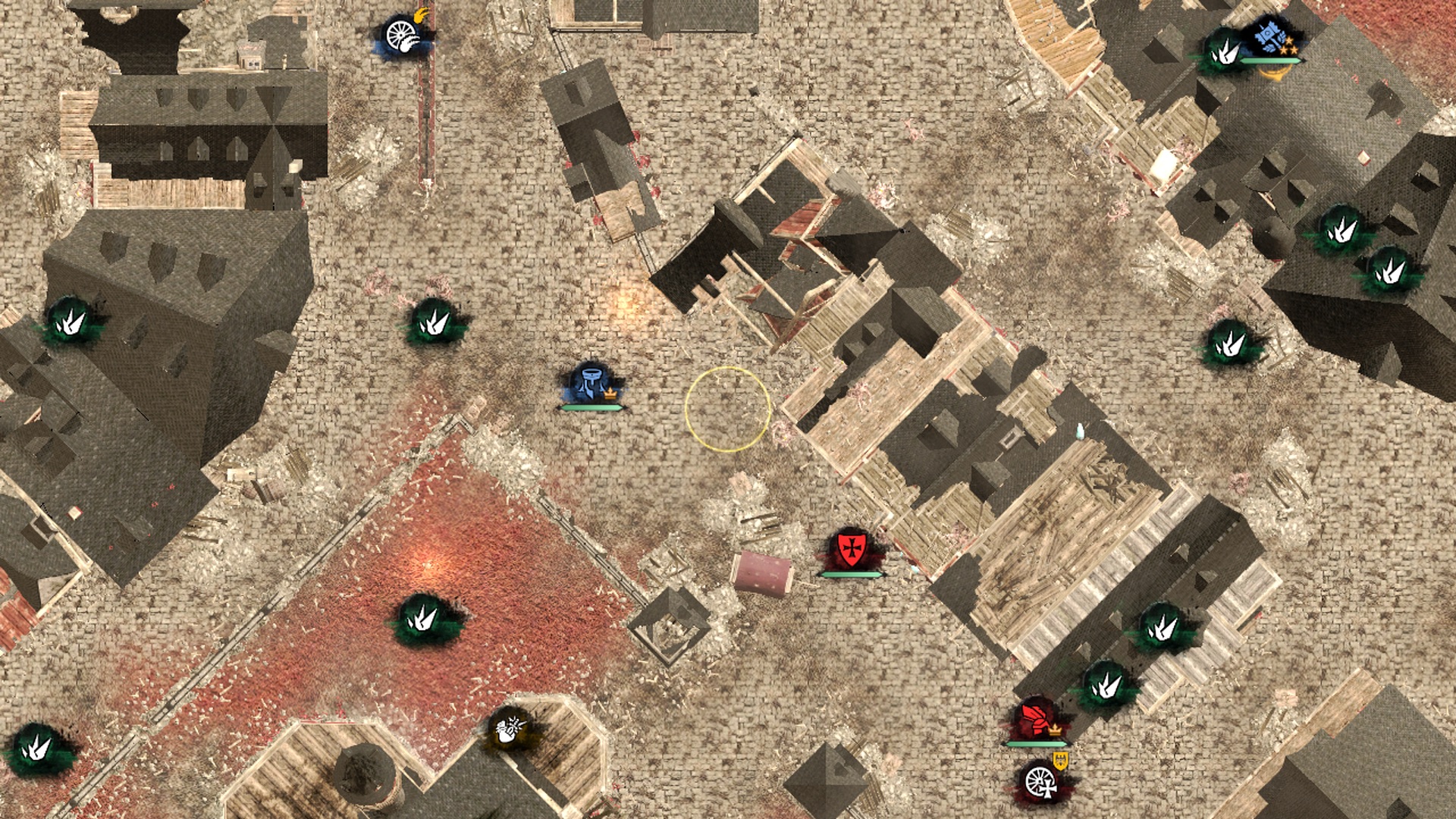
It was just a dumb decision to make this a third-person game, because not only would a bird’s-eye camera make the strategy way better and negate the need for a map, but it would also minimise exposure to the terrible, muddy graphics. Regardless, you move your character and encounter the awful movement system.
Each character gets a certain number of movement points, with lines and a flag on the floor showing how far you can move per movement point. But moves aren’t final, so you can run around and get back points after exploring. This makes for a very unfocused experience, as you clumsily stumble around, getting stuck on invisible blocks or getting confused about which movement flag was which and looking silly. It’s certainly not the deliberate series of moves you’d find in chess.
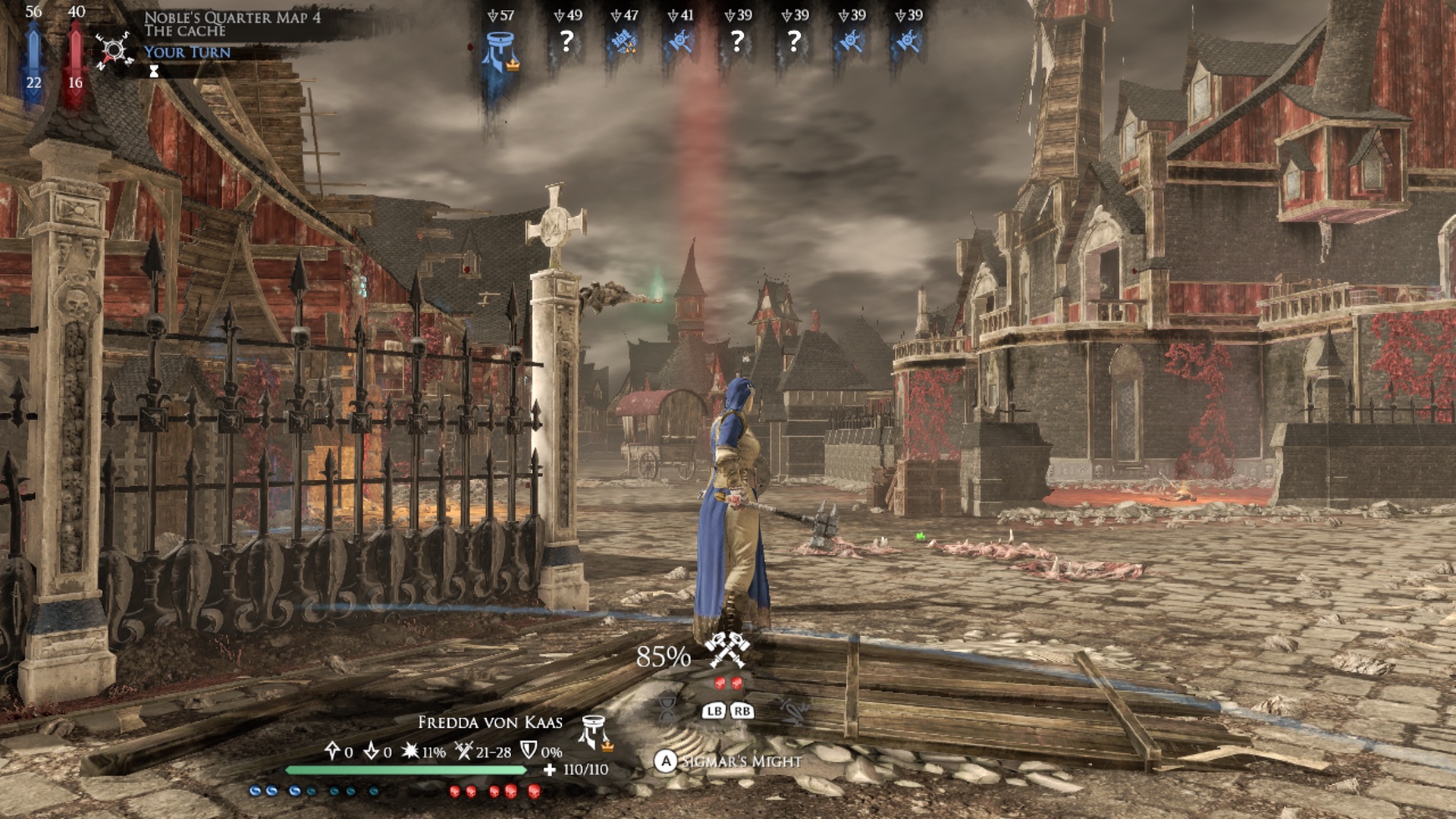
Eventually you’ll find a chest to loot, earning a tiny amount of Wyrdstone. You need a lot of that, so you’ll be looting chests over and over again in every mission. At some point you’ll fight the bad guys and their competent but boring AI. When you move close to them, you get locked into attack mode, so there’s no real choice but to fight to the death.
This means clicking attack and confirming the “are you sure?” thingy, every damn time, which will be a lot. After attacking at least once, you normally have the option to go into a stance, like dodge. Again this means clicking dodge and confirming and watching the same piss poor animation as always. Later in the game you get spells which adds some variety, but they’re mostly either mundane or plain useless.
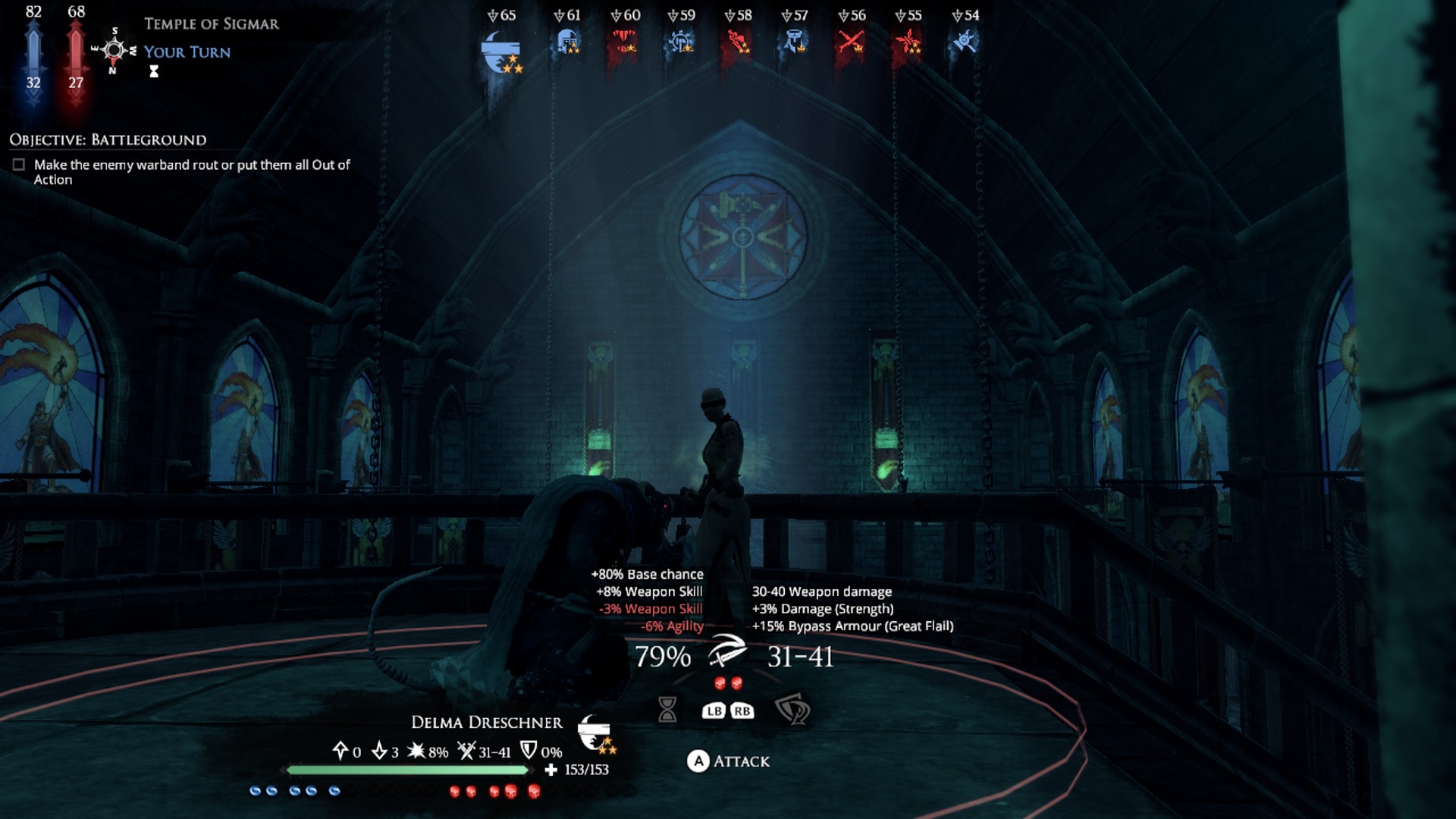
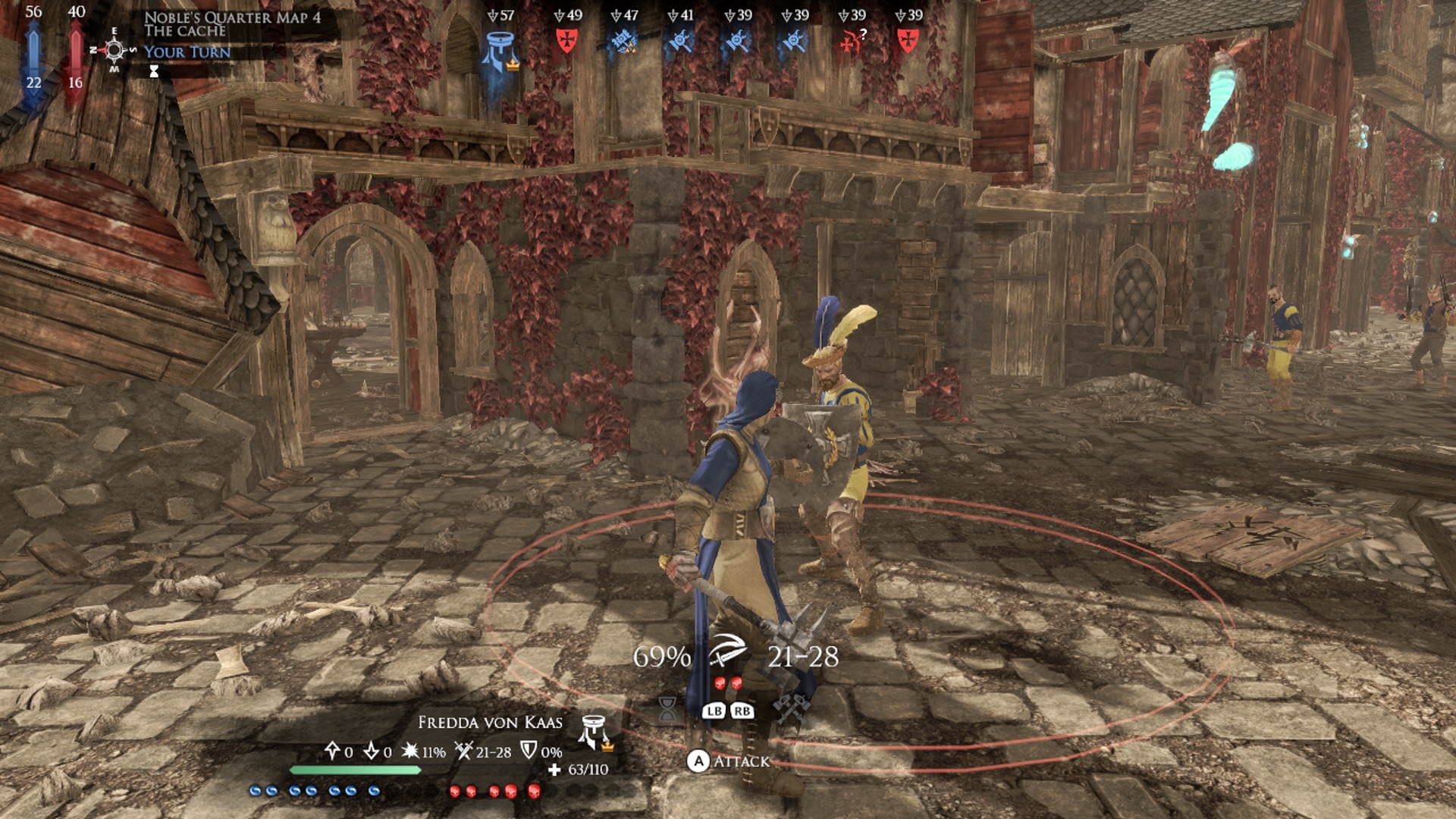
Because of the dodge thing, generally low hit ratios and high health stats, you spend a long time just pressing ‘A’ repeatedly, swinging swords back and forth trying to grind the other guy down. The attacks and deaths aren’t satisfying or shocking. The characters have no personality or voices and you can barely customise them so you don’t care. They just fall down and you move on.
There is a bit of strategy in the combat, with the way you position soldiers and timing of turns and so on. But it’s limited by terrible design choices. The aforementioned third-person perspective is one, but the turn and fight systems are bad too. By splitting up turns per character and locking people into fights, strategic choices are severely limited.
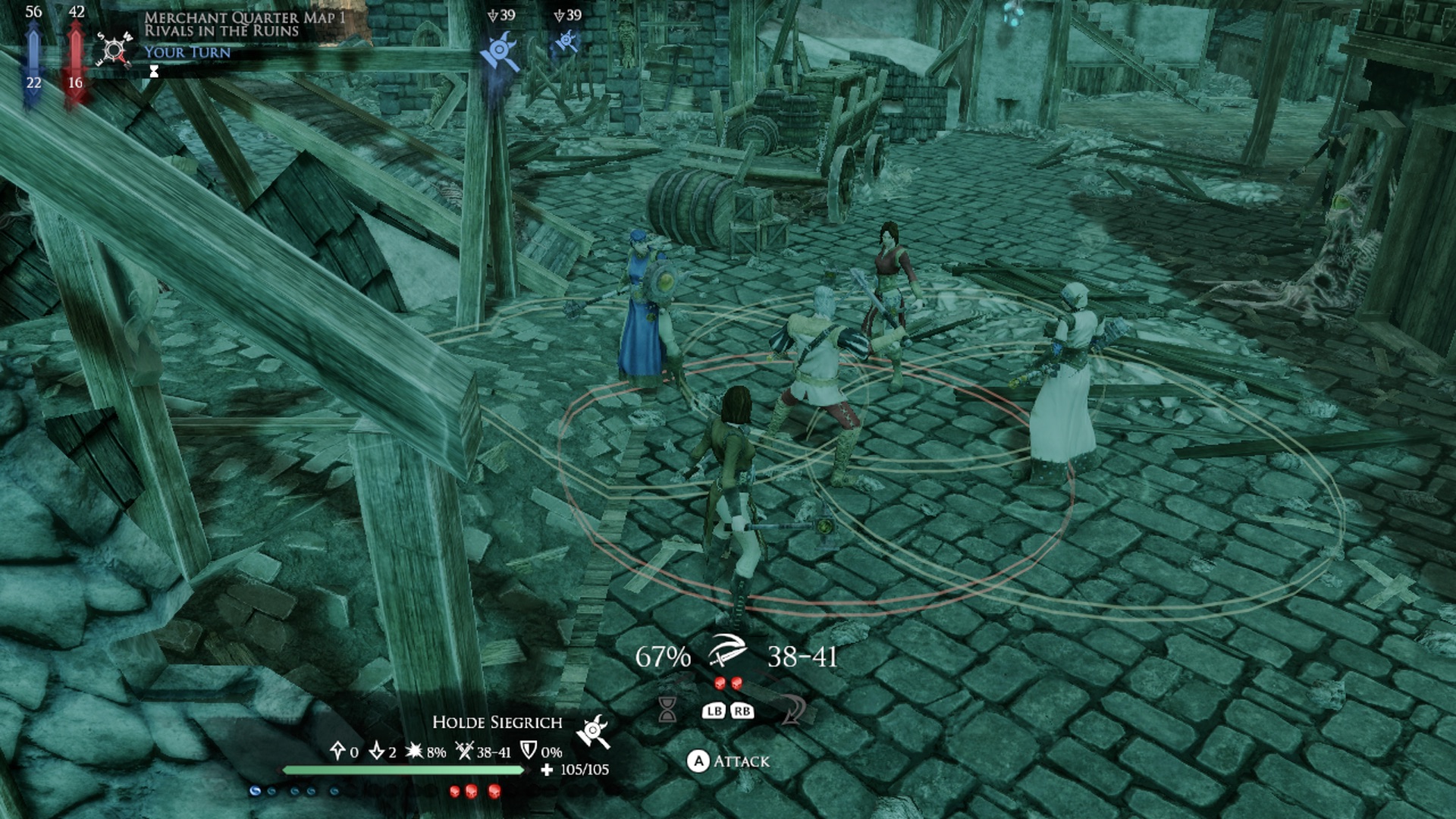
It all boils down to fight this guy or don’t. It’s not like you’re moving things around and seeing how your opponent reacts, because there’s no real opportunity to. It even backfires entirely sometimes. Fights can get so clustered that you can’t get a new soldier into it, due to the arbitrary ‘combat zone’ rule, so you just end up skipping that turn. You almost always feel like your hands are tied or you’re just going through the motions.
In these missions you also have objectives like stealing the enemy idol. But because you get locked into fights where fleeing is either impossible or harshly punished, people die which causes a team to rout and the match to end, regardless of how close you were to finishing the objective. So you can beat the enemy but get nothing for it. It’s awful.
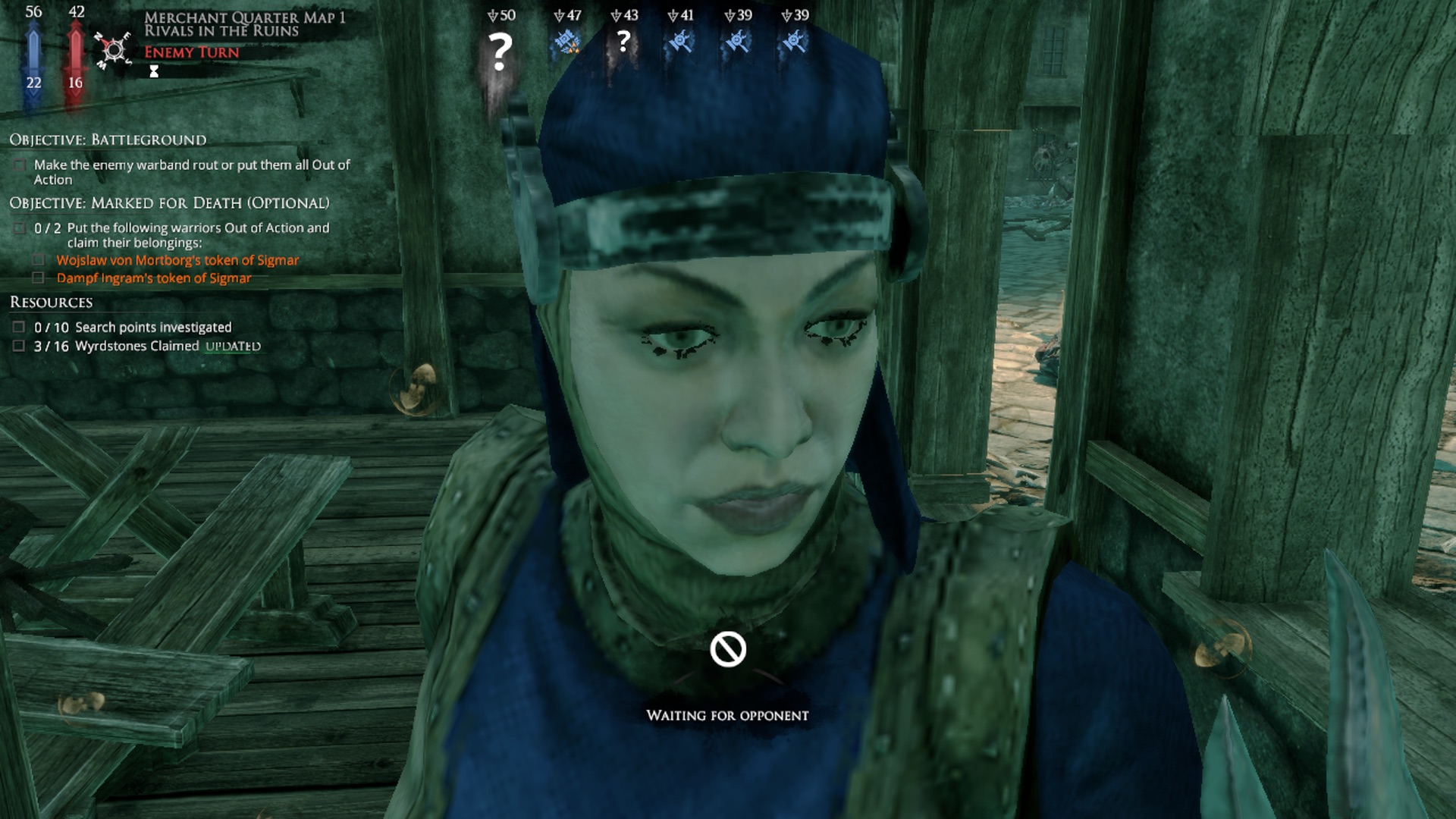
Finally you win or lose and get a post-game screen. Now you have to click through every single one of your nearly identical-looking guys, to be told they levelled up one stat point out of a bajillion different stat points. Wow, so exciting. Then you have to go to the Warband screen and pay them after EVERY BATTLE. One by one, you click on them, then click pay, then click confirm payment. Then, because people get injured a lot, you have to do the same thing to heal them. One by one, you click on them, then click heal, then click confirm heal.
It’s painful. Sometimes a guy randomly gets a bad injury, so they can’t fight, which means you can’t even do a mission. So you just hit ‘Next Day’ and wait, over and over until you can play again. All of these things add up to make Mordheim so unbearably tedious, with repetition on top of long waits of nothing on top of dreary micromanagement. Your reward for dealing with all that is an ugly, mediocre strategy game lacking any sense of excitement.
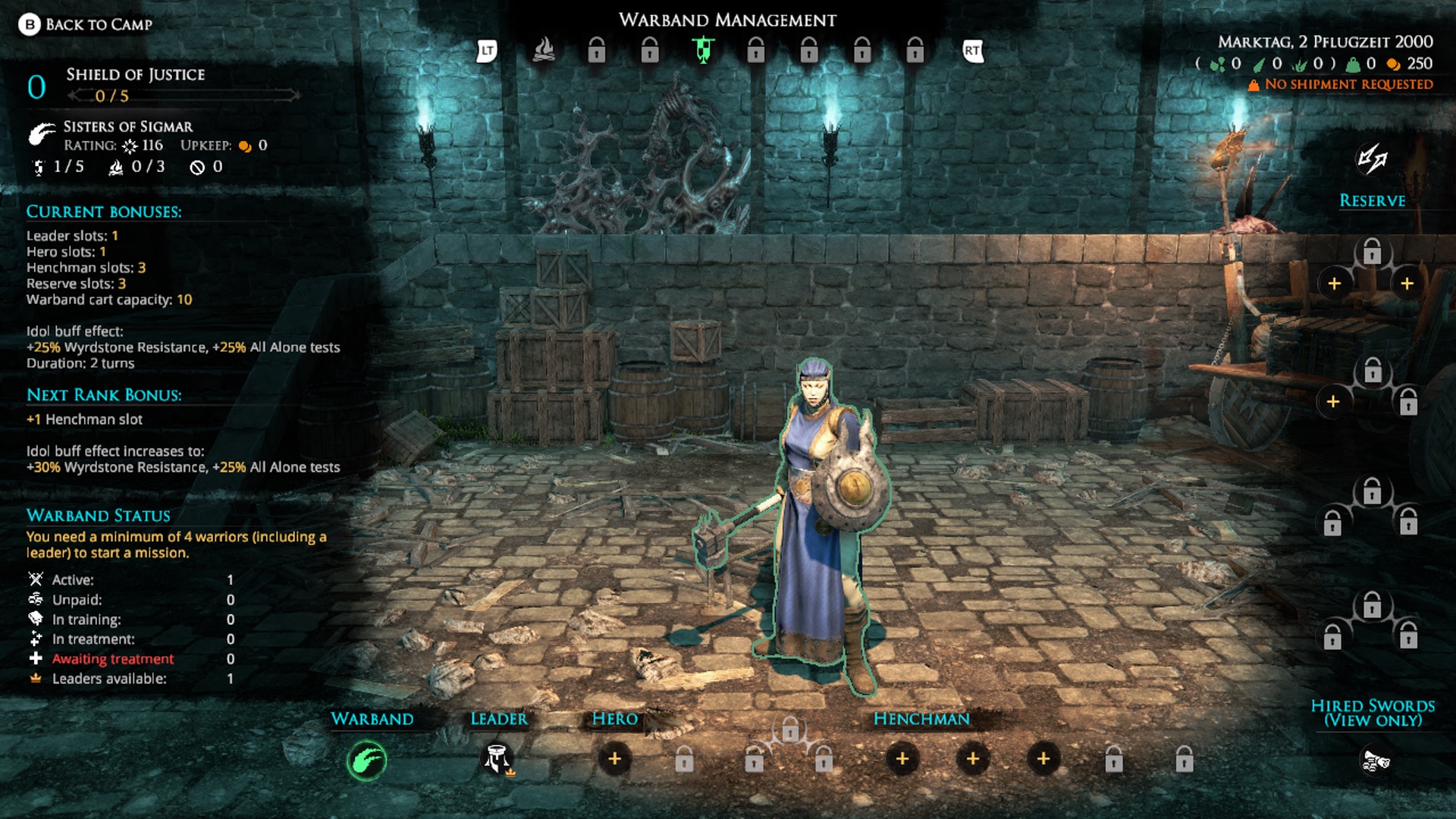
The only thing the game really has going for it is the immense amount of detail in the abilities and stats of characters. This is full RPG stuff, with multiple pages of abilities and so many numbers your head will spin. That in of itself isn’t a problem, but it isn’t necessary.
There’s simply no reason why all the hundreds of stats, each often having ratings like 147 or 258 for example, couldn’t have been simplified into a couple of dozen stats with ratings up to 20 or something. XCOM of course does this brilliantly, as did Mass Effect 2 after the mess of the original’s systems.
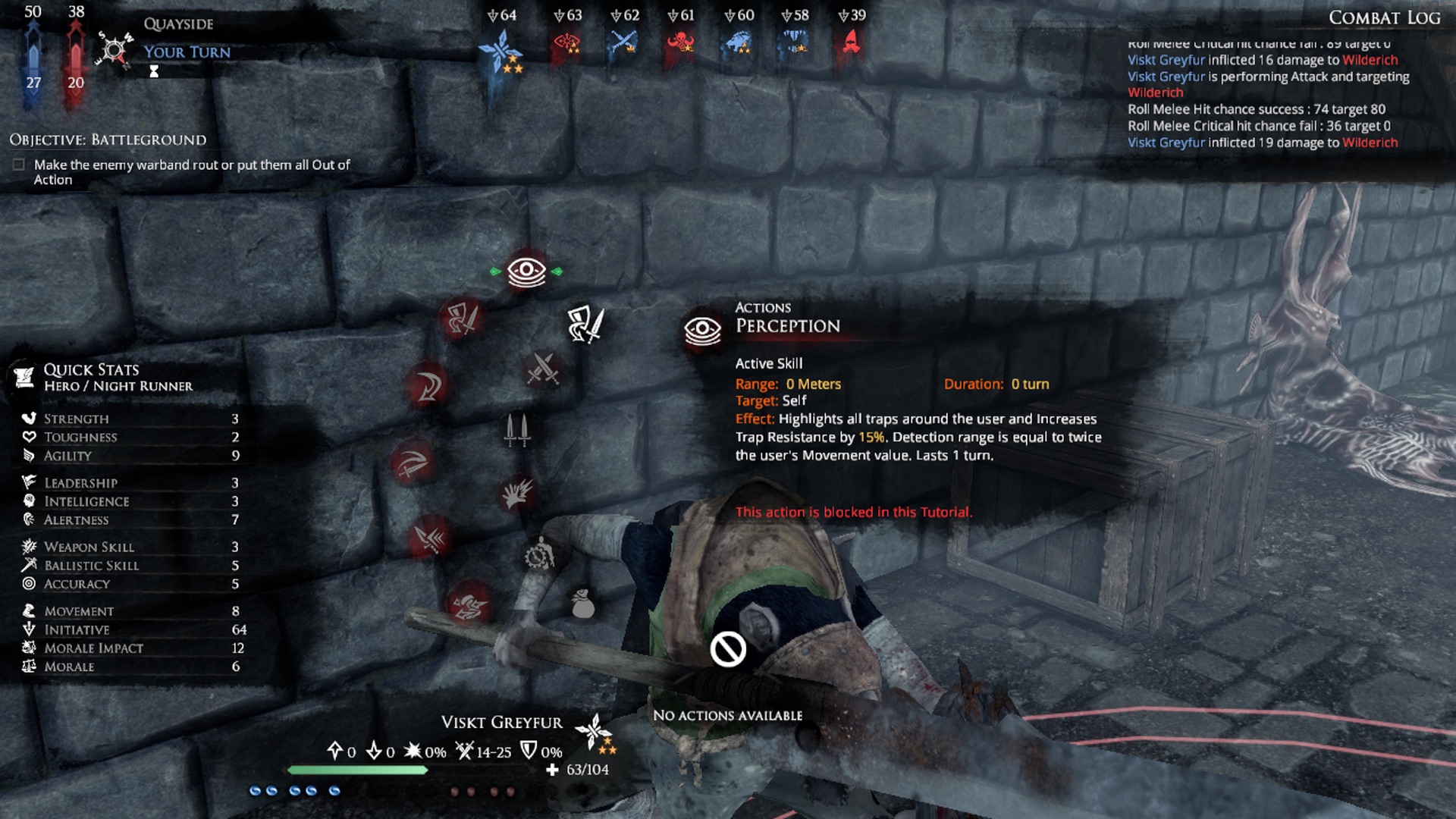
When you streamline the user-facing details, it makes everything better. It’s easier to get into, easier to understand at a glance, easier to translate into graphics, easier to create clear differentiations between types of characters and more immediately satisfying when something changes. If a stat goes from 88 to 89/100 and boosts attack strength by 1%, nobody cares, but if it goes from 3 to 4/5 and you get a distinct new ability that’s instantly usable, it’s super awesome.
Of course, really detailed stats can be great. But not for every game and not in every aspect of play. There’s no need for them to be this granulated. You have to be careful when and how you show them. Too many tiny differentiations can actually obfuscate things more than not showing them at all. The focus should be on the actions and choices at the tactical level, with very carefully chosen and clearly defined stats adding depth. Unfortunately, this game completely fails at that.
It’s really quite sad that Mordheim is this unsatisfying. There’s loads of stuff to do in the game, with lots of stats, random missions, types of characters unique factions. It looks amazing on paper, but none of it feels good to play. It doesn’t matter that you’ve got a huge box of chocolates of three dozen different varieties, if they all taste like dog food.
Summary
Playing Mordheim is an exercise in tedium. It’s slow, dreary, ugly, frustrating and repetitive, with no sense of excitement and a distinct lack of polish. The amount of numbers and stats and rules the game has give the illusion of strategic depth, but this one simply belongs in the depths.

Dean was a regular ICXM contributor between 2015–2017, publishing 39 articles across game reviews, Windows and PC, and Xbox news. Their work focused on hands-on reviews, platform commentary, and breaking-news reporting during the Xbox One X launch year and Microsoft’s wider Play Anywhere / UWP gaming initiative. They post on X as @SpookyWomble.