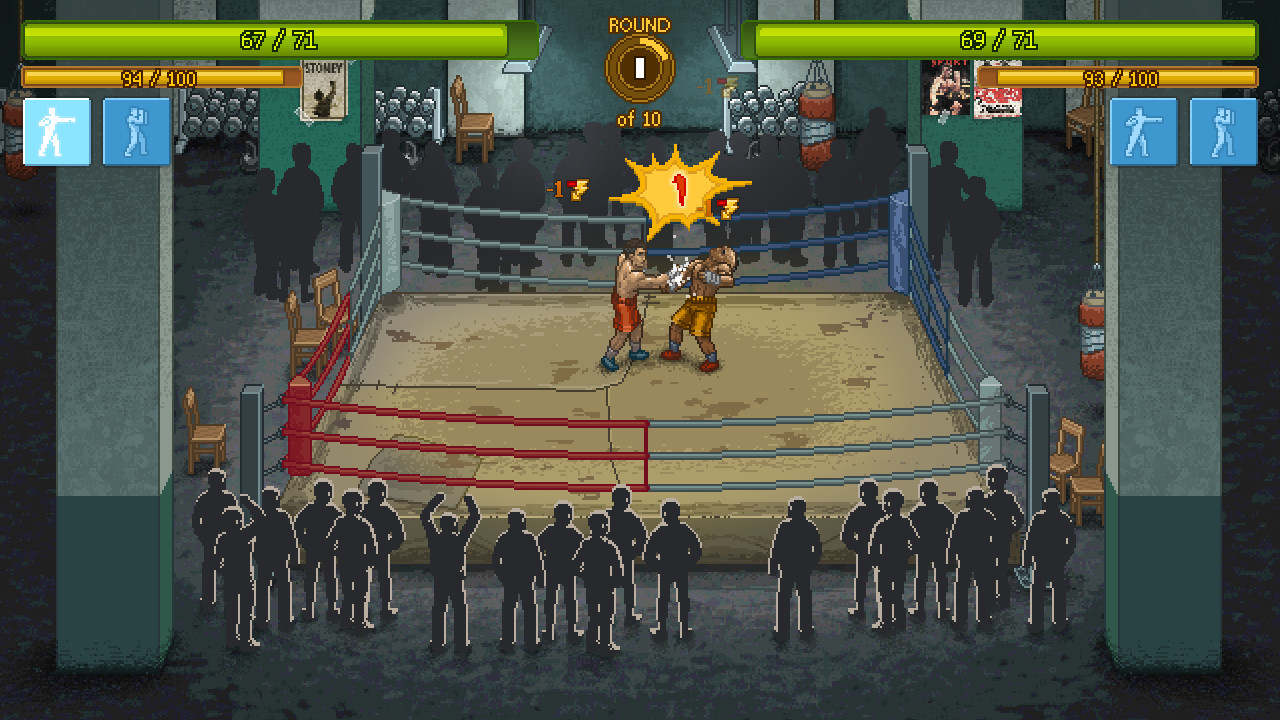
Punch Club, the latest from developer Lazy Bear Games, combines the essence of tycoon games with a distinct style that nods to ’80s and ’90s action movies, games, and television. References from Fight Club, Pulp Fiction, Rocky, The Godfather, Teenage Mutant Ninja Turtles, and many more are present. Although it can become repetitive and monotonous at times, Punch Club’s detailed animations, upbeat retro soundtrack, and gestures towards pop culture make it unique, entertaining, and a joy to appreciate.
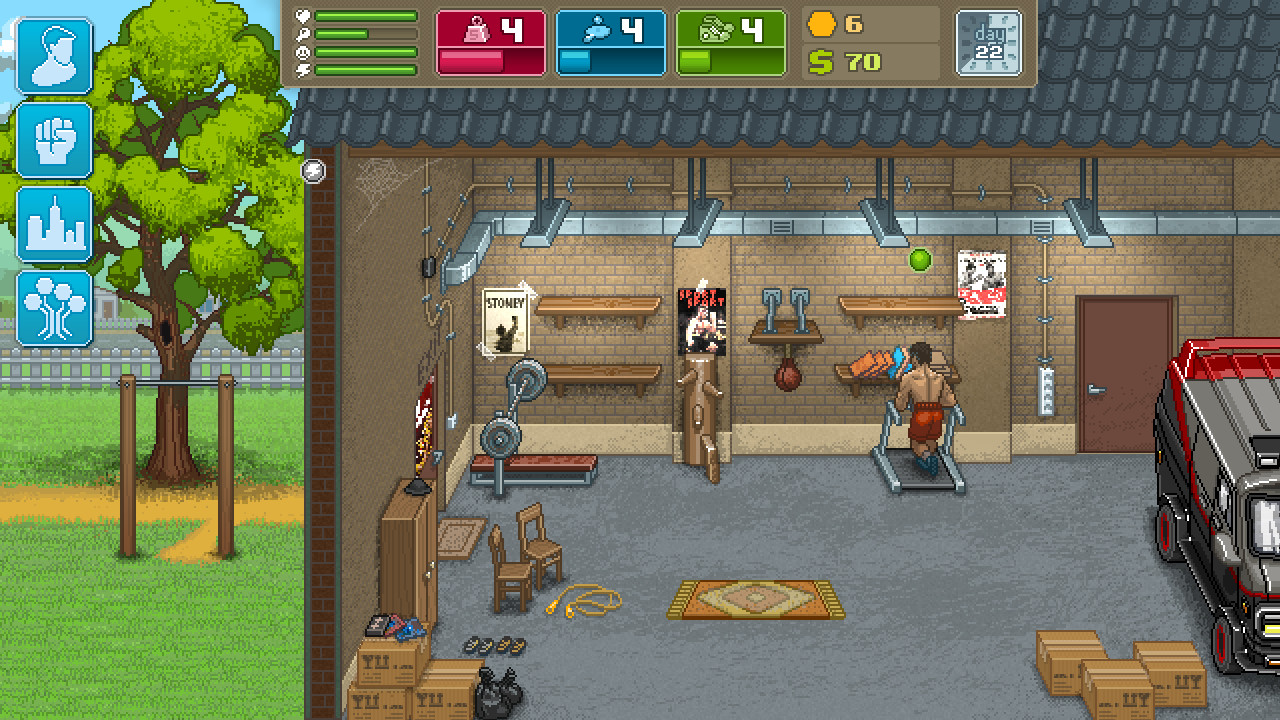
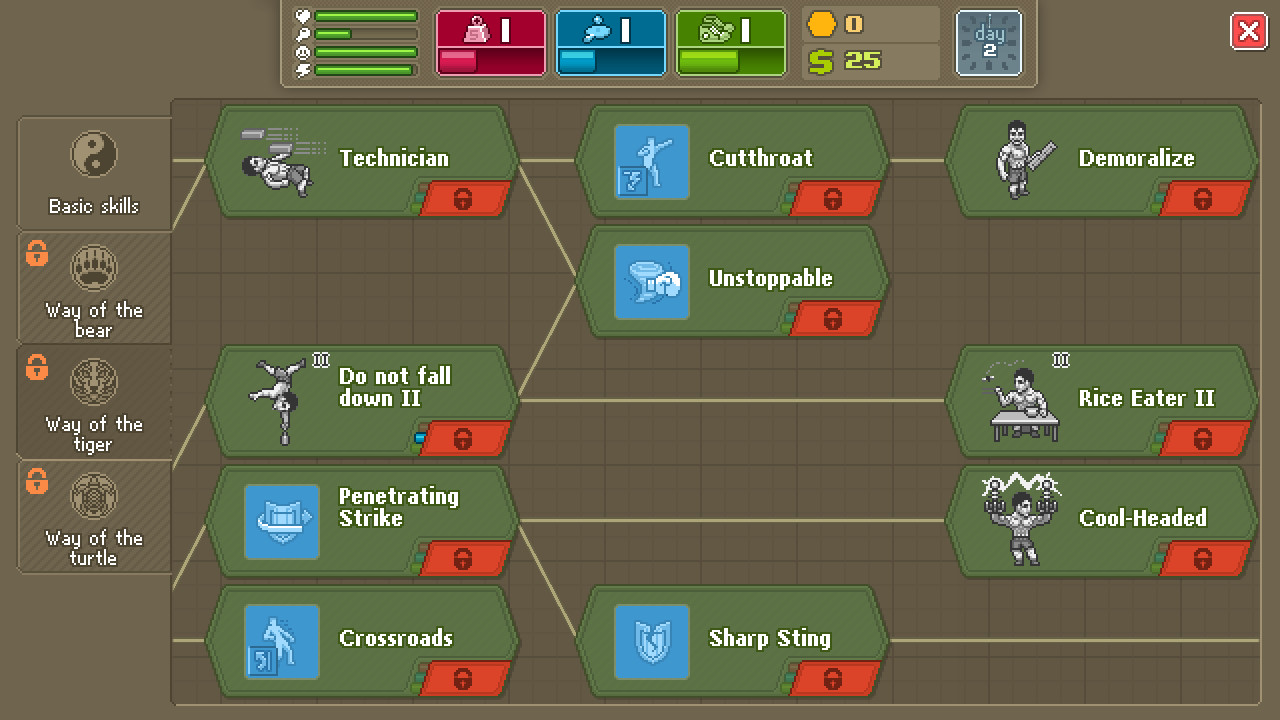
Punch Club starts right off with the satire. Your character’s father, a professional boxer, is murdered in an alley, leading you to swear revenge on his killer. You begin your journey poor but optimistic. The main goal is to train in one of three core skills; strength, agility, or stamina, in order to progress through a ranking of fighters, just as your father did before you. As you use different workout equipment, floating colorful orbs will illustrate improvements to these skills. By training with others and by winning fights you gain skill points, which can be spent on abilities to improve your fighting.
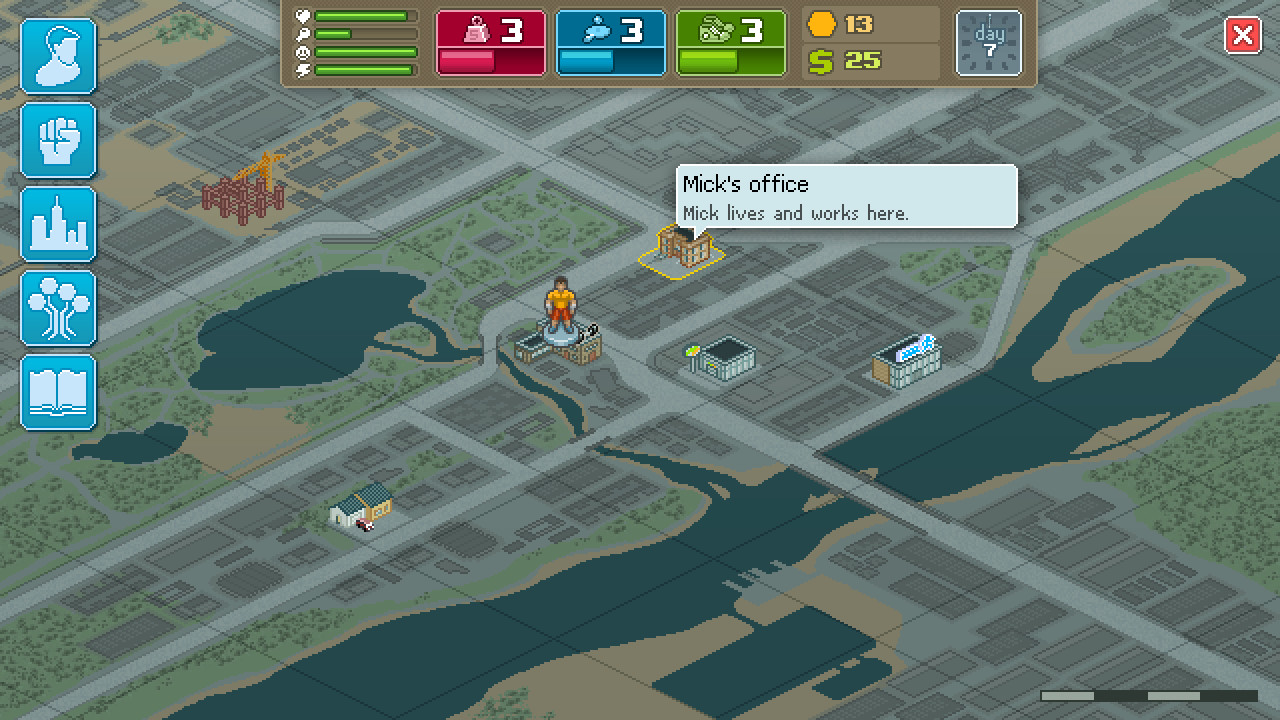
You also need to spend time working for money, participating in recreational activities, sleeping, eating, and resting, or else you will not be able to perform tasks. However, there’s a catch; at the end of each day your stats decrease a small bit. Skipping training for even two in-game days can have a major negative impact on your performance in fights, and thus on your overall progress too.
Using strategy and planning in order to progress is at first welcoming, but soon becomes frustrating. Once you develop a pattern and determine the most efficient way to organize daily routines, tasks start to become tedious and boring. Nevertheless, “tedious” and “boring” are perhaps what define management games in general, and Punch Club does mix up the formula a bit more so than other games of the same genre. New characters and locations are introduced as you progress and a couple of unforeseen changes to the narrative will force you to develop slightly new approaches to certain situations.
Combat suffers from a similar issue. Screenshots might imply that Punch Club features fighting similar to that in games like Mortal Kombat or Street Fighter, with WASD or directional arrows being used to control one’s character, but actually each fight unfolds automatically on screen. Every attack and miss and block is RNG, or numbers based. In between rounds you choose a series of perks and abilities for your character to employ, but you don’t do anything afterwards. Simply stand by and see how the whole thing plays out. This, on its own, is not necessarily a bad thing. The issue comes from the lengths of the hundreds of fights in which you will participate. With no way to fast-forward during these scenes, each fight can last anywhere from 20 seconds to a minute, and although each and every move is animated with the utmost care, the initial awe dies down quite soon. Towards the last few hours of my playthrough I completely abandoned Punch Club during these fight scenes, scrolling through my phone instead. For a player to turn his back on the key theme behind a game is not a good thing.
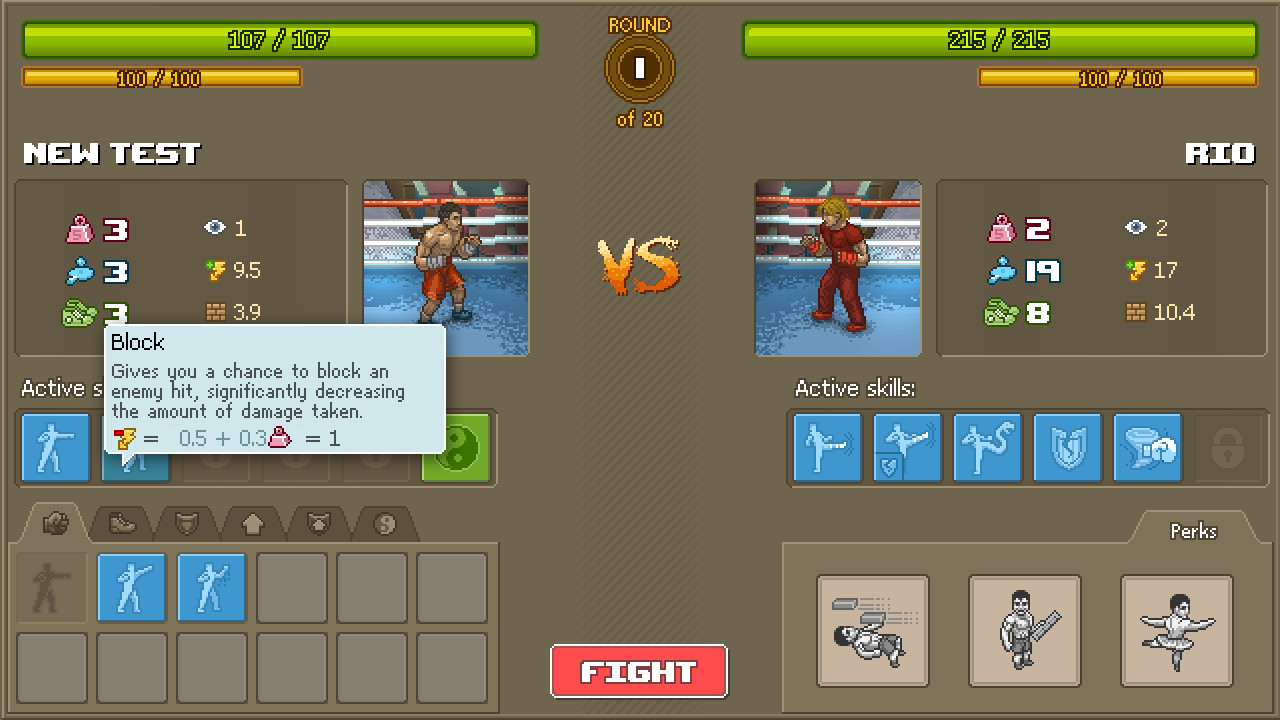
I adore the artistic style behind Punch Club. A visual retro filter can be toggled on or off and each location is incredibly detailed with relevant objects, posters, and people. Each push-up and each pull-up is perfectly captured by a slightly modernized 16-bit look.
The soundtrack – probably my favorite aspect of Punch Club – matches this aesthetic. It’s upbeat, it’s invigorating, and it, like Punch Club’s visuals, is reminiscent of classics from the SNES or Genesis ages while also feeling modern and evolved.
Summary
I really enjoyed my eleven or twelve hours with the slightly branching narrative of Punch Club. Although I found that far too much time was spent endlessly grinding or waiting for fights to end, Punch Club has a certain charm that is hard to shake. I completed the game in only a couple of sittings, my addiction to progress compelling me to play for several hours in a row and my sentimental attachment to its themes urging me to remember it as special. For the low price of ten dollars, you can’t really go wrong with Punch Club.

Tristan was a regular ICXM contributor between 2015–2017, publishing 51 articles across opinion pieces, game reviews, Windows and PC, and Xbox news. Their work focused on hands-on reviews, platform commentary, and breaking-news reporting during the Xbox One X launch year and Microsoft’s wider Play Anywhere / UWP gaming initiative. They post on X as @tbogost.