Introduction
Quantum Break is Remedy Entertainment’s take on time travel and manipulation. It is your classic, third-person action game that follows the story of Jack Joyce (Shawn Ashmore of X-Men) and his one-time friend, now enemy Paul Serene (Aiden Gillen of Game of Thrones). Jack is summoned back home by Paul, who works at Riverport University, to help him out in a difficult time. He informs Jack he has an “amazing discovery” to show him. After years of work with Will Joyce, Jack’s brother, Paul has developed a time machine. It uses chronon particles to develop a pseudo black hole, which allows the user to walk through the machine and exit in a new time period. According to Paul, Will began to “lose it” as the time for human experimentation grew closer, which resulted in his termination from the project and his disappearance. Every time travel movie or game has had its own little twist, and Remedy came up with theirs. In Quantum Break, you can only travel back in time for as long as the machine has been active.
Paul activates the machine and sends himself two minutes into the future as a test. Of course, the experiment goes wrong and Will Joyce (Dominic Monaghan of Lost) shows up to try and fix the problem. In the struggle, a machine malfunction grants Jack the time abilities he uses in the game. With nowhere else to go, Paul attempts to escape through the machine again as Will and Jack need to fight their way through Monarch’s troops. The activation of the machine caused a rift in time and now two separate timelines have begun to overlap. As they do, time stutters occur which stops everything for their duration. Jack is able to maneuver through these due to his chronon powers. If the rift is not repaired, eventually the two timelines will overlap entirely, resulting in permanent stutter where nothing will ever move again. The end of time. Will tells Jack he has a way to fix this and that Paul is using the machine for his own personal gain.
This is where the greatness begins. Quantum Break’s story consists of such numerous moving parts that all come together cohesively. Many see their own opportunity to take advantage of this technology. Others want nothing to do with it and fear it. All the subplots of these individual characters not only function independently, but they also impact every other character in the game. Of course, they don’t know what the others are doing, but we do since we are playing. The way that Remedy blends this all together without any major holes in the plot is incredibly intriguing and results in a truly enthralling storyline.

The story of Quantum Break is told through the combination of a game and four episodes of a live-action show. The game includes five acts, each with multiple parts, and the live-action episodes are shown at the completion of acts one through four. Act five is where the game ends. You can choose to play through three difficulty levels with an achievement for completing the game on each one. It’s a game that benefits greatly from multiple playthroughs as it allows you to see different aspects of both the game and show. Completionists will also need to play it multiple times in order get all achievements. During the game you play as Jack Joyce, with the live-action show centered around Paul Serene. At the completion of each game episode, you control Paul for a brief scene prior to arriving at a junction point.
These points are your Mass Effect-like moments. Paul is given two choices and you can see the potential outcomes of each one. You then have to choose which path the game takes. Some people die, some people live, and you decide who. Both the game and show change depending on your choice.
The live-action show’s four episodes account for only ninety minutes of Quantum Break’s ten hours of gameplay. Along with Paul Serene, you’ll follow the storylines of his right hand man Martin Hatch (Lance Reddick of Fringe), Dr. Sofia Amaral (Jacqueline Pinol of Fault in Our Stars) and Liam Burke (Patrick Heusinger of Black Swan). Hatch is the face of Monarch Corporation, Sofia Amaral is a scientist who aids Paul, and Liam Burke is their security specialist. So, he’s basically a trained killer. In fact, the fight scene choreography in the episodes is so good that I wouldn’t be surprised if Liam gets his own action movie after starring in Jack Reacher’s sequel later this year.
Each of these characters manipulate the others while trying to solve their own problems. Paul Serene is manipulating all of them in hopes of accomplishing his master plan. None of them are any the wiser and each thinks they are the ones with the upper hand over the others. What you see in each episode is dependent upon the choices you make with Paul at each junction point. They are filmed and acted incredibly well and the show benefits from such great star power. It becomes obvious a few minutes into the first episode that Quantum Break would be proper blockbuster project if made solely into a film.
Gameplay
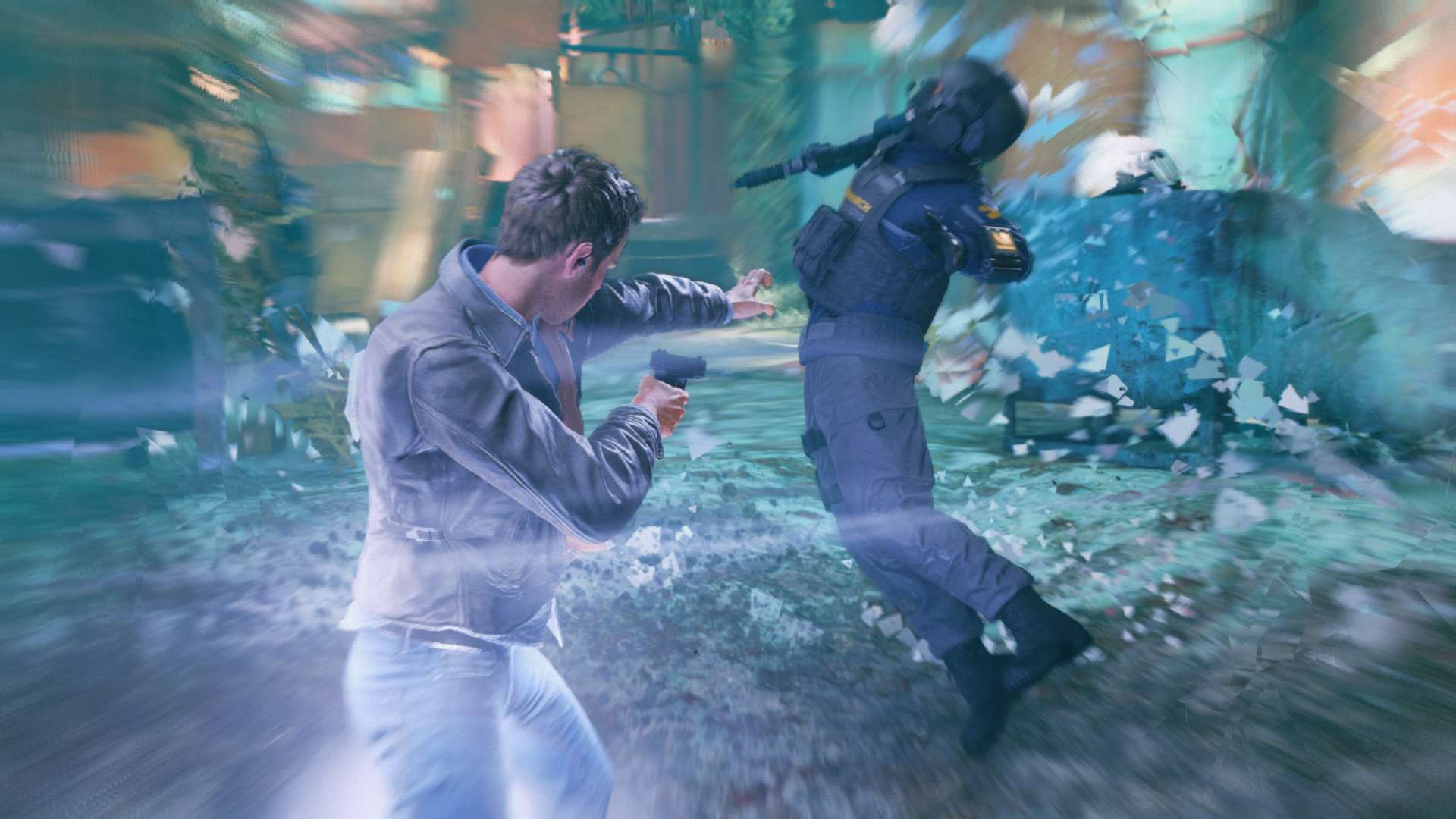
The combat system in Quantum Break is an entirely new, innovative concept. We all know the game focuses around the manipulation of time, but the uses of that manipulation are what make Quantum Break’s combat so good. The first thing you’ll notice is the cover shooting as you have no abilities at the start of the game. It is similar to Gears of War in how you can aim while in cover, and it’s phenomenal. The computer-controlled enemies are surprisingly smart in Quantum Break, even on easy difficulty, so this cover setup works perfectly. There are six time abilities that you can use throughout the game, which you earn as you progress. You begin with only weapons and work your way up to all six, with a melee attack being the final one you earn. Each of the abilities consumes Jack’s chronon energy and takes a varying amount of time to cool down for reuse. They can also be upgraded by finding hidden chronon clusters throughout the game, of which there are sixty. The six powers you can use are:
⦁ Time Vision: Similar to Assassin’s Creed Eagle Vision, enemies, explosive objects and collectibles are highlighted in red. Available weapons and ammunition caches are highlighted in blue. This lasts a few seconds and cools down very quickly.
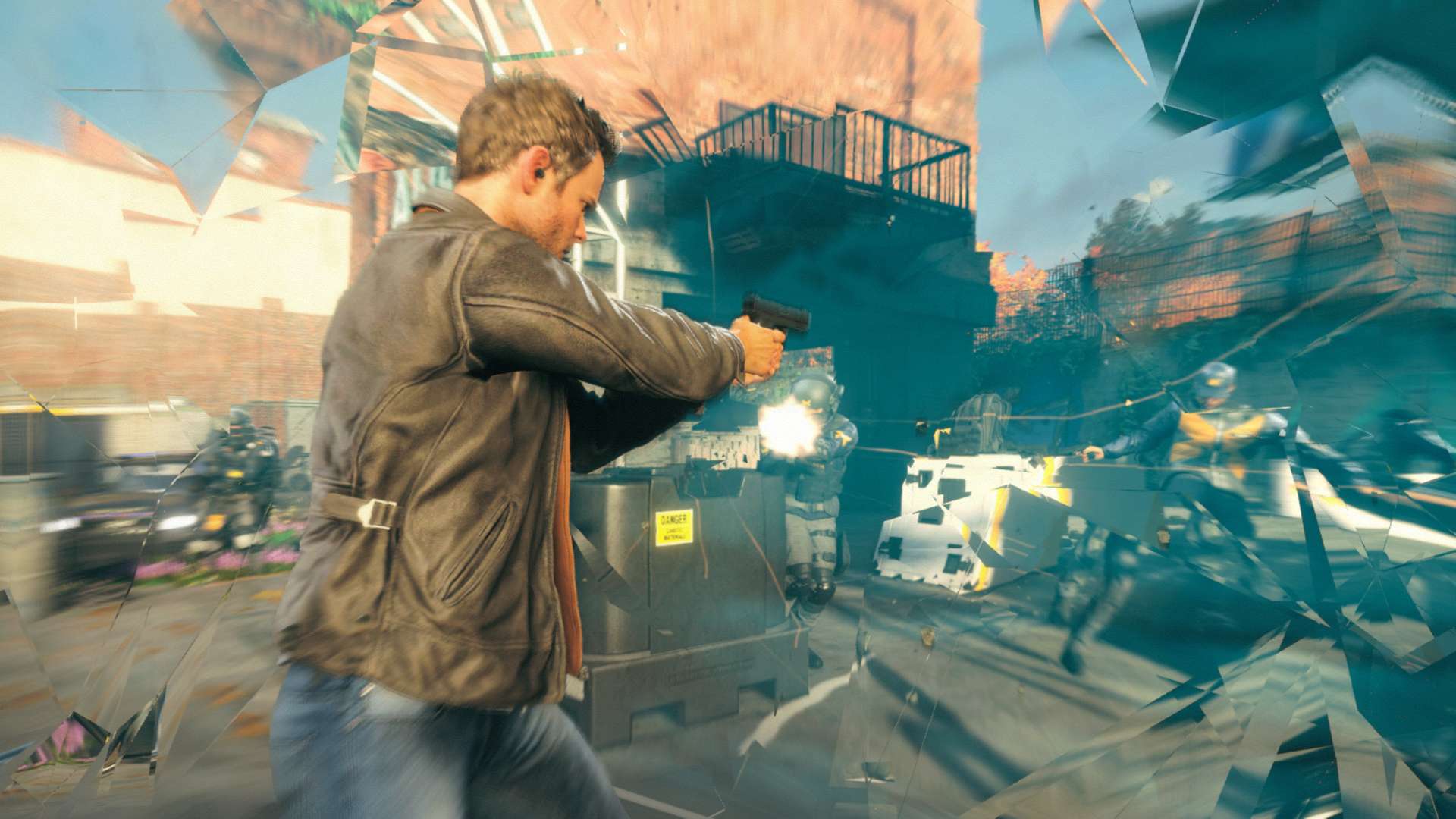
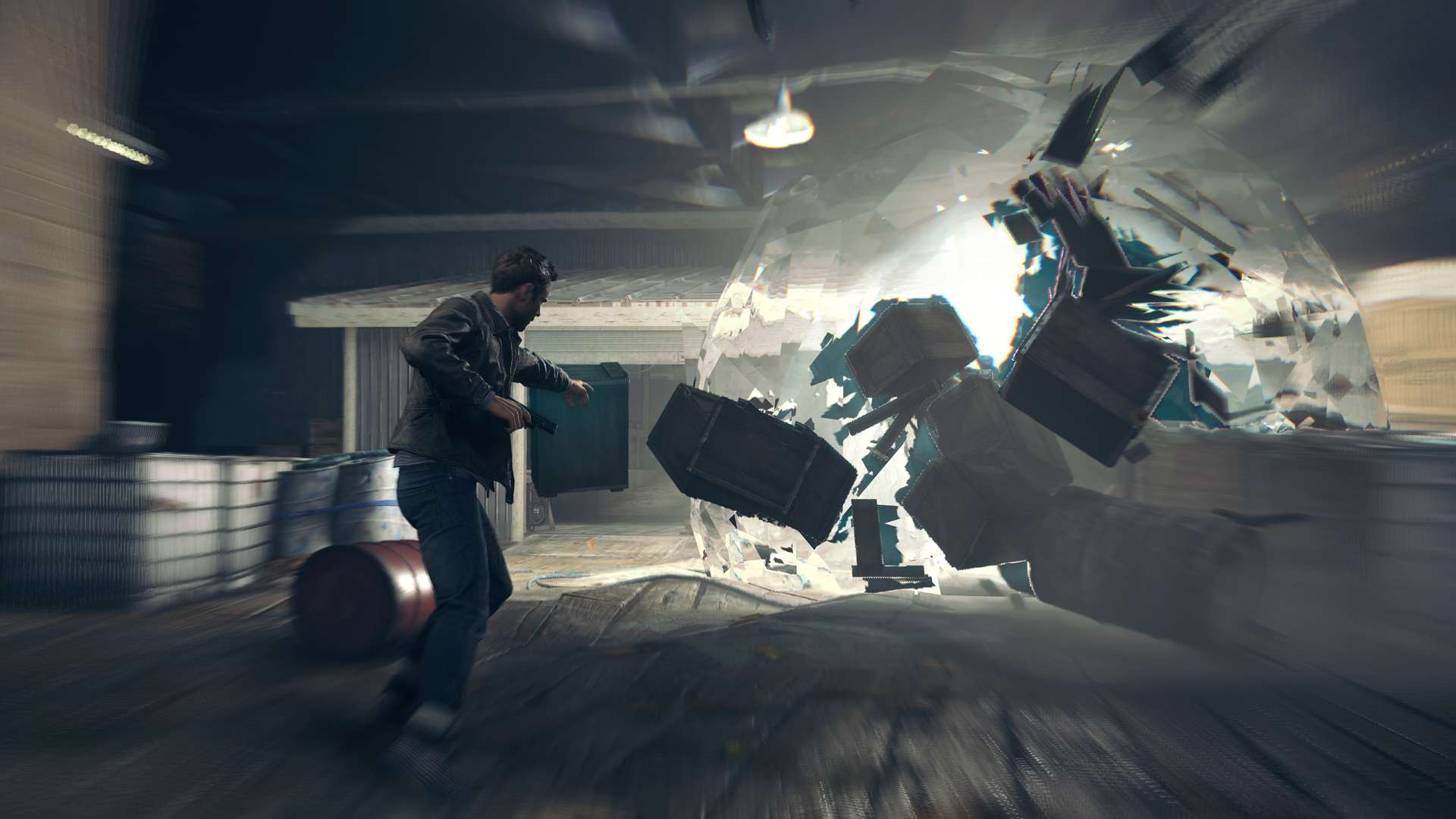
⦁ Time Stop: Sets a chronon bubble where your aiming cursor is set, usually in front of an enemy. It freezes the enemies behind it. Shooting the bubble stacks bullets up, allowing for them all to hit the enemy once the bubble disappears. This can be upgraded to include a larger bubble and more activations.
⦁ Time Blast: A massive burst of chronon energy. Basically your grenade time weapon. Can be upgraded for faster cooldown and larger radius of effect.
⦁ Time Dodge: A teleport type of attack. Allows you to quickly move from one place to another without taking damage. Can be upgraded to include an extra dodge prior to using all cronon energy as well as slowing time for easier weapon aiming.
⦁ Time Shield: Casts a time bubble around Jack protecting him from enemy attacks. Jack can still shoot and use abilities through it, so it helps when you’re surrounded by enemies to allow for some health regeneration. Can be upgraded to cover a bigger area and take more damage. This bubble is stationary, so if Jack moves too far laterally he will exit the shield.
⦁ Time Rush: Allows you to melee an enemy while running, not just dodging, for an extended amount of time. Lets you escape large groups of enemies and cover a lot of ground in a short time avoiding detection.

With melee being the final one you earn, Quantum Break forces you to use a variety of different techniques as well as your own imagination in order to defeat enemies. Just as Jack can move through stopped time due to an infusion of chronon particles, there are certain enemies that can do the same. These enemies are not able to be stopped by Time Stop or Time Blast as a result. So, Jack will need to time rush past them and melee later on in the game. If you haven’t earned that ability yet, you can sneak behind them and shoot them. Of course, shooting an explosive barrel always works as well. Time Stop an enemy, shoot a few bullets into it and watch him explode when the bullets hit him all at once. Can you imagine the sheer momentum that would pass onto the foe? Time Blast a sniper from far away and then time rush in behind an unfreezable enemy only to pop off a shotgun round in his back. The possibilities are endless and each gamer will develop their own style of combat.
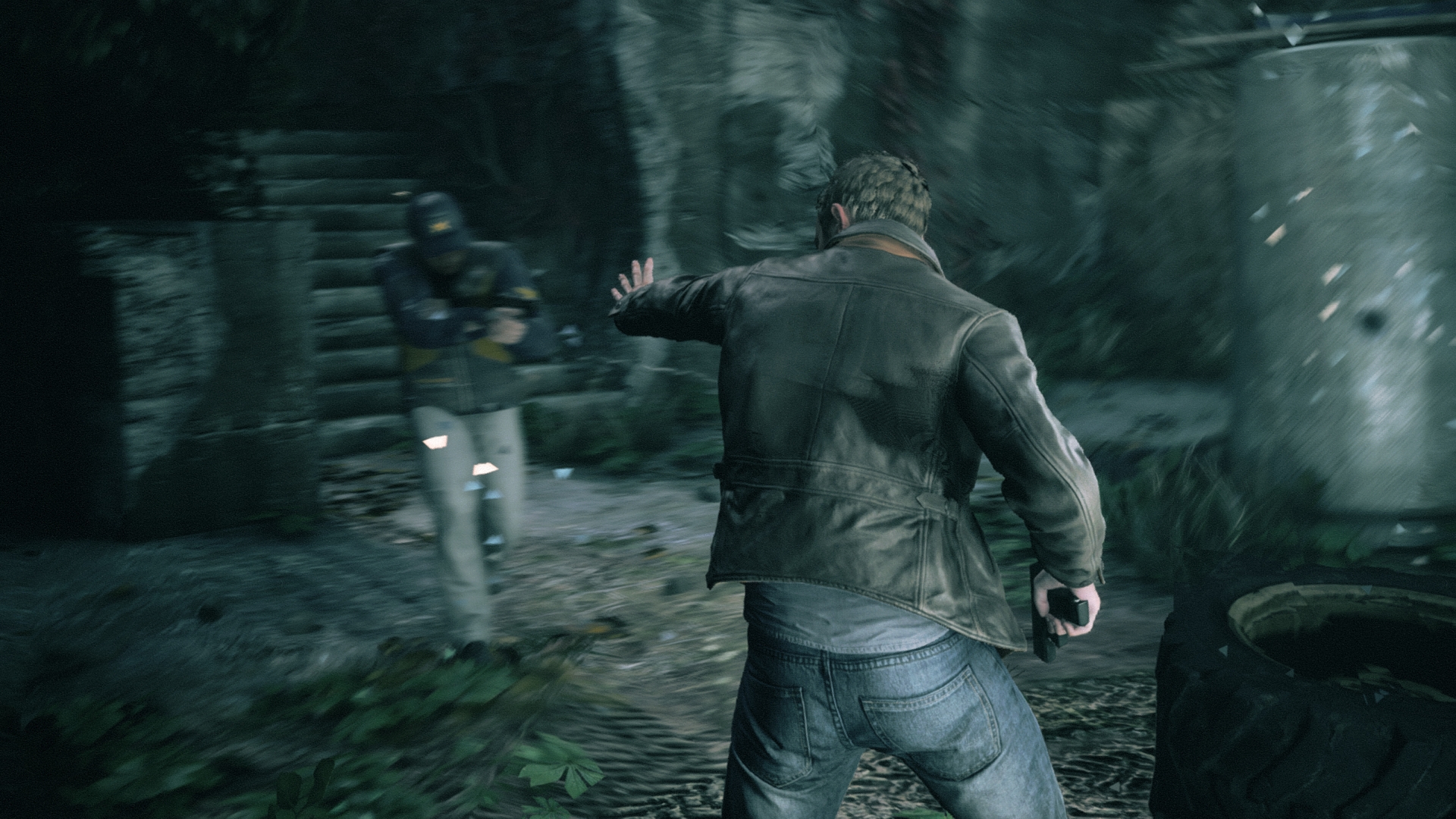
Jack’s Time Vision also allows you see objects that be manipulated with time as well as conversations that took place in the past. Your path may be blocked due to a fallen tree, but Jack can fix that. Rewinding time can move objects and allow you to pass. These fixes only work for a few seconds and you’ll need to be quick or else get caught in the object’s path again as it falls. Jack also has the ability to witness conversations since timelines are overlapping. Future Jack may be able to watch Paul from the past, and the conversations provide clues on how to proceed in-game.
There are no side missions in Quantum Break and only one boss battle at the end of the game. This serves a good purpose because it allows the focus to remain on the main story at hand without branching out and becoming convoluted. It features standard third-person, action-adventure exploration and linear gameplay that guides you through the level’s individual sections, but benefits from the combat’s variety. With many different ways of completing each fight, it removes that going-through-the-motions feeling that many third-person action titles suffer from. Every area does have explorable sections, and they are pretty much mandatory if you wish to obtain the different upgrades and collectibles in the game.

Quantum Break includes a total of 206 collectibles broken down into sixty upgrades, nine pieces of intel, eight Quantum Ripples, 61 documents, 45 computers and 23 media files. Jack can upgrade his powers by collecting the chronon particles. You’ll need to pay attention, but they are pretty easy to locate. At certain points, Jack’s Time Vision icon will flash to indicate something important is nearby. If it is an upgrade, a circle will come up with a white dot on the screen. This acts as a compass, and Jack can follow the trail by placing the dot at 12 o’clock and moving toward it. When you are close to the item, Time Vision allows you to see and interact with it. Each chronon particle is one point and allows you to upgrade your powers. Upgrades can require anywhere from one to six points depending on its level.
The Ripples are found in-game and unlock hidden content in the show. They appear as normal collectibles, and the only way to tell that it is a Ripple is a rotating, yellow icon in the top right corner of the screen when you find it. The same icon pops up in the following TV show indicating the hidden scene. Some are humorous, while others add that final piece of information to a question. The collectibles are definitely recommended as they provide a huge amount of backstory for the game. This information goes a long way when trying to piece together Quantum Break’s plot.
Jack has three different types of firearms he can use. Switching weapons is as easy as pressing left, right and down on the D-pad. Left is shotgun, right is assault rifle or SMG and down is your pistol. Remedy made sure to include so many variable options in combat that you don’t even need the melee attack. It does help at the end, but at that point you are having so much fun that you don’t really want to use it. In fact, I didn’t even use it in the final boss battle which includes about ten enemies you can’t freeze in time. Combat can become stale and repetitive in many games that allocate abilities over time. Too often you’ll see some random upgrades that don’t really make a difference and act as fillers. Quantum Break executes it brilliantly because not only do they add new abilities, but tougher enemies may not be impacted by your new powers. Any doubts you had about Quantum Break’s combat system can be put to rest because Remedy set it up perfectly.
Everything in Quantum Break’s gameplay has a purpose. There is no filler and every ability or upgrade matters to both the game’s story and mechanics. When you consider the TV show, game and the overlapping story together, Quantum Break is the most accomplished title in recent history.
Performance
I fully expected to experience some issues when playing Quantum Break. Fortunately, there weren’t really any major ones and a prerelease patch pretty much eliminated all of the minor ones. Whether minor or major, the ability to stop time while having some objects move and others not had me expecting some screen tearing. It was obvious that the folks at Remedy expected this as well because they definitely prepared for it. The patch took care of that problem.
As the time of writing, the frame rate is locked at 30 FPS on Xbox One as well as Windows 10. Any of the slight stutters I found early on were removed with the prerelease patch last week and are no longer an issue. Interacting with certain objects like opening doors or climbing ladders had some choppiness to them, but they are also gone. As of now, Quantum Break truly doesn’t have any real issues and functions incredibly well considering its fluid and dynamic gameplay.
Graphically speaking, Quantum Break looks as good as it plays. It’s quite amazing considering the locations used are normally bland and dark. Science labs, dark university halls and a shipping yard are just a few examples. The way that certain objects are highlighted by simply adding a different shade of color is quite uncanny. Other than your standard of far away objects looking slightly flat, there aren’t any real concerns graphics-wise about the game. Objects don’t materialize as you move and there is a clear distinction between objects frozen in time with those that are not. For example, you can see if you defeated an enemy half way across the screen as he’s frozen in mid-air. Remedy does an excellent job of making sure the objects are rendered so depth perception allows you to differentiate. It’s not easy to make it seem like a guy is frozen in mid-air in front of a wall opposed to actually being on the wall itself when you are far away, but Quantum Break’s setup pulls it off. How many times have you looked up into the night sky and seen a plane fly past the moon? Now, we know the plane is closer than the moon, obviously. Since they are both so far away, however, it appears that the plane is much closer to the moon than it actually is. It’s because we lack the depth perception to see it that far away. Quantum Break renders objects in-game to accentuate this, therefore providing a richer, more 3D-type environment.
The character modeling is exquisite in Quantum Break. Scans of the actors make it a seamless transition into the live action scenes. It’s obvious that facial animation and lip syncing was a big priority for Remedy. So far, as we noted in our review, the animation and cutscenes in Rise of the Tomb Raider were the best we’ve seen. Quantum Break did the same as it was able to show subtle facial movements that also capture the emotions the characters were experiencing at the time. Nearly all the internal areas use a heavy focus on ambient light. Whether it’s a university lecture hall bathed in moonlight or a lounge casting shadows with desktop lamps, you can tell the lengths Remedy went to in order to provide a more encompassing experience. There is not that much light as much of the game takes place at night. As a result, the varying lighting techniques offer a more realistic environment.
Windows 10
As stated above, the Windows 10 version of Quantum Break currently is locked at 30 FPS but can support up to 4K resolution. 60 FPS is being worked on with no definite time of when it will be available. Playing both versions, we found no major difference between the two. Of course, at 4K resolution the objects are going to look better than their Xbox One counterparts, but that is about it. Everyone pretty much knows at this point that frame rate is more important than graphics, especially in a game like Quantum Break. While graphics play a minor part, there is no real way to tell the difference with 1080p, 900p or 720p with 4x MSAA, at least not with the naked eye. We played through the entire game on both versions, and only saw a difference when playing at 4K resolution on Windows 10. Other than that, Remedy did a great job optimizing Quantum Break for console with a highly refined and polished Xbox One version. Gamers can pick up the Xbox One copy and be confident that they are getting an outstanding experience. Plus, Quantum Break on Xbox One comes with a free copy for Windows 10 as well as backward compatible versions of the Alan Wake games. It offers tremendous value to the consumer.
Summary
Quantum Break provides its own twist on time travel. Jack Joyce struggles with whether or not he should and can change the past. Certain people have powers while others do not. Certain people can be freed from being frozen in time while others can not. The overall plot and answer to the main question can be figured out early enough if you pay attention, and it becomes obvious what Jack believes. The manner in which you arrive at this conclusion, however, is veiled with a few twists that we aren’t about to spoil. You will be left with a few questions at its completion, especially after the end credits scene about one of the game’s main characters. It’s one of those that will have you saying “Okay, wait a minute, I thought that…”. Don’t worry though, these were done intentionally to create mystery for the next season which is pretty much a given at this point. The Quantum Break: Zero State novel expands slightly on the game’s story and provides further information on the mysterious details. Any of the flaws we did experience have been removed with the new patch released last week ahead of launch. All things considered, between a game, live-action show and novel, Quantum Break is one of the most complete and versatile gaming endeavors in recent memory and a phenomenal single-player experience.

Mike is a games journalist, host of 1080Players Gaming Radio. They contributed 62 articles to ICXM between 2015–2016, focused on opinion pieces, game reviews, Windows and PC, and Xbox news: operates 1080Players Gaming Radio on the Boost Radio Network; ICXM published cross-content from his outlet.