Ori and the Blind Forest is a mixed genre game with a strong platforming focus with light RPG elements all set within Nibel, a beautiful atmospheric world. Created by Moon Studios, an independent studio with developers located all around the world, Ori and the Blind Forest tells the story of a hero who must journey to find courage and confront a dark nemesis to save his home. The young orphan is destined for heroics through a visually-stunning action-platformer crafted by the talented people at Moon Studios for Xbox One and PC.
Featuring hand-painted artwork, meticulously-animated character performances and a fully orchestrated score, Ori and the Blind Forest explores a deeply, emotional story and love, sacrifice and the hope that exists in each and every single one of us.
Ori and the Blind Forest debuted at E3 2014, at Microsoft’s press conference. Moon Studios have been in the works of crafting Ori and the Blind Forest for over four years, with Microsoft enquiring about publishing the game about a year into development. Reportedly, Microsoft’s Vice President of Devices and Studios, Yusuf Medhi, stated that they considered opening the E3 conference with Ori and the Blind Forest. However, it was later replaced by Call of Duty: Advanced Warfare.
The game is set in the forest of Nibel which is dying since a powerful storm has caused a series of devastating events in motion. However, this forest is filled with environments both beautiful and foreboding, each with their own flair and theme for puzzles and enemies. The hand-crafted artwork is superb, bringing the forest of Nibel to life. The world of Ori and the Blind Forest is one you’ll not just explore, but fall in love with. Combine this with the emotional-driven story and orchestral masterpiece featured in Ori and the Blind Forest, this is one the most stunning games you’ll ever experience.
Ori and the Blind Forest is driven by it’s creative, emotional story-telling. The games prologue introduces you the main character, ‘Ori’ who at birth was cast away from his home. He grows up with his “stepmother” called ‘Naru’ who has looked after Ori her entire life until the forest suddenly decays. Naru eventually takes ill, creating one the most saddest scenes I’ve ever experienced as a gamer. Before Naru took ill, she looked after Ori and played with Ori in the colourful world of Nibel. When Naru took ill, I cried – only for about two minutes but this emotionally driven scene touched me as a gamer and a human being, as someone who always tries their best to be there for other people. The same thing happened to Alan (BeetleComet). This is the scene that will break everybody’s hearts in Ori and the Blind Forest. At this stage, Ori has to venture out and find out more about himself in this coming-of-age story about responsibility and making sacrifices for the ones we love.
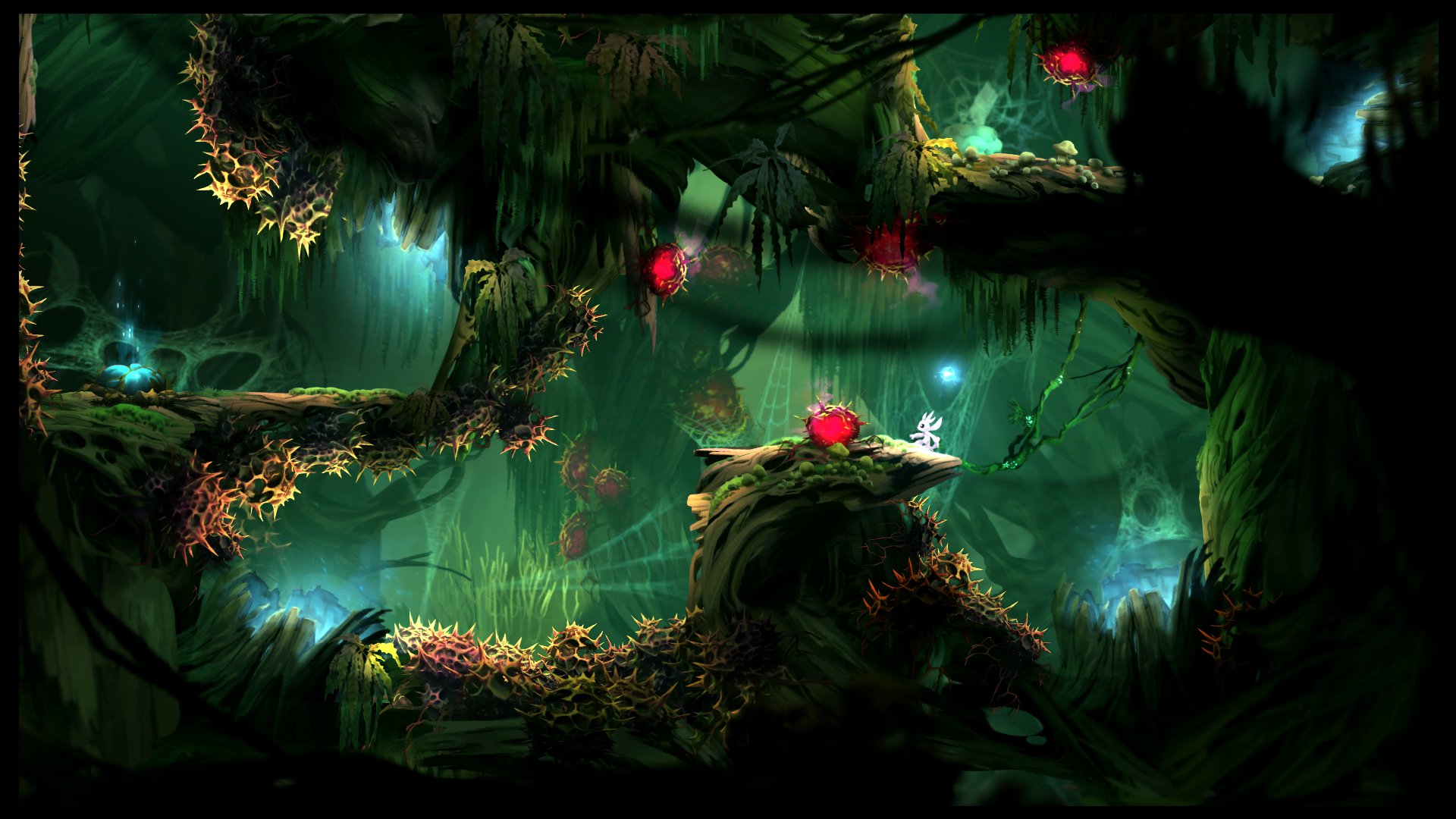
You take on the role of Ori, a white guardian spirit. After a malevolent enitity named Kuro appears, Ori must journey alone through the blind forests of Nibel. Initially, Ori is weak from emotion and can only jump, until he meets a friend and companion, Sein, who will guide Ori on his adventures and attack enemies. This opens up another gameplay element called the “soul link,” which allows you to save your game and attribute ability points earned by collecting an ability cell (which immediately grant Ori a skill point) or gaining experience.
Ori and the Blind Forest features a “sawtooth” gameplay style – moments of high action followed by moments of rest and exploration which allows players to adventure around Ori and the Blind Forest’s beautifully-crafted environment and also experience the challenge Ori has to offer. Ori and the Blind Forest can get fairly difficult at times – as of right now, I’ve died 201 times (there’s an in-game tracker for it just so you can be even more ashamed when you look at your large death counter) and I expect that number to increase a lot as I progress further through the extraordinary world of Nibel. To put into perspective how expansive Ori’s world is, I’ve only discovered 24% and I’ve played over 3 hours of the game as of now. That’s incredible when you really come to terms with it. There’s an achievement worth 25 gamerscore for completing the entire game without dying, a feat that seems long out of my reach.
Ori and the Blind Forest has an extremely rewarding skill tree, with three different branches – Efficiency, Utility and Combat. The combat tree allows you to increase the strength of your attacks, such as the “Charge Flame” which also allows you to open blue weakened rock, gaining you access to other sections of Nibel. The design of the weakened rock actually bears a resemblance to Dust: An Elysian Tail (however in Dust you have to find a key to open the weakened rock) and so do a lot of other elements in Ori. Dust is another Microsoft-published title that released on the Xbox Live Arcade in 2012 and on Steam in 2013. I thought it might have taken some inspiration from Dust. However, Thomas Mahler, the game director at Moon Studios later confirmed to me that this isn’t the case. We all like Dean and are very impressed about his solo-effort, but we drew most of our inspiration from the Nintendo games we grew up with, like Super Metroid and Zelda: A Link to the Past, etc.The efficiency tree is mostly about making it easier for the player to gain experience, life and energy, with skills such as “Life Efficiency” which makes life pickups restore twice as much life, “Ultra Spirit Magnet” which magnetises most pickups towards Ori and automatically absorbs them, or “Ability Markers” which makes Ability Cells appear on the map. The utility tree focuses on different abilities for Ori, such as “Water Breath” which allows for Ori to breathe in clean water as you would usually have health points deducted if you tried to swim.
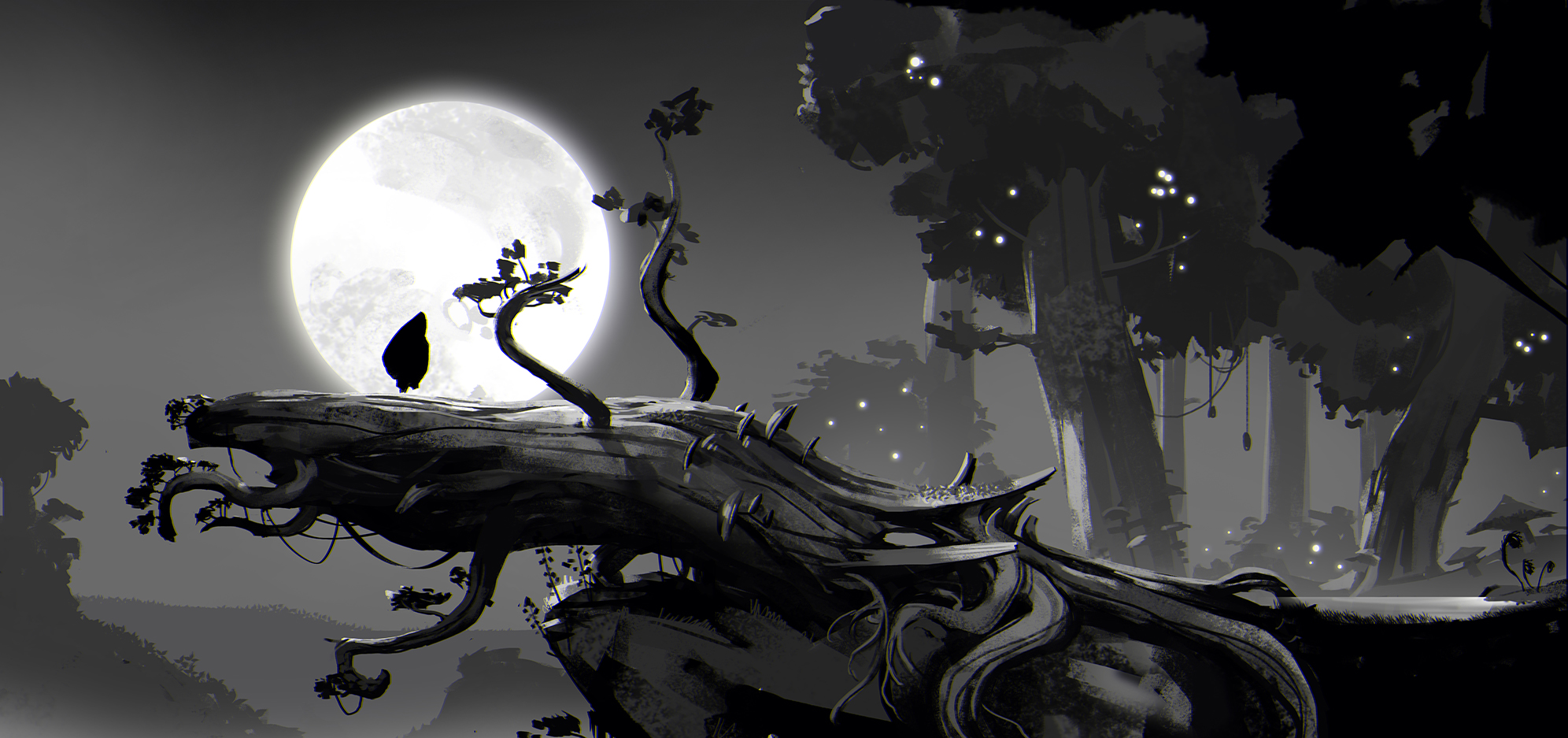
The utility skill tree also adds some extra additions to the Soul Link, like health being restored if you create a soul link. Later on in the game, you’ll unlock the “Double Jump” skill – in the Utility skill tree you can upgrade it to a “Triple Jump.” Every skill tree will reward you with a 15 gamerscore achievement for earning all skills in every individual tree, and you’ll earn a 20 gamerscore achievement for earning every tree – so not only do the skill trees reward you in-game, they reward you with a total of 65 gamerscore (which may not seem like much, but it isn’t too hard to get agility points – either collect an Agility Cell or kill enemies.) There’s also an achievement that I’ll probably never be able to earn called “Elite” for completing the whole game without using a skill point, meaning you’ll never get the ability to shoot three flames, reuse Soul Links or upgrade your combat skills – all for a mere 25 gamerscore.
As you progress through Ori and the Blind Forest, you’ll unlock different abilities for Ori to use that are separate from the skill trees. The first skill you’ll unlock is “Spirit Flame” allowing you to shoot flames at your enemies. This skill can later be upgraded in the Ability Tree to shoot three flames at the same time, increase the strength (and later increase the strength further) and allow you to hit four targets at the same time. The second skill you’ll unlock is “Wall Jump” which does what it says – allows you to jump up and off walls. You’ll then unlock “Charge Flame” which I discussed earlier on in the review, allowing you to either use it as an attack or open up certain areas. “Double Jump” will then be unlocked, again doing what it says in the name – in the Ability Tree, this can later be upgraded to a “Triple Jump,” allowing you to jump twice after your initial leap. You’ll then unlock “Bash” allowing you to reroute projectiles and boost yourself off of lanterns. Throughout the game you’ll unlock four more skills other than the ones I mentioned above. Unlike the Ability Tree skills, you have to collect these to progress in the story.
The music in Ori and the Blind Forest is beautifully orchestrated, and the soundtrack is magnificent. The symphonic score was recorded at Ocean Way in Nashville and it’s what really makes Ori and the Blind Forest – well – Ori and the Blind Forest! The music changes depending on the situation you are in – such as the music will intensify when you initiate combat, or calm down when you’re peacefully exploring. It’s an amazing touch to Ori and the Blind Forest and really expands on the atmospheric feel of the game. The music makes you feel like you’re there, immersing you into the experience. Honestly, it’s some of the best music I’ve ever heard in a video game.
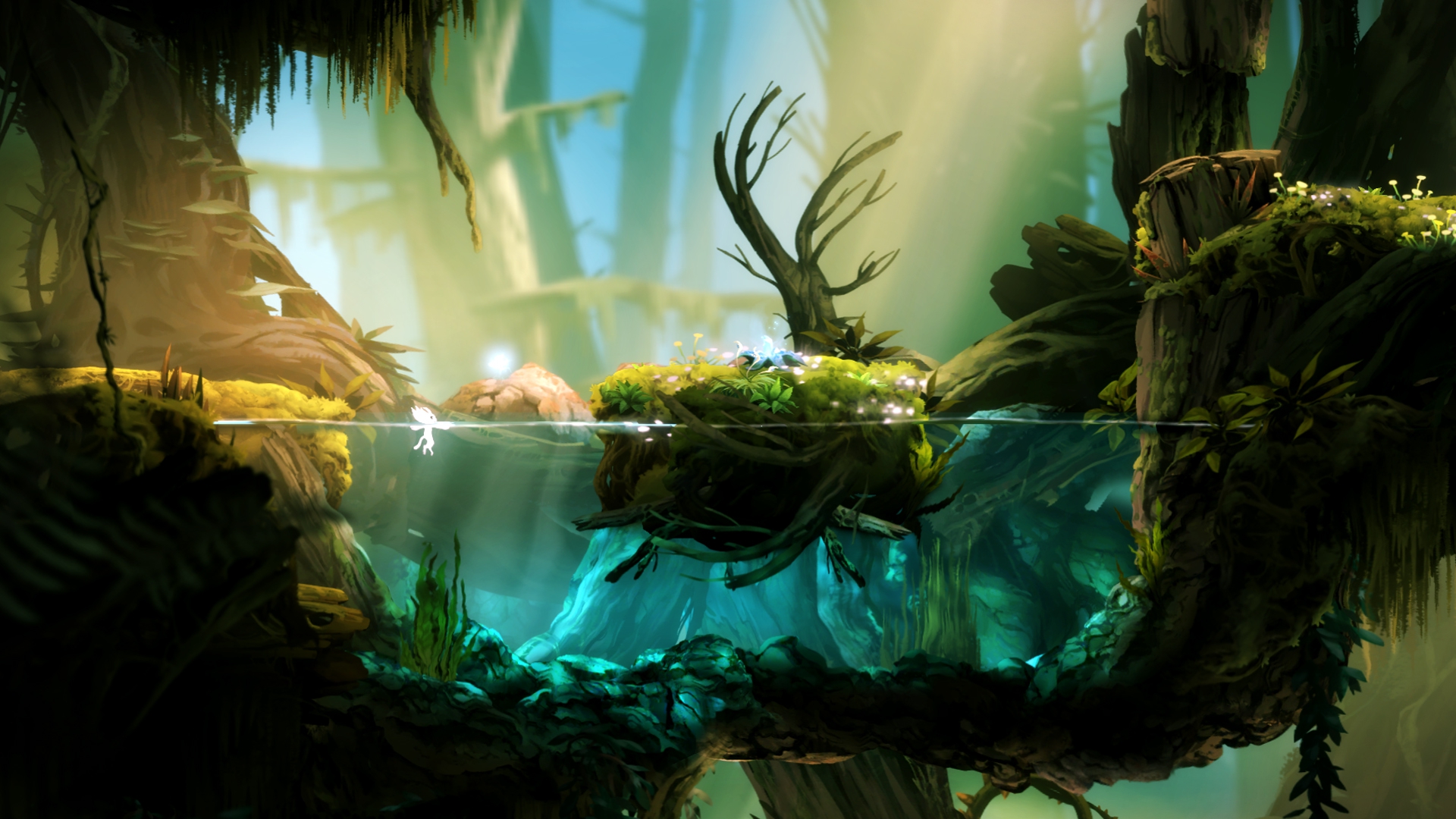
Ori and the Blind Forest’s replayability is actually very high. From first looks at the game, you may think that one playthrough is enough to see everything, but it definitely isn’t. Soon enough you’ll learn that there’s a lot of different collectibles to earn like 12 extra life points to add on to your original 3 using Life Cells, 15 extra energy points to add on to your original 3 using Energy Cells, a large amount of Ability Cells to collect which immediately grant Ori an ability point, Map Stone Fragments to uncover different sections of Nibel, and lots more. You can also have up to three different save files at the same time, allowing you to go back if you missed something.
The game’s story is about 10-12 hours long depending on your skill at solving puzzles and the general speed you play the game at. There’s another achievement worth 25 gamerscore, which tasks you to complete the game in under 3 hours. How is that possible when the game is 10-12 hours long, you may ask. That, I don’t have an answer to – I especially don’t see myself accomplishing that in the near future anyway!
The saving function in the game can get frustrating. There’s no form of autosave, so to save you either have to find a “Spirit Well,” or save using a Soul Link which requires energy. Essentially each save counts as a checkpoint, so when you die you’ll go back to the last time you saved. The form of frustration isn’t really the fault of the game though, and so I can’t deduct away from Ori’s greatness because of this – it’s more the fault of me. I’ve played so many games where the game will happily autosave for me, and in a sense, that’s why the saving function is frustrating. Because I forget to save manually. You’ll get the occasional autosave before a boss fight so when you die you don’t have to run all the way back to the battle. One thing the saving function does annoy me about however is how if you save before a cutscene then die, you have to re-watch the entire cutscene – which means you have to either rekindle the Soul Link after the cutscene, or if you don’t have the rekindle skill (it’s a ability in the Ability Tree – if you’re going for the Elite achievement you won’t have it) then you have to watch the entire cutscene again. This gets annoying if a cinematic plays and after it is a really difficult section, as it usually means, depending on your platforming skill, you’re going to have to watch the scene quite a few times. This is only a minor fault though, and apart from that, Ori’s save system has changed the way I play video games, and for that, I can only thank the developers.

Some could argue that the difficulty of the game is too high and maybe people will give up if they get too frustrated – however, I feel like the developers want this game to be difficult. They want you to die a bunch of times. And essentially, that is Ori and the Blind Forest. You will die a bunch. But at the same time, you’ll be immersed into the game’s world. You’ll feel like you really are Ori, on a desperate journey to bring peace and hope to the world. The gameplay sucks you in to it’s deep, dark, crazy world. Every single moment of this game has you sit and prosper. You think to yourself how big of an impact Ori and the Blind Forest actually has on the way you play games, on the way you think about the world. I encourage everyone, everywhere, to simply purchase and play this game. You will not regret a single moment.

Alan and Cam is a shared byline ICXM used for 2 articles co-authored in 2015 covering game reviews. See the individual contributor profiles for the writers behind these collaborations.