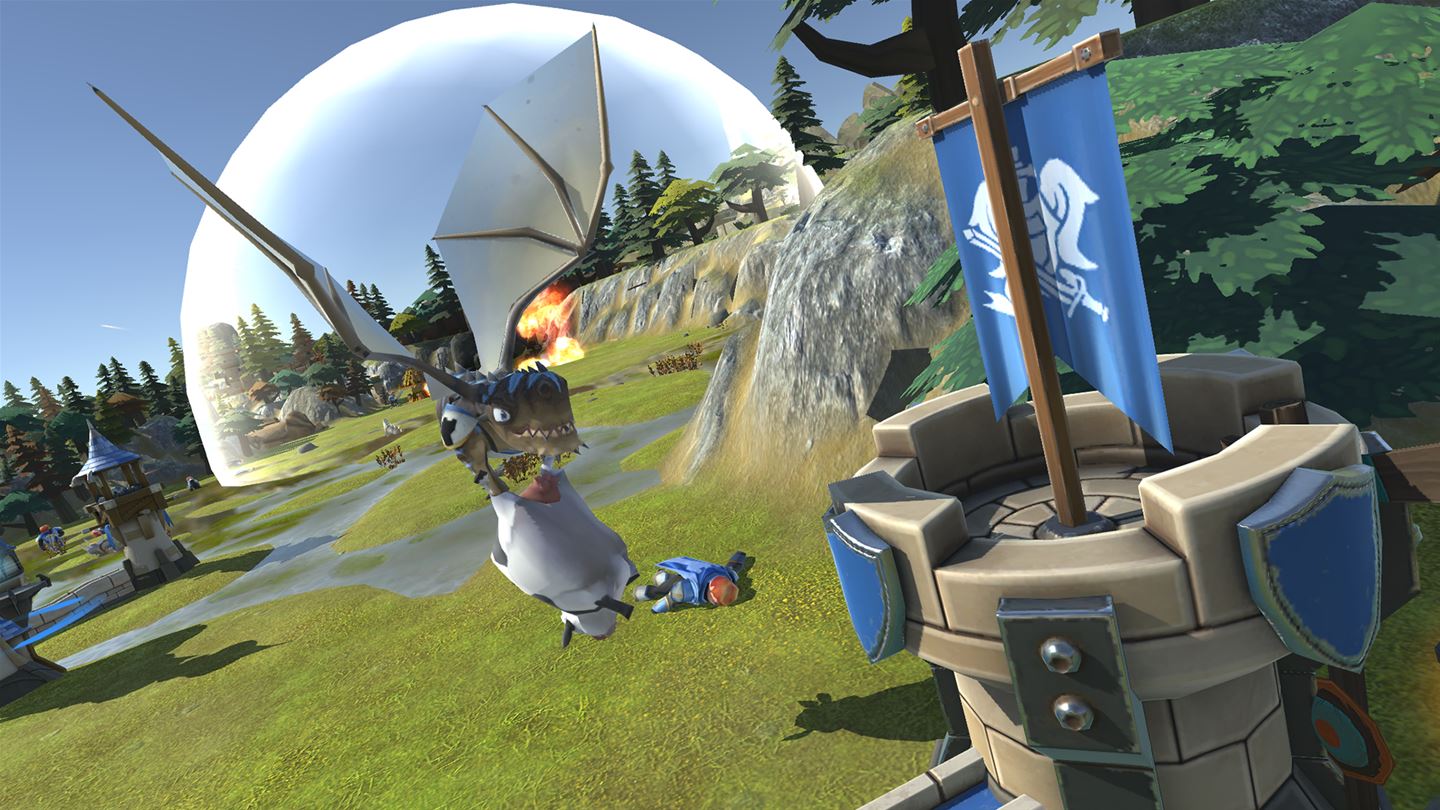
If I had to pick a genre of video games to be my favorite, it would have to be tower defense. There is something about placing down turrets and destroying wave after wave of invaders that brings me such joy. I was very happy to learn about Siegecraft Commander, a new tower defense game on Xbox One that has a very unique way of placing towers. But is the new mechanic a game changer, or a gimmick?
Overall, Siegecraft Commander is very similar to most tower defense games. I started with a home base that I had to protect. I then built new towers that had various abilities in order to defeat the armies marching on my base. The game is played in a ¾ view that is very zoomed out, common with many games of the genre. Apart from these similarities, Siegecraft is very different than its contemporaries.
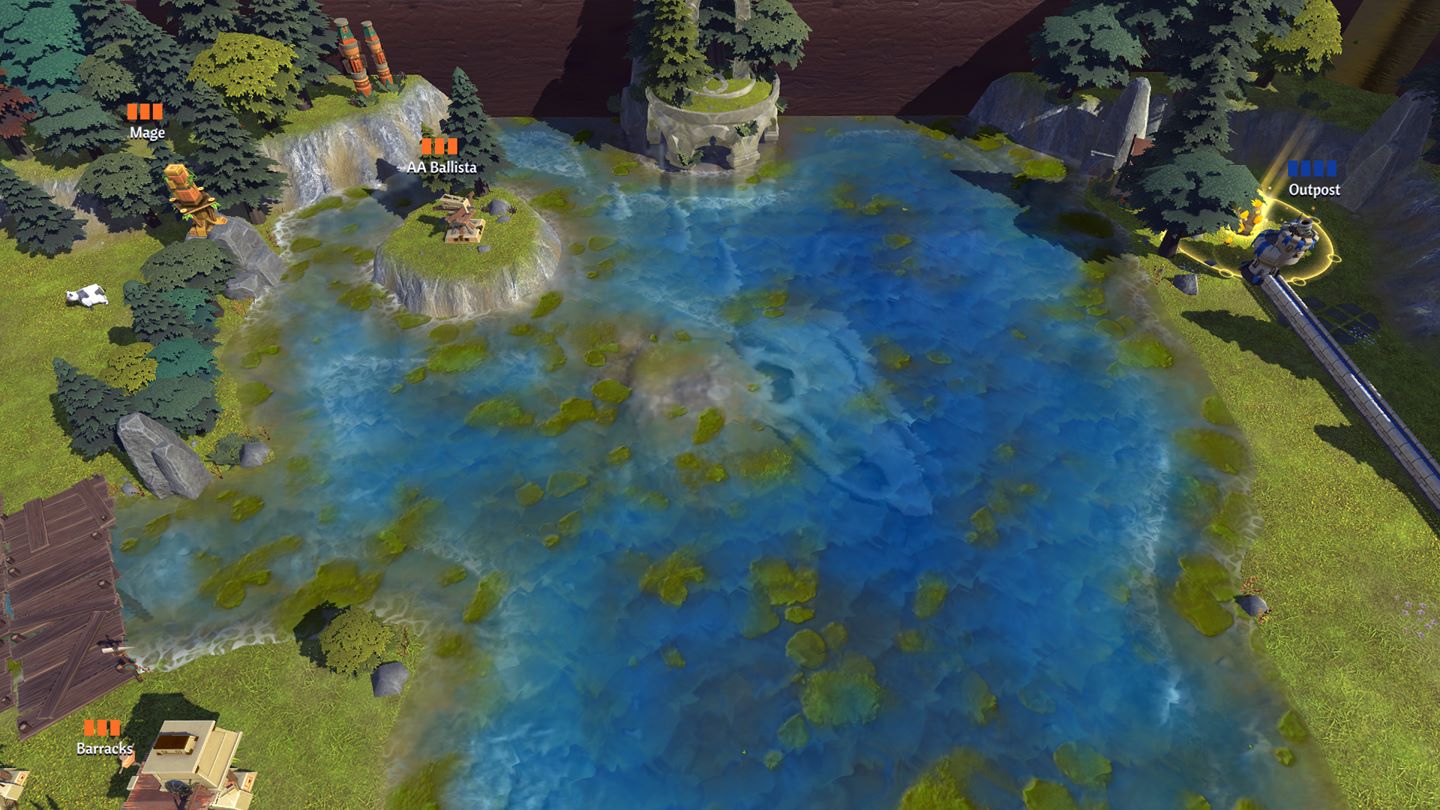
First, there is not the typical economics system found in other tower defense games. In Defense Grid, the killing of aliens generates points that are used to buy new towers. In Plants vs. Zombies, sunshine is harnessed from sun flowers in order to purchase new plants. In Siegecraft, the new towers are essentially free. The only real cost is the time I had to wait in order to launch a new tower.
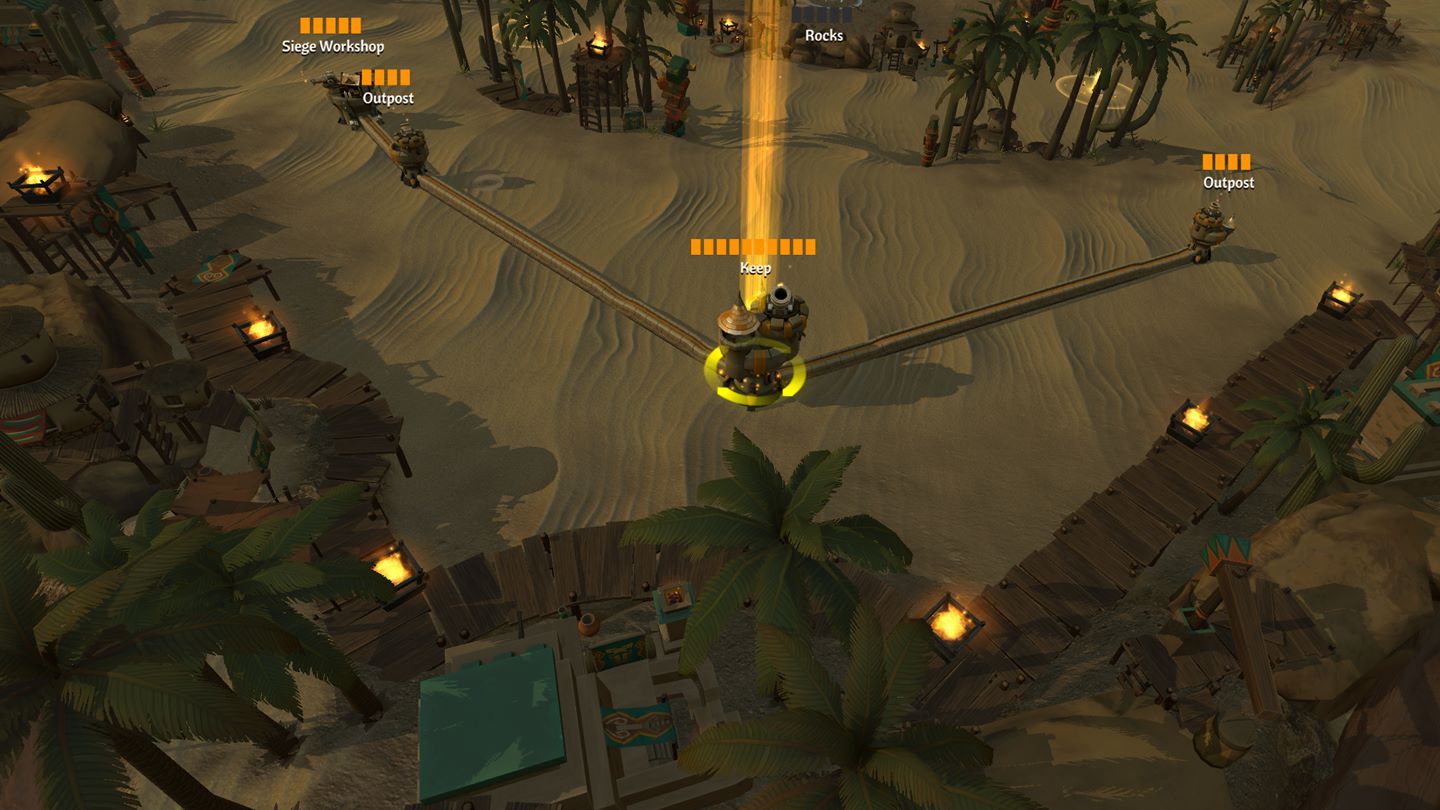
Yes, I said launch. The way towers are placed in Siegecraft is that they are shot out of a “parent” tower like a cannon ball. For example, your starting tower will have the option of firing a barracks, artillery or a dragon tower onto the map. I then had to use the analog sticks to aim and fire the tower, ensuring it was not in line with another tower or rock. If the tower collided with my own tower, it destroyed both towers which could cause a chain reaction.
As said before, there is a hierarchy that is observed within the tower structure. The top level is the “parent” to the “child” towers. So if my home base launched an operations tower, which launched a barracks, which launched a sister barracks; then these would all be linked by a visible wall. If the enemy killed my home base, all of the towers that are linked to the home base would also be destroyed, because the parent was destroyed. If just the barracks were destroyed, then all higher level towers would still remain.
Siegecraft also has a lot of player input during each mission. Instead of just placing towers, I had to also control some towers to fire cannons and ballistas at dragons or hordes of bad guys. The towers are also pretty weak and are destroyed rather fast, so there are very few moments of placing towers and just waiting for waves. This game has a lot of high action.
However, there were a few things that I felt were a little imbalanced. The enemy attacked randomly instead of in the traditional wave style. As fast as the enemy could create soldiers in their barracks was how quickly these soldiers attacked me. So sometimes I had a small group of 1 or 2 enemies, and sometimes a large team of twenty. The twenty-enemy groups were actually much easier to handle than the little groups. This was due to the wonky attacking mechanism.
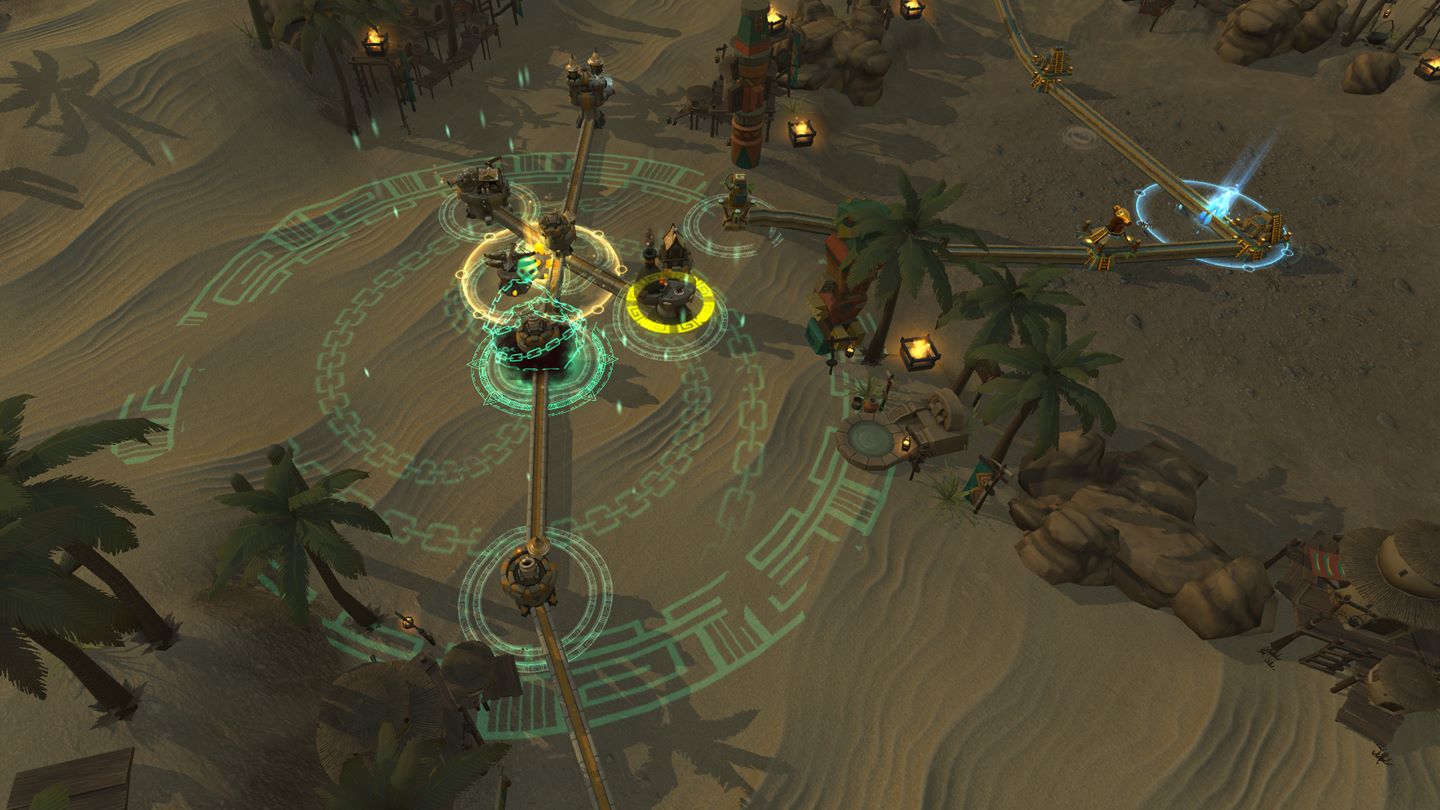
To take on the ground troops, it was best to fight fire with fire. I created tons of barracks to ensure I had the defense to fight the groupings of soldiers. But every once in a while, my troops would just walk past the bad guys in an attempt to rush the enemy base. This left a few soldiers to attack my towers. I then had to use a cannonball to attack the troops directly. And this was where the mess happened.
If I shot with the tower they were attacking, I missed 99% of the time due to the troops being too close. If I shot with an adjacent tower, I usually hit my own tower and caused it severe damage. I also regularly killed my own troops while they tried to jump in the fight to defend the tower.
Basically, the game felt imbalanced due to the chaos it caused. The matches would start out with a few minutes of building without any real problems, then all of a sudden I was swarmed and I had to react for a while. I was continuously swarmed and I lost tons of towers while fighting back toward the enemy territory. Eventually I destroyed the enemy barracks and was no longer at risk. But the game still went on for another ten minutes as the enemy kept making towers after I destroyed their ballast towers. The computer would just replace over and over again faster than I could destroy. It grew very thin after the fifth level in a row where this happened.
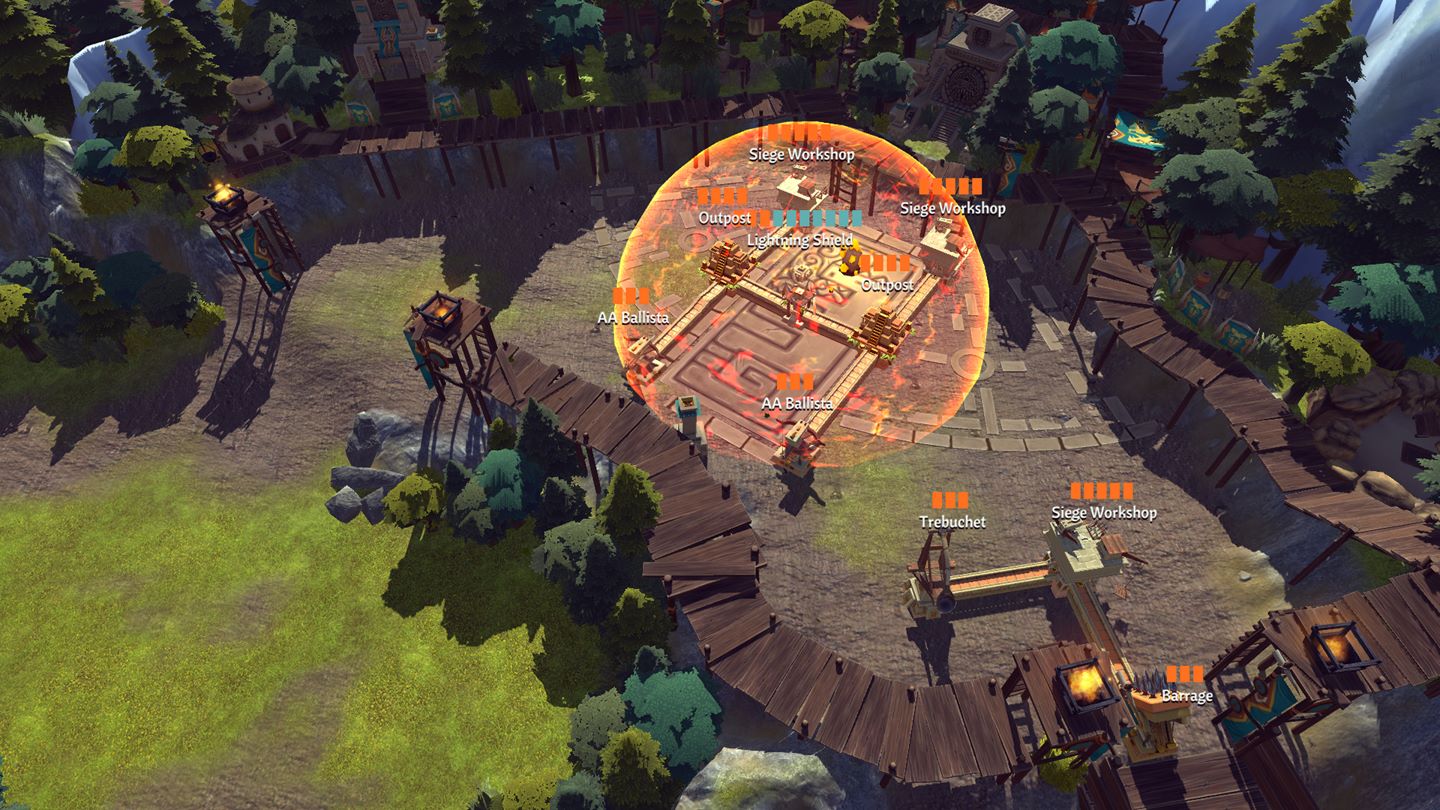
The storyline is very light in Siegecraft Commander, but I found it to be well written and I chuckled often. I liked the characters that both act as mentors and story drivers. There was no voice acting (which I loathe), but I still felt this was a well-produced package. The art style is very clean and I never had a problem seeing the enemy characters or towers, and each element felt very unique. The game ran smooth and it never crashed or dropped frames.
Summary
Siegecraft Commander is a very solid game mechanically, visually and technically. I love that the developers took a very different approach to the tower defense genre and I think it paid off. I hope in the next iteration there can be a little more balancing to how the pace of a match works. Overall, it is definitely a good choice for players who like the action-oriented tower defense variant like Dungeon Defenders and Deathtrap.

Joshua was a regular ICXM contributor between 2016–2017, publishing 42 articles across game reviews, and Xbox news. Their work focused on hands-on reviews, platform commentary, and breaking-news reporting during the Xbox One X launch year and Microsoft’s wider Play Anywhere / UWP gaming initiative.