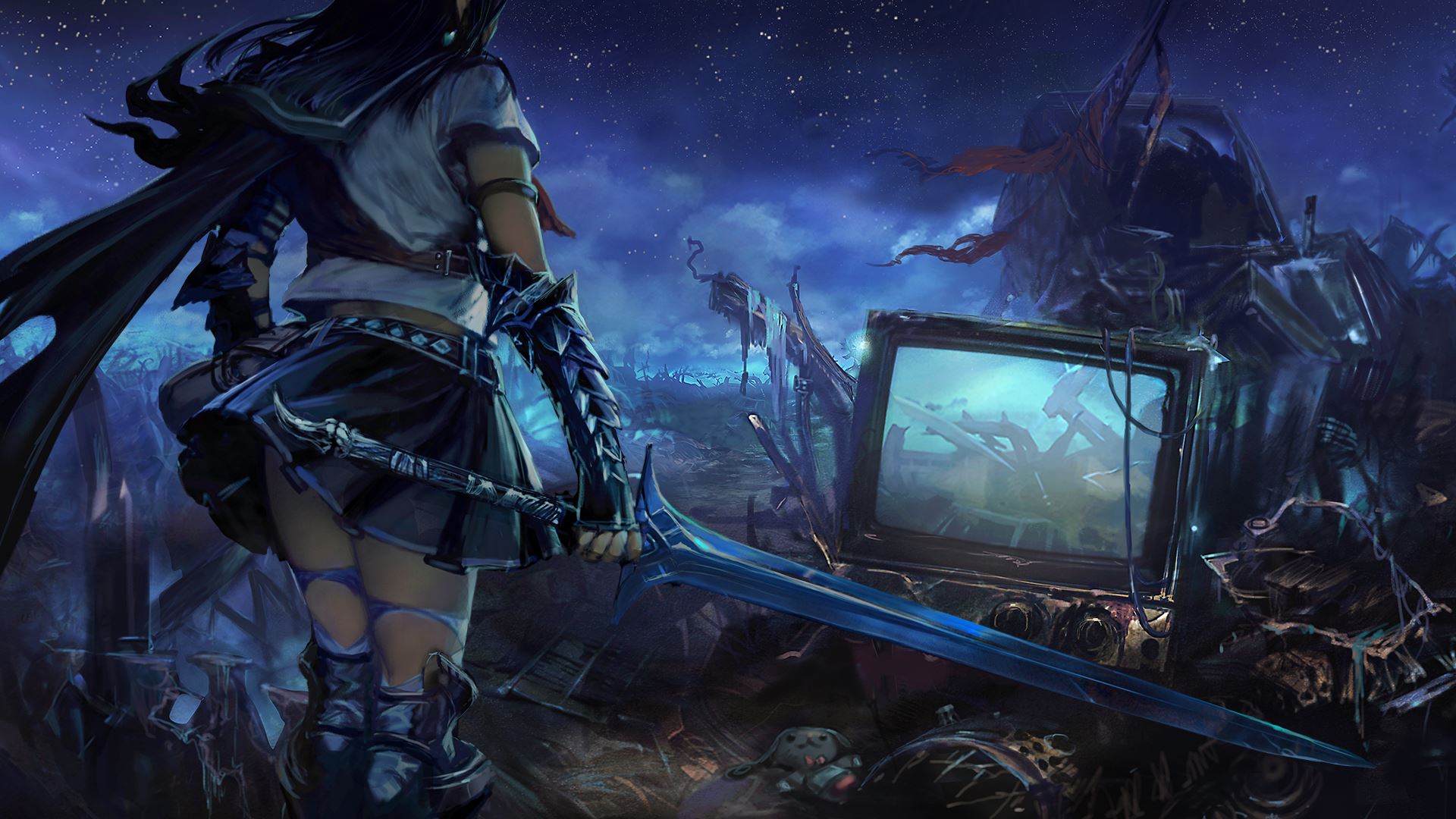
The upcoming game developed and published by Experience Inc., the Japanese studio specialised in dungeon RPGs, also known as dungeon crawlers, called Stranger of Sword City is described as “the next step in the evolution of the traditional dungeon RPG genre”. This title contains the three core elements of attraction for dungeon RPGs: character creation, conquering various dungeons, and dungeon crawling gameplay. Furthermore, the developers claim that their experience and know-how with a large number of titles within the dungeon RPG genre has allowed them to create enhanced support features that allow users to enjoy the title to their hearts content. Let’s explore was this really means shall we?

Stranger of Sword City’s plot puts you in the shoes of the only survivor of a plane that mysteriously vanishes and ends up crashing somewhere on the outskirts of Sword City…that happens to be in an alternate dimension. Soon in the game, you discover that you aren’t the only earthling that has, for mysterious reasons, ended up in the realm of Sword City, and that by being an inhabitant of Earth, you have special abilities that grant you the title of Stranger. You will also learn that by being a Stranger you have the ability to wear heavier armor and wield weapons unlike anyone else. Your main role in this dimension is to protect the rest of the inhabitants of Sword City by hunting down special monsters called Lineage Species, and gather the Blood Crystal they leave behind once defeated.
The gameplay in Stranger of Sword City can be a bit confusing at first due to it being different from any dungeon RPG game out there. The most notorious aspect that makes it look different is due to the perspective that is used. The camera isn’t the traditional isometric view or the top-down view, instead, it relies on a first-person perspective similar to the one found in early FPS like Doom and Quake. Next you have the exploration part which is deeply connected to the first-person perspective that makes you walk all over the place in order to unveil the map of each dungeon that you enter.

The dungeon areas are themselves a bit different than you might be used to seeing because instead of rooms connected to each other, you will have a kind of labyrinth environment which is divided into different levels. They have the usual elements found in dungeon RPG games like monsters, treasure chests and traps. Although the dungeon areas look more like a labyrinth, it doesn’t mean you won’t find rooms in them. Even these rooms are unique to the game. They work a little bit as treasure areas, where you will be able to use one of the unique abilities that the Stranger possesses.
That ability is called Hide and as the name implies, it allows you to hide, making you invisible, which will then give you the opportunity to ambush special groups of enemies that have a treasure chest with them. This is an interesting mechanic and it’s the first time that I’ve ever encountered something like it, and needless to say that it works very well and complements the game.
Moving around the world is quite simple really. You have to unveil part of the map that you want to move to first and then you can select any spot later and have your party fast travel there. This is very useful especially if you need to return to the Strangers Guild to revive, heal or restock. The Strangers Guild is where you can access other dungeon areas as well as your “base”. In this base you’ll be able to revive and heal your party members, create new characters to be part of your team and restock your inventory.

All the interactions between you and the NPCs of the game are very similar to the ones presented in anime visual novels. All the speeches, and any reply options that you may have, will be presented as text on screen with the portrait(s) of the character(s) you are talking to. The characters in the visual novels sometimes acquire different expressions related to the conversation. If the conversations between the characters seem to be inspired by the anime visual novels, the combat itself will be a mix between visual novel and old turn-based mechanics found in some old RPG games like Final Fantasy.
The core of the combat is fairly simple to understand. At the beginning of your turn you will decide each action for all the members of your party. This can range from attacking, defence, using items, skills or any other specific ability that each might have. After that you will have the option to either verify and see each action you choose or you can choose to skip the confirmations and animations. After your first turn, you will also have the option to order the party to perform the exact same actions again. Each character has their own class and abilities, as well as individual stats, that vary from class to class. Knowing the strengths and weaknesses of each of them is the key to surviving and progressing through the game.

As I’ve mentioned in the beginning of this review, the game features two art styles. One is inspired by the artistic concept of anime and manga, and the other can be described as a more western fantasy approach, which still maintains obvious Japanese influences. Choosing one or the other doesn’t affect the gameplay besides some aesthetic parts of it, especially related to the characters.
As for the sound, the only part that needs to be mentioned is the fact that although the conversations are all shown in text form, the voice acting is all in Japanese, something that is common in the majority of JRPGs. The soundtrack of the game fits well into it and changes according to the situation you are in, similar to what happens in the old Final Fantasy games.
Summary
Stranger of Sword City is definitely an interesting game, with some unique aspects that make it stand out from common RPGs and dungeon crawlers that are already out on the market. It features a wide variety of customization options not only for the creation of characters, but also for equipment and weapons. Although the story isn’t exactly bad, it lacks some personality to it when it comes to character interactions. However, this is overcome by the great first-person dungeon crawler mechanics and the stunning art style which makes it a unique experience. I must say that as a fan of dungeon crawlers and JRPGs, this is definitely a game that every fan of this genre should play.

João is a games journalist, Senior Editor at XDA Developers. They contributed 156 articles to ICXM between 2015–2017, focused on game reviews, Windows and PC, and Xbox news: previously reported for Neowin before joining XDA Developers in 2021, where he leads coverage of Windows, Microsoft, and hardware.