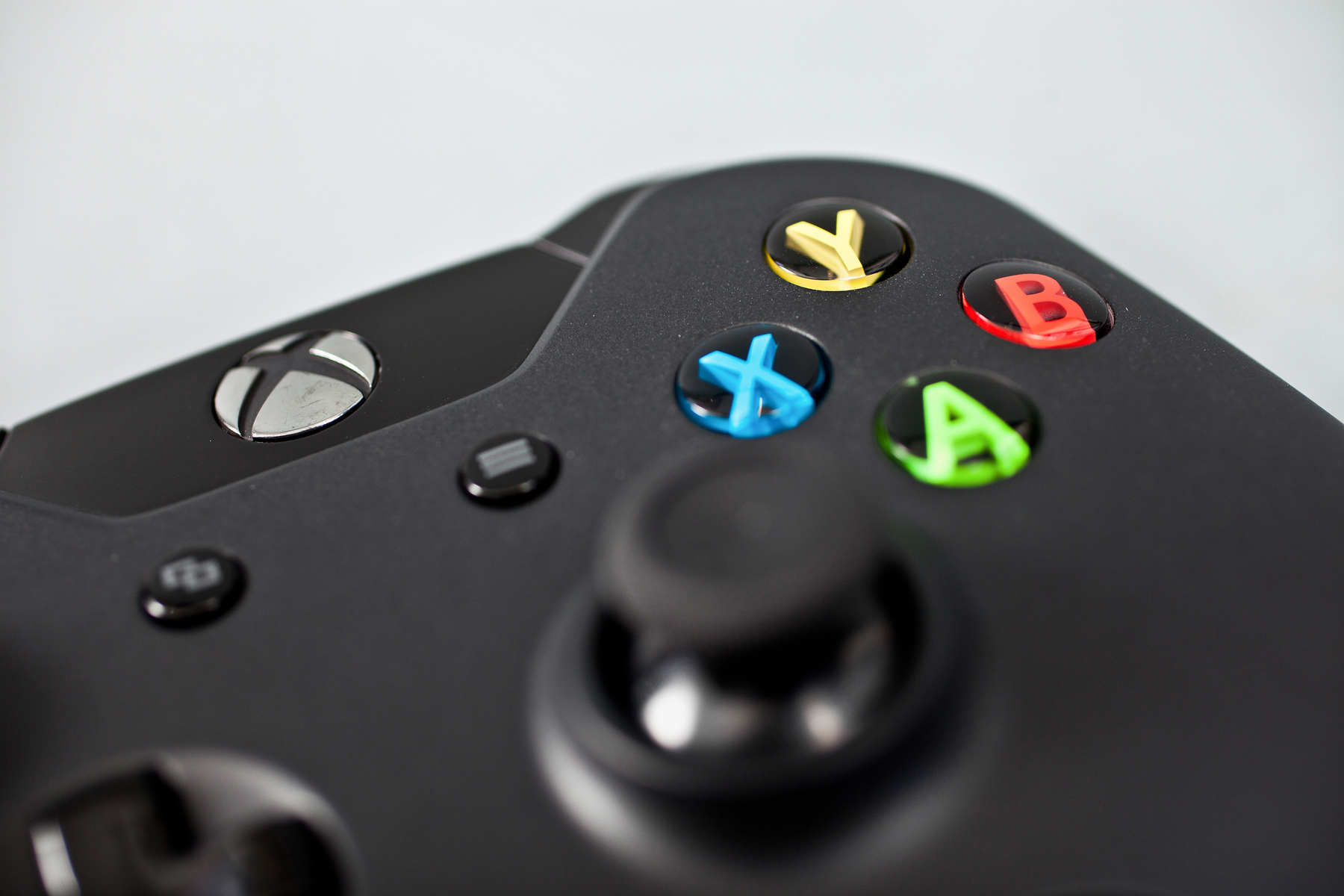
Like clockwork, after Microsoft had a gangbuster show over at E3 this month, the analysts and mob came out of the woodwork to discuss how their theories of how Microsoft is getting out of the gaming business would fit the current narrative. This after Microsoft CEO Satya Nadella and the Head of the Xbox Division Phil Spencer stated that the gaming division—also known as Xbox—is core to their business model and that they will support it just like they would support any other division. However, the analysts and doomsayers didn’t take this lying down.
The main theory is that Microsoft is planning to spin off the Xbox division, or shut it down completely due to the lacklustre sales of the current Xbox console, its games, and services and that the Xbox division is currently a square peg in the big round Microsoft pie. This wasn’t thwarted by the fact that Microsoft just announced the new updated Xbox One S, and the new Xbox Project Scorpio, along with the development of over 14 new games coming to the Xbox platform. Their analyses head up an argumentative fallacy, that confirms their belief because one or more points are true, even though it disregards all other facts.

It reminds me of the time when HP launched their HP WebOS tablet range. The company didn’t do too well in the market, with the iPad dominating the market, and cheap white box Android tablets flooding the market for lower income earners. I myself was a fan of these tablets. So HP did what any normal company would do, decided to shut down the division, but before they did that, they announced a new range of HP Slate tablets running their WebOS system and launched them in quick succession. This was done to ensure that shareholders would see that their division was not profitable and that they would agree to shut it down.
However, that never happened.
When HP saw that the total sales market for the HP tablet series was so mediocre they had one of the biggest fire-sales in history. At that time you could pick up the tablet—which retailed for $499—for a mere $99. They sold out immediately as one would guess, and they completely abandoned the market for WebOS. They since then only focussed on cheap Android devices.

Microsoft currently sold around 25 million Xbox One consoles, and the updated Xbox One S has been topping the charts since launch quite consistently. The updated slim version also saw its pre-order stock getting depleted due to the sheer number of orders on Amazon. Beyond that, there are currently over 40 million active Xbox Live subscribers, and their flagship game has sold well over 5 million units in three months. It reached a complete saturation point of 34% on the console, which is extremely good. Microsoft also recently announced that their Elite controller sold over 1 million units, impressive considering that most of the video game community called it ‘unwanted’ and ‘overpriced’.

If Microsoft were to spin off the Xbox division, they would have done that already. To successfully spin off a business, you have to give shareholders a good enough reason to do so and currently—if these analysts are to be believed and we disregard everything we know—they wouldn’t have. The Xbox division is making profits, profits which lead to dividends, which gets paid to each one of those shareholders. It wouldn’t make sense cutting off their only gateway to consumers’ homes. Look at what happened to IBM when they stopped focussing on consumers, Microsoft, and other companies have outmanoeuvred them consistently. Microsoft sees the consumer market as a ‘gateway’ drug for consumers, who increasingly have control over which devices they use at the office, and once you get into the office—which is a minefield—you’re home free. Their consumer businesses are doing quite well—bar the Windows Mobile business—and it wouldn’t make sense cutting off a healthy limb just to save ‘mythical dollars’ even though they would actually be losing additional income.
The whole argument that ‘if Microsoft does not sell as many consoles as Sony’ therefore ‘Microsoft is getting out of the gaming business’ is completely redundant. Even with the advent of the Play Anywhere initiative, it still does not prove that the argument can be justified. Microsoft is working with massive customer feedback systems which through analytics and data shows them what their customers want, and they act on that swiftly. If there were no market or need for Play Anywhere, Microsoft wouldn’t have made it see the light.
Logical fallacies aside, gaming remains a massive part of the Windows ecosystem, and Microsoft rightfully wants to ensure that it remains that way with a push for games being launched on Windows 10 that traditionally would only be limited to Xbox. This would give consumers the choice they want when it comes to playing their favorite games. Additionally, since the cross-buy feature is only limited to digital games, it locks customers into the Windows 10 ecosystem much like what Apple does with iOS.

In regards to the updated consoles, Microsoft does not see this as the main driver for game sales. They’re releasing these consoles as an entry level device for consumers who cannot afford systems that usually would run up to thousands for a comparable experience. Beyond that, the Xbox Project Scorpio system is there as fan service, for those dedicated fans who want a system that can play games at 4K for instance. The Scorpio was never intended to compete in the entry-level market, and it’s being pushed as a premium Microsoft gaming platform, and it will join other experiences like the Surface Book, Surface Pro, and Band devices, and it will be priced as such.
But just like we’ll always hear that Windows has a ‘massive virus problem’, we will always hear about how fallacious arguments are being morphed into existence by analysts and pundits who desperately need proof for their narrative for some reason, without the burden of actually having to prove it. Xbox is here to stay, and it’s just a matter of time before you accept that fact, and Microsoft has a lot of time.

Dreyer was a regular ICXM contributor between 2016–2017, publishing 139 articles across opinion pieces, game reviews, Windows and PC, and Xbox news. Their work focused on hands-on reviews, platform commentary, and breaking-news reporting during the Xbox One X launch year and Microsoft’s wider Play Anywhere / UWP gaming initiative. They post on X as @dreyer_smit.