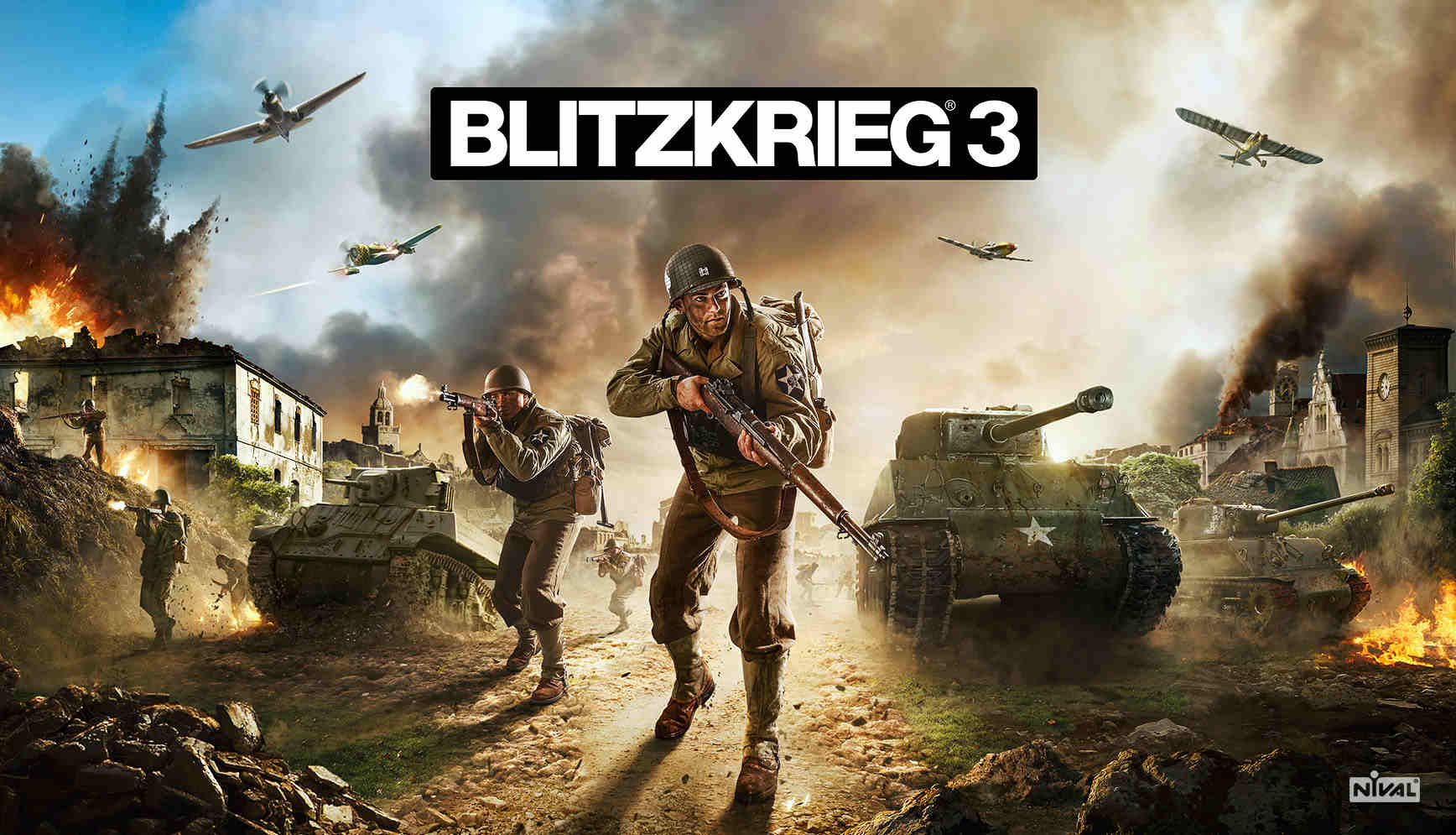
Although the Blitzkrieg franchise hasn’t been one of the biggest strategy series released, with titles such as Age of Empires and Heart of Iron grabbing the biggest chunk of the genre, Blitzkrieg has always had a bit of a soft spot in gamers’ hearts since the first game launched back in 2003. Blitzkrieg, the first game of which was regarded as a cult classic, hasn’t seen the same level of success since then. Navil decided it was time to return to the World War 2 era with Blitzkrieg 3 since games like Call of Duty and Battlefield have reinvigorated the call for early 20th-century warfare.
Blitzkrieg 3 takes the player back to the battlefields of World War 2, giving the player the choice of taking the challenge on as either the Nazis, the British or the Soviets. The game takes you right into a tutorial, however, you can decide to skip that part after you invade Poland. Once you finish the tutorial, you’re met with a large overview map which shows you the entirety of Europe and North Africa with several first round battles you can choose from.
Since I haven’t played any Blitzkrieg title before, the concept was new to me, and it took me some time to get used to the way the game requires you to play. Blitzkrieg isn’t for the faint of heart, requiring a lot of planning and careful consideration for how you’re about to take on certain targets. Several times I ended up losing all my units because my usual schtick of running headlong into battle could be regarded as quite stupid.
The game also introduces a neural network type AI which adapts in real time to how you play, and therefore introduces a very interesting dynamic for novice and expert players with this game. It took me quite some time to get used to it with the AI in the game intelligently maneuvering around the map to challenge me where they had the advantage. Each ‘battlefield’ requires you to take on certain objectives, be it giving support to your allied units or destroying certain targets.
The game features historically accurate units, which unlock as you move through the game and complete missions, which in turn gives you experience points. This experience counts towards both the unit itself and your commander. Units in the game have specific abilities where you can—as you progress—dig trenches, assassinate specific targets hiding in buildings, and even fortify tanks. As you play through the campaign, once you complete specific objectives you receive ‘support points’ which you can use to call in for more reinforcements or for specific requests such as bombing a specific target from the air or otherwise. The support mechanism helps a lot when you know there would be a slight problem with the number of units you have taking on a heavily fortified area. Your units can also move into buildings and turn them into fortifications.
The main premise of the game hasn’t changed much from the original games. The only major change one can experience is the advent of Boris, the AI system they implemented in the game. Furthermore, the game received several updates to its graphics.
However, this detracts little from the gameplay experience since this game is all about strategy. Games like Hearts of Iron pride themselves on how difficult and deep they can make the complete experience, and Blitzkrieg makes that more accessible. It also takes the strategy right to the front lines, whereas Hearts of Iron makes you more of a ‘Minister of Defence’ deciding where to strike and when instead of having you make strategic decisions right on the battlefield.
It depends on how you like to play in the end. I mostly prefer games such as Blitzkrieg since it gives me full control of the battlefield. I’ve had more success that way, whereas Hearts of Iron, and even more with Europa Universalis, take the ‘roll of a dice’ concept where you might have the biggest army but you can still lose the fight merely on luck, which isn’t my strong suit.
Overall the game was quite intriguing and fun to play. The level of thought needed to be successful really drew me into the game and I thoroughly enjoyed it. As a strategy fan, I can fully recommend this game, however, I would recommend that they make some changes to the menu system to make it more intuitive since I spent a considerable amount of time trying to figure out that I needed to drag units into the support blocks before it would allow me to start a game.
Blitzkrieg 3 stays true to the original premise and brings it into the 21st century with advanced adaptive AI and more detailed worlds. Highly recommended for those who enjoy Hearts of Iron, but would like to dig a bit deeper into the meat of the battle.
Summary
Blitzkrieg 3 takes us back to the battlefields of World War 2, giving us control over the armies of the Allies, the Soviets and the Nazis. Introduced with the game, Navil added an adaptive AI named Boris which gives the game a unique experience, unlike what you’ll find in your average strategy game.
Although not for everyone, Blitzkrieg gives hardcore strategy fans something to really dig their teeth into, with an expansive set of tools to take on any objective they may come across. The game also gives you the freedom to take on those targets any way you wish.
Blitzkrieg will be launching soon on Steam and will be on both Windows 10 and MacOSX. Although the game only currently runs on PC, I wouldn’t mind seeing them port it to Xbox One, since Halo Wars 2 and Cities: Skylines show what is truly possible on console.

Dreyer was a regular ICXM contributor between 2016–2017, publishing 139 articles across opinion pieces, game reviews, Windows and PC, and Xbox news. Their work focused on hands-on reviews, platform commentary, and breaking-news reporting during the Xbox One X launch year and Microsoft’s wider Play Anywhere / UWP gaming initiative. They post on X as @dreyer_smit.