When Far Cry Primal was first announced, a lot of people weren’t sure how it would work. A Far Cry game without guns seemed like a strange idea. After playing the game, I can say that that ‘strange idea’ was a good one. I enjoyed my time playing it immensely.
The game starts out with Takkar and his hunting party being ambushed by a sabretooth tiger. Takkar is the only survivor, and is tasked with finding the land of Oros and his Wenja cousins. During this opening tutorial mission before the attack, you must first follow and kill a mammoth. This was a fun mission to play through which lead to a very action-packed opening once the sabretooth tiger came in. Sometimes the opening in a game can be boring, so I’m glad that this wasn’t the case. The land of Oros is open to you after you complete the tutorial mission.
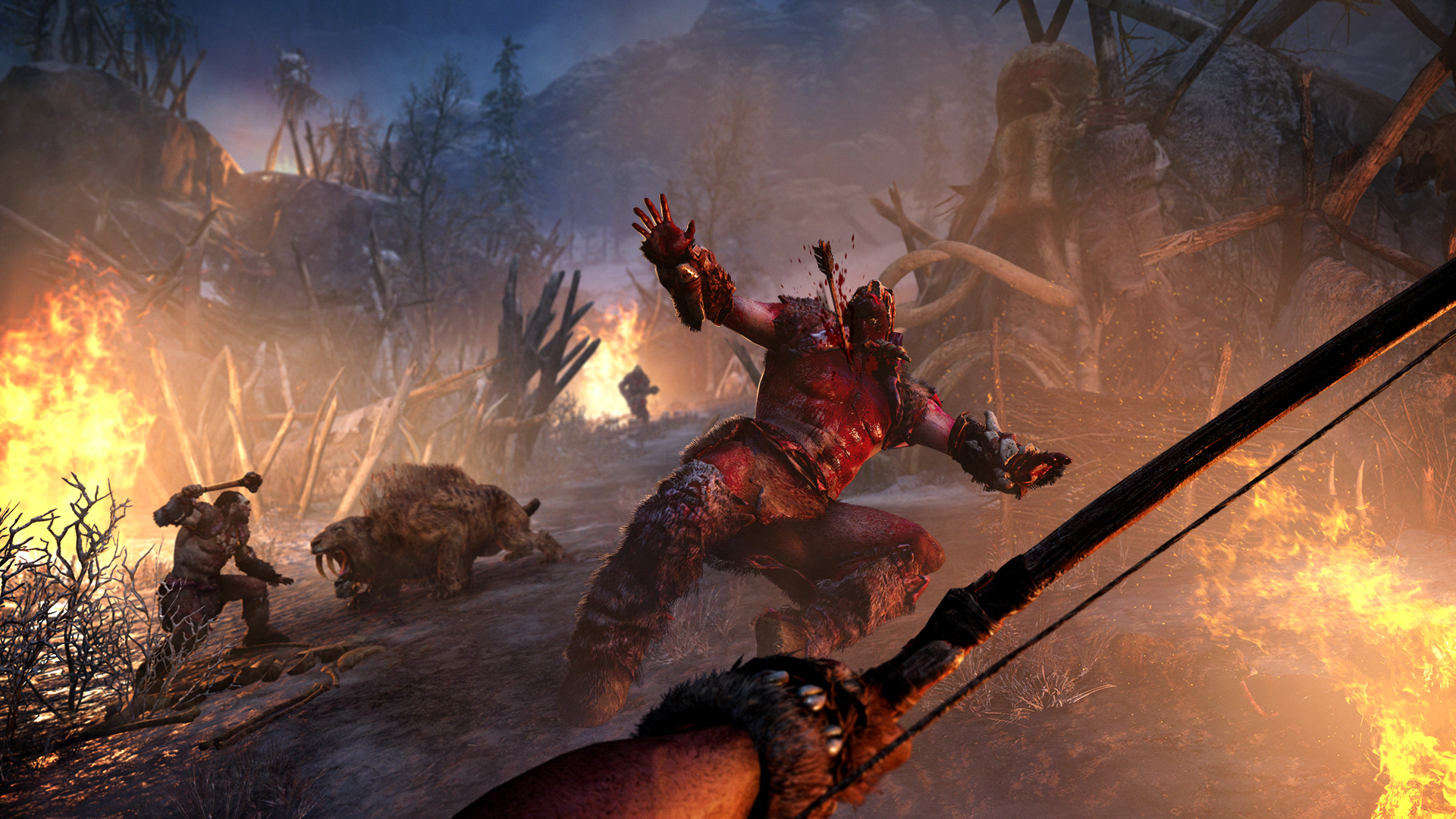
Gameplay and Combat
For a Far Cry game without guns, it was still a lot of fun to play. The combat in the game is great, albeit simple. You unfortunately only have a few weapons at your disposal, although this makes sense given the time period. There are only so many tools that you can craft in 10,000 BCE. The main weapons are the bow, the club, and the spear, which can all be upgraded. The weapon you will use the most will probably be the bow and arrow. Some people may use the club if they’re a melee player, but I tend to default to ranged attacks, and the bow is the best weapon to use in that case.
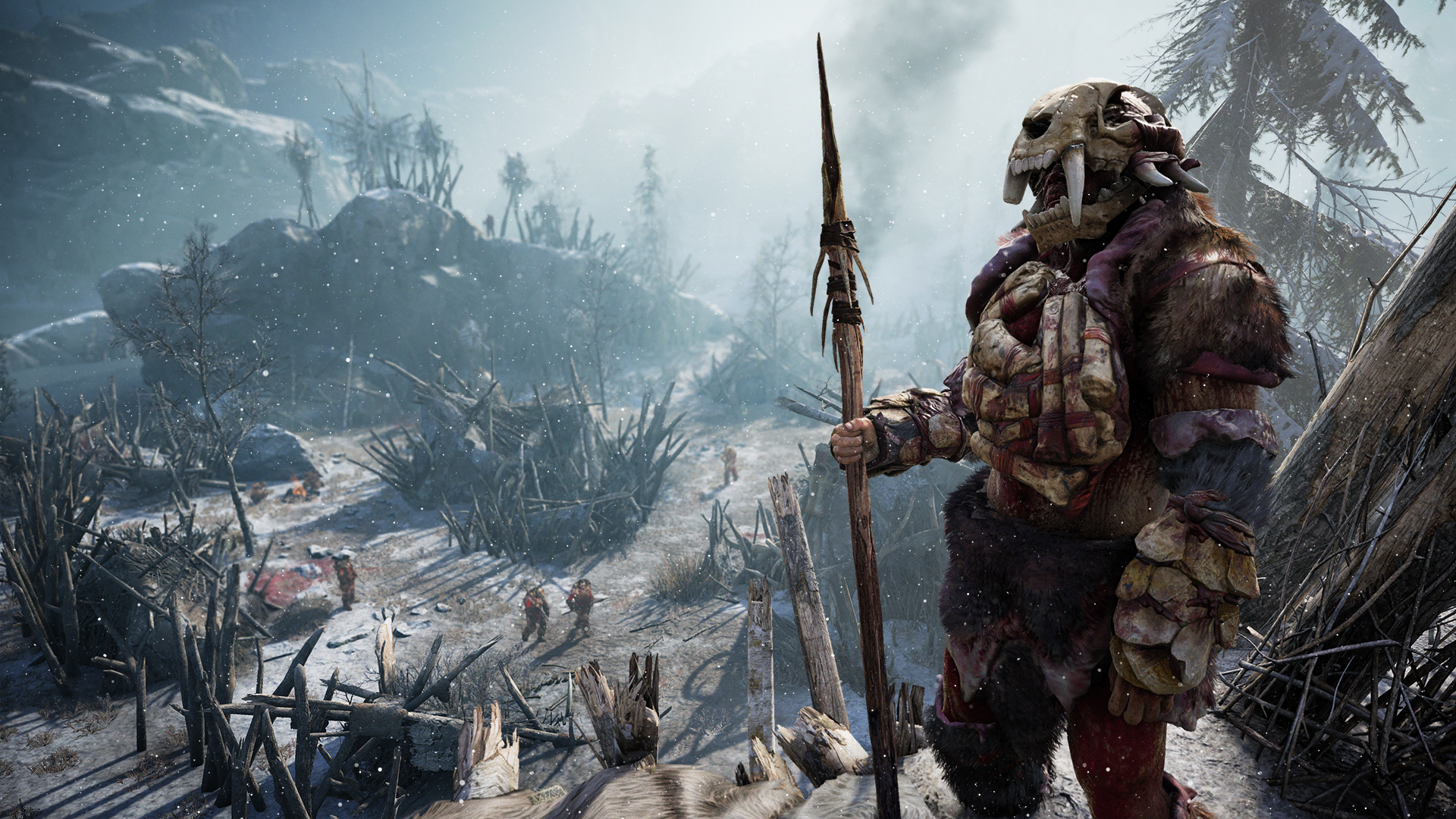
The bow is not incredibly strong, but a well-placed headshot will normally do the trick if you’re using it against human enemies. The Izila and Udam are the two hostile tribes that you will find in the game. Generally speaking, they’re relatively easy to defeat if you only encounter a few people at a time. They usually attack with bows, spears, or clubs, so if you can keep your distance, you should be safe. If several enemies ambush you, that’s when you need the help of one of your tamed beasts.
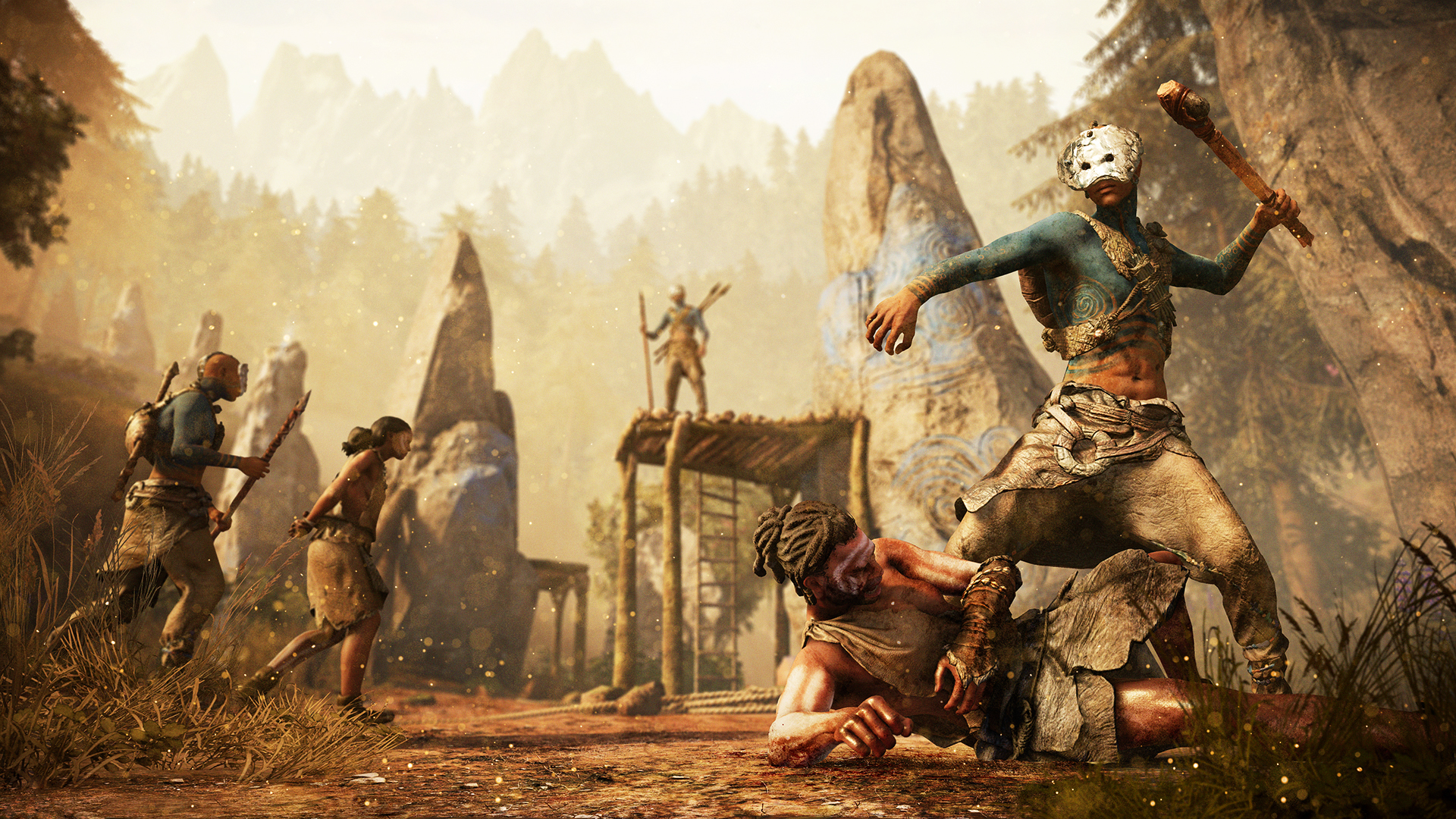
Taming beasts may actually be my favorite aspect about the game. When you progress far enough, you will unlock the ability to tame different animals. You start out with an owl, which you can control and send out to scout the area you are near. Eventually, you can tame larger animals, such as wolves, lions, and bears. They aren’t always easy to tame, so it takes some skill to distract them. These can then be called upon to attack a group of enemies or even aid in warding off other hostile animals. It was convenient when I wanted to get somewhere quickly but didn’t want to spend a long time killing anything that attacked me. This didn’t always work, as a bear could have no problem overpowering my lion, but it was nice to have a bit of a safety net.
Your beasts only have a limited amount of health, so if they get injured, you can heal them and even revive them if need be. I found myself getting attached to several of my beasts, so I liked being able to save them from death. If you want more of a challenge, you can choose to send your tamed beast away whenever you want. Having the ability to control animals like that isn’t normally a feature that I see in games too often, and it was something that I ended up loving.
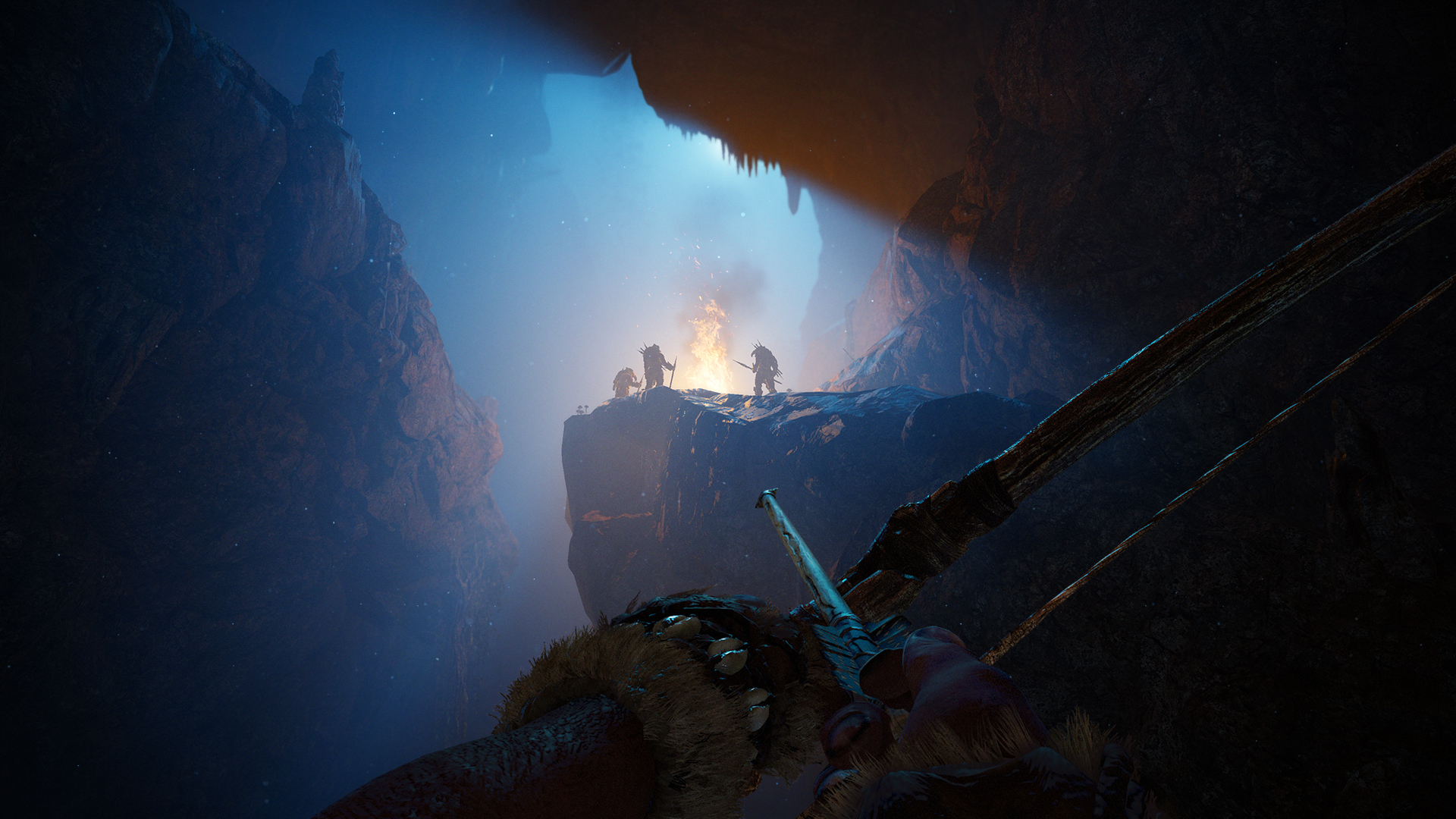
The day and night cycle that the game has isn’t just for show. It can actually affect the gameplay. The time of day can determine what animals are roaming about in certain locations and even how hostile they are. It would be wise to sleep at one of your villages before you venture off, unless you want to be surrounded by an angry pack of wolves. It was great to see how different an area felt once it became nighttime. This is another time where it would be smart to have one of your tamed beasts with you, or even a torch, which you can quickly make in the weapons wheel with your club. There is a nice sense of urgency when you are wandering through the dark. How the animals acted and their wonderful AI really brought the game to life.
Like a lot of games nowadays, Far Cry Primal has an ability called Hunter Vision. Whether it’s called by a different name, like Eagle Vision in Assassin’s Creed or Survival Instinct in Tomb Raider, the ability itself is essentially the same. Important items on your screen, whether they are supplies or enemies, will start to glow yellow so you can easily spot and track them. I’m not exactly sure why games are tending to over-rely on this feature. While it is extremely helpful, I found myself wanting to use it too often. It’s not much fun tracking a beast when I need to constantly stop and hit my right thumbstick to use the ability. I see how it is useful, I just wish that I didn’t feel like I needed to use it so much.
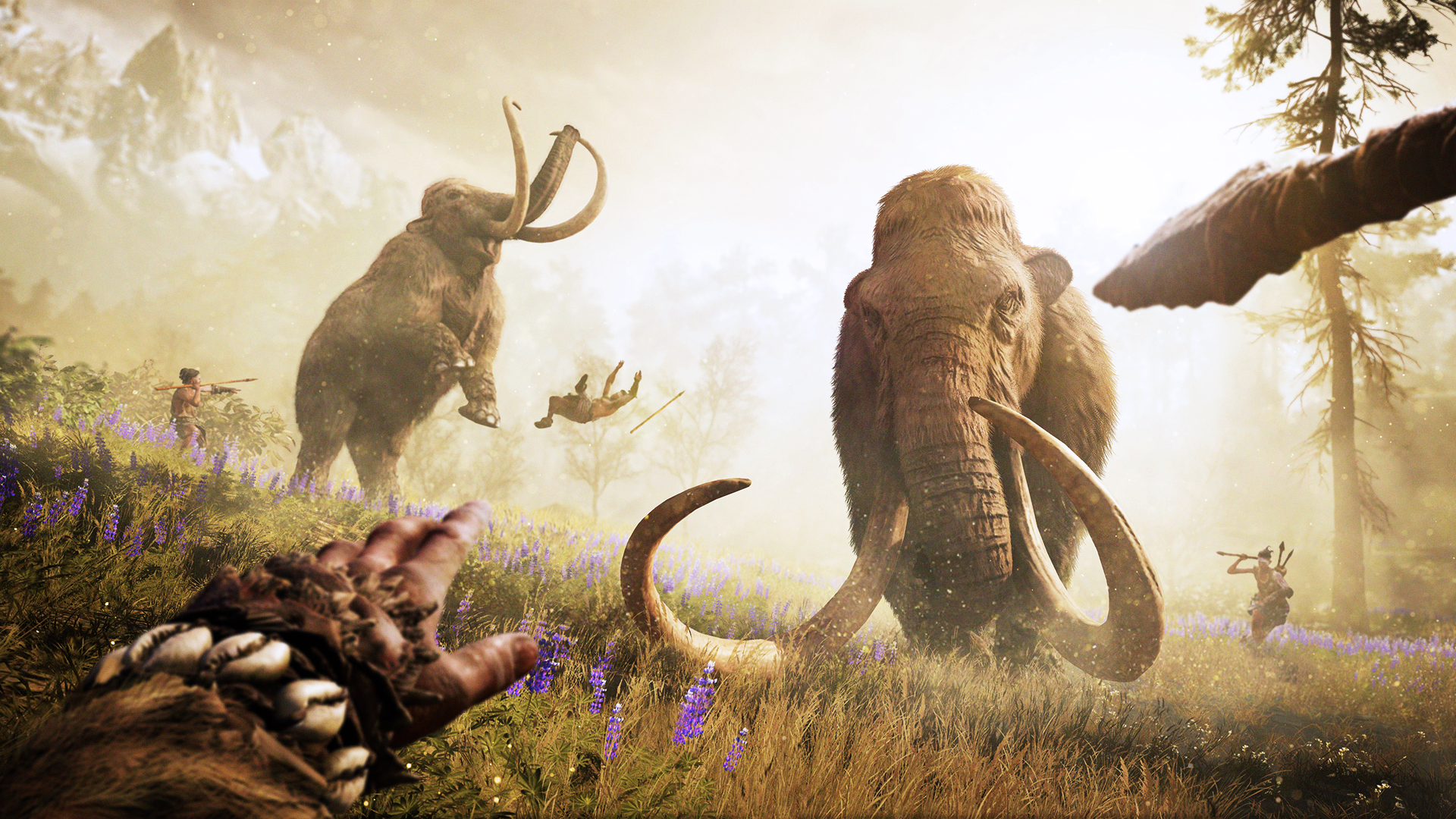
Overall, the gameplay and combat were great. There were dozens of different missions I could do scattered throughout Oros, from defending a village, escaping a cave, to finding resources for better weapons. All of my tools and abilities were fun to use, and I could see myself just wandering around Oros for hours.
Crafting and Skills
Once you get further into the game, you are introduced to more of the game’s crafting systems and skill trees. The crafting system is intuitive and easy to use, so you should not have any trouble when trying to make new gear. After you have gathered enough resources, all it takes is for you to find what you want to craft in the menu and then choose to craft it.
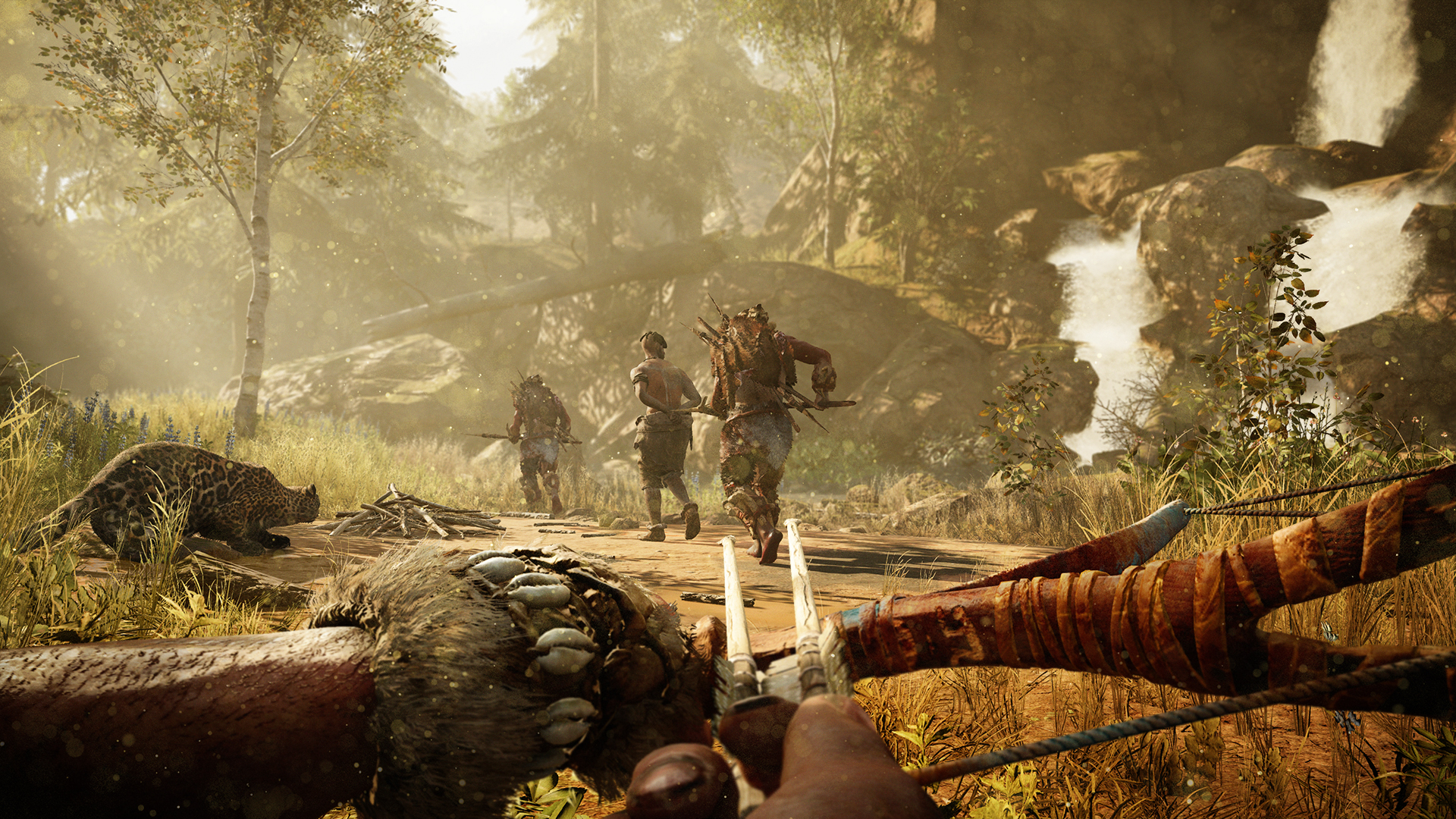
The main items that you will craft are tools and upgrades for yourself, and huts and upgrades for your village. You can find various resources in the wilderness which allow you to craft new tools. These can range from wood to slate to animal skin. Everything that you will need for your survival must be crafted, much like how humans would have needed to do so in the past. Oros is filled with an abundance of common resources, so you should have no problem gathering what you need. I found the crafting system very straightforward and accessible for anyone to use. It wasn’t convoluted in any way.
Going into the skill trees at first surprised me because I saw multiple characters with skills to unlock. As it turns out, all of these skills benefit Takkar in some way. For example, Tensay’s (who is the game’s mystical Shaman) skill tree unlocks more of your animal taming abilities. I liked how instead of making one overly-complicated skill tree, they instead made several smaller ones and just tied them to other people who help you along your journey. Unlocking a skill is as simple as leveling up and seeing what skills are available for you to spend your skill points on.
Environment and Setting
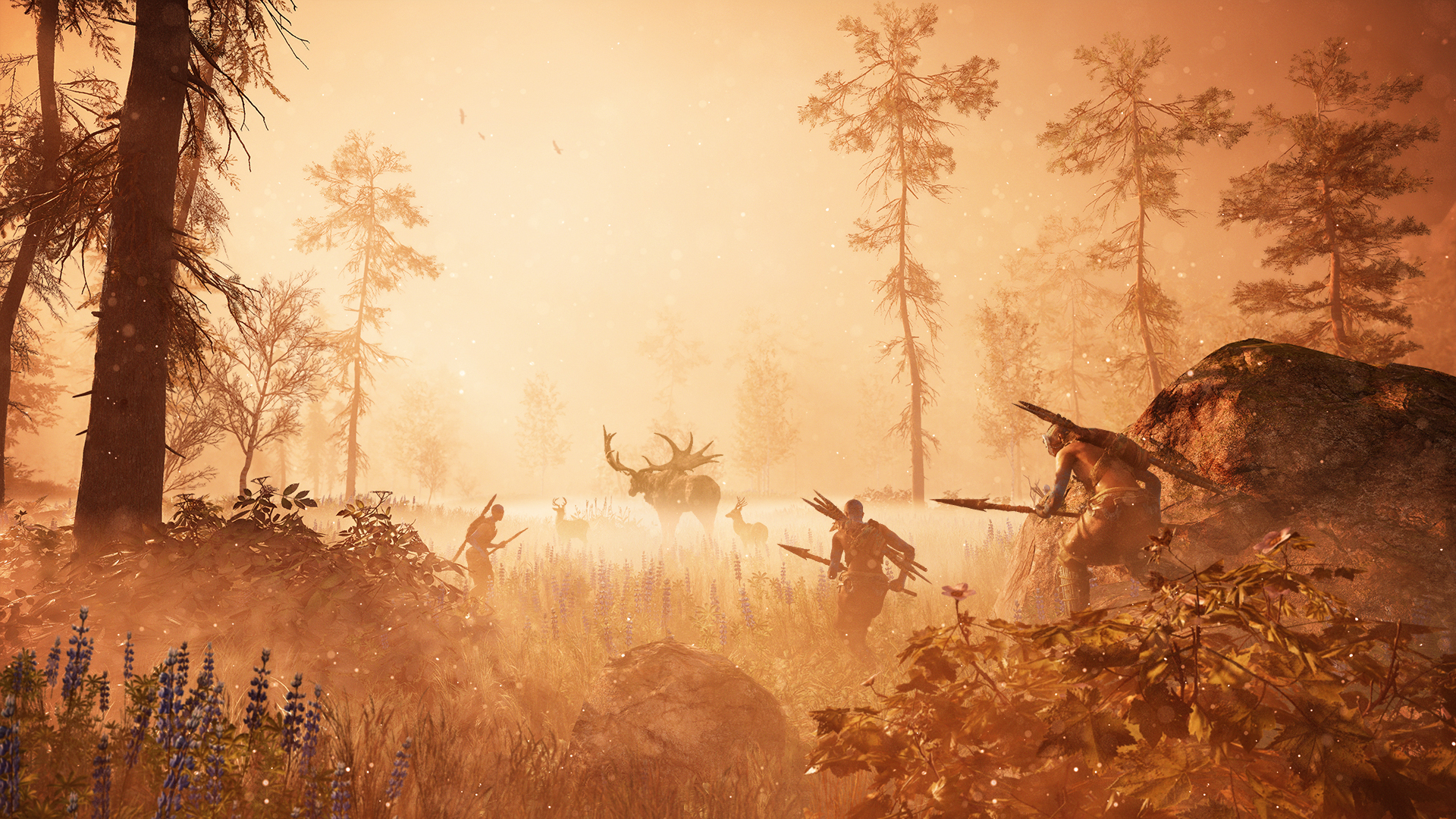
Oros is a beautiful setting with a decently large map. The detail in the world was gorgeous. It had so much variety that it really created a wonderful environment that I never got tired of. I could start hunting a bear high atop a mountain then through a forest and end up in a meadow. Combine the scenery with the animals that I encountered, like mammoths and sabretooth tigers, and I could really feel like I went back in time. Everywhere I went was filled with unique animals and different sounds that it was almost as if I were there. Even on the screen when I went to save the game, it showed a silhouette on a cave of whatever scenery I happened to be looking at as I paused. Ubisoft was definitely successful at creating an immersive world.
Story
The story in Far Cry Primal is fairly basic. Once you get to Oros, you must help the Wenja overcome attacks from the Udam and Izila tribes, one of which is cannibalistic. Along the way, you meet a Shaman named Tensay who is the one that teaches you how to tame animals. Because of this ability, people view you as a hero and call you the Beast Master. There are no big, mind-blowing twists and it is easy to follow along as the plot never really gets complicated. If anything, I would have actually liked to see a more complicated plot with a bit more to it. I understand that in keeping with the theme of the game there is only so much that they could do, but I’m the type of person who enjoys more elaborate stories.
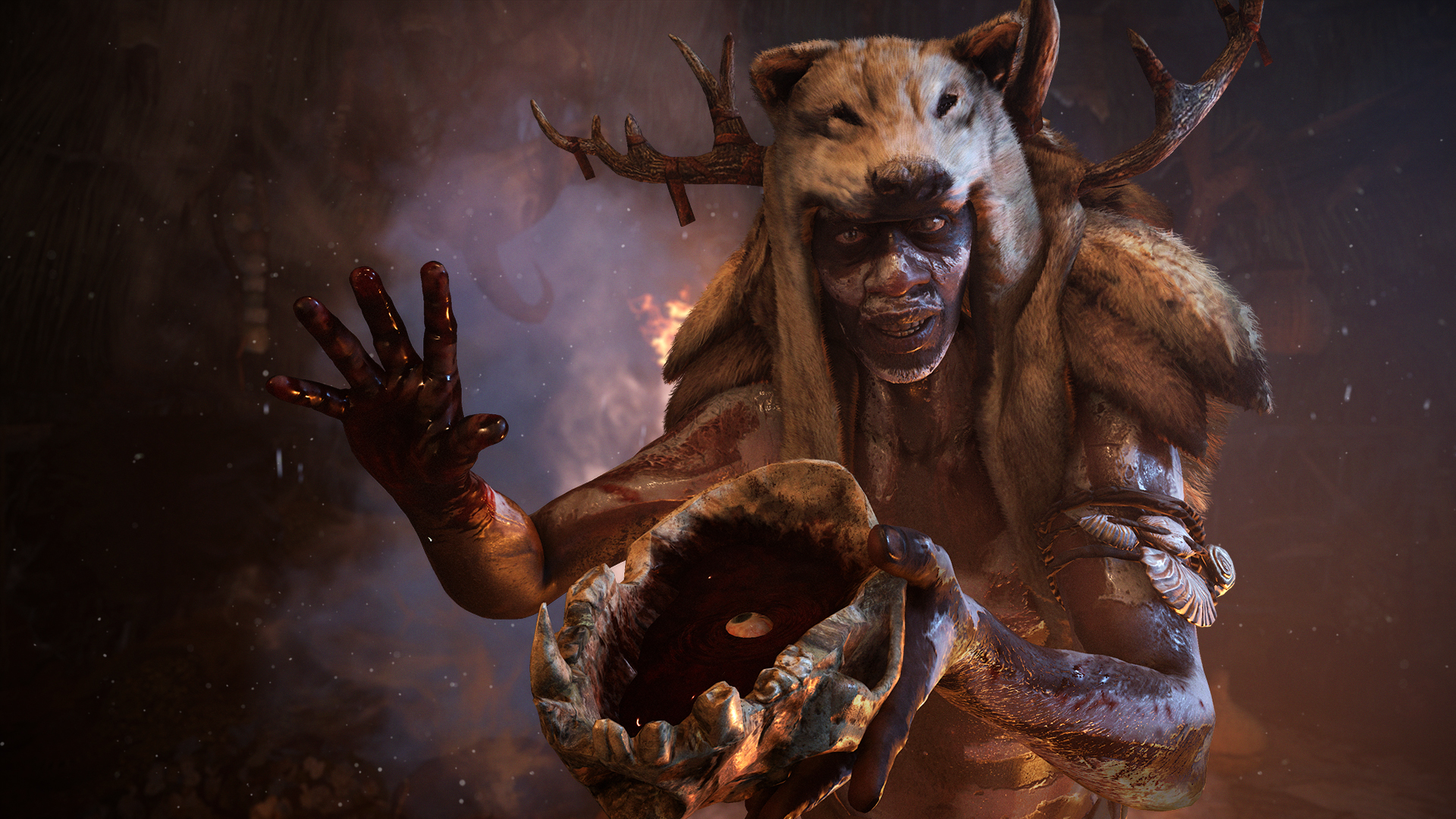
What shined in the story were the tribes’ cultures. It was great to see how Ubisoft created unique, fictional tribes and still made them feel natural and real within the game. The Wenja, Izila, and Udam all had their own traditions and way of life. Even individuals within each tribe had their own specific traits and beliefs, like being a Shaman, a healer, or a warrior. Some of them were eccentric or extremely brutal, but I guess that is a product of the time Ubisoft was portraying. During missions with Tensay, I had visions of the Udam and Izila tribes that gave me glimpses of what they were like. These ‘dream sequences’ allowed me to explore their cultures even more.
Performance
We tested Far Cry Primal on Xbox One and PlayStation 4, and it ran very well on both. We never had any frame rate issues or problems with lag, and we didn’t encounter any severe glitches. The graphics were actually a bit better than we expected. They weren’t ground-breaking, but for the amount of foliage on the screen at a given time, it looked stunning. Some of the animals, especially the owl, almost looked real. We were very pleased with how well the game looked and ran.
Both of the versions looked almost identical. We couldn’t see any noticeable differences between the two using the same settings. Gamers can pick up any version and enjoy it thoroughly as both are great.
Summary
If you’re a fan of action-adventure games, I highly recommend that you get Far Cry Primal. It isn’t perfect, and some people may feel that it’s more of the same, but I quite enjoyed exploring Oros. Its simple nature sometimes ended up hurting the story and gameplay, however that doesn’t mean it wasn’t fun. You can tell that the developers put a lot of time and effort into making it a fantastic experience. Far Cry Primal offers a wealth of great content with an interesting setting that many will love.
Be sure to check out Far Cry Primal on Amazon


Jennifer is a games journalist, former games journalist and PR Manager at Gearbox. They contributed 234 articles to ICXM between 2015–2017, focused on opinion pieces, game reviews, Windows and PC, and Xbox news: went on to write for Windows Central and later managed PR for Gearbox Software.