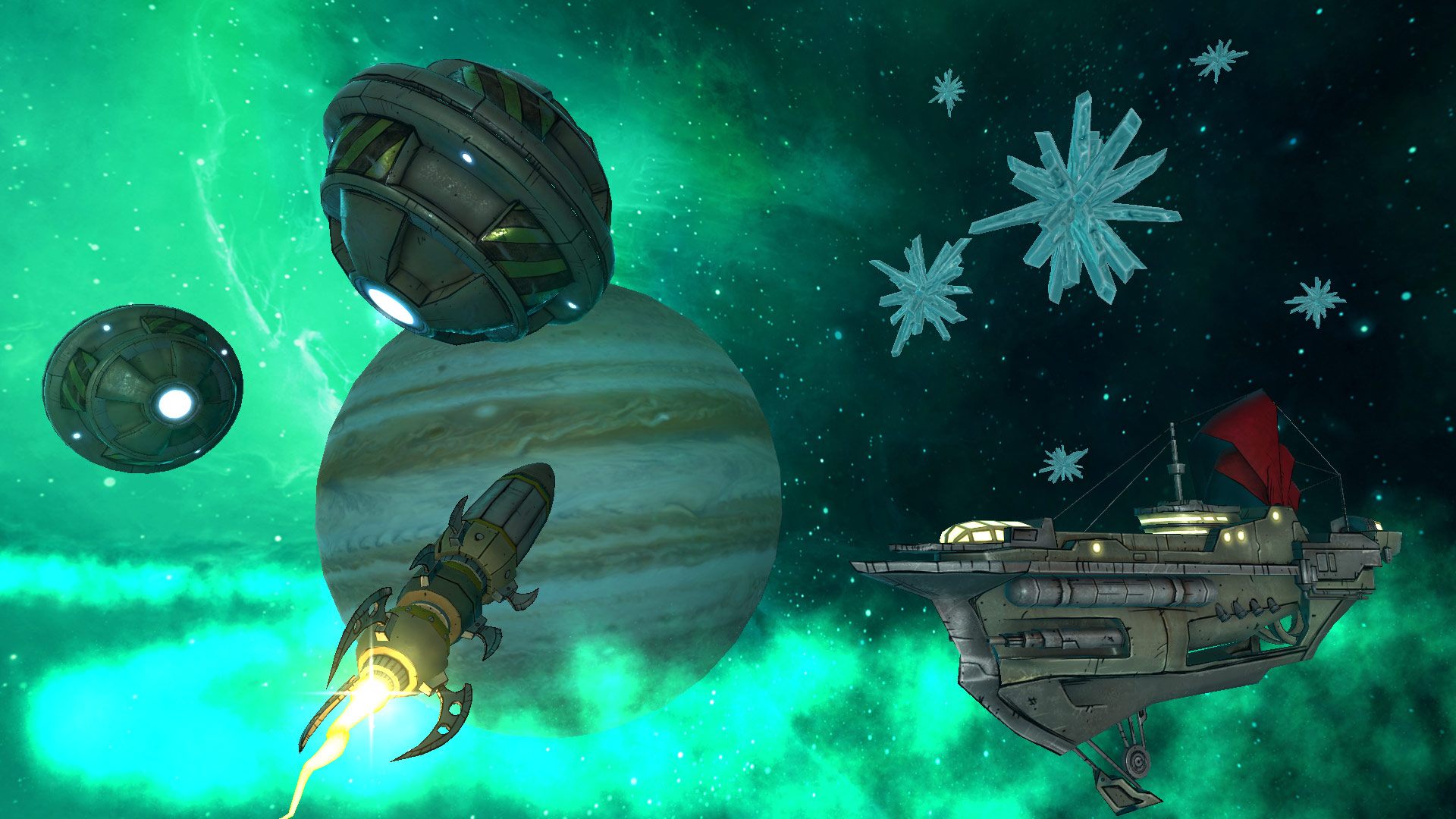
G Prime: Into The Rain is a stylized gravity slingshot-based puzzle game with a deep story in which you take on the role of an explorer who must chart and gather information about a new and strange phenomenon called The Rain. This phenomenon catches the interest of various corporations, each of which is willing to pay for any information at all, and it’s up to you to choose which one you want to work for.
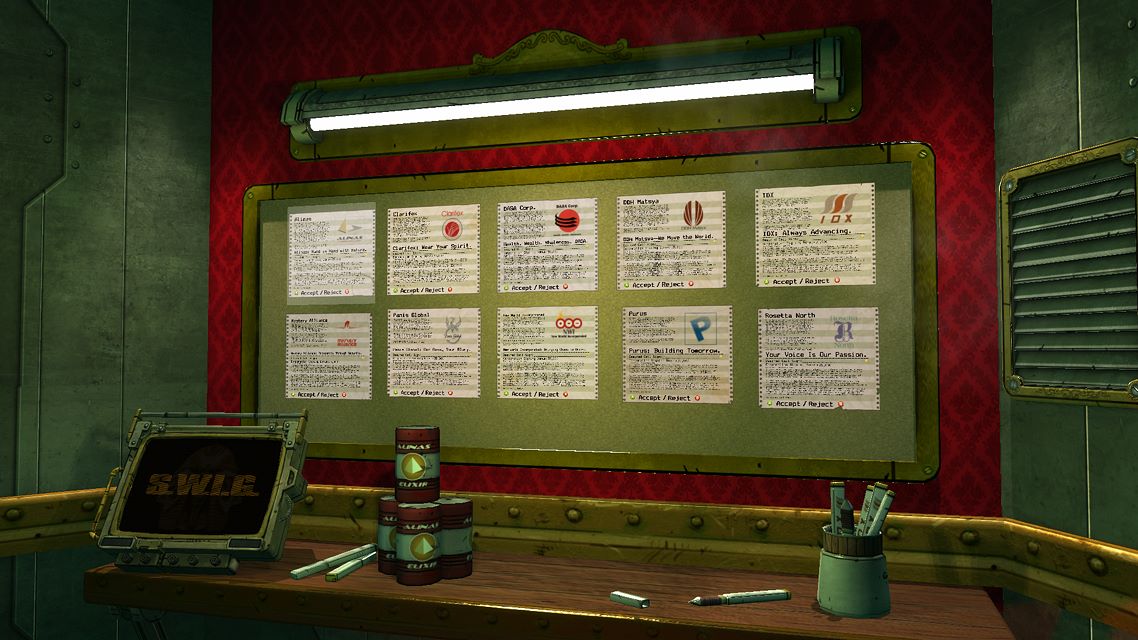
At the start of the game you must select one of the ten corporations to work for, keeping in mind that the decision is final. Afterwards you are taken to your ship, called Ptolemy Stations, or more specifically, the Crow’s Nest. The Crow’s Nest lets you access in-game menus and much more.
Now for my first complaint. These menus can seem a bit strange at first and take a while to acclimate to. Surely they could’ve been designed better. For example, the screens on the top right give you access to the in-game manuals and are overly complicated. For those interested in the game’s story, there are other sections that you have to explore and read. I would recommend spending some time familiarizing yourself with everything before you begin the game.
On the left there is a screen with the letters S.W.I.G. on it. This is where you can view your progress as well as access leaderboards. The S.W.I.G. screen is also used to link G Prime progression to future Soma games related to the Arc Universe. While you are on the Crow’s Nest you can also press the X button to access options related to sound, camera, difficulty and more.
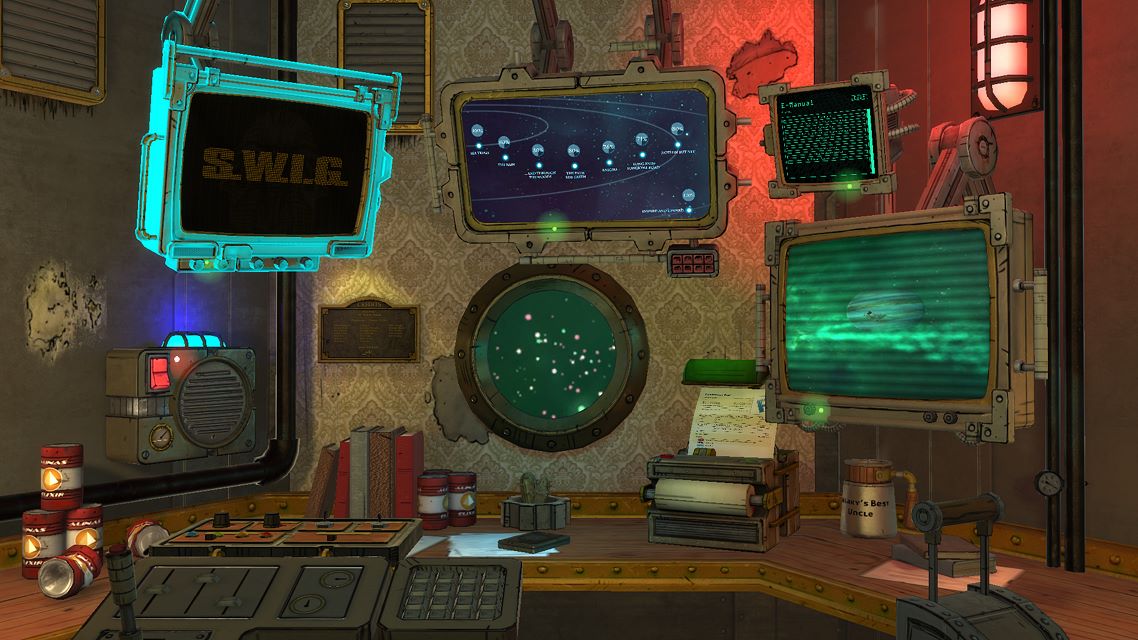
Once accustomed to the Crow’s Nest you will meet Barker, the ship chief, who will introduce you to the game and give a brief summary about your objective and key information related to the story.
As for gameplay, G Prime is fairly simplistic in its core. Your objective is to shoot SDER Rockets in order to hit red targets, timing your shots appropriately for maximum payoff. The closer you are to the center of a target, the better and more valuable the data you collect will be, increasing your final score. When you successfully hit each available target, the level will end and you will be taken to the report sheet where you will see whether or not you have achieved the required payout in order to proceed to the next level. If not, you will have to replay the level again until you manage to acquire the minimum payout. The payout takes multiples variables into consideration, from the value of the data collected to the number of rockets used to hit all of the targets.
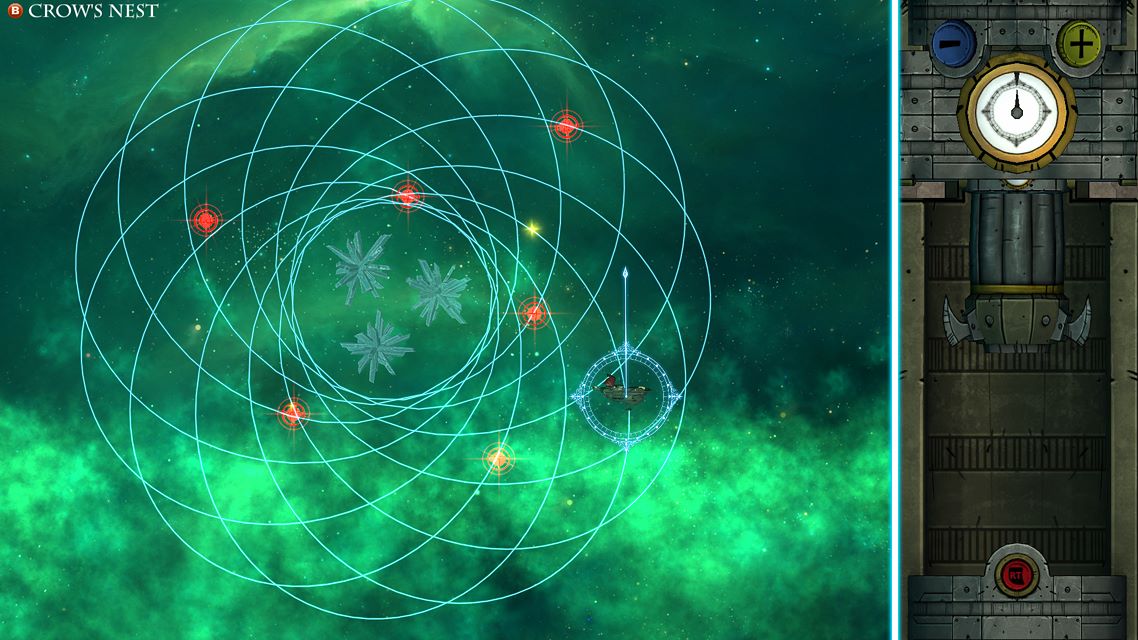
In order to succeed in your missions you will need to adjust three aspects regarding your shots and your rockets. Most importantly, you will adjust the angle at which your rocket will be launched, which is represented by the first dial on the right side of the screen. You adjust the power with which the rocket is fired by pressing the RB button on your controller and the duration of the boost that you will have once you fire your rocket with the final dial. Furthermore, you are able to attach up to two extra boost compartments for additional uses and strategies.
The gameplay might seem simplistic at first, but once you get started you will see that that is not the case at all. Besides simply hitting targets, you must concentrate on multiple other conditions as well, from gravity buoys to various clouds that affect both the trajectory and behaviour of your rockets.
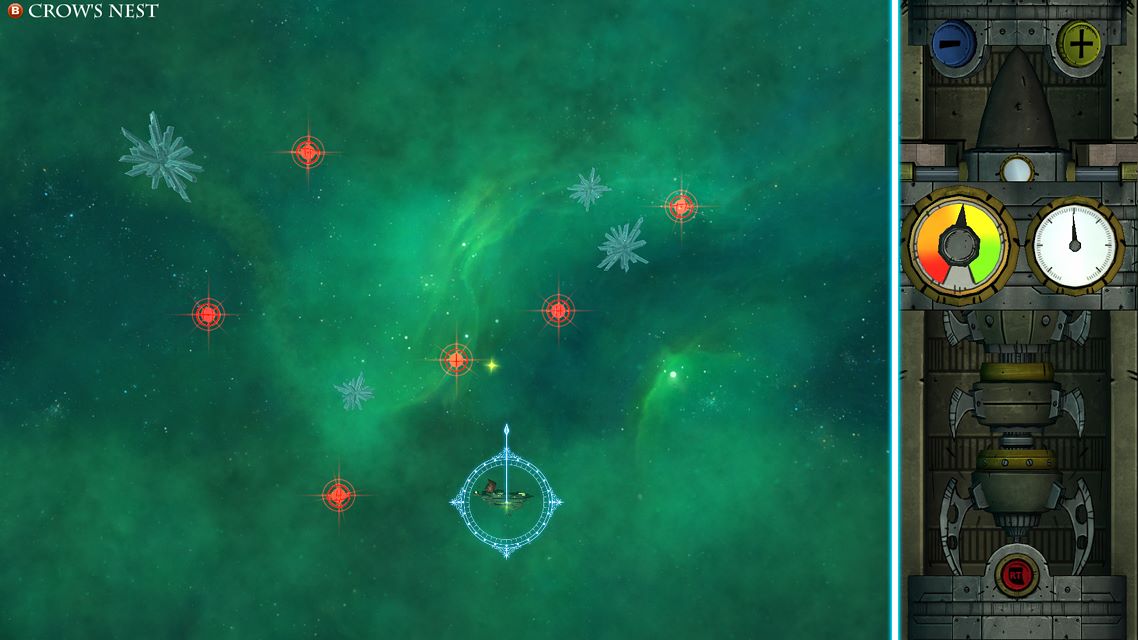
There are two types of gravity buoys, each of which functions the same way. One is some sort of black buoy and the other looks like an ice crystal asteroid. Both types will appear in various different sizes, causing the power of each one’s gravitational pull to alter depending on the situation at hand. Some might be fixed on a specific point and others might be orbiting around each other or randomly around the map itself.
There are three types of clouds, each of which has a unique ability. The first ones you encounter are “sand clouds” which, as you might be thinking, will decelerate your rocket until it stops completely. The second ones to cross your path, “lightning clouds” as I like to call them, help boost your rocket when it is activated. The third kind of clouds that you will encounter are “explosive clouds” which, contrary to “lightning” ones, will destroy your rockets if you try to boost nearby them.
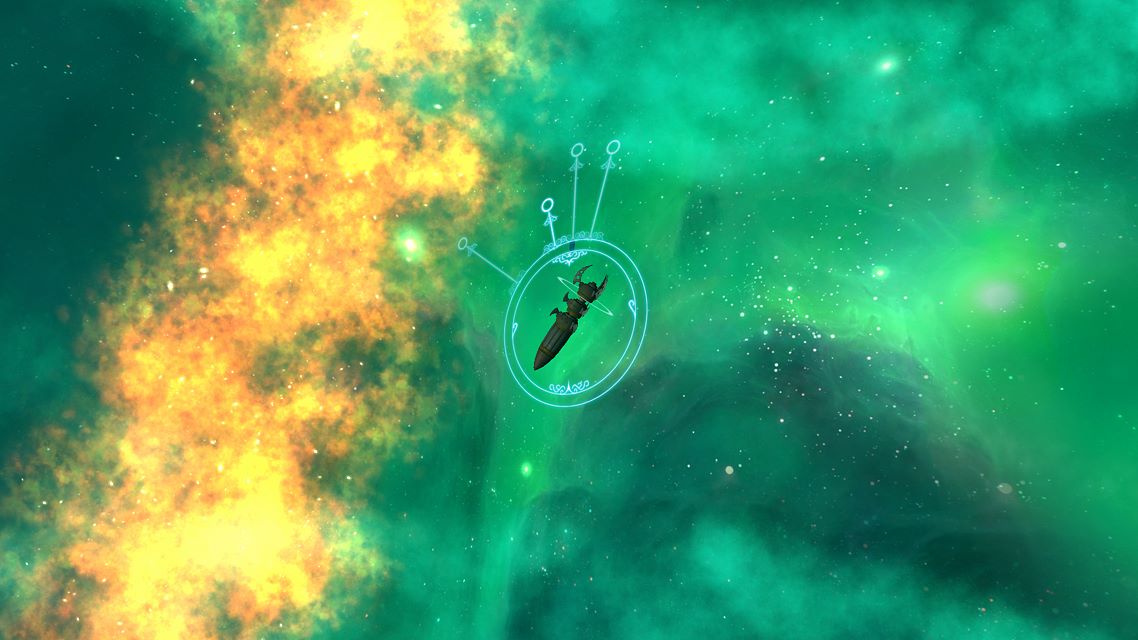
In the sound department, G Prime doesn’t stand out much. Sound and music are both simplistic and well adjusted to the game, but easily forgettable. The graphics and artwork tend to be better, as G Prime’s steampunk theme suits itself perfectly, and the levels, backgrounds, and environments are quite stunning and well made.
Summary
To sum up, G Prime is not a game for casual gamers, especially not so for those who do not enjoy puzzle games that require deep thought. Even those deeply invested in games of the puzzle or space genres may find it hard to get into. The game itself is simple, but there are some aspects that could be better worked out in order to make it a bit more enjoyable, such as easier controls. The zoom camera, although possible to control, is incredibly awkward and hard to work with, and the rocket controls are a bit tricky to handle as well.
One thing that definitely stands out in G Prime is the background story, which is probably the best that I’ve seen in a game like this. For those interested in a challenging puzzle game with a unique story and style, G Prime: Into the Rain is a solid play, but clumsy controls, odd menus, and difficult camera angles will surely drive away more conventional gamers.

João is a games journalist, Senior Editor at XDA Developers. They contributed 156 articles to ICXM between 2015–2017, focused on game reviews, Windows and PC, and Xbox news: previously reported for Neowin before joining XDA Developers in 2021, where he leads coverage of Windows, Microsoft, and hardware.