A few weeks ago I wrote a preview for Tom Clancy’s Ghost Recon Wildlands and walked away feeling somewhat negative about the game. Nothing really clicked with me and although it isn’t a terrible game, it really didn’t do anything special. It felt lukewarm but for some reason, I have found some moments of enjoyment in the final product. To be honest, I’m not sure why I enjoyed it more than the beta. Maybe Ubisoft tweaked some elements to make the gunplay more satisfying or I was just in more of a mood to play a game of this type. Regardless, the game still has flaws that outweigh the greatness within.
The story of the game is quite generic but it has some small touches of amazing world building. You’re part of a four-person squad called the Ghosts. They’re a special unit that constantly conducts secret missions that require them to get up and leave their families whenever they’re called upon, which in turn causes problems back home (some of which you hear about through dialogue within the game). The Ghosts are tasked with taking down this notorious drug cartel called the Santa Blanca who are occupying and terrorizing the country of Bolivia.
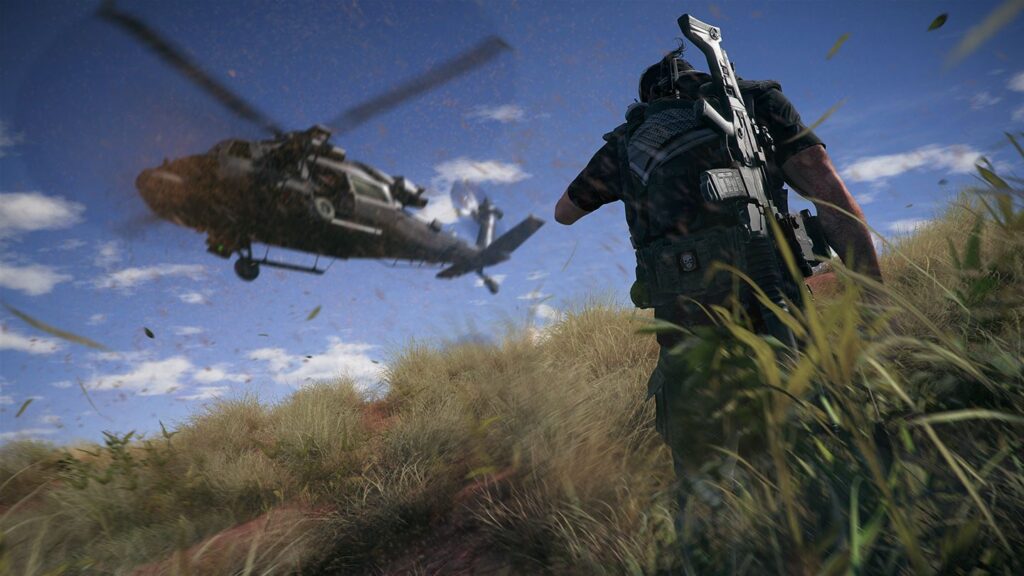
The cartel is absolutely gargantuan with all types of bosses and leaders controlling specific regions across the enormous map. If you’ve played Mafia III, you’ll already be very familiar with how Ghost Recon Wildlands’ campaign plays out. You must dismantle various operations set up by the cartel (destroying cocaine stashes, stealing supplies, and more) in order to draw out bosses who will attempt to come in and fix everything you’ve ruined. During this time, you’ll sweep in and assassinate the boss and claim that region for your squad and the people of Bolivia. Although it’s fairly repetitive, if you mix up your playstyle every so often or get a couple of co-op partners to tag along with you, you can make it fun.
I previously mentioned there is some great world building which is the most brilliant part of Wildlands’ campaign. On the radio you hear stories about the militarized police and the cartel’s impact on the world. Your squad mates talk about how this affects them: they’re forced away from their families to protect others. An interesting moment for me happened while driving to a mission with them. One of them started talking about how his wife was divorcing him because he was always gone and the other three heroes proceeded to discuss how their lives back home were also unhealthy or nonexistent due to their time away. It added a unique, realistic layer that you rarely see in third-person shooters.
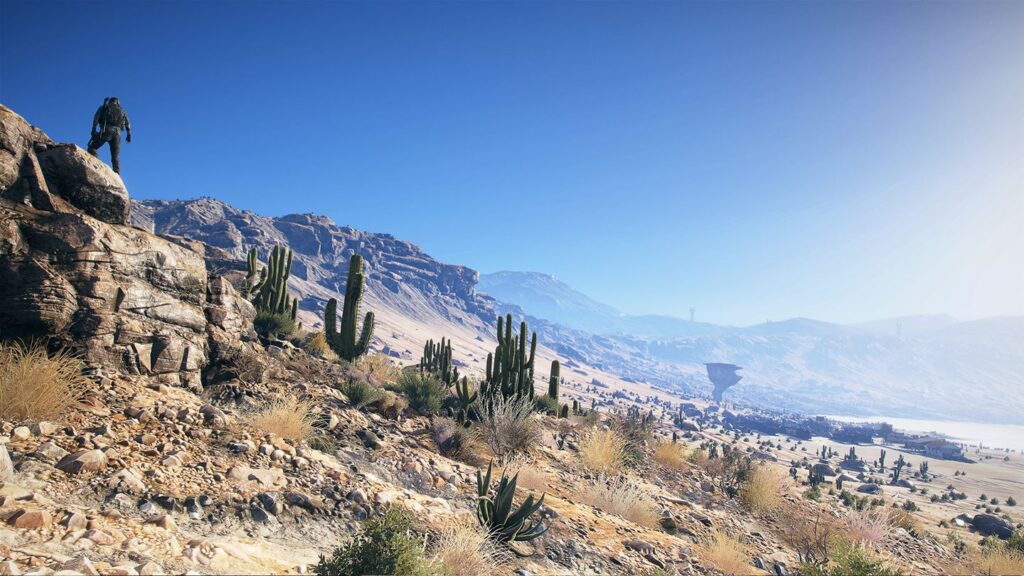
One aspect that bothers me about the world is how the map is designed. For starters, there are numerous rebel bases or rally points for your team to regroup at with an enemy outpost literally 100 meters away. You could walk there in a minute and find five to ten enemies. Logically, this makes no sense. How do these two rival factions not know that they’re both right next to each other? There’s even one base that shares the same land as the enemy! They can literally see each other but there are no gun battles between them. It makes no sense at all and had me constantly scratching my head in confusion. The vast world simply exists but doesn’t feel alive or real.
On top of that, there are a lot of missed opportunities when it comes to using the environment in combat and just smart level design. The best example I can give of this would be when I was approaching an enemy outpost that had a crane nearby (where you could potentially overlook the compound). I pulled out my sniper rifle and ran towards it, expecting to climb up. When I got there, I realized there was no ladder for me to climb. I was sort of confused at how something so simple could be overlooked. It would’ve been a perfect opportunity for me to use my sniper rifle which I hadn’t used all that much. I then had to move to a two story building where I would shoot a few guys before having to get down because it didn’t give me a view of the whole compound. A ladder next to the crane seemed like such an obvious design choice but alas, I was wrong.
The world also feels slightly baron as there’s not much to do outside of the fairly repetitive missions which caused me to quickly grow tired of it. Although the missions are there to get the job done, everyone needs some variety. Even just one or two mini-games would’ve helped make the world feel less bare and banal.
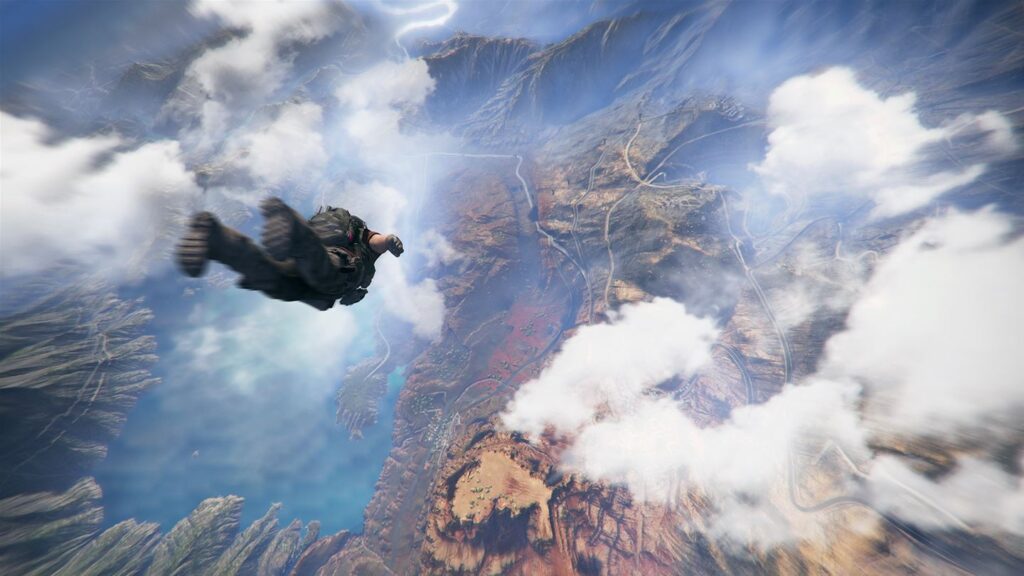
Although Wildlands features Ubisoft’s biggest map yet, a big map is nothing without a world filled with tons to do and life to see. The civilians seem to mindlessly walk around with no actual destination in mind and there’s not much to really explore outside of some compounds with enemies inside. Imagine if a game like Grand Theft Auto V or The Witcher 3: Wild Hunt had the maps that they have, but featured none of the fun activities and excellent lore and life within them. It would remove one of the best and most interesting aspects from those games. Having big maps is also tedious as it begins to feel like a chore when you have to constantly go across the map over and over again to clear out a compound which may take you two minutes tops. The drive there might have been double that at the least, making it feel like a giant waste of time.
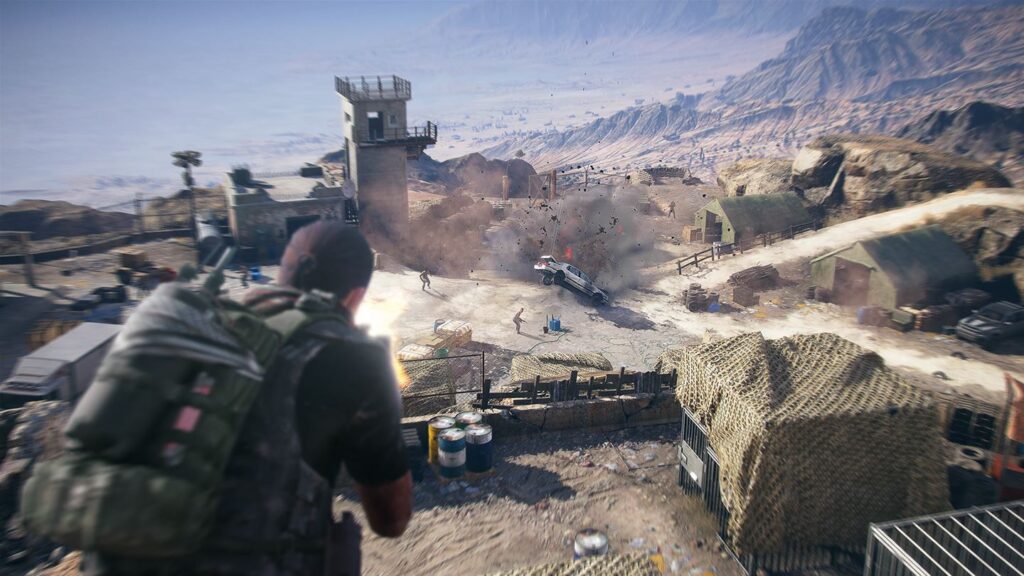
The gameplay of Wildlands is neither a hit or a miss. It’s more of a foul ball, they do hit the ball but it doesn’t really count for much. They tried but couldn’t fully execute. The gunplay feels slightly more satisfying than the beta as enemies drop quickly, but the destruction and impact of all the chaos is very strange and minute. Cars that get shot or take damage have this annoying, unrealistic PlayStation 2-era look and feel. It’s almost like when a vehicle gets damaged, the game replaces the nice, clean car with a slightly different damaged car. It feels unnatural and doesn’t have the degradation that a car in Grand Theft Auto V would have as it gets shot up.
When it comes to combat, some mechanics feel questionable. Entering cover isn’t as simple as it should be. Instead of sliding into cover or walking up to a wall and pressing a button, you must press your character up against the wall for a second or two until she automatically clicks into place like a magnet. Sometimes it just doesn’t work right and causes frustration and can even lead to death. It seems odd to change something that has worked so well for other third-person shooters including Ubisoft’s The Division. As the saying goes, if it’s not broke, don’t fix it. In addition to that, you can’t blind fire from cover. If you’re pinned down in cover or near death, you must stand up or poke a good portion of your body out to fire, leaving you incredibly vulnerable. There’s no way to just lift your arms up and blindly fire rounds off to spook your foes or take out a couple of guys. The aforementioned Ubisoft game, The Division, used this mechanic very well and made combat much more fun because you could bounce into cover and blind fire at heavily-armored enemies while not taking as much damage. In Ghost Recon Wildlands, you must constantly expose yourself to shoot and it more or less defeats the purpose of having cover.
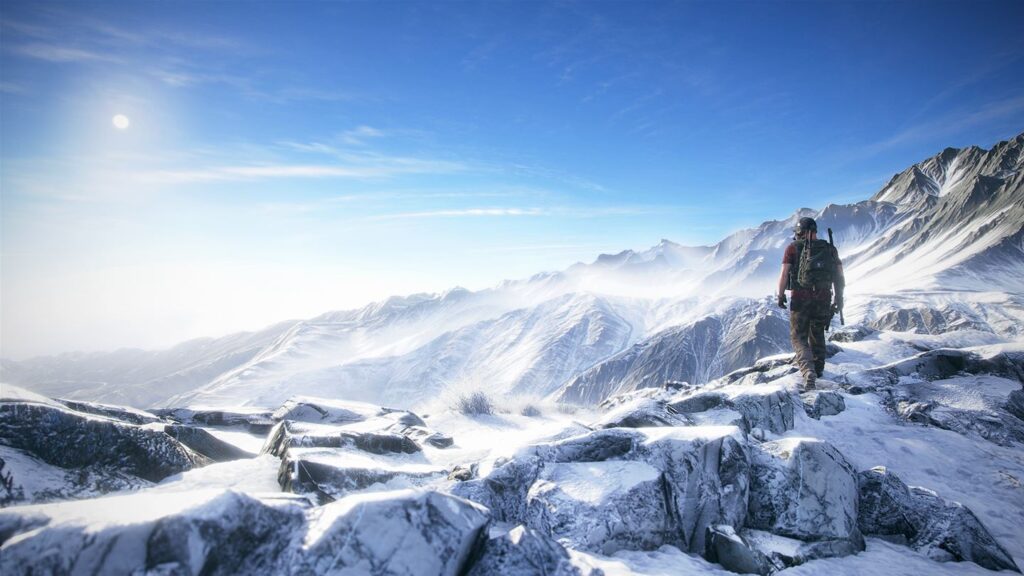
Although Ghost Recon Wildlands can be played as an action game, it mostly tries to encourage you to attempt missions stealthily. After all, Tom Clancy’s games have a strong history of stealth with games like Splinter Cell and even some previous Ghost Recon titles. The problem with this is that the stealth is flawed. Yes, you’re equipped with a silencer and can quietly knock out pesky enemies in your path, but it doesn’t fully commit to the stealth approach. It has essential mechanics missing like the ability to hide bodies which is vital in places where there are patrolling foes and lookouts.
If you choose to play Wildlands like an action game, you should be able to have some fleeting enjoyment with the fun car chases and intense gun battles (despite some mechanics being flawed). However, you will also notice it doesn’t fully commit to being an epic action game either. Grenades and some explosions feel more like weak firecrackers than deadly blasts…like they would leave a ringing noise in you ear. Helicopters and cars have these wimpy destruction animations which feel like pyrotechnics gone wrong. Well, “gone wrong” isn’t the right term here. More like “gone wrong” in the sense that the pyrotechnics never went off.
Summary
Although I did enjoy Ghost Recon Wildlands for the most part, it doesn’t feel like it was executed to its full potential. It doesn’t have the “oomph” it should and comes off as a bit lackluster. For all of the good elements in the game, there are several bad or annoying ones that come with it. If you’re looking for a new title to enjoy with friends, you may be able to find some enjoyment here. Those looking for just a really solid third-person shooter with lots to do, this really isn’t it. By no means is Wildlands a bad game, but it isn’t really a great game either. What worries me the most is that I don’t see how Ubisoft can fix it without rewriting major portions of the code and redesigning the map.