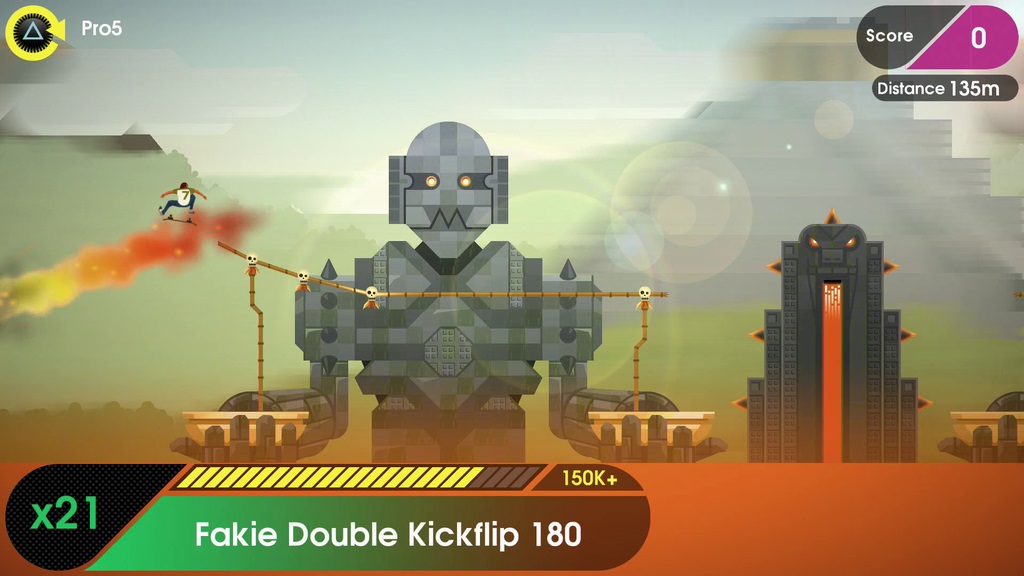
I have a confession to make. While I was in middle school, I bleached my hair, wore cargo shorts, and tried to be a skater. I purchased my first deck at Price Club and attempted to learn any basic trick I could. My heroes of the late ’90s included Rodney Mullen, Bucky Lasek, Bob Burnquist, and the great Tony Hawk. I was the target market for Neversoft when they created Tony Hawk’s Pro Skater.
My best friends and I stayed up countless nights learning every combination of tricks in order to secure the top score on each map. We must have believed that success in-game could lead to us actually performing a 720 Crist-Air in real life like some Assassin’s Creed Animus situation. This obviously never happened, but we had multiple iterations of THPS to keep us going.
I long for the great skating games I remember.
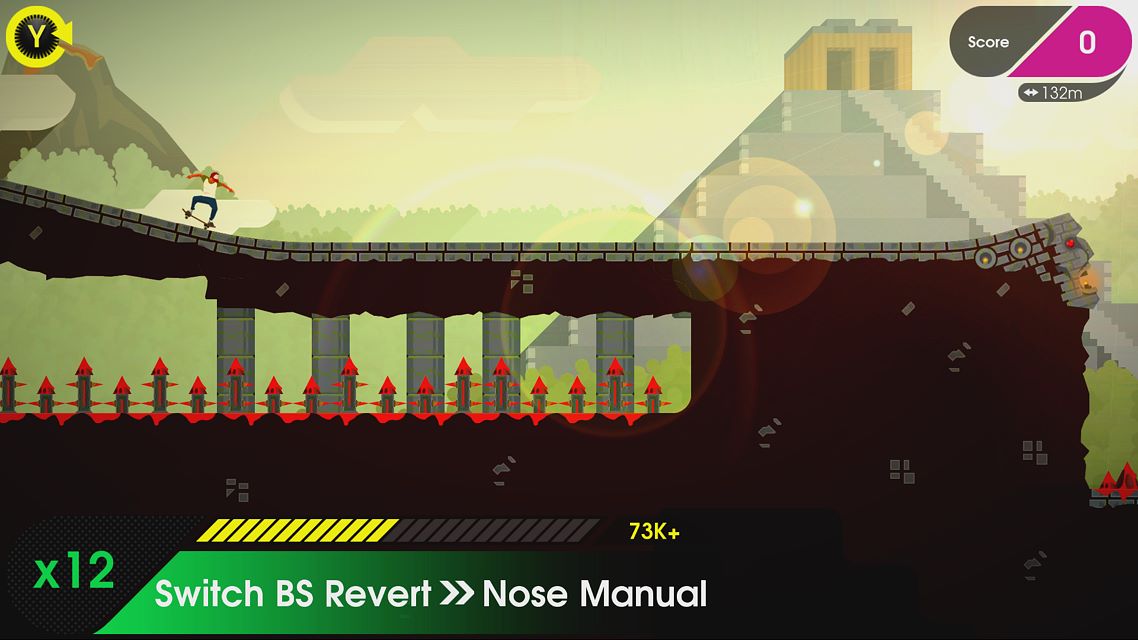
Luckily, Roll7 realized that Activision was never going to provide the world with a great skating game again, so they brought OlliOlli 2 into the world. OlliOlli 2, sophomore attempt in the OlliOlli franchise, was released on PC back in August of 2015 to overwhelmingly positive reviews. As of this month, you can now jump, flip, grind, and fail your way through glorious Olliwood on Xbox One. But is this game just another second-rate port, or is it the savior my inner 13-year-old has been waiting for?
The premise of OlliOlli 2 is extremely simple. The character skates to the right while performing tricks to earn points and complete the level. Each level has five or so tasks that must be completed in order unlock other courses. These tasks include objectives like: reach a specific score, obtain a specific combo count, perform specific tricks, or succeed in perfect landings. It is a good thing the missions are so simple, because the gameplay is anything but.
I started each course by tapping A to pick up speed. Then I would hold the analog stick in any direction, circle it around, and let it go to make my character ollie (jump) into the air and perform a trick. I discovered that I was unable to change my trick once I was in the air—the game doesn’t work like that. Each combination of the analog stick’s orientation, the direction it is spun, and when it is let go produces a different trick. The harder the trick is to pull off, the more points the trick is worth.
The next step is to land the trick. Instead of just focusing on the trick, I also had to ensure I pressed A at the exact moment my character touched the ground. Pressing A too early provided a diminished return on my score and pressing A too late caused me to fault, losing everything. At first I really struggled with this, and it took me a while to break the muscle memory from years of A being the jump button, but eventually it became second nature.
In a game this precise, the controls have to function flawlessly at all times, and OlliOlli 2 has extremely tight controls. There are tons of tricks that can be completed in the air, or while on rails, with the lightest flick of the analog stick. The character reacts quickly and I never became frustrated with controller issues. Every time I missed a jump and failed my run it was because I forgot to press A when I landed, or tried to press A in order to clear a staircase. In other words, my sole frustration with OlliOlli 2 was my own terrible play.
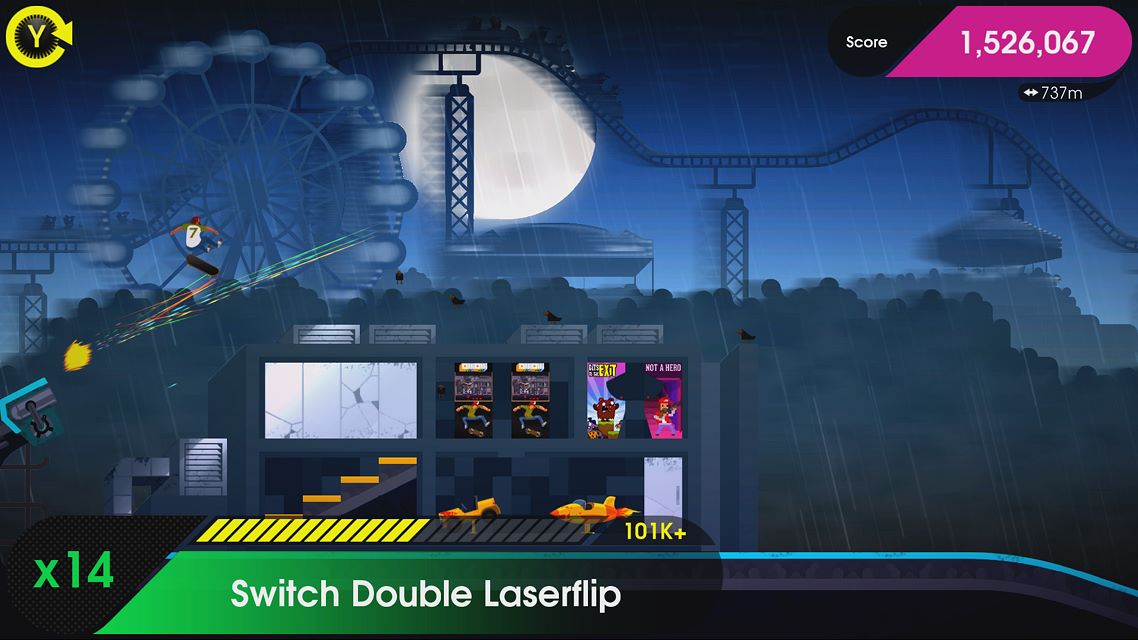
Graphically, OlliOlli 2 showcases a retro-inspired art style and simplistic character models. In some games this can be a great hindrance, but in OlliOlli 2 the focus is on the precision of gameplay. The lack of background distractions allowed me to focus on my character and the obstacles to come. Any flashing or movement behind the character could have thrown off my concentration and ruined a record-breaking run. I appreciate when design decisions are chosen to complement the gameplay and strengthen the overall product. Roll7 clearly understand OlliOlli 2 and had an intentional experience that they sought to provide the player with.
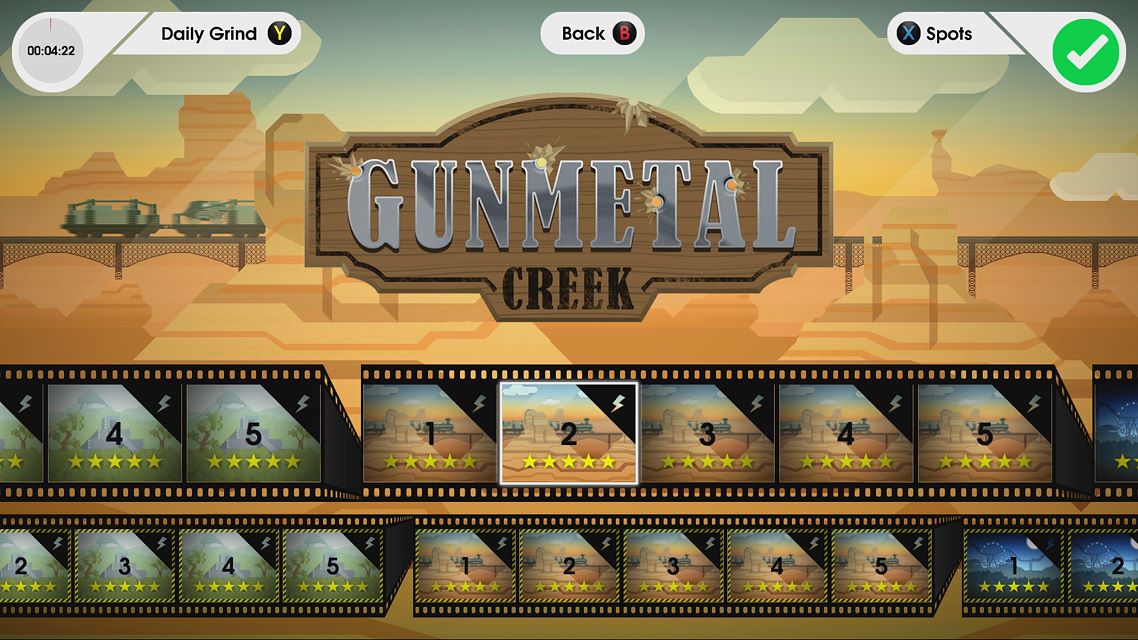
The technical framework of OlliOlli 2 is just as precise as the controls. I had zero issues with screen tearing, lag, or texture pop-in that could have disrupted a run. The game is bright, sharp, and clear even though it is simplistic. The courses are very pretty and each obstacle is clearly marked so I never missed a grind opportunity. Each course maintains the theme of Olliwood, but is different enough to feel fresh and new. And just when I got sick of Olliwood, I was introduced to the Carnival of the Dead and Gunmetal Creek.
There are two modes in the game: amateur and pro. The courses are very similar between the two modes, but the tasks and precision required increase in pro mode. I did not spend a lot of time in pro mode because I was just not good enough. Pro mode is for players that put in the time and effort to really succeed in OlliOlli 2. For the rest of us, we can play safely in amateur mode.
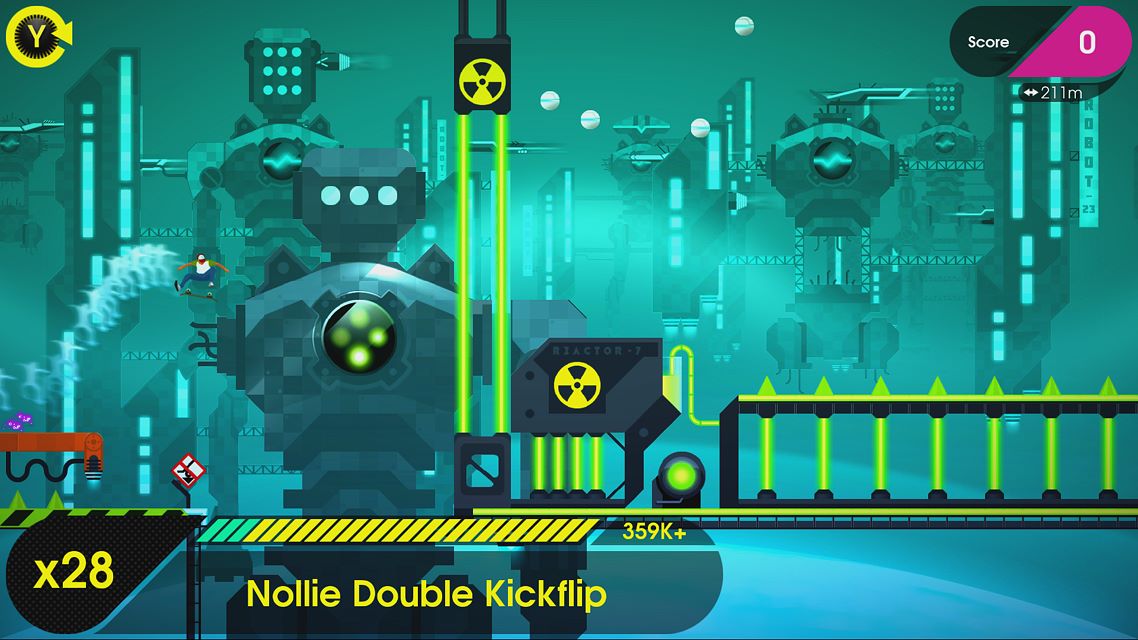
There were plenty of levels in amateur mode to hold my interest for a very long time. The game is content-heavy for the price and also includes local multiplayer, online scoreboards, daily challenges, and free-skate modes. There is a tremendous amount of content here.
Summary
OlliOlli 2 is anything but a simple port. Over 100 levels of inspired and addictive gameplay kept drawing me back day after day. From the precise trick execution to the calculated design of each course, OlliOlli 2 is the skate game that us ’90s kids both want and need. I wholeheartedly recommend this game to anyone who loves hard, gameplay-driven games. As my thirteen year-old self would say, this game is radical.

Joshua was a regular ICXM contributor between 2016–2017, publishing 42 articles across game reviews, and Xbox news. Their work focused on hands-on reviews, platform commentary, and breaking-news reporting during the Xbox One X launch year and Microsoft’s wider Play Anywhere / UWP gaming initiative.