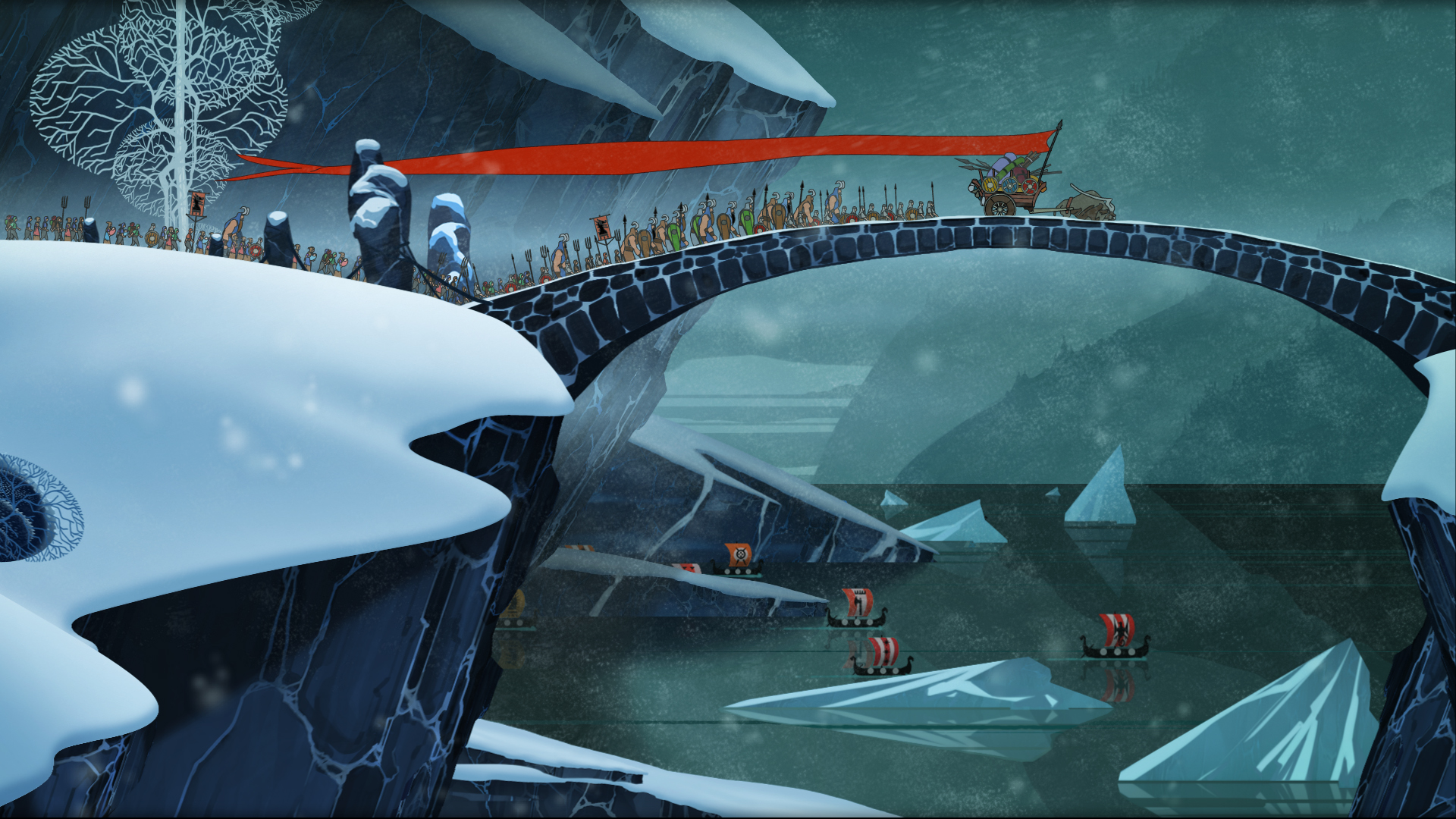
The Banner Saga is a unique and interesting experience. It tells a phenomenal story where your choices have far-reaching consequences. The game is hard to describe. It’s a mix of The Oregon Trail and any turn-based combat title. It also has role-playing elements mixed in. While the storytelling and advanced gameplay foundations are solid, it’s let down by the fact that The Banner Saga is essentially a text-based adventure with no voiceovers. You click through a lot of dialogue options, test out the fighting prowess of your characters, and then engage in some combat. What could’ve been a truly outstanding experience becomes an average one which lacks some personality due to the choices made by the developers.
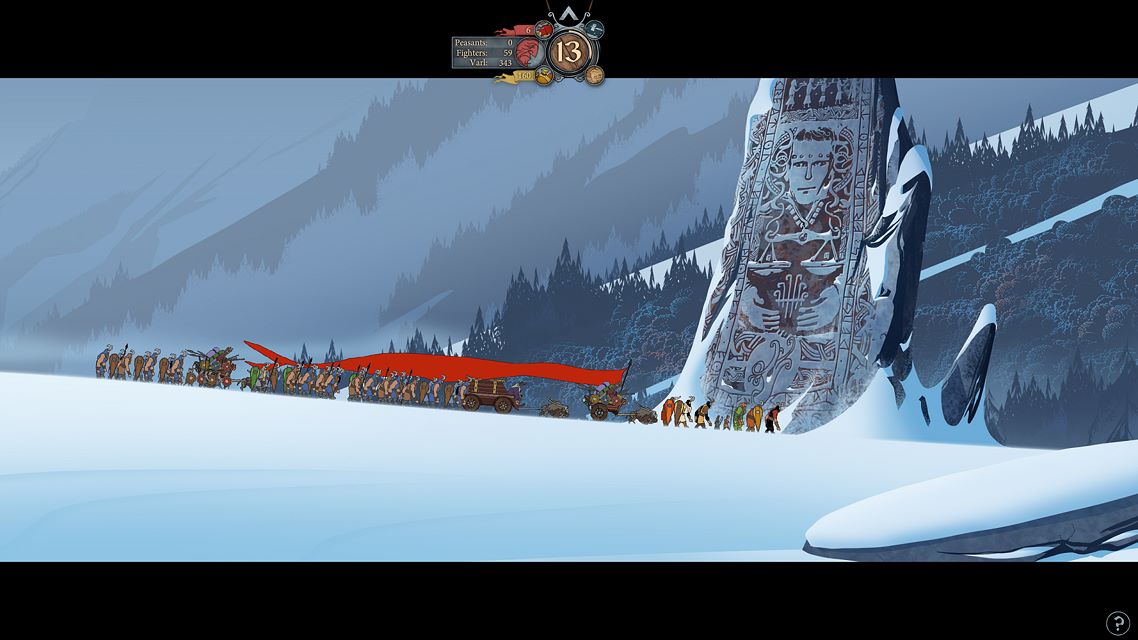
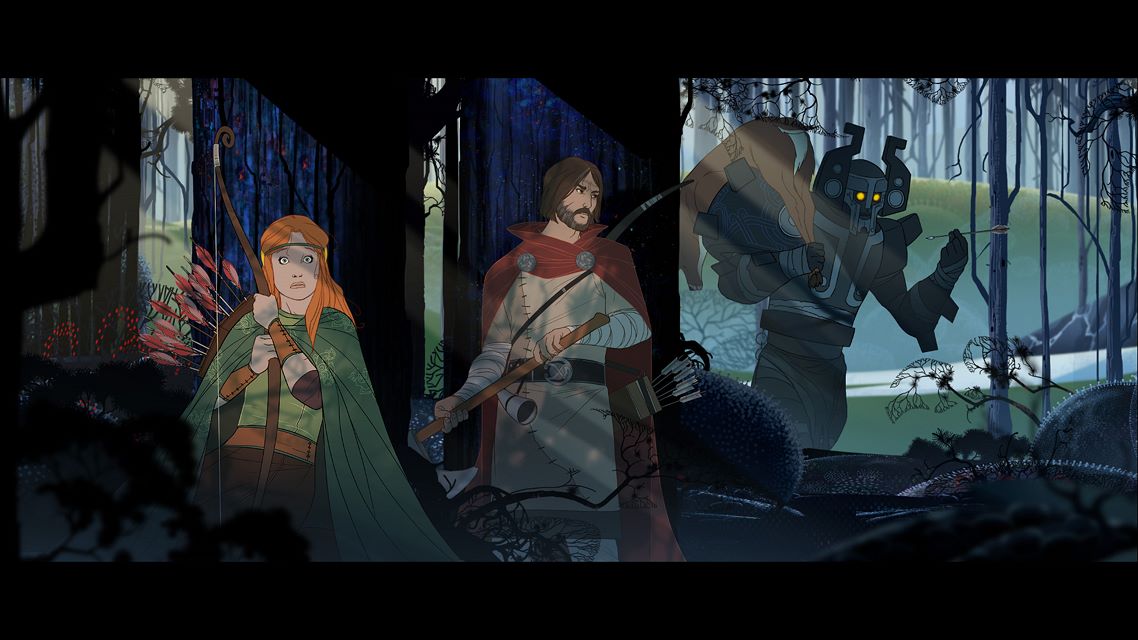
The first aspect of The Banner Saga you immediately notice is that it’s a gorgeous game. It has one of the most striking art styles ever created in my opinion. The hand-drawn visuals are truly a sight to behold and give the game a lot of character. The opening scene lays the premise for the story and one of the few voiced cutscenes captures the essence of the game beautifully. You expect it to maintain this quality throughout the experience but are let down when the gameplay actually begins.
The lack of voice acting proves troublesome in some dialogue situations. It’s sometime hard to tell who the characters are referring to because you just read a lot of similar text. I would like to think that I don’t have problems with reading comprehension and it actually has to do with the writing. Whatever the reason might be, I had issues and I’m sure I’m not the only one.
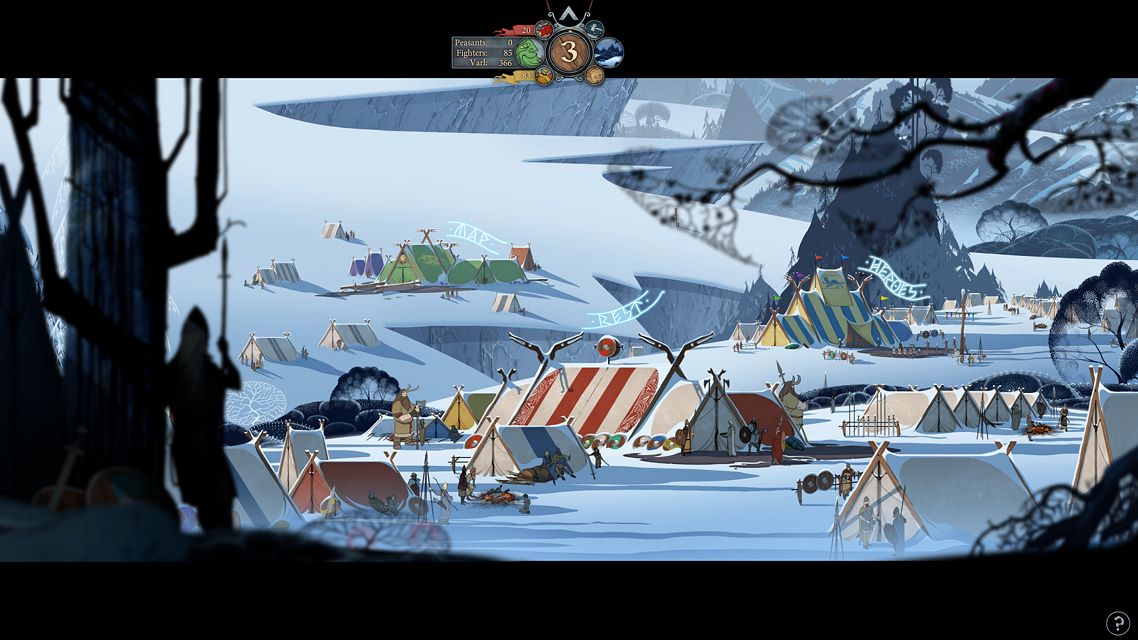
The story begins in the thick of it all. The Sun is stuck in the sky and the Viking lands exist in an uncertain time. War might be around the corner. The story starts of as a simple journey back to a little town but becomes so much more as certain unfortunate events occur along the way. You can drastically change the political landscape of the game because all of your choices matter. Humans and giants are the main characters and how they live with one another is at the heart of the title. You can shatter alliances and build friendships. You really do have absolute control through your decisions. That has to be the best aspect of The Banner Saga by far.
The story can play out in different ways and that adds to the game’s replayability. Additionally, it offers different difficulty settings so you can spend dozens of hours playing through the title to see how the combat and consequences vary.
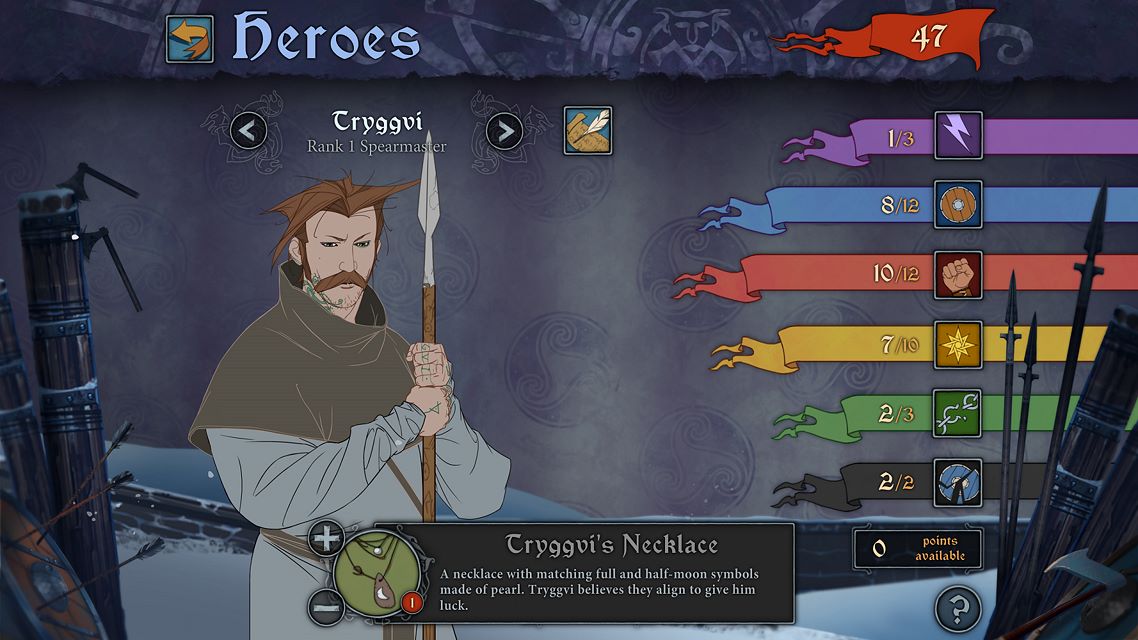
Before I talk about the combat, I have to applaud the developers for the gorgeous menus. Everything, from the way your caravan is laid out to the map are just breathtaking. The Viking influence in every little corner adds a special touch to the game. While this is a positive, the glaring omission of voice acting becomes even more evident. There’s so much amazing attention to detail that it makes the omissions that much more noticeable and jarring.
The combat takes place in small arenas where you have to use a lot of strategy to prevail over your enemies. The first few battles are easy because they’re tutorials. The difficulty ramps up as you progress through the world but can be adjusted at any time. You essentially have to move your characters, position them accordingly, and then strike your enemies.
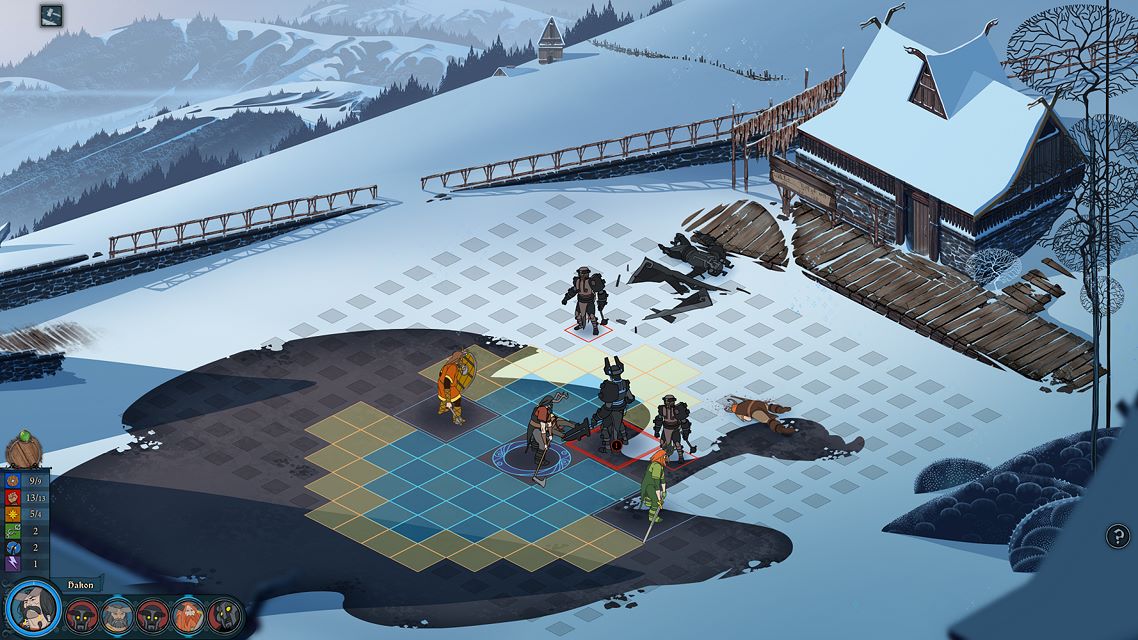
Many characters have special abilities where they are able to hit all of the enemies around them through a powerful swing for example. Mastering these special abilities is the key to success. The Banner Saga requires much more thought than other turn-based combat titles I’ve played in the past. I honestly could compare it to chess. You have to plan multiple moves to make sure your characters are always together and can hit enemies after the other’s turn ends. If your character gets surrounded and separated from the group, they usually end up getting killed.
The game also introduces smaller decisions like managing resources. Remember how in The Oregon Trail you had to decide to keep on going or rest? What happened when you just sat in that praire? You would use resources and gave your group a chance to recover. The same concepts apply here. After each battle you should rest if you’re playing on higher difficulty settings and let your heroes recover. This can get tricky though. Sometimes I found myself running out of resources and that caused a lot of tension. I just put my party through a tough battle, I’m low on food, days from the next town, if I rest we’ll run out of resources. So, at the risk of starting the next battle with hurt heroes, I soldiered on hoping that it would all turn out well. This adds another level to the game which I really appreciated because I was addicted to The Oregon Trail as a child. This is a significant step up.
Summary
Overall, there’s a lot to love about The Banner Saga. While it can get repetitive at times, just think of it as an evolution of The Oregon Trail. The fact that the choices made in the game carry so much weight is remarkable and maybe even genre-defining. Someone reading this review might call me unfair but when a game has been on another platform for so long, I expect its next iteration for a new set of gamers to be special. Why tease us with excellent voice acting in some cutscenes and then make the rest of the game so bland? Are console gamers really going to love a title that is basically all about clicking through text?
While the combat and upgrade systems are strong, I think the developers missed an opportunity here to create a title that is truly magical. It doesn’t offer anything new to gamers who have played XCOM or Wasteland 2 except for the setting. It’s a wasted opportunity and that’s what disappoints me the most. Luckily, the story redeems the overall experience.

Asher is a games journalist, former News Writer (Gaming) at Windows Central. They contributed 1110 articles to ICXM between 2015–2017, focused on opinion pieces, game reviews, Windows and PC, and Xbox news: wrote over 1,100 ICXM pieces on Xbox news, hardware reviews, and platform commentary before joining Future plc’s Windows Central in 2017.