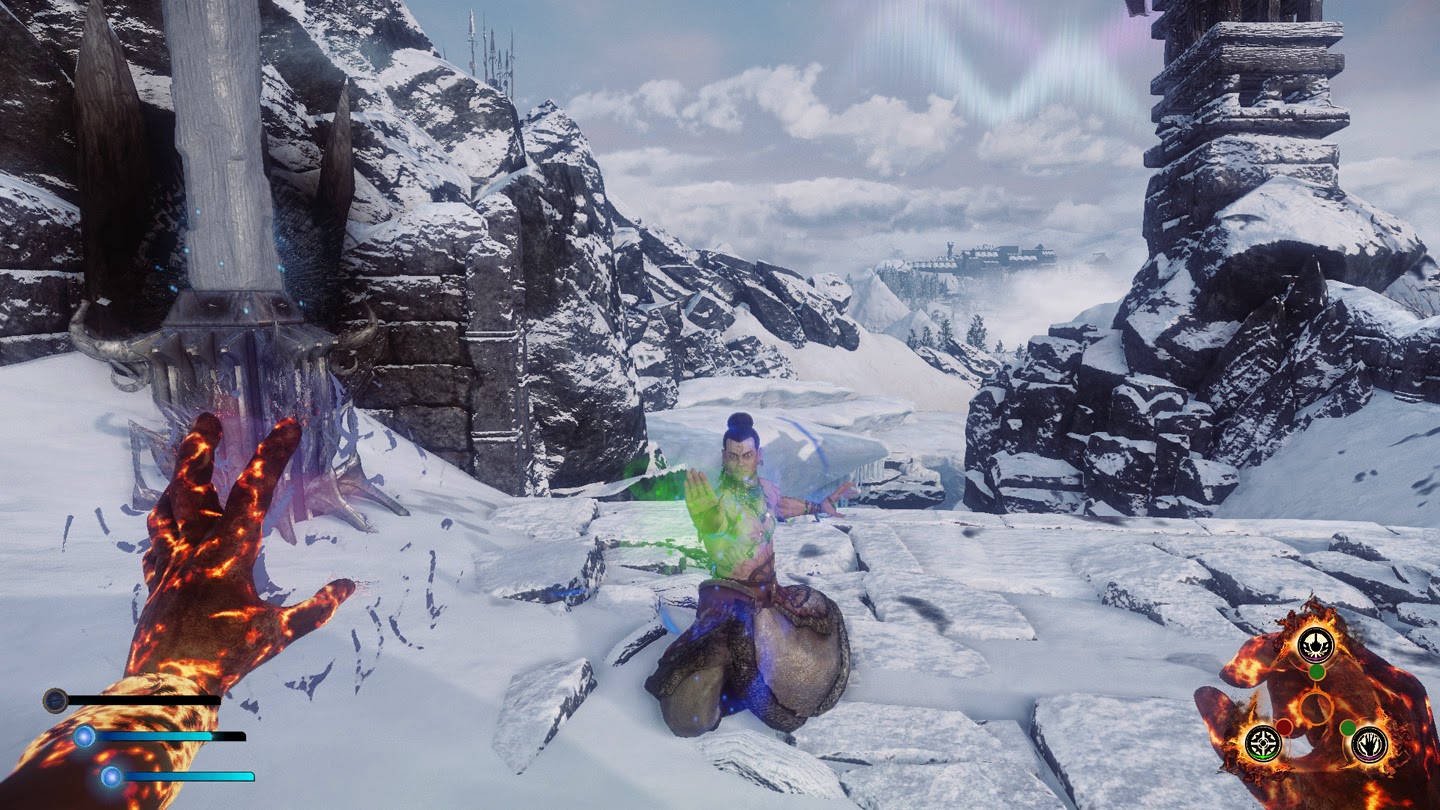
I’ve spent the past couple days wondering whether I ought to write a review of Lichdom: Battlemage, a first person spell-casting game originally developed by Xaviant and ported onto Xbox One by Maximum Games. On the one hand, it is my duty to write a review for each game that I receive a copy of for free from a publisher. On the other hand, it feels entirely fair to ignore that responsibility in the case of Lichdom. For my review, I could have simply written a single sentence begging readers not to purchase this game. I could have written an entire page of unintelligible text in a made-up language, paralleling the defective coding of Lichdom itself. I could have listed my PayPal email and asked for fifty dollars from each one of my readers like Maximum Games’ similar request for free cash through Lichdom. In the end, I decided not to do any of those things. I decided to do something selfish, presenting to Maximum Games every bit of the retribution that it deserves through a few brief passages of cold, vengeful text.
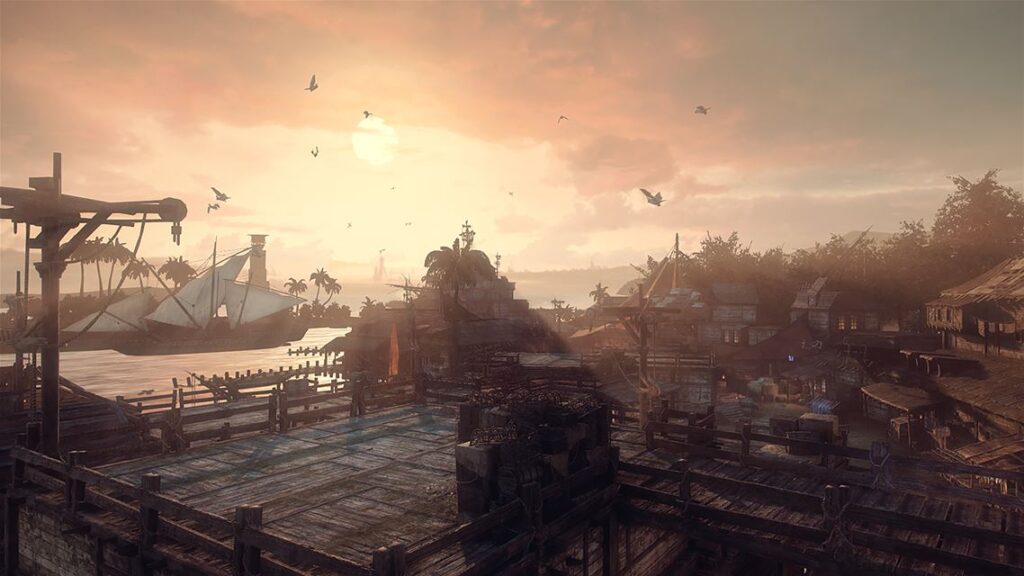
The principal problems with Lichdom: Battlemage are technical. The game runs at a nauseating 12-17 frames per second on average, and that number drops consistently as you progress and as more enemies appear on-screen. Several times when I was playing, the game would freeze for an entire second. Texture popping, motion blur and flickering shadows are also severe problems. Furthermore, Lichdom is inherently dark, and there is no way to change the brightness in the options menu, so in addition to struggling to move throughout the world, you’ll also be struggling to see anything inside of it. Unfortunately, even if Lichdom’s technical troubles were to be fixed, I’m not sure that it would be an enjoyable game anyway. Admittedly, due to the frame rate issues making the game almost completely unplayable, it has been challenging to determine whether that is entirely the case, but plenty of evidence points to the likelihood of Lichdom being mediocre or worse.
The story to Lichdom is boring and trite, showcasing a slow-witted protagonist who has gained magical powers from an old mage and seeks vengeance on an enemy whose actions seem to be driven by the fact that “he’s evil.” Much of the narrative is told through repetitive “echoes,” cloudy visions of the past and present that exhibit the conversations of NPCs in a lifeless way, and which are somehow becoming more and more widespread in video games everyday. The monotonous voice acting doesn’t help either, helping to form a completely insipid form of storytelling overall.
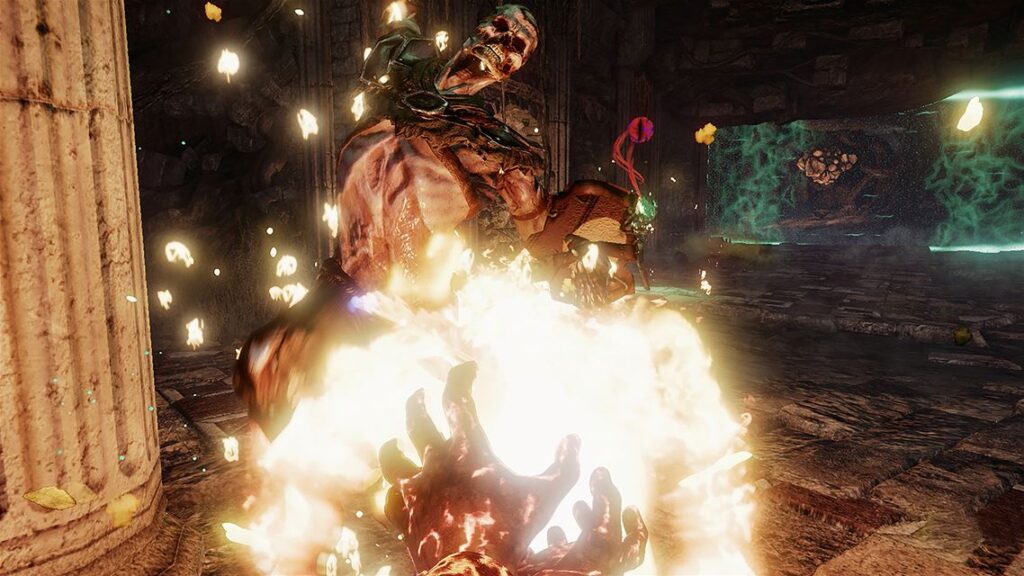
The concept for Lichdom is intriguing: create a first-person shooter game and replace guns and grenades with upgradeable magic and fireballs. Unfortunately, the execution is unremarkable. Powerful spells do not produce satisfying sounds when they connect with enemies, and critical hits result in a peculiar, low-pitched “ding” like the sound a bell makes. There is very little enemy variety and the levels are linear yet broad, like a series of interconnecting arenas, causing combat to become tedious quickly. It seems like it might be neat to tinker with the crafting system, which allows you to fuse orbs gained from killing enemies to alter your spells and abilities, but it is actually an immense chore to determine how spell creation works. The fundamentals of crafting are never explained to you and the menus are nearly impossible to navigate. This was a major mistake. Explaining and perfecting this feature should have been a top priority for the developers since almost every game nowadays seems to incorporate some type of crafting system, each functioning differently from the next and each confusing in its own right. To make matters worse, Lichdom, a purely single-player game, will not pause when you open the spells menu to adjust your powers. Enemies will continue to attack you and you will continue to take damage. In a game about modifying a few key abilities depending on your situation, this is beyond frustrating.
Summary
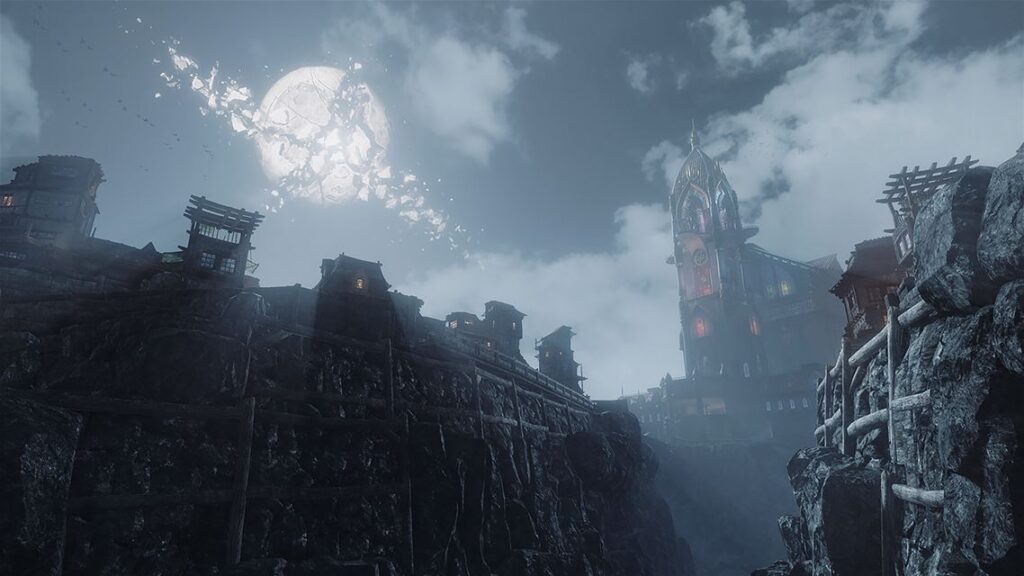
But by far the most appalling thing about Lichdom: Battlemage is not its dull method of storytelling, its unsatisfying combat, its convoluted crafting system, or even its game-breaking frame rate issues. The most appalling thing is the sheer lack of sincere communication and apology from Maximum Games, who have released the most utterly broken Xbox One game that I have ever played and have demanded a whopping $50 for it. It has been over a week since Lichdom released and Maximum has released a single press release barely detailing the technical issues that are occurring. The fact that Lichdom is still even available for purchase on the Xbox Store before a massive patch has been released is shameful, and arguably criminal. In its current state, there is no way that I could possibly recommend Lichdom: Battlemage to anyone. I’m glad that I took my valuable time to write a review, and if you care at all for your time or money, you should be too.