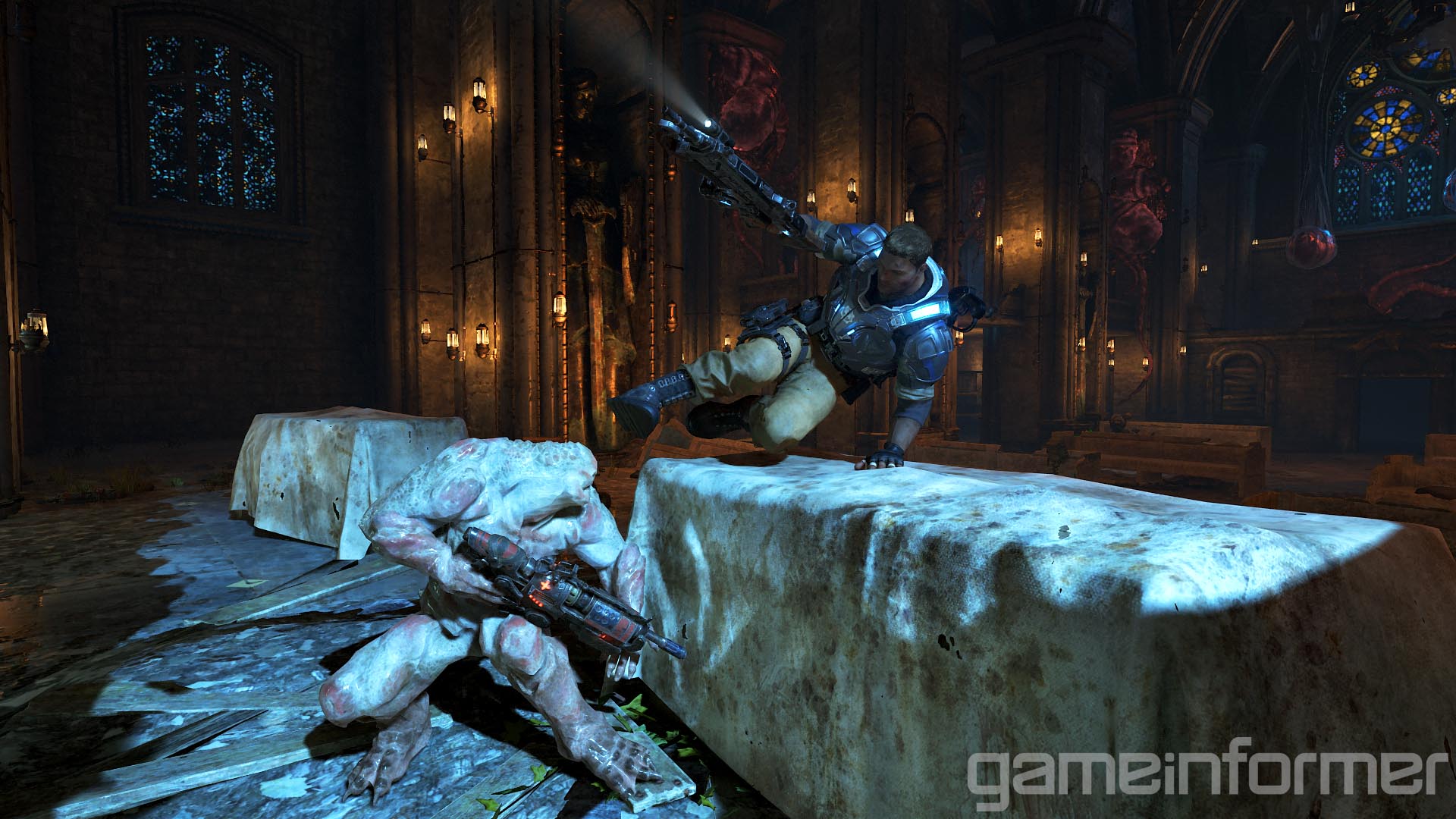
Gears of War has never really been a series that I’ve cared about all that much. As an Xbox owner since the original giant brick—and obviously an owner of the 2013 re-iteration of a giant bloody brick—most people would think that I would hail Gears of War as one of the holy grails of my console platform, but I don’t.
The games are decent enough, there’s nothing really wrong with them, but they’ve never appealed to me. And before I get shouted at and called a casual Gears scrub, I have played all of the games, to completion, and I do appreciate the quality of the games but so far, the only Gears game that I’ve genuinely enjoyed, is Gears 4.
After queuing at EGX for half an hour and watching the PC version of Gears 4’s campaign run into numerous issues , I went straight to the highly anticipated Horde 3.0 mode running on the Xbox One S. Technically, Gears of War 4’s Horde mode was flawless. Textures varied in quality, especially on some of the enemies, and some areas could have seen with some sharper anti-aliasing but Gears 4 kept a solid sixty-frames-per-second lock throughout the ten playable waves provided at EGX.
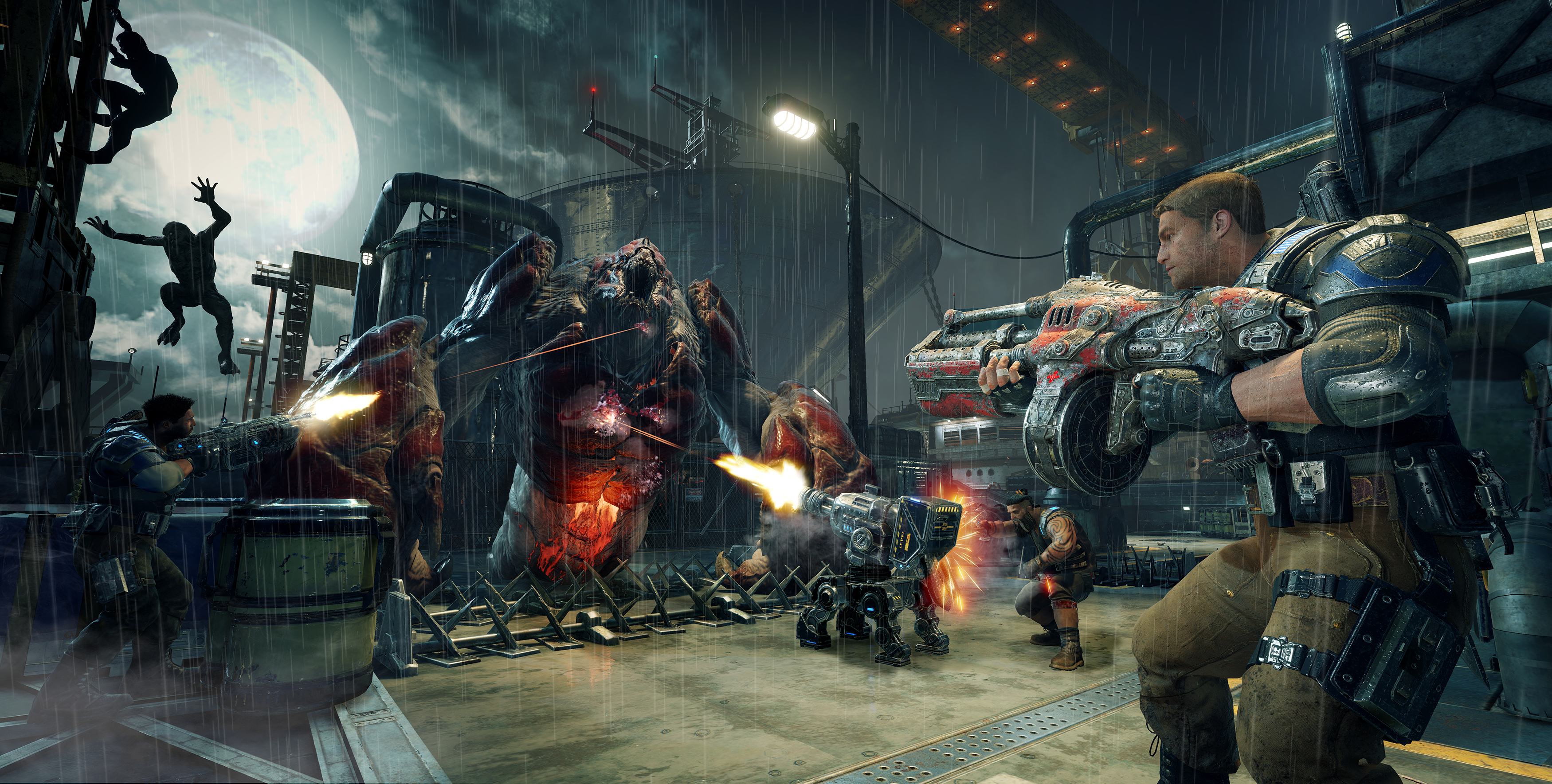
Horde 3.0 is also a lot different to how Horde used to be. Horde 3.0 now revolves around an item called the Fabricator, a device used for creating sentry turrets, barricades, weapons, reviving allies and a host of other cool things. When the game starts, you and your allies will have to drag the Fabricator from the centre of the map into your chosen strategic location. The Fabricator does *not* take damage so building barricades are meant to protect you, not the device.
The Fabricator is powered by, well, power which is dropped by enemies after they die. Much like Titanfall 2’s Bounty Hunter mode, power (or in Titanfall’s case, money) power must be returned to a certain spot—in this case the Fabricator—before players can buy items such as grenades. Different enemies drop different amounts of power, especially the bigger ones, which can contain power amounts in the hundreds.
The biggest change to Horde, however, comes in the form of classes. Playing the original Horde was just a standard wave-based system with bigger and tougher enemies appearing over the course of the match and that still happens with some truly scary creatures jumping around the map in later levels but the way in which you’ll combat them changes depending on what class you’ve chosen at the start of the match. Scout, Heavy, Sniper, Solider and Engineer.

You choose your class before the match starts as well as equipping cards to use during the match which grants you bonuses to your characters abilities. The engineer gets bonuses to activities such as building and holds a repair tool instead of a pistol in order to refill turrets and repair barriers—which costs power—whereas the Scout gets bonuses to certain weapons and has the ability to pick up double the power if the power is picked up whilst enemies are active on the field.
The class system adds a lot more to the game which, in my opinion, is a lot more intriguing than standard Horde mode. For example, due to the Scout’s ability to obtain double the amount of power than every other class, you’ll try to down enemies more than kill them straight out in order to mop up all the remaining power but, as experienced Gears players will know, other enemies are able to revive a downed enemy if they’re close enough.
Dying is also a bit more unique than what you would imagine with the game requiring you to also use power in order revive your teammates. This is done by venturing to the point where they died in order to pick up their C.O.G tag which can then be taken to the Fabricator. The first revive in a round is completely free but the more you have to revive teammates, the more it starts to cost. This requires you to start asking yourself, do I keep wasting power on this person who is repeatedly dying on us or do we leave them out for the round and save power instead?

I only had about thirty minutes with Gears 4’s Horde 3.0 mode but those thirty minutes have changed my anticipation of Gears 4 from meh to GIVE IT TO ME NOW. With fast, responsive gameplay and a bit more depth than previous Gears games, it seems that The Coalition have perfectly recreated the feeling of Gears but with clever additions here and there to give the game slightly more depth than what many Gears veterans are used to and, for me at least, Gears of War 4 is now a game that I’ll be looking forward to when it releases in two weeks.

Lewis is a games journalist, freelance gaming and consumer-tech journalist. They contributed 344 articles to ICXM between 2015–2017, focused on opinion pieces, game reviews, Windows and PC, and Xbox news: has since served as Editor-in-Chief at StealthOptional and Gaming Editor at MSPoweruser, with bylines at Gfinity Esports and FRVR.