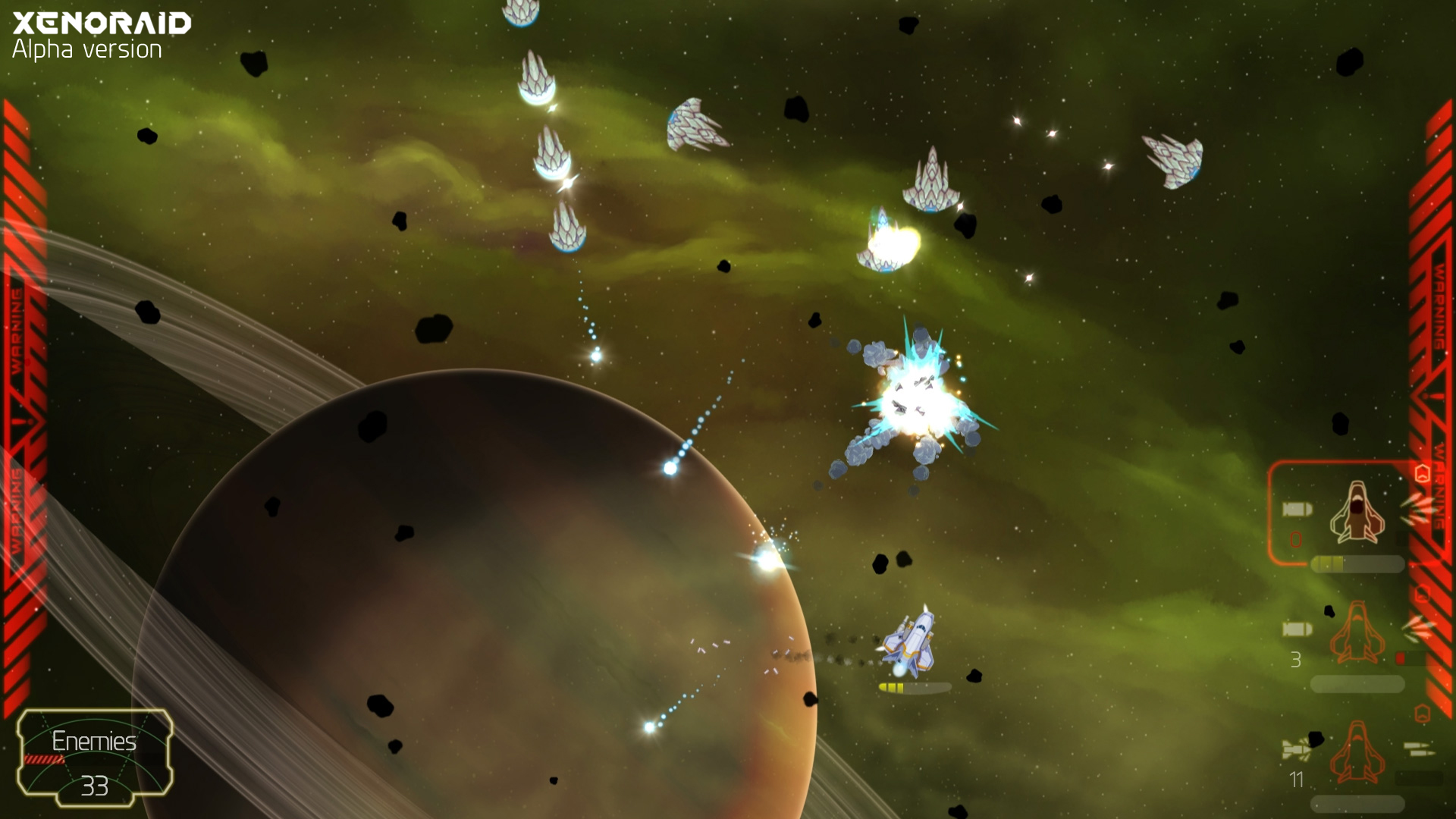
The enemy threat is approaching. My small squadron of elite fighters is the last hope of stopping the alien entourage from reaching our command center. Four pilots, alone in the vast nothingness of space, are the thin line between victory and defeat. Xenoraid, by developer 10tons, puts the player in control of all four fighters in a desperate quest for victory.
At its core, Xenoraid is a top-down shooter that has a stationary screen much like Galaga. The four spaceships that the player controls start at the bottom of the screen facing up, and the enemy ships appear at the top of the screen and move down. The player is able to move the ship up and down or left and right in order to dodge bullets, bombs, and asteroids.
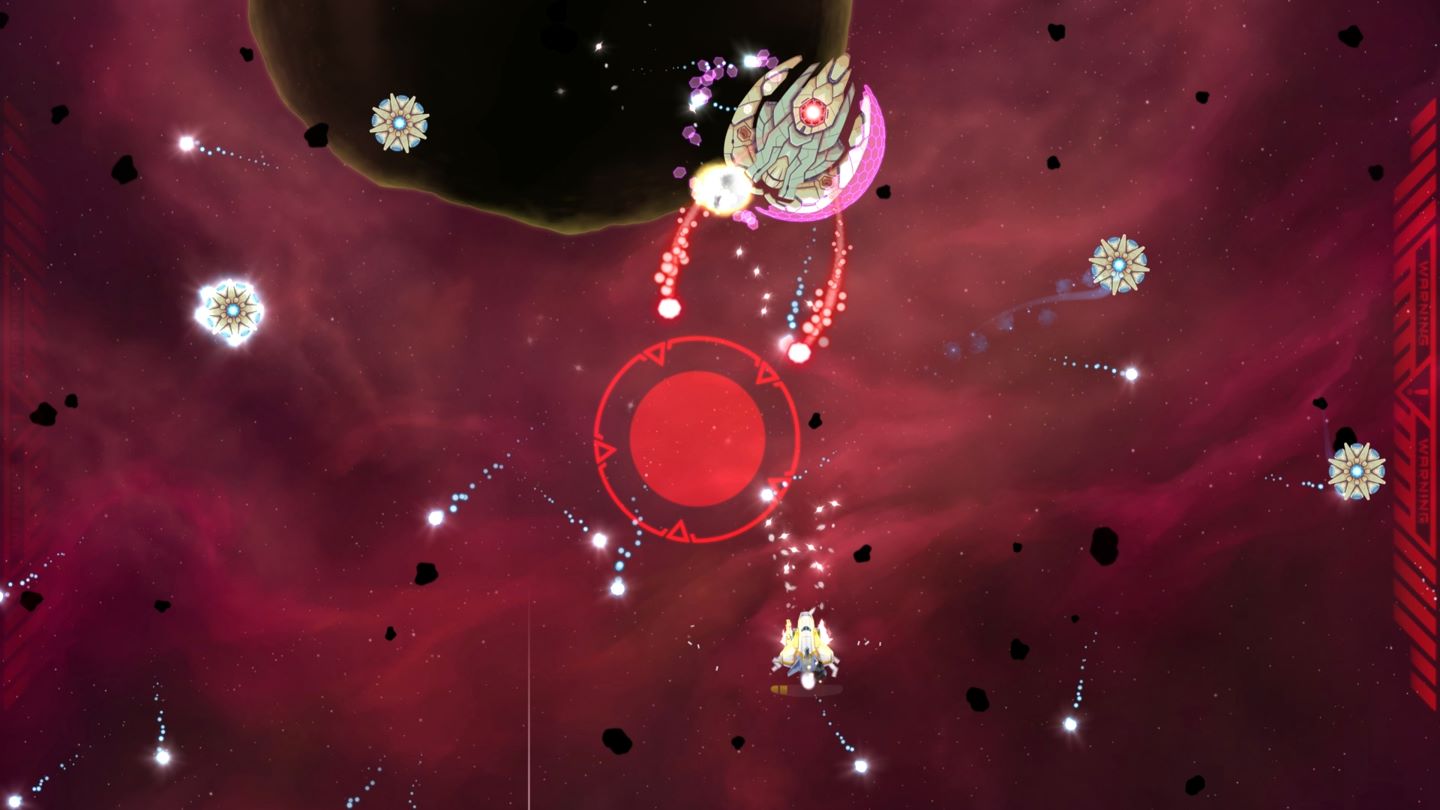
I found the game to be competent graphically, but mostly underwhelming. Space games have the unique advantage of having a setting that inspires wonder in the real world. Fantasy games have to create monsters and castles that do not exist. Space is already immaculate and awe-inspiring. It is the truest definition of awesome. To have backgrounds that look like a sticker of a planet placed on top of a watercolor plane is not what I would expect.
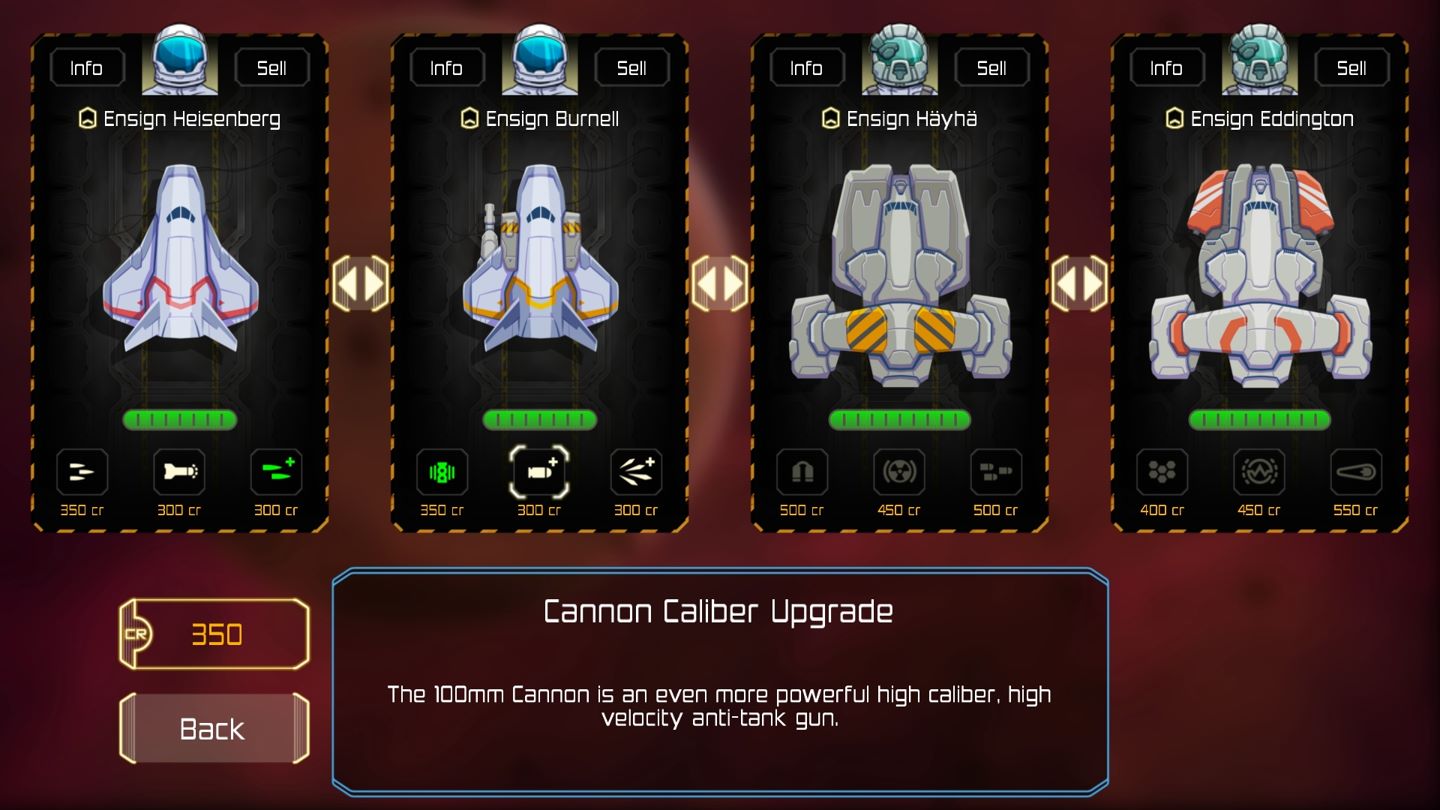
The ship designs are also incredibly simple. There are multiple types of ships, each with different characteristics and weaponry. I really love that element, more on that later. But the design of the ships themselves is overly simplistic. Most ships look like a variation on the NASA space shuttle, with larger wings or a square perimeter. The colors is always white with either red or yellow accents.
I have been a little harsh on the design choices of Xenoraid because I expect a lot of space games. The developer has the chance to do almost anything, it is science fiction. To play it so safe is a lost opportunity, to me. However, I will say that the game is not at all bad looking. The game is actually quite pretty, just underwhelming. It is like looking at the Eiffel Tower in a picture, it is obviously pretty but doesn’t hold a candle to the beauty of the real thing.
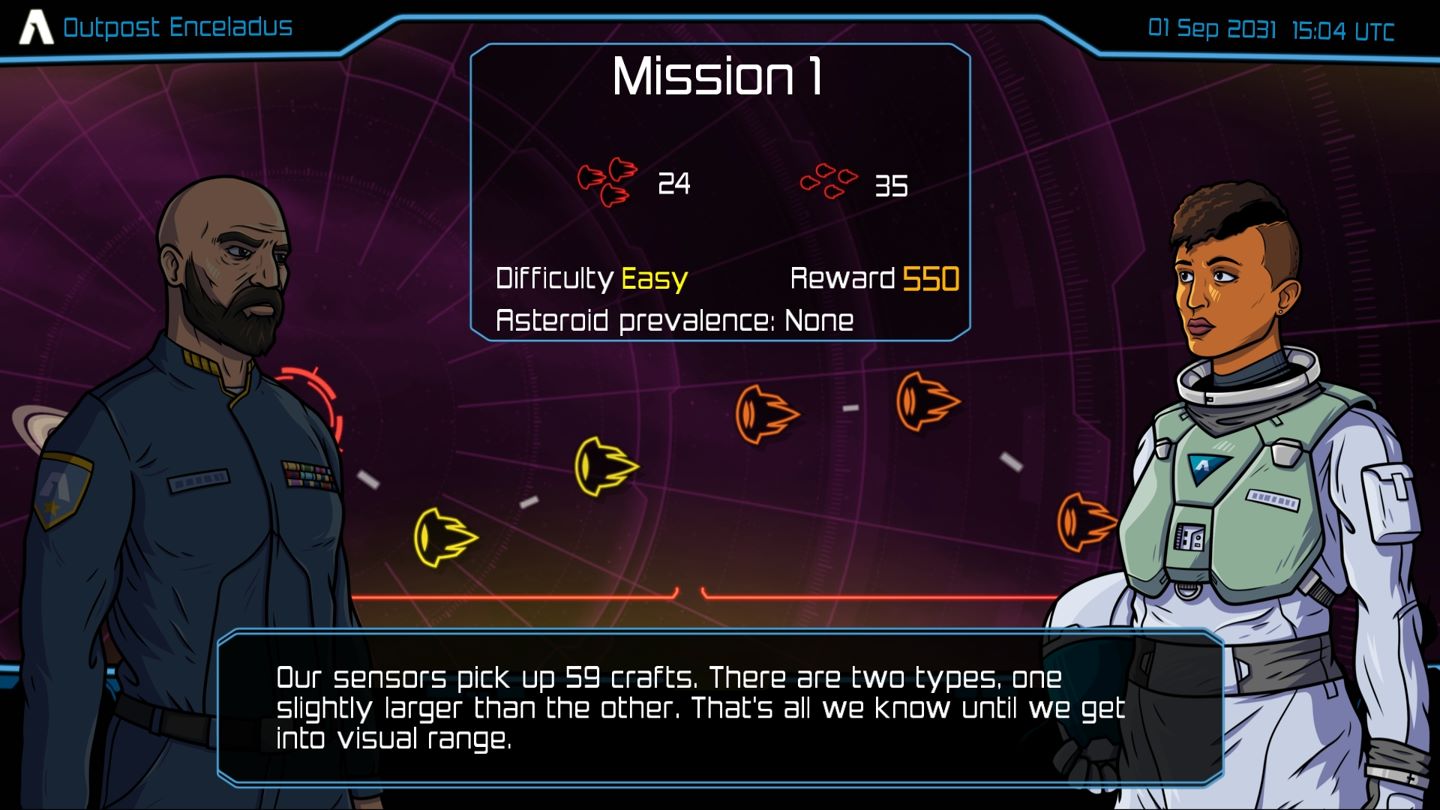
Where Xenoraid truly shines is in how it differs from other dogfighting games. Xenoraid adds an RPG element that is implemented well. Killing enemies and blowing up specific asteroids nets the player XP as well as credits. The XP allows the pilot to level up, which is done automatically by the game. Leveling up makes the ship stronger, faster, and all around better.
The credits are used to buy upgrades for the ship including: new weapons, more health or special traits. Certain traits can be the ability to drop flares when enemy missiles are sighted, or a discount on buying a new ship if one is destroyed. There are a ton of upgrades to purchase, but the credits are quite limited so choices must take that into consideration. I was only able to upgrade a few things per ship each mission which made most of the other upgrades obsolete as I always went for more damage or health.
After selecting and upgrading my ships, I launched into the mission with four ships in tow. Each ship is mapped to a face button as only one ship is on screen at a time. After firing for a couple seconds, my guns would overheat, I then had to quickly switch to another ship to continue the battle. Learning how to switch quickly is imperative as the few frames of invisibility this gives the player is almost necessary to beat the larger boss ships that fill the screen with bullets.
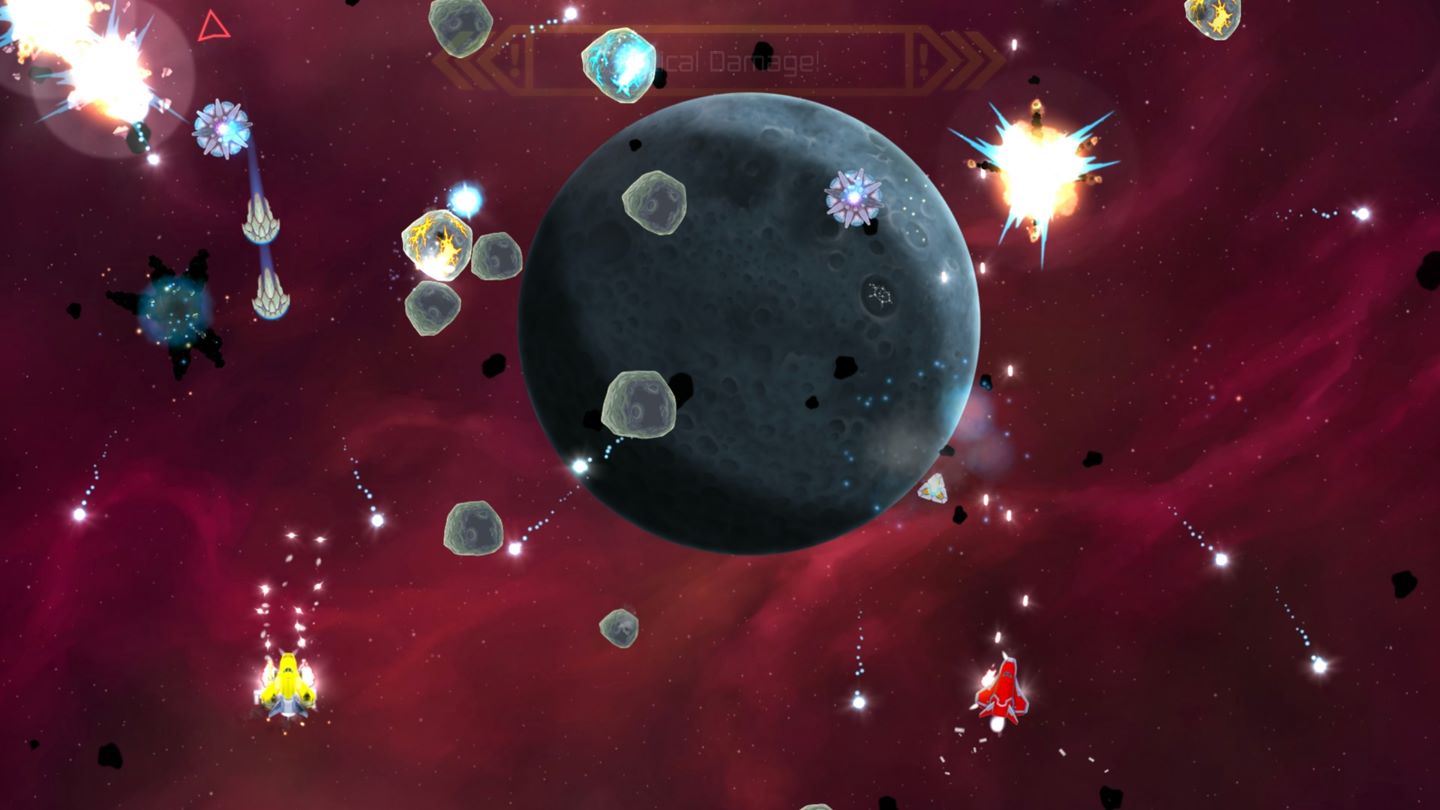
The one feature of Xenoraid I was not too fond happened during the move to a new mission. When I began Mission 2, I had all new pilots with none of my previous upgrades. Early in Mission 2 I lost one of my pilots as they were all too weak to win against the next-level aliens. I still beat the mission, so I now had the choice of starting Mission 2-2 with only three pilots that were leveled up, or purchasing a fourth pilot and having all pilots remain rookies. I chose to level up my three pilots, and lost the mission by having all three destroyed.
When all pilots were destroyed, I had to begin again at Mission 2-1. I got my four ships back, but none had upgrades. I found this system to be a little frustrating. I understand that this makes the game an actual challenge, and I am not a fan of hand-holding. But the fact that Mission 2 negates all of my progress in Mission 1, and then punishes me so severely when a pilot dies that I am unable to actually finish the campaign is a little absurd. Games haven’t worked like that for years, and there is a clear reason why–it isn’t any fun.
I think Xenoraid is on the right track, but really stumbled with that move. The graphics are so clean, it never dropped a frame throughout my entire play time. The RPG system is novel and cleanly implemented. The controls are super tight and responsive. The sound design is excellent and a pleasure to listen to. Even the level design is incredible with some levels having immense amounts of enemy ships, and others having few ships but asteroids that both help and hurt the player.
But the death condition is just imbalanced. It takes a game that is so balanced in almost every other way and turns it on its head. I was so pumped after beating the first mission that the disappointment to see that none of my upgrades mattered in Mission 2 was magnified. This same system repeated through the next few missions as well.
Summary
Xenoraid is a game that some people will love, and others will hate. The problem is that this dichotomy depends on if a person is good at the game or not. People bad at the game will lose ships early and have to continually restart missions. Players good at the game will be able to build up early credits and not face these hardships and resets. With this aside, Xenoraid is a really solid game that compliments the genre significantly. I only hope this can be balanced with a future update.

Joshua was a regular ICXM contributor between 2016–2017, publishing 42 articles across game reviews, and Xbox news. Their work focused on hands-on reviews, platform commentary, and breaking-news reporting during the Xbox One X launch year and Microsoft’s wider Play Anywhere / UWP gaming initiative.