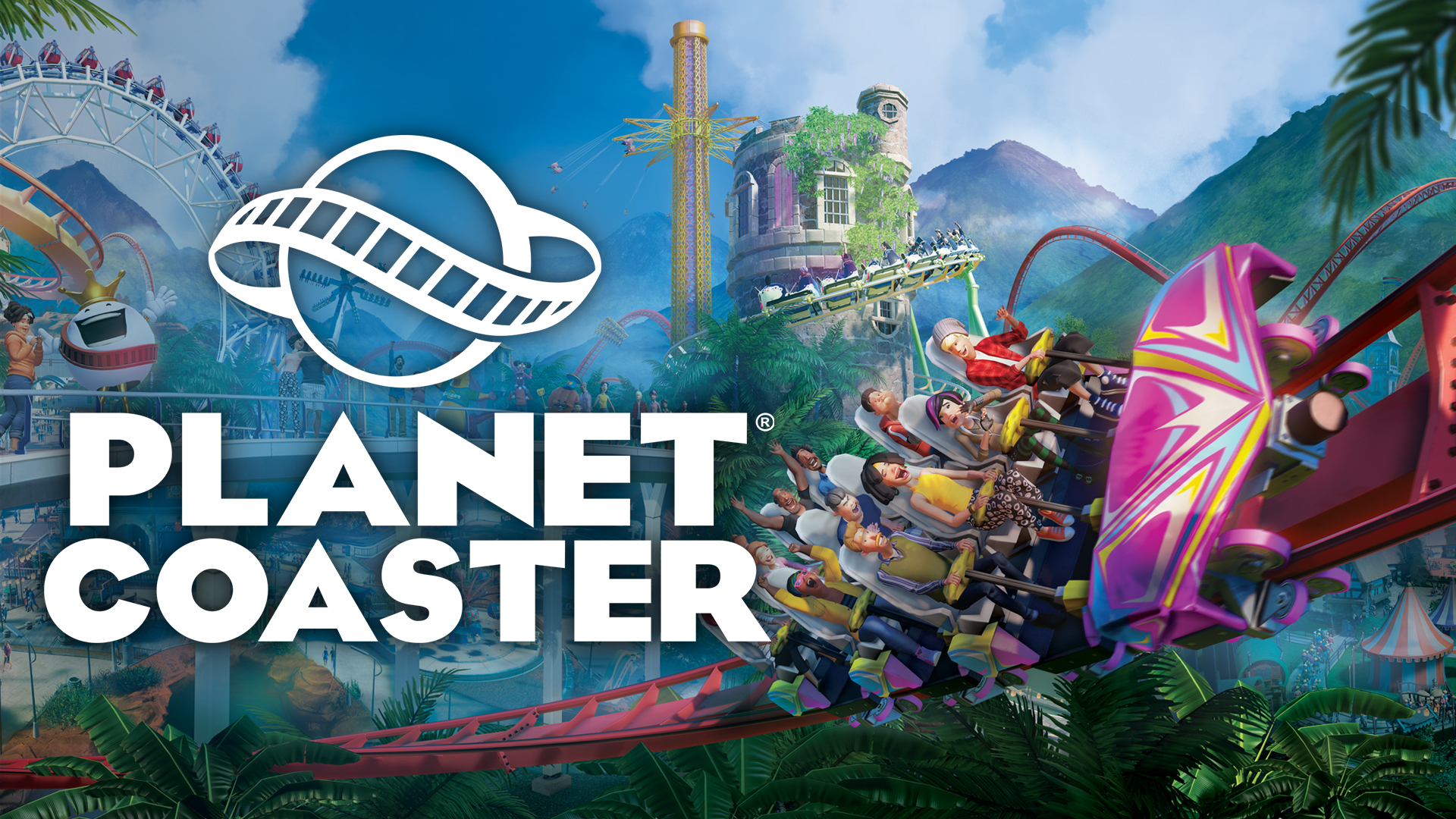
It seems that we’ve been through a drought of coaster builder games this decade. After the titan that was Roller Coaster Tycoon 3, the well seemed to dry up leaving us with nothing to satiate our coaster building crave. While Atari made attempts to revitalise the series through the mobile market they created with Roller Coaster Tycoon 4 Mobile—a freemium based game with wait timers instead of any creativity or design—no developer has come close to the genius gameplay of Roller Coaster Tycoon 3. Planet Coaster, however, looks to bring back true life into the series, filling up the well once more with creativity as Frontier—the minds behind Roller Coaster 2 and 3—step back into the ring.
In Planet Coaster, you have the power to create as no game before it has allowed. Not only are you able to create your own coasters and scenery, you are now able to customise buildings from their base parts, allowing you to create magnificent structures restricted only by your imagination. This customisation lets you immerse yourself in the fiction of your park, creating an experience that is all-encompassing as each shop, pathway and ride fits the theme of the world that you want to create. With this new level of detail, you would expect the graphics to take a hit so everything can run smoothly. However, Planet Coaster offers up stunning cartoon visuals similarly to the fan-favourite Roller Coaster Tycoon 3. This cartoon aesthetic however does not compromise on the level of texture detail, as even when you scroll the camera down close to the ground, at head height for the people in your park, everything still shines with polish and outstanding quality.
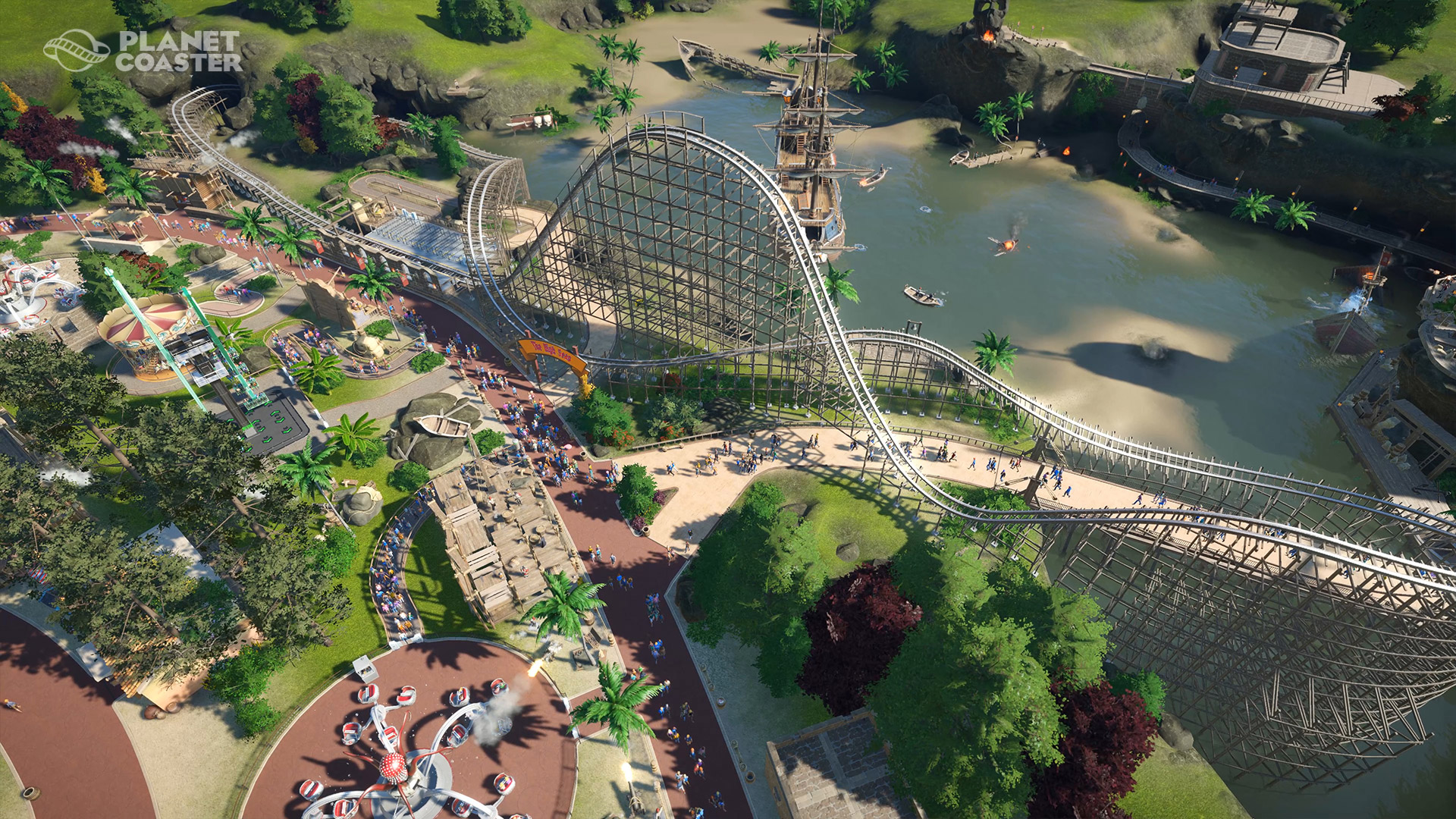
You will spend most of your time in Planet Coaster creating its namesake coasters. To do this Planet Coaster has implemented a new creative suite where you drag the track pieces on different axes and grids to fit it into place. While it can start off feeling quite fiddly, the process quickly becomes second nature as you drag pieces of the track around into the perfect positions. This new axis-based system also comes into play once the coaster is complete and you give the final test to your design. You’re now able to slightly shift the track via its axis to perfect the readings and excitement of your ride. This feature became extremely handy during the times your car just about falls short of a climb as you can pull it down rather than having to recreate the entire section to fix a lack of speed.
While this system offers a lot more control when building your coasters and park, letting you place each piece as you mean it to go without having to resort to an analogue method, it can often become inconsistent at times. Without an upcoming preview of what your build will look like other than the first piece, you can often be building blind and resorting to trial and error. Most frustratingly within this new system is the pathing. While it is expansive with different widths and patterns to choose from, it can be a hard beast to wrestle with. To help there is the select grid function, however there is no guarantee whether this will help you line up with a prebuilt section from earlier as it also disables snapping to other pieces. When controlling it yourself, you can enable a snapping option to a variety of angles to keep your park regimented which works well. However, even when using it and moving back to join up in a loop, the pathing can freak out and refuse to connect to itself having you start the whole path over, if you don’t want a wonky section. After the frustration of trying to split paths takes control over you, I found myself wishing that I had the option for the analogue controls as in Roller Coaster Tycoon 3 with the customisation that Planet Coaster has brought.
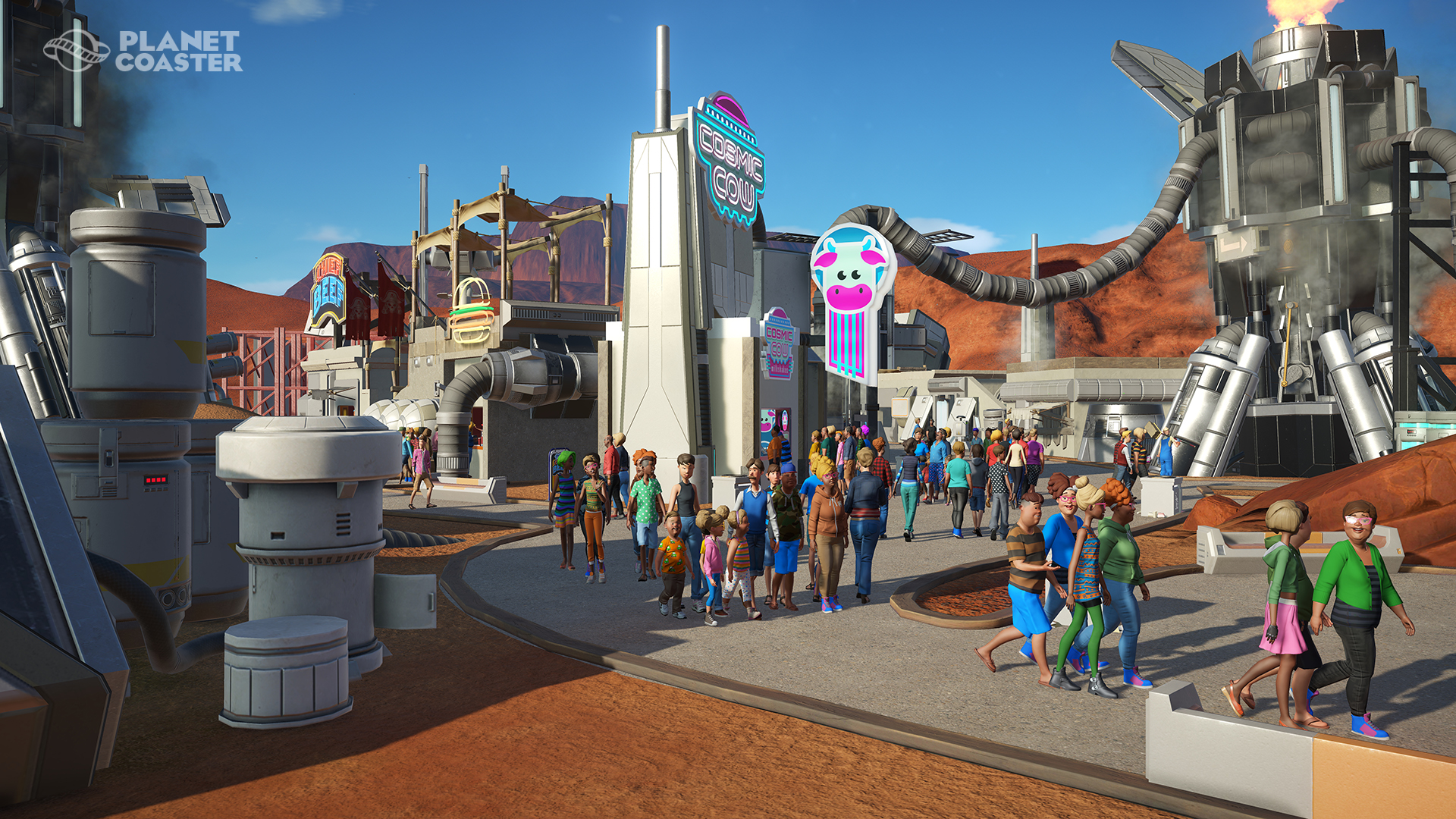
To customise your park to perfection, Frontier has created a variety of prefabricated buildings to place around within set styles, being: Pirate, Fairy Tale, Planet Coaster, Western and Sci-Fi. While these are a nice addition to the creative suite there are only so many to choose from, which can leave your park looking repetitive if you’re not willing to create scenery yourself. For many players, myself included, this creative aspect is greatly appreciated, being able to spend hours toiling over a queue to make it look perfect. Other players however are more forced into the role, letting their park fall into a shamble as pieces are repeated. In Planet Coaster, the scenery of your park is hugely important, with queue and ride scenery ratings playing a role in how popular a ride is to go on. Success often hinges on the ride scenery rather than its statistics, often forcing players to decorate even if they do not want to.
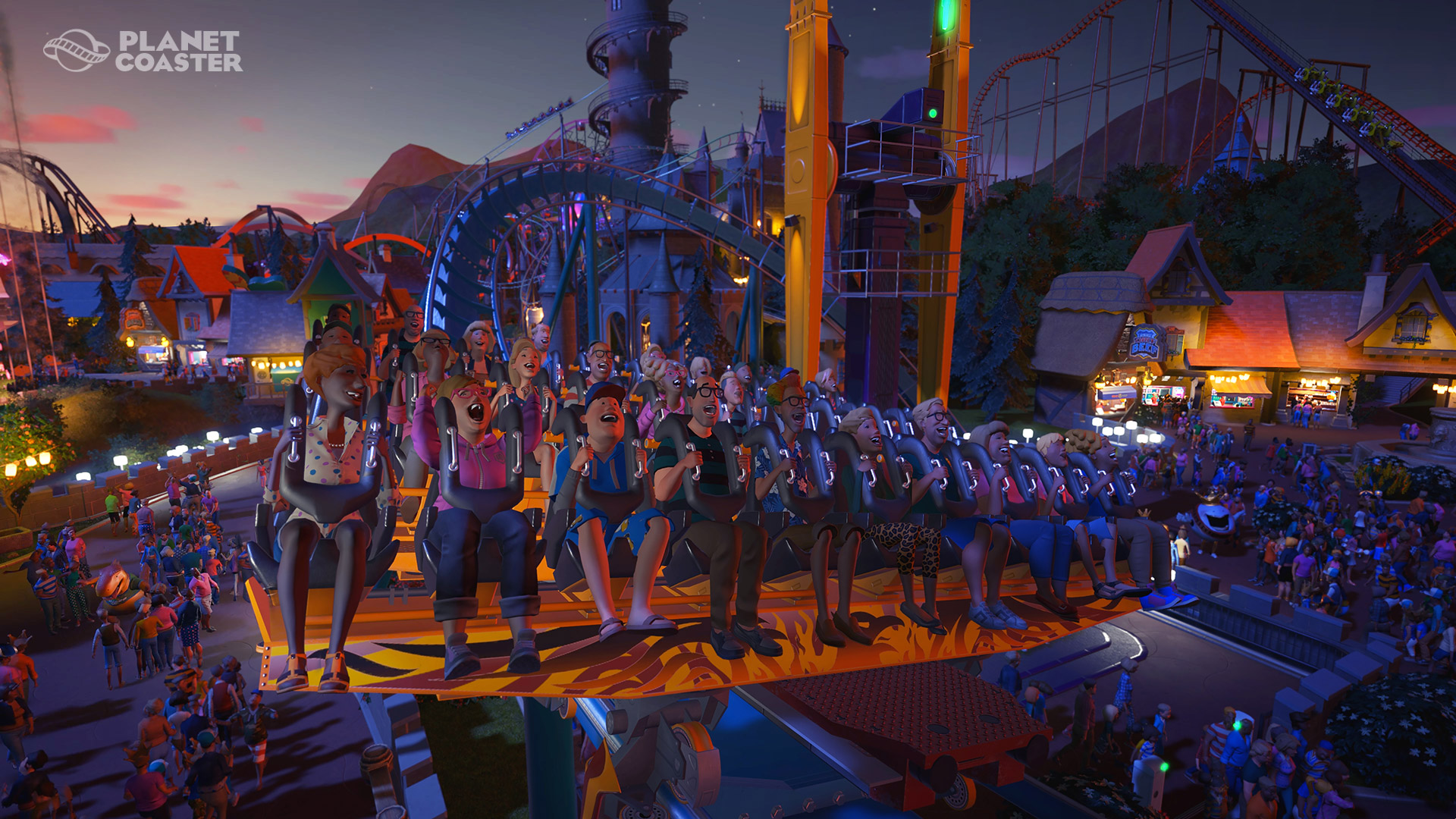
The music within Planet Coaster is brilliant where it is notable. Within the park each ride and coaster can have its own music which can of course be customised, even with your own music for the avid builder who is willing to dive into the games files. The menu music within Planet Coaster is the most impressive element however and shows perfectly how much polish has gone into Frontier’s latest. Rather than just fading out into black or cutting to an end, the music transitions into an end piece, a dedicated end that is seamlessly worked into leading you into the experience as the game fades in. For me this is the perfect opening to the game, opening it to you with a presentation which feels far more than just a continue button.
In most Coaster building games, there will be basic terrain tools that let you form your park to some extent, building a mountain to run your coaster around or a valley to fill with water. In every game, they have always been left to be side notes, a little decoration but rarely ever more. In Planet Coaster however, your tools to form the world are expansive and more than willing to bend what should be considered possible. Outside of coasters, the laws of physics are more like guidelines when it comes to theme park building. In Planet Coaster this is no more apparent as you can shape the land to your will with nothing standing in your way. This means impossible overhangs and floating islands are all up for creation, even having entire parks based in the skies or deep underground.
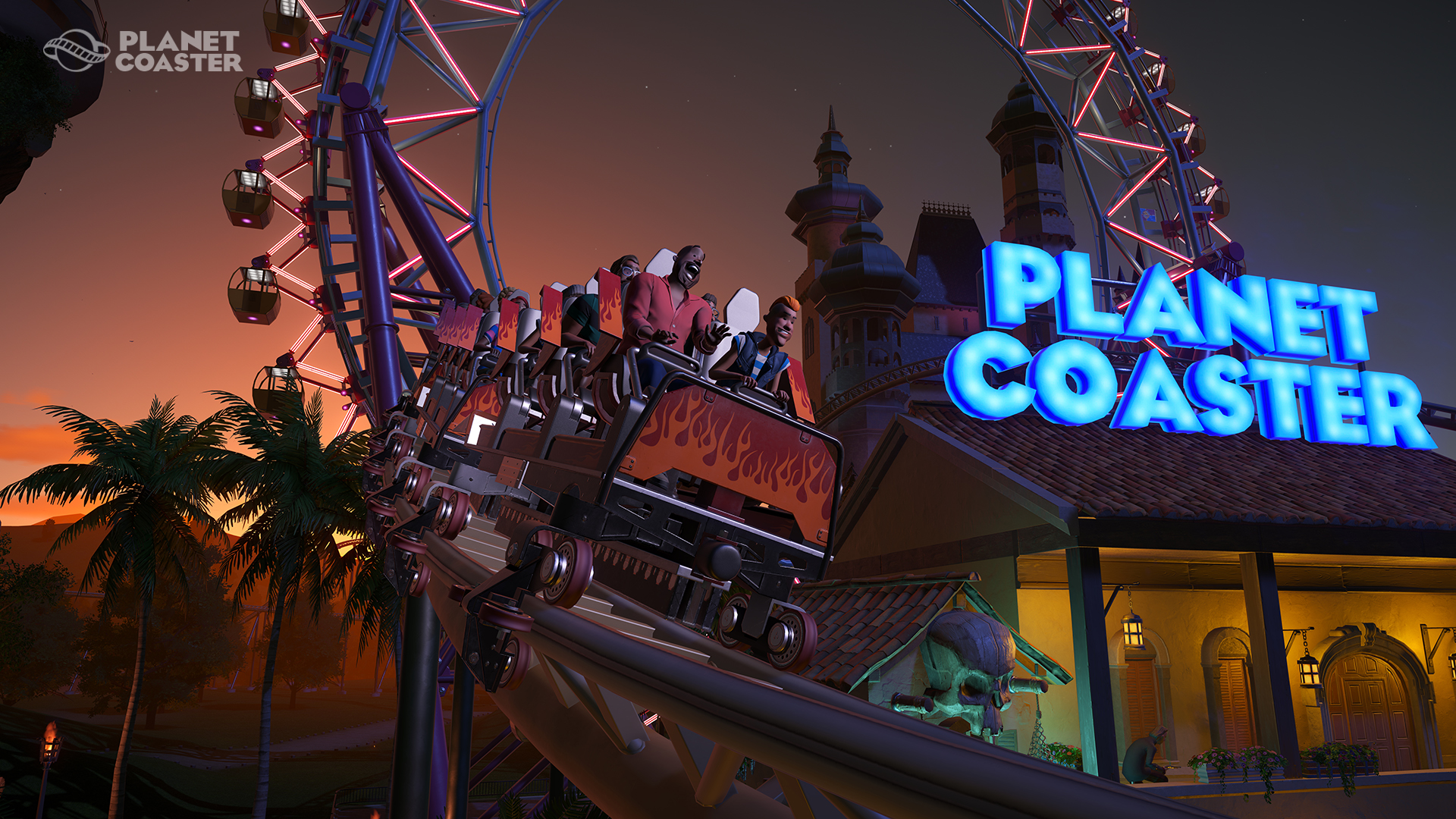
Players have always had the desire to show off their creations, if not in compilations of screenshots then in files they would upload so other players could place them in their own parks. Planet Coaster chose to take this to the next level with integrating Steam Workshop and blueprints into the game. With a push of a button, you can share everything from coasters to shops or set pieces with your friends and the wider world. This of course also means they are all at your disposal to take from, gathering the best of what players have made to make your park just perfect for your customers to roam around. While Frontier’s prefabricated creations often became repetitive, when you have the whole worlds’ to choose from, there is more than ample choice.
Summary
Planet Coaster is a modern masterpiece. Frontier have created the premiere title in theme park simulator games which offers unrivaled customization albeit at the cost of a little awkwardness controls-wise. Planet Coaster is a game like no other.

Alex was a community contributor to ICXM, writing 3 articles in 2016 covering game reviews. ICXM operated as an independent Xbox and Windows gaming outlet through the run-up to Xbox One S and Project Scorpio, plus the broader Windows 10 gaming push, drawing from a rotating bench of editorial volunteers. They post on X as @CrtlAltDlt.