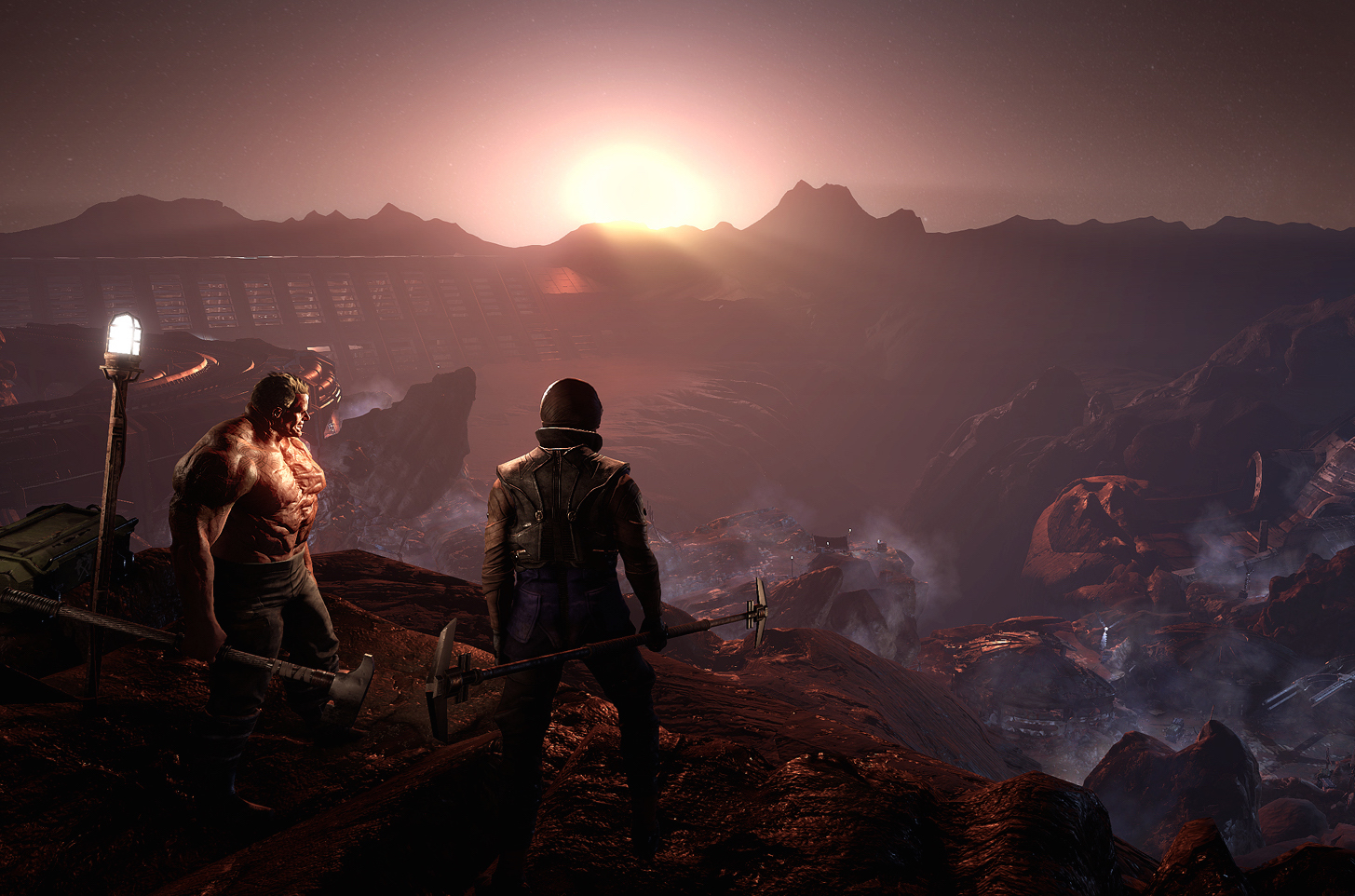
When I first started playing The Technomancer, I was struck by how it reminded me of other literature, movies and games that I had already experienced before. Weaving in and out of the fast-paced combat like I did with Geralt in The Witcher 3, navigating through menus and searching for loot similar to BioWare gems Star Wars: Knights of the Old Republic or Mass Effect, and exploring the sands of Mars in a complex world evocative of Frank Herbert’s Dune all brought back good memories. The Technomancer manages to echo each of these masterpieces while also creating its own unique atmosphere and setting. Although plenty of quirks and a few pacing issues make it less than perfect, The Technomancer is a great old-school role-playing game that any fan of the genre will enjoy immensely.
You play as Zachariah Mancer, a young man who at the start of the game is undergoing the final steps of a rite of passage which will allow him to become a true brother of the Technomancers, pious and wise warriors with cybernetic implants that grant them electrical powers. Your final test sees you learning the secret origin story of the Technomancers along with their aspiration for the future, which will set in motion an adventure throughout all of Mars itself.
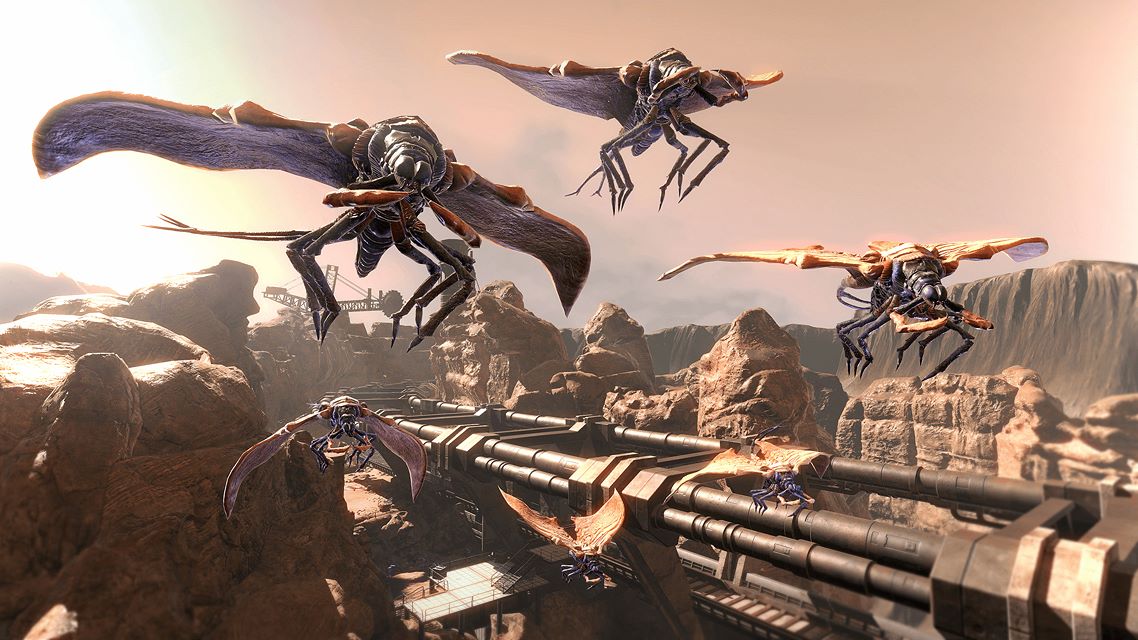
The story begins quite complex as you’re almost instantly thrown into a world full of tense situations between two governments fighting over water, the scarcest resource on the planet, rogue gangs searching for power by means of intimidation and coercion, mutants terribly altered by the effects of the sun and hated by ordinary humans, plenty of alien creatures, and of course, the Technomancers. The lack of in-depth exposition at the beginning of the campaign makes it hard to follow along with everyone’s motives at first, especially when the game claims that a karma system is constantly affecting your relations with each of these groups, but things become more clear, even fascinating, after a few hours playing. I enjoyed the story almost the entire time, and felt that it only truly faltered towards the middle of the game when I was forced to spend several hours running errands for an uninteresting ruler of a foreign city for no particular reason or purpose.
Although the cutscenes suffer from some lighting errors and dreadful lip syncing, they occur rarely, and are not that important to a game like The Technomancer anyway. I never observed any performance issues outside of the cutscenes, and the writing, voice acting, and environments are great throughout.
The game is not technically open-world, but rather takes place in several different hub areas across Mars. You gain access to more regions as you progress in the story and are eventually able to fast travel between some of them, but still need to trek across massive amounts of space often. One of my favorite games, Knights of the Old Republic, takes you from location to location in a linear pattern; after completing the missions on one planet it was likely that you would never return there. In The Technomancer however, it is essential to backtrack to locations that you’ve already visited over and over again in order to complete side missions and main missions, especially during the middle portion of the game. This takes away from a lot of the fun and is far more tedious errand-work than I’ve experienced in other role-playing titles. Furthermore, enemies constantly respawn in these places and cannot be avoided, so you may find yourself anxiously dreading combat encounters while already spending unnecessary amounts of time running through the multiple hubs just to reach an objective marker at a final destination. After that, guess what? You’ve got to fight your way out all over again.
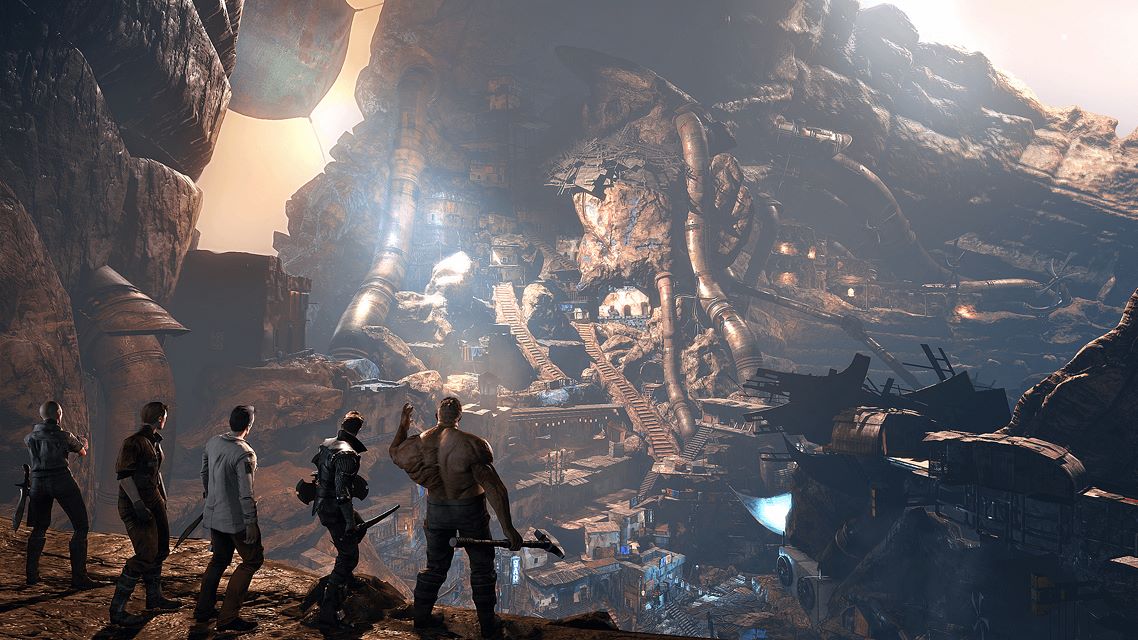
Yet this isn’t at all to say that I didn’t enjoy exploration in The Technomancer. Although travelling is monotonous, observation is engaging. Every hub area is distinct. The underground city Opis is dank and ominous, with tension between soldiers and gangs always present and a steady, electric soundtrack keeping things suspenseful. Other regions are extremely colorful, with beautiful lighting and contrasting styles of electronic music creating an entirely new sense of wonder. I enjoyed taking in each of these atmospheres and going out hunting for crates of gear or side missions the first three or four times through, just not when I was forced to return more times than is reasonable. It’s silly that you cannot set custom waypoints, but holding the right trigger brings up a slightly opaque thumbnail of the map, which I found handy as I traversed the environment.
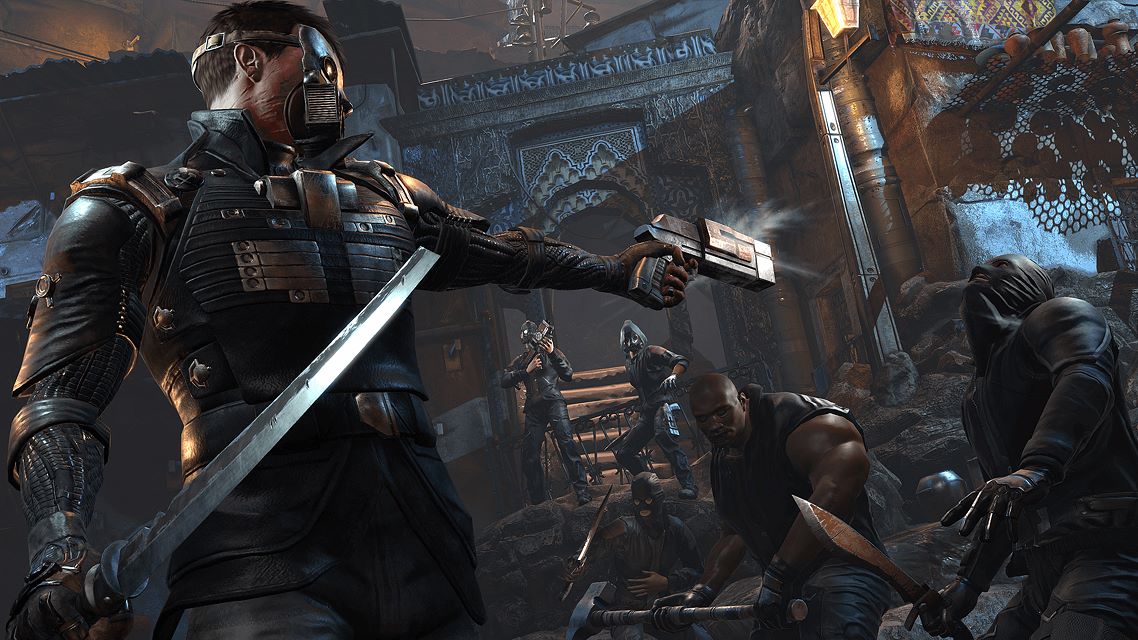
Combat may seem unfair at the start of the game, (I had to play the first few hours on easy difficulty before ramping up to normal) but once you get used to the controls and learn the techniques required for success, it becomes enjoyable. By holding the right bumper and pressing X, Y or B while fighting, you switch between three stances: warrior, rogue, and guardian. Warrior wields a staff and is focused on strong area attacks, rogue uses a gun and dagger and is based on agility and critical hit damage, and guardian has you flourishing a mace and shield and is centered on health and defense.
Most games would force you to pick a single playstyle at the start of the game, but Technomancer encourages you to switch between all three styles mid-fight, although it does take some practice remembering which keys bind to which stances and what situations are best-suited to each. In addition to physical fighting you can also employ your Technomancer powers at any time, shooting enemies with beams of electricity or stunning them with high-powered punches packed with voltage, just to name a couple options.
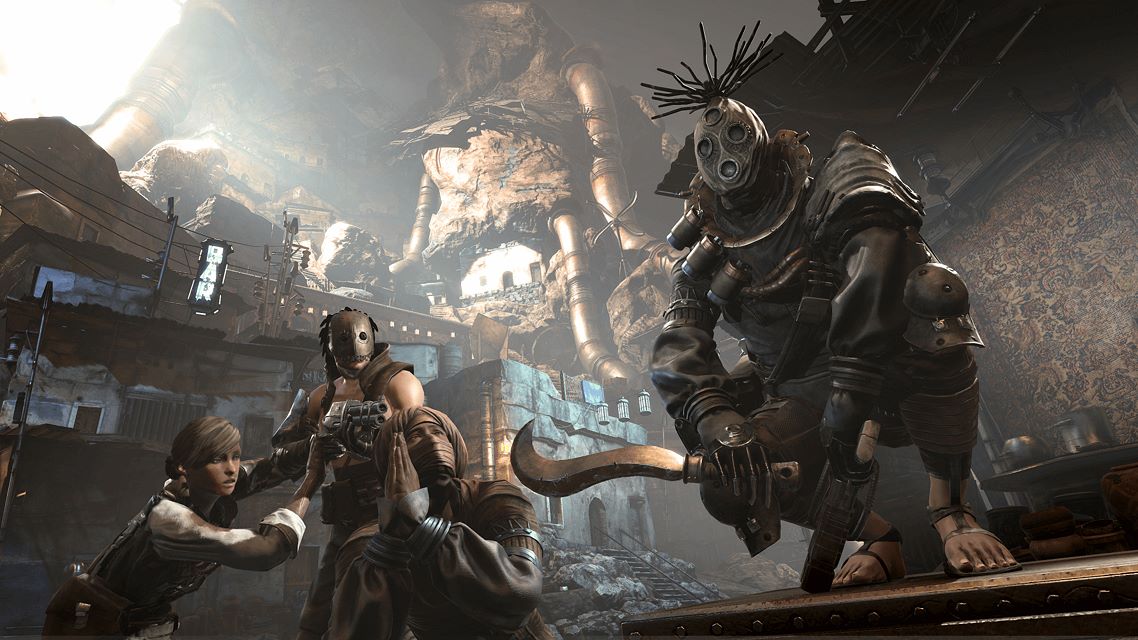
All four methods of combat have their own intricate skill trees, and while it takes ages to max out multiple trees, it is doable. Every three levels you get access to additional traits as well which affect your physical and intellectual capabilities. These grant you passive bonuses such as the ability to craft more complex upgrades for your weapons or to convince computer-controlled companions to follow your commands.
Combat itself is most unique because of the disruption mechanic. Weapons and skills have various stats associated with them: increase damage, critical hit chance, chance to poison and more, one of which includes the chance to disrupt enemy attacks. Since there isn’t a symbol to point out that an enemy is about to strike and should be avoided like in, say, the Batman: Arkham games, it’s up to you to watch each of your enemies’ movements and to time your attacks proficiently. If you manage to disrupt an enemy, knocking them off balance or stunning them, you’ll have a major advantage and will be able to inflict loads of damage in the short seconds before they comes back to their senses.
Sometimes the game will go into slow-motion for a split-second as you or an enemy begins to carry out an attack. During this short time period you have the option to either continue with your current plan or to execute a different tactic entirely. Not only does this feature allow for last-minute changes to your battle strategy, but it also looks neat visually, and the animation is so brief that it never slows down the pace of the brawl.
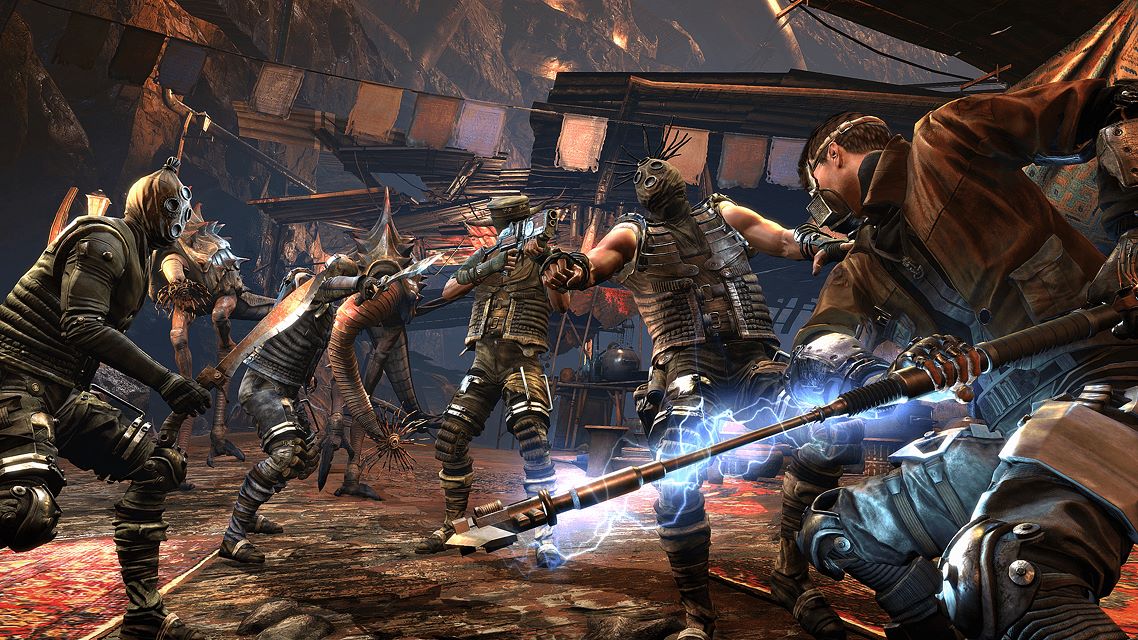
You come across plenty of different companions during your adventure in The Technomancer, each of whom assists in battle and offers insight and advice about the world, including judging the morality of your actions. You share equipment with companions, so it’s important to manage your inventory rationally in order to make sure everyone has optimal gear. I enjoyed the company of my allies and the ability to switch between any two of them for slightly varied fights and passive boosts.
Unfortunately, I ran into several issues that should not be present in any game. For example, I once asked a character if he had ever been to a location called “The Underworks” before as we stood directly inside of it. He replied in past tense, describing in great detail the time when he had been to The Underworks long ago and what it looked like. It was an odd conversation that clearly wasn’t thought out very well and that I didn’t expect to come across in an otherwise cohesively written game. While experiences similar to this one are not common throughout the game, they are present in several places.
Another problem is embedded in the karma system, which affects how your companions and other characters respond to your actions throughout the world. Although I appreciate the changes in dialogue proportional to your endeavors both good and bad, I never felt like my actions had a major impact on the world as a whole, and if they did, the game didn’t do a good job of illustrating that. I found myself questioning the purpose of the karma system often and wondering whether it was a necessary addition. Sometimes it isn’t even logical. At one point I lied to a character, telling him that I had successfully completed a task he had previously assigned me. My lie seemed to go off unnoticed; I was applauded for a job well done. Nevertheless, a notification warned me that my relationship with said character had declined a significant amount. So which was it? Did he actually appreciate what I had done? Did he know that I abandoned his orders yet pretended otherwise? Occasions like this aren’t immersive, but plain frustrating. I want to know why my decisions matter and what incidents they lead to. The karma system doesn’t appear to be central to The Technomancer, but it’s hinted at enough that I think it could have been improved upon much more.
Summary
The Technomancer is a very solid game that seems to be almost a mixture of an old-school role-playing title and a modern third-person action game. It features classic customization options through skill trees that affect how you play, companions with genuine personalities, and a good main plot overall. However, it also remembers to implement complex and rewarding combat mechanics that encourage multiple different playstyles of fast-paced fighting. Although peculiar nuisances like the faulty karma system are irritating and bigger issues like the suddenly-sluggish experience halfway through the game make it less than perfect, there’s plenty of satisfaction in this title. While the “cause and effect” mechanics may not be as fleshed out as in modern titles like The Witcher 3, The Technomancer blends enough new qualities with vintage attributes in order to create an authentic world and a whole bunch of electric fun.

Tristan was a regular ICXM contributor between 2015–2017, publishing 51 articles across opinion pieces, game reviews, Windows and PC, and Xbox news. Their work focused on hands-on reviews, platform commentary, and breaking-news reporting during the Xbox One X launch year and Microsoft’s wider Play Anywhere / UWP gaming initiative. They post on X as @tbogost.